Property tailoring makes fluoropolymers fit the application rather than forcing the application to fit a standard material. By adjusting dielectric behavior, optical transparency, surface wetting, gas permeability, chemical resistance, thermal stability, and processing characteristics, manufacturers can produce components suited to the demanding conditions of microelectronics and chemical synthesis. The result is improved purity, reliability, measurement accuracy, and service life.
The central benefit is controlled performance: tailored fluoropolymers combine chemical inertness and thermal stability with application-specific electrical, surface, optical, and permeability properties. This is especially valuable where contamination, signal integrity, solvent exposure, or dimensional reliability can determine process success.
Why Property Tailoring Matters
Standard Materials Cannot Meet Every Requirement
Fluoropolymers already provide strong resistance to aggressive chemicals, low surface energy, electrical insulation, and high thermal stability. However, specialized equipment may require a precise balance of properties rather than maximum performance in only one area.
A microelectronic component may need predictable dielectric behavior and low contamination, while a reaction vessel may prioritize chemical inertness, low sample adhesion, and resistance to elevated temperatures.
Synthesis Controls More Than Chemical Resistance
Advanced synthesis and processing can tune dielectric properties, optical transparency, surface wetting, gas permeability, and processing behavior. These adjustments allow the same broad material family to serve different technical roles.
Fluorine content also affects chemical and thermal performance. Highly fluorinated materials such as PTFE and PFA generally provide particularly strong resistance to harsh organic and inorganic reagents, high-temperature endurance, low surface energy, and minimal sample adhesion.
Benefits for Microelectronics
Protecting Electrical Performance
In microelectronics, fluoropolymer dielectric properties can be tailored to support electrical insulation and predictable signal behavior. This matters when components must isolate conductive elements, manage parasitic effects, or operate near sensitive electronic structures.
The value is not simply that the material is insulating. Its electrical behavior must remain consistent across the intended operating conditions.
Reducing Ionic and Particulate Contamination
Microelectronics processes are highly sensitive to trace contamination. Fluoropolymer components with low ionic leaching help prevent unwanted species from entering cleaning, etching, deposition, or fluid-management processes.
Low surface energy and chemical inertness also reduce the likelihood that residues will adhere strongly to process surfaces. This supports cleaner handling of high-purity fluids and more repeatable fabrication conditions.
Supporting Fluid and Gas Management
Tailored gas permeability can be useful where a component must control or limit the passage of gases. In fluid-management systems, customized fluoropolymer tubing, seals, tanks, and machined parts can be selected for compatibility with the process chemicals and operating environment.
Surface wetting can also be adjusted when fluid spreading, non-wetting behavior, or controlled interaction with a process liquid affects performance.
Improving Component Reliability
Microelectronic equipment often combines chemical exposure, thermal cycling, and strict dimensional requirements. A fluoropolymer formulation and processing method selected for those conditions can retain structural integrity for longer periods.
This reduces the risk that material degradation, chemical attack, or surface contamination will disrupt a high-value process.
Benefits for Chemical Synthesis Apparatus
Resisting Aggressive Reagents
Reaction vessels, cleaning tanks, electrochemical cells, and fluid-transfer components may encounter strong acids, bases, organic solvents, and elevated temperatures. Tailored fluoropolymers provide robust resistance to these environments while limiting degradation.
Perfluoropolymers such as PTFE and PFA are especially useful when near-universal chemical inertness and high-temperature resistance are required.
Preventing Sample Contamination
For trace analysis and high-purity synthesis, even small amounts of elemental or ionic leaching can distort results. Properly selected fluoropolymers help provide near-zero elemental leaching and minimize the introduction of contaminants into sensitive samples.
Their non-stick surfaces also reduce sample adhesion and scaling. This makes cleaning easier and supports more consistent results between experiments.
Enabling Complex Apparatus Designs
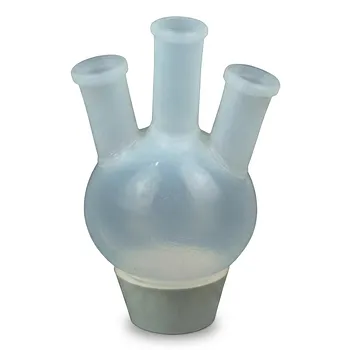
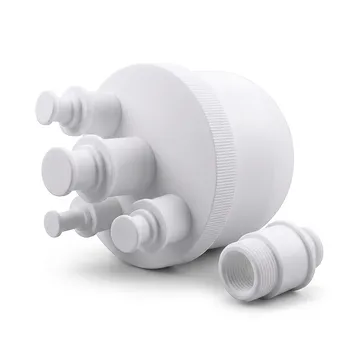
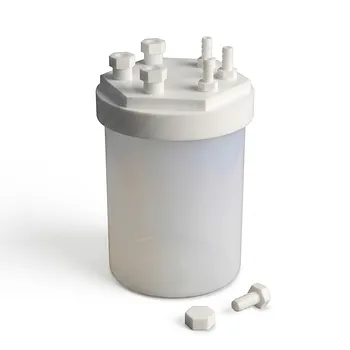
Fluoropolymers can be precision-machined into non-standard components, including bespoke reaction setups, hydrothermal synthesis liners, microwave digestion vessels, microchannel reactors, and electrode accessories.
This design flexibility is important when off-the-shelf laboratory equipment cannot provide the required geometry, pressure handling, flow path, or electrode arrangement.
Maintaining Performance Under Heat
Chemical synthesis and digestion processes can impose severe thermal stresses. Fluoropolymers selected for high thermal stability can withstand elevated temperatures while preserving chemical resistance and functional geometry.
The appropriate material must still be matched to the actual temperature, pressure, chemical exposure, and duration of the process.
Controlling Surface Interaction
Surface behavior can be tailored to make a component more hydrophobic, hydrophilic, oleophobic, or chemically interactive. These characteristics influence liquid spreading, sample release, microfluidic flow, and fouling.
Surface modification can add functionality without changing the bulk mechanical properties. For example, patterned hydrophilic and hydrophobic regions can support specialized microfluidic designs, while chemically introduced surface groups can enable biomolecule immobilization in bio-analytical apparatus.
How Tailoring Converts Properties Into Performance
Chemical Resistance Protects Purity
Chemical inertness limits reaction between the apparatus and the process medium. This protects both the component and the sample, which is essential in synthesis, digestion, electrochemical processing, and high-purity fluid handling.
Low Surface Energy Improves Release and Cleaning
Low surface energy produces hydrophobic, oleophobic, and low-friction behavior. These characteristics reduce adhesion, scaling, and retained residues, helping operators clean equipment and recover samples more effectively.
Electrical Insulation Supports Specialized Cells
Electrical insulation is valuable in electrochemical cells and microelectronic process equipment. It allows fluoropolymer parts to separate or support conductive elements while resisting the surrounding chemicals.
Optical and Permeability Control Expands Application Options
Optical transparency can support visual monitoring or optical measurement where opaque materials would obstruct the process. Controlled gas permeability can help manage exposure to gases or reduce unwanted transmission through tubing, membranes, or enclosures.
Understanding the Trade-offs
Maximum Fluorination Is Not Always the Complete Solution
Increasing fluorine content generally improves chemical resistance, thermal stability, and low-surface-energy behavior. However, the best material still depends on the complete operating envelope, including mechanical loads, temperature, pressure, fabrication method, and required surface functionality.
A material optimized for chemical inertness may not be the best choice when bonding, surface reactivity, or specialized wetting behavior is the primary requirement.
Surface Treatments Can Add Process Complexity
Surface modification creates useful functions that the bulk polymer may not provide. However, treatment quality, pattern stability, and compatibility with the operating environment must be verified for the specific application.
A modified surface should not be assumed to have the same chemical behavior as the untreated bulk material.
Fabrication Must Preserve the Intended Properties
Precision machining enables complex fluoropolymer apparatus, but design and processing decisions can affect dimensional stability, surface quality, and long-term reliability. Component geometry should therefore be developed alongside material selection and manufacturing requirements.
Testing Must Reflect Real Operating Conditions
Published material properties are useful for screening, but they do not replace application-specific validation. Testing should account for the actual reagents, temperatures, pressures, exposure times, cleaning cycles, and contamination limits involved.
How to Apply This to Your Project
The right selection begins with the failure mode or performance requirement that matters most.
- If your primary focus is microelectronics purity: Prioritize low ionic leaching, chemical resistance, stable dielectric behavior, and surfaces that minimize residue and contamination.
- If your primary focus is chemical synthesis: Prioritize resistance to the actual acids, bases, solvents, temperatures, and pressures used in the process, with low sample adhesion where purity matters.
- If your primary focus is complex apparatus design: Select a fluoropolymer that combines the required chemical and thermal performance with a processing method capable of producing the necessary geometry.
- If your primary focus is fluid or microfluidic control: Evaluate surface wetting, gas permeability, friction, and any required hydrophilic or hydrophobic patterning alongside bulk chemical resistance.
Property tailoring turns fluoropolymers from broadly resistant plastics into precisely engineered components for cleaner, more reliable, and more controllable specialized processes.
Summary Table:
| Benefit | Microelectronics | Chemical Synthesis |
|---|---|---|
| Chemical Resistance | Protects against process chemicals | Withstands aggressive reagents |
| Low Ionic Leaching | Reduces contamination | Prevents sample contamination |
| Tailored Dielectric Properties | Supports signal integrity | - |
| Custom Surface Wetting | Controls fluid spreading | Enhances sample release |
| Thermal Stability | Reliable under heat | Maintains performance under heat |
| Design Flexibility | Machined parts for fluid management | Bespoke apparatus for complex reactions |
Ready to optimize your microelectronics or chemical synthesis processes? At KINTEK, we specialize in high-performance fluoropolymers (PTFE/PFA) with tailored properties to meet your exact requirements. From low-leaching components for semiconductor fabrication to corrosion-resistant reaction vessels and precision-machined parts, our solutions ensure purity, reliability, and efficiency. Leverage our expertise in custom CNC machining and comprehensive labware manufacturing. Contact us today to discuss your application and discover how we can enhance your performance.
Related Products
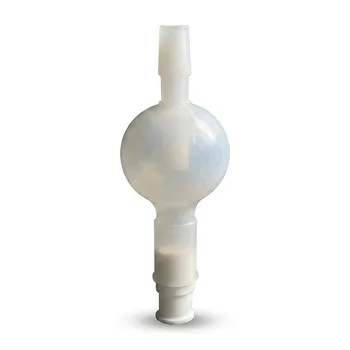
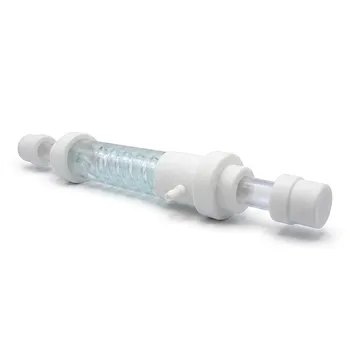
- High Purity PFA Chromatography Column with Collection Bottle Corrosion Resistant Fluoropolymer Filtration System for Trace Analysis
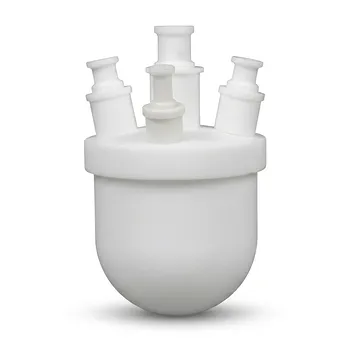
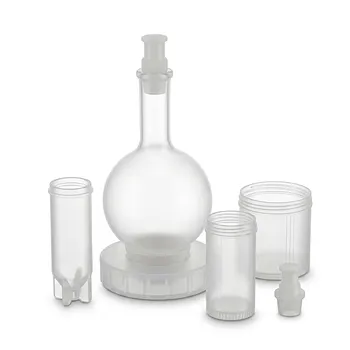
- Custom PTFE Flask 250ml High Purity Fluoropolymer Laboratory Vessel for Chemical Research
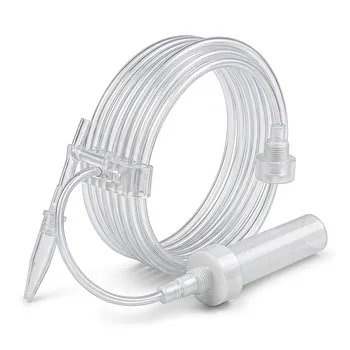
- Custom PFA Tubing 1/4 Inch High Purity Corrosion Resistant Fluoropolymer Tube with Welding and Machining Services
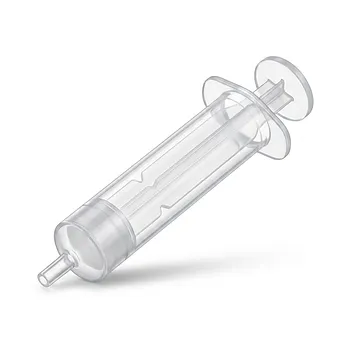
- Corrosion Resistant PFA Syringe Translucent Visual Fluoropolymer Labware 10ml Chemical Handling Tool
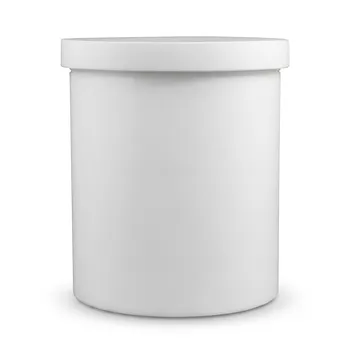
- Custom PTFE Reaction Tank Corrosion Resistant Fluoropolymer Chemical Processing Barrel 10L 20L 30L
People Also Ask
- Why is the chemical stability of polymer endgroups critical when selecting melt-processible fluoropolymers like PFA for high-purity laboratory apparatus? Choose Stable Endgroups for Reliable Performance
- What are the characteristics of PFA material? A Guide to Its High-Performance Balance
- Why is Perfluoroalkoxy alkane (PFA) preferred over glass or stainless steel in pharmaceutical process development? Pure Yield
- Why is PFA superior for cleaning and preventing cross-contamination? The Gold Standard for Ultra-Trace Lab Hygiene
- What are the key properties of PFA (PerFluoroAlkoxy)? A Guide to Extreme Chemical and Thermal Resistance