PTFE tape acts as a precision boundary and a chemical shield in the hydrothermal synthesis of cobalt sulfide. It is used primarily to wrap the edges of a carbon cloth substrate to define a specific, 1 cm² active reaction area. This ensures that the cobalt sulfide is deposited only on the intended surface, which is a fundamental requirement for the accurate calculation of the material's specific capacity during electrochemical testing.
Core Takeaway: PTFE (polytetrafluoroethylene) provides a chemically inert and thermally stable mask that allows researchers to control exactly where cobalt sulfide deposits. By isolating a specific reaction zone, it enables precise quantitative analysis while protecting the sample and equipment from high-temperature corrosion and contamination.
Defining the Active Reaction Zone
Precision in Electrochemical Calculation
In the development of cobalt sulfide electrodes, the mass and area of the active material must be known with high precision. By using PTFE tape to wrap the edges of the carbon cloth, researchers create a physical mask that limits deposition to a designated 1 cm² area.
Prevention of Indiscriminate Deposition
Hydrothermal environments are highly energetic, often causing materials to grow on every available surface within the reactor. The tape forces the cobalt sulfide growth to occur only on the exposed carbon fibers, preventing "edge effects" or excess deposition that would skew experimental data.
Chemical and Thermal Stability in Harsh Environments
Resistance to Corrosive Precursors
The synthesis of cobalt sulfide typically involves reagents like nitrates or urea, which become highly corrosive under high-temperature and high-pressure conditions. PTFE is chosen for its exceptional chemical inertness, meaning it will not react with these precursors or contaminate the resulting crystal structure.
Thermal Resilience up to 220°C
Standard hydrothermal processes for sulfide synthesis often reach temperatures between 120°C and 200°C. PTFE remains stable and maintains its seal within this range, ensuring that the reaction environment remains controlled and the tape does not degrade into the solution.
Maintaining High Purity and Protecting Equipment
Prevention of Metal Leaching
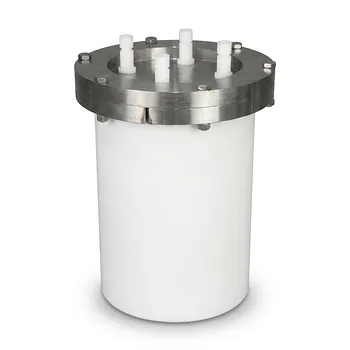
PTFE materials, including liners and tapes, serve as a barrier between the reaction media and the metal walls of the autoclave. This isolation prevents the leaching of iron, chromium, or nickel from the stainless steel shell, which is vital for synthesizing high-purity nanomaterials.
Non-Stick Properties and Recovery
The "non-stick" nature of the polymer facilitates the easy removal of the carbon cloth after the reaction is complete. This property ensures the complete recovery of the synthesized cobalt sulfide without damaging the delicate nanostructures during the cleaning or detachment process.
Understanding the Trade-offs and Limitations
Temperature Ceilings
While PTFE is highly resilient, it has a definitive thermal limit, typically around 220°C to 250°C. Exceeding these temperatures can cause the material to soften or undergo thermal decomposition, potentially releasing toxic fluorinated vapors and ruining the experiment.
Mechanical Integrity Under Pressure
If the PTFE tape is not applied with uniform tension, high-pressure fluids can seep underneath the edges. This "under-tape deposition" can lead to a larger-than-intended reaction area, which introduces significant errors in specific capacity calculations.
Applying PTFE Strategy to Your Synthesis
Selecting the right application method for PTFE depends on your specific experimental priorities.
- If your primary focus is precise capacity measurement: Ensure the PTFE tape is wrapped tightly and measured with a caliper to maintain a strict 1 cm² window for cobalt sulfide growth.
- If your primary focus is material purity: Utilize high-quality PTFE liners in conjunction with the tape to eliminate any contact between the corrosive precursors and the autoclave’s metal shell.
- If your primary focus is experimental safety: Never exceed the 220°C threshold for PTFE-based components to avoid structural failure of the seal and potential chemical hazards.
By mastering the spatial and chemical control provided by PTFE, you ensure that your cobalt sulfide synthesis is both reproducible and scientifically rigorous.
Summary Table:
| Function | Benefit | Key Specification |
|---|---|---|
| Precision Masking | Defines exact 1 cm² active area | Enables accurate electrochemical calculations |
| Chemical Shielding | Resists nitrates and urea precursors | Prevents contamination and metal leaching |
| Thermal Stability | Maintains integrity up to 220°C | Ensures a controlled hydrothermal environment |
| Non-Stick Surface | Facilitates easy sample detachment | Protects delicate cobalt sulfide nanostructures |
Elevate Your Synthesis Precision with KINTEK
From everyday basic labware (beakers, measuring cylinders, crucibles, and reagent bottles) to advanced reaction apparatus like hydrothermal synthesis liners and custom electrochemical cells, KINTEK provides everything you need for rigorous scientific research.
We specialize in high-performance fluoropolymer materials, offering high-purity trace analysis instruments, fluid transfer components (tubing, fittings, valves), and precision-engineered consumables. Whether you require standard parts or custom CNC-fabricated components for complex laboratory setups, our absolute focus on PTFE and PFA ensures your experiments remain contamination-free and reproducible.
Ready to optimize your lab results? Contact us today to discuss your custom fabrication needs or high-volume orders!
References
- Nguyen Dinh Hung, Le van Khu. MORPHOLOGICAL AND PHASE EVOLUTION OF COBALT SULFIDE ON CARBON CLOTH VIA CONTROLLED HYDROTHERMAL SYNTHESIS FOR HIGH-PERFORMANCE FLEXIBLE SUPERCAPACITORS. DOI: 10.18173/2354-1059.2025-0057
This article is also based on technical information from Kintek Knowledge Base .
Related Products
- PTFE Lined High Pressure Digestion Vessel 50ml High Temperature Hydrothermal Synthesis Tank
- Custom PTFE Sealing Tapes for Industrial and High Tech Applications
- High Temperature Resistant Insulating TFM Separator and Ultra Clean Laboratory PTFE Baffle Plate with Customizable Pore Size and Hole Configuration
- High Purity PTFE Faucet Corrosion Resistant Polytetrafluoroethylene Drum Valve Customizable Lab Chemical Fluid Control
- Customizable PTFE Heat Insulation Plate High Temperature Corrosion Resistant Laboratory Support Layered Multi Tier Stand
People Also Ask
- What are the benefits of using a PTFE-lined vessel for carbon-sulfur cathode treatment? Maximize Purity & Performance
- Why are PTFE-lined pressure digestion vessels required for the preparation of Ag/CeO2 catalysts? Purity & Performance
- What safety features are typically incorporated into high-pressure PTFE digestion vessel designs? Ensure Lab Safety
- What is the function of PTFE lined high-pressure vessels in g-C3N4 synthesis? Achieve High-Purity Material Growth
- Role of High-Pressure Digestion Tanks in Perovskite Synthesis: Achieve Superior Stability and Latent Heat