Increasing fluorine content generally improves the chemical, thermal, electrical, and surface performance of fluoropolymers used in laboratory labware and fluid-transfer components. As fluorination increases toward fully fluorinated materials such as PTFE and PFA, resistance to aggressive chemicals, heat, flames, weathering, and solvent penetration improves. Friction, surface energy, dielectric constant, and dissipation factor generally decrease, although some mechanical strength and wear-related properties may decline.
Higher fluorine content favors chemical inertness, thermal endurance, low adhesion, and electrical insulation. This makes fully fluorinated polymers especially suitable for high-purity reagent handling, trace analysis, digestion vessels, valves, fittings, and fluid-transfer paths where contamination and chemical attack are unacceptable.
Why Fluorine Content Matters
Stronger Protection Against Chemical Attack
The carbon-fluorine bond is highly stable, so increasing fluorine substitution generally makes the polymer less reactive with acids, solvents, bases, and other aggressive reagents.
For laboratory equipment, this reduces corrosion-like degradation, swelling, extraction, and chemical contamination. Fully fluorinated polymers such as PTFE and PFA are therefore widely selected for reagent bottles, tubing, beakers, reaction vessels, and analytical components.
Lower Solvent Absorption and Contamination Risk
Higher fluorination also reduces the ability of solvents to dissolve or penetrate the polymer. That characteristic is important when a component must preserve sample purity during storage, transfer, digestion, or trace-level analysis.
Low surface interaction helps prevent reagents and analytes from adhering to the flow path. The result is lower carryover and easier cleaning, provided the component is properly fabricated and maintained.
How Thermal Performance Changes
Greater Thermal Stability
Higher fluorine content generally increases thermal stability and resistance to elevated-temperature exposure. The material is better able to maintain its chemical integrity when used with heated reagents, hot solvents, or digestion processes.
Fully fluorinated materials are commonly chosen when maximum thermal endurance is required. PTFE and PFA can support demanding laboratory applications, including high-temperature chemical handling, with service limits determined by grade, design, load, and exposure time.
Higher Melting or Processing Temperature
Fluorination generally raises the polymer’s melting or processing temperature. This supports performance at elevated temperatures but also makes manufacturing more demanding.
PTFE has exceptional chemical and thermal resistance but is not conventionally melt-processable. PFA retains similarly strong resistance while offering melt processability, which can be advantageous for producing tubing, bottles, complex fluid paths, and molded components.
Improved Flame and Weather Resistance
Higher fluorine content generally improves flame resistance and resistance to environmental weathering, including photochemical degradation. These properties matter for equipment exposed to heat, light, outdoor conditions, or demanding facility environments.
They are secondary considerations for many laboratory vessels, but they can become important in fluid-transfer systems, instrumentation, and equipment installed near heat sources or exposed to long-term environmental stress.
How Surface and Fluid-Handling Behavior Changes
Lower Friction and Improved Sliding
Increasing fluorination generally lowers the coefficient of friction. This produces low-friction, non-stick behavior that benefits valve seats, plungers, fittings, seals, and moving interfaces.
The lower-friction surface can reduce actuation resistance and help components slide smoothly. It does not, however, eliminate the need to evaluate wear, contact pressure, surface finish, and compatibility with the mating material.
Lower Surface Energy and Adhesion
Highly fluorinated surfaces have low surface energy, which discourages wetting and adhesion. In fluid-transfer components, this can help reduce residue retention and simplify cleaning.
For analytical workflows, the benefit is particularly significant when handling low-concentration samples or reagents that could otherwise adsorb onto the flow path and distort results.
Better Dimensional and Chemical Integrity Under Exposure
Chemical resistance and thermal stability help tubing, vessels, and fittings retain their intended function during repeated exposure to aggressive reagents. The actual dimensional stability still depends on temperature, pressure, wall thickness, applied loads, and the specific polymer grade.
Electrical Properties in Laboratory Components
Higher Surface and Volume Resistivity
Higher fluorination generally increases surface and volume resistivity. This makes highly fluorinated polymers effective electrical insulators in laboratory instruments and fluid-control assemblies.
The benefit can matter where tubing, insulating spacers, sensor housings, or valve components must prevent unintended current paths or electrical leakage.
Lower Dielectric Constant and Dissipation Factor
As fluorine content increases, the dielectric constant and dissipation factor generally decrease. These changes reduce electrical polarization and dielectric losses.
This can support more stable performance in high-frequency instrumentation, sensitive analytical equipment, and assemblies where electrical insulation must coexist with chemical exposure.
Understanding the Trade-offs
Mechanical Strength May Be Lower
The improved chemical and thermal performance of highly fluorinated polymers can come with a reduction in certain mechanical properties compared with less-fluorinated engineering plastics. Cut-through resistance, stiffness, tensile strength, or load-bearing capability may be lower depending on the material and test condition.
This does not make PTFE or PFA mechanically unsuitable. It means that pressure, clamping force, unsupported spans, impact, creep, and wear must be considered during design.
Creep and Load Retention Require Attention
Fluoropolymers can deform slowly under sustained load, particularly at elevated temperatures. A chemically compatible polymer may still be a poor choice for a highly loaded structural part, thin wall, threaded connection, or seal that must maintain constant compression.
Designers may need thicker sections, mechanical reinforcement, appropriate support, or a different polymer for the load-bearing structure while retaining fluoropolymer surfaces where chemical resistance is essential.
Processing and Fabrication Are Not Equivalent
Fluorine content does not by itself determine the best manufacturing route. PTFE is typically shaped through compression or ram processes and then sintered, while PFA is melt-processable and can support more conventional molding and extrusion methods.
The selection should therefore consider not only fluorination level but also geometry, purity requirements, weldability, transparency, dimensional tolerances, and the available fabrication process.
Higher Fluorination Is Not Automatically Better
Maximum chemical resistance is valuable only when it addresses the actual operating conditions. A less-fluorinated fluoropolymer may provide better mechanical strength, rigidity, or processability for a specific component while still meeting the chemical requirements.
Material selection should be based on the complete combination of reagent exposure, temperature, pressure, mechanical loading, purity, and manufacturing constraints.
Making the Right Choice for Your Goal
Select the fluorination level and polymer grade according to the dominant failure risk in the application.
- If your primary focus is maximum chemical inertness and sample purity: Use a fully fluorinated material such as PTFE or PFA for aggressive reagents, trace analysis, reagent storage, digestion vessels, and non-contaminating fluid paths.
- If your primary focus is high-temperature chemical handling: Favor PTFE or PFA, then verify the grade’s temperature limits under the actual mechanical load and exposure duration.
- If your primary focus is smooth fluid transfer and low adhesion: Choose a highly fluorinated surface for tubing, valves, fittings, and flow paths where low friction, non-stick behavior, and reduced carryover are important.
- If your primary focus is structural strength or rigidity: Consider a partially fluorinated polymer or a reinforced design, provided its chemical and thermal resistance is sufficient for the application.
- If your primary focus is manufacturability and complex geometries: Evaluate PFA when melt processing, extrusion, molding, or welded assemblies are important, while recognizing that PTFE and PFA have different fabrication characteristics.
In practice, higher fluorine content shifts a fluoropolymer toward maximum chemical and thermal performance, while careful mechanical and processing design determines whether that advantage translates into a reliable laboratory component.
Summary Table:
| Property | Effect of Higher Fluorine Content |
|---|---|
| Chemical Resistance | Increased resistance to acids, solvents, and bases |
| Solvent Absorption | Lower absorption, reduced contamination risk |
| Thermal Stability | Improved high-temperature performance |
| Flame Resistance | Enhanced flame and weather resistance |
| Friction | Lower coefficient of friction |
| Surface Energy | Reduced surface energy, anti-adhesion |
| Electrical Resistivity | Higher surface and volume resistivity |
| Dielectric Constant | Lower dielectric constant and dissipation factor |
| Mechanical Strength | May decrease; reduced stiffness and tensile strength |
| Creep Resistance | Lower creep resistance; requires careful design |
At KINTEK, we specialize in high-performance PTFE and PFA components for demanding lab applications. Whether you need custom machined parts, high-purity vessels, or reliable fluid transfer systems, our end-to-end CNC machining capabilities ensure precision and reliability. Need a solution that balances chemical resistance with mechanical integrity? Contact KINTEK today to discuss your requirements and enhance your lab's efficiency and purity.
Related Products
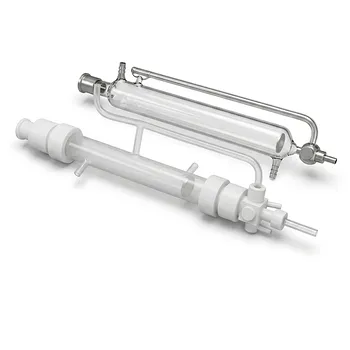
- High Purity PFA Chromatography Column with Collection Bottle Corrosion Resistant Fluoropolymer Filtration System for Trace Analysis
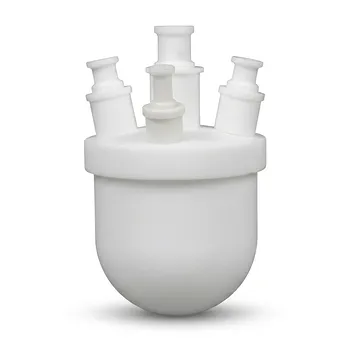
- Custom PTFE Flask 250ml High Purity Fluoropolymer Laboratory Vessel for Chemical Research
- High Purity PFA Chromatography Column Double Layer Constant Pressure Filter Column with Sieve Plate Acid Resistant Fluoropolymer Filtration System
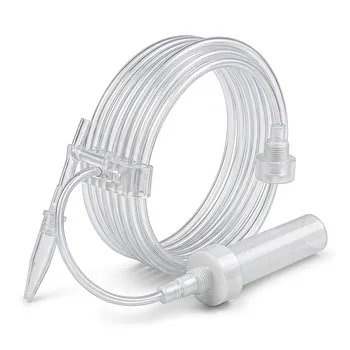
- Custom PFA Tubing 1/4 Inch High Purity Corrosion Resistant Fluoropolymer Tube with Welding and Machining Services
- High Purity PTFE Single Neck Reaction Flask Acid Resistant Customizable Fluoropolymer Laboratory Reactor
People Also Ask
- Why is the chemical stability of polymer endgroups critical when selecting melt-processible fluoropolymers like PFA for high-purity laboratory apparatus? Choose Stable Endgroups for Reliable Performance
- What are the characteristics of PFA material? A Guide to Its High-Performance Balance
- Why is Perfluoroalkoxy alkane (PFA) preferred over glass or stainless steel in pharmaceutical process development? Pure Yield
- Why is PFA superior for cleaning and preventing cross-contamination? The Gold Standard for Ultra-Trace Lab Hygiene
- What are the key properties of PFA (PerFluoroAlkoxy)? A Guide to Extreme Chemical and Thermal Resistance