Increasing fluorine content generally improves a fluoropolymer’s chemical, thermal, and electrical performance. As fluorine substitution rises, the strong carbon–fluorine bonds and highly shielded polymer backbone typically increase resistance to aggressive chemicals, heat, flames, weathering, and electrical conduction. At the same time, dielectric constant, dissipation factor, surface energy, and friction generally decrease, although some mechanical properties may decline slightly.
Higher fluorine content usually moves a polymer toward greater inertness, thermal endurance, electrical insulation, and non-stick performance. Fully fluorinated materials such as PTFE and PFA provide the strongest version of these benefits, but material selection must still account for mechanical loading, processing requirements, and service temperature.
Why Fluorine Changes Polymer Performance
The Role of the Carbon–Fluorine Bond
Fluorine forms one of the strongest bonds with carbon in organic polymer structures. When fluorine surrounds the polymer backbone, it helps shield the carbon chain from chemical attack, oxidation, heat, and environmental exposure.
This shielding effect explains why highly fluorinated polymers are difficult to dissolve, degrade, or react with under ordinary operating conditions.
Partial Versus Full Fluorination
The effect is not determined by fluorine content alone. The polymer’s molecular architecture, crystallinity, comonomers, processing history, and additives also influence its final properties.
Nevertheless, increasing fluorination commonly moves materials from partially fluorinated polymers toward the high chemical inertness and thermal endurance associated with perfluoropolymers such as PTFE and PFA.
How Chemical Performance Changes
Chemical and Solvent Resistance Increase
Higher fluorine content generally improves resistance to acids, bases, solvents, oxidizers, and other aggressive reagents. The fluorinated surface is less chemically accessible and less likely to participate in reactions with the surrounding environment.
Fully fluorinated polymers are therefore widely used in chemical handling, digestion vessels, valves, tubing, reagent storage, and high-purity laboratory components.
Solubility and Absorption Decrease
As fluorination increases, solvents become less capable of dissolving or swelling the polymer. The low surface energy also reduces adhesion and limits the tendency of liquids to wet, penetrate, or remain attached to the material.
This is especially valuable in trace analysis, where sample absorption, contamination, leaching, and carryover can compromise results.
Weathering and Photostability Improve
Higher fluorine content generally increases resistance to ultraviolet exposure, oxidation, and outdoor weathering. Fluorinated materials can retain their surface and chemical characteristics for longer periods than many hydrocarbon-based plastics.
The benefit is relevant to outdoor equipment and components exposed to changing temperature, sunlight, and atmospheric contaminants.
How Thermal Performance Changes
Thermal Stability Increases
Greater fluorination generally improves resistance to thermal degradation. The polymer can maintain its chemical integrity at temperatures that would accelerate oxidation, decomposition, or embrittlement in less fluorinated materials.
This makes highly fluorinated polymers suitable for demanding laboratory and industrial processes involving heated reagents or repeated thermal cycling.
Melting Temperature Generally Rises
Increasing fluorine content typically raises the polymer’s melting or processing temperature, although the exact value depends strongly on the polymer structure.
Among commonly used perfluoropolymers, the approximate thermal hierarchy is PTFE above PFA above FEP for melting temperature and thermal endurance. PFA is melt-processable, while PTFE generally requires specialized processing because it does not flow readily in the conventional melt-processing sense.
Flame Resistance Improves
Higher fluorine content generally reduces flammability and improves resistance to ignition and flame propagation. Fluorinated polymer structures are less prone to supporting combustion than many hydrocarbon plastics.
This property is useful where electrical insulation, chemical handling, and elevated temperatures occur together.
Continuous-Use Temperature Still Requires Verification
High fluorine content does not make every fluoropolymer interchangeable at every temperature. Grade-specific limits, mechanical load, pressure, exposure time, and thermal cycling must be considered.
For example, perfluoropolymers can support continuous service temperatures near 260°C in suitable applications, but the allowable temperature for a particular component may be lower when pressure, creep, or dimensional stability is important.
How Electrical Performance Changes
Volume and Surface Resistivity Increase
Higher fluorination generally increases both volume resistivity and surface resistivity. The material becomes less capable of allowing electrical charge to move through its bulk or across its surface.
This produces strong electrical insulation performance, which is one reason highly fluorinated polymers are used in wire insulation, high-purity fluid systems, analytical equipment, and electrical isolation components.
Dielectric Constant Decreases
The dielectric constant generally decreases as fluorine content increases. A lower dielectric constant means the material stores less electrical energy when exposed to an electric field.
This can reduce the material’s influence on signal transmission and electrical-field behavior in certain insulating applications.
Dissipation Factor Decreases
Higher fluorination also generally lowers the dissipation factor. Less electrical energy is converted into heat within the polymer during alternating-current operation.
The resulting combination of low dielectric constant, low dissipation factor, and high resistivity is valuable in high-frequency and high-performance insulation systems.
How Surface and Mechanical Properties Change
Friction and Surface Energy Decrease
Higher fluorine content generally lowers the coefficient of friction and surface energy. The resulting surface is smooth, non-stick, and resistant to wetting by many liquids.
These characteristics support low-force movement in valves, fittings, seals, sliding components, and fluid-transfer systems.
Fluid Transfer Becomes Smoother
Low surface energy reduces adhesion between the polymer and the fluid or contaminant. This can help limit residue retention and improve cleanability in tubing, flow paths, and laboratory vessels.
The effect is operational rather than purely chemical: the material not only resists reaction, but also makes it harder for substances to remain attached to the surface.
Some Mechanical Properties May Decline
Higher fluorination can slightly reduce certain mechanical strength characteristics, including cut-through resistance and, depending on the grade and test method, strength under specific loading conditions.
This does not make highly fluorinated polymers unsuitable for demanding equipment. It means that designers must evaluate creep, compressive loading, abrasion, impact, and dimensional stability rather than selecting solely by chemical resistance.
Understanding the Trade-offs
Chemical Inertness Versus Mechanical Load
PTFE and PFA can provide exceptional chemical purity and resistance, but they may not be the best choice for every load-bearing or wear-intensive component.
Where pressure, repeated movement, or edge loading is significant, the design may require appropriate wall thickness, reinforcement, support, or a different fluoropolymer grade.
Thermal Endurance Versus Processability
PTFE offers outstanding chemical and thermal performance but is difficult to process using conventional melt techniques. PFA is melt-processable and can provide high purity and chemical resistance, but its processing behavior and mechanical response differ from PTFE.
The best material is therefore determined by both service conditions and manufacturing method.
Low Friction Versus Grip and Retention
A low-friction surface is beneficial for sliding and fluid transfer, but it can reduce grip in interfaces that depend on friction. Seals, threaded connections, clamps, and mechanically retained parts must be designed around the material’s low surface energy and friction.
High Resistivity Versus Static Charge
High electrical resistivity is useful for insulation, but it can also allow static charge to accumulate. In applications involving flammable solvents, powders, or sensitive electronic systems, static-control requirements should be assessed separately.
Fluorine Content Versus Complete Performance
Fluorine content is a useful directional indicator, not a complete material specification. Two polymers with similar fluorine levels can behave differently because of differences in backbone structure, crystallinity, molecular weight, fillers, and processing.
Testing against the actual chemical, temperature, pressure, and electrical conditions remains necessary for critical equipment.
Making the Right Choice for Your Goal
Select the material according to the property that controls failure in the intended application.
- If your primary focus is chemical inertness and high-purity handling: Favor highly fluorinated or fully fluorinated materials such as PTFE and PFA, especially when exposure includes aggressive acids, solvents, or trace-sensitive samples.
- If your primary focus is elevated-temperature service: Compare the specific melting point, continuous-use temperature, creep behavior, and thermal-cycling performance of the available grades rather than relying on fluorine content alone.
- If your primary focus is electrical insulation: Prioritize high volume and surface resistivity together with low dielectric constant and dissipation factor, while also evaluating static-charge control.
- If your primary focus is low-friction fluid handling: Use highly fluorinated materials for their non-stick, low-adhesion, and smooth-sliding surfaces, but verify wear and sealing performance under the actual load.
- If your primary focus is structural strength or abrasion resistance: Treat fluorine content as only one selection factor and compare mechanical strength, cut-through resistance, creep, reinforcement, and wear data.
Increasing fluorine content generally delivers greater chemical inertness, thermal endurance, electrical insulation, and non-stick behavior, provided the resulting mechanical and processing trade-offs match the application.
Summary Table:
| Property | Effect of Increased Fluorine Content |
|---|---|
| Chemical & Solvent Resistance | Increases significantly, improving resistance to acids, bases, and solvents. |
| Solubility & Absorption | Decreases, reducing swelling and contamination risk. |
| Thermal Stability | Increases, with higher melting points and improved flame resistance. |
| Electrical Resistivity | Increases, providing better insulation. |
| Dielectric Constant | Decreases, reducing energy storage and signal interference. |
| Dissipation Factor | Decreases, minimizing heat generation in AC applications. |
| Friction & Surface Energy | Decreases, enhancing non-stick and low-friction properties. |
| Mechanical Strength | May slightly decrease, affecting cut-through and creep resistance. |
Enhance your lab's performance with high-purity PTFE and PFA components from KINTEK. Our advanced fluoropolymer products offer superior chemical resistance, thermal stability, and electrical insulation, ideal for demanding industrial and research applications. Whether you need custom-machined parts, high-purity labware, or complete fluid handling systems, our team is ready to provide tailored solutions. Contact us now to discuss your requirements and benefit from our expertise and reliable supply.
Related Products
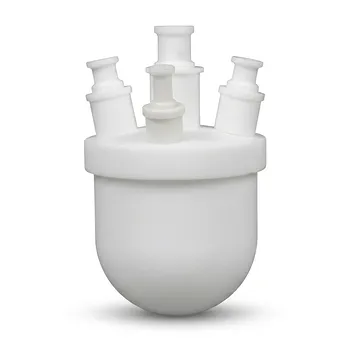
- Custom PTFE Flask 250ml High Purity Fluoropolymer Laboratory Vessel for Chemical Research
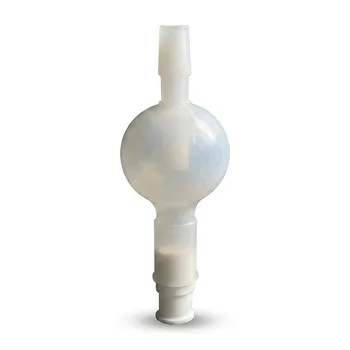
- High Purity PFA Chromatography Column with Collection Bottle Corrosion Resistant Fluoropolymer Filtration System for Trace Analysis
- Custom PTFE Reaction Tank Corrosion Resistant Fluoropolymer Chemical Processing Barrel 10L 20L 30L
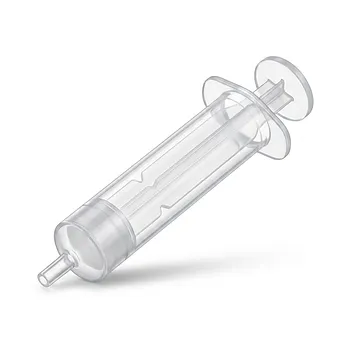
- Corrosion Resistant PFA Syringe Translucent Visual Fluoropolymer Labware 10ml Chemical Handling Tool
- Custom PFA Tubing 1/4 Inch High Purity Corrosion Resistant Fluoropolymer Tube with Welding and Machining Services
People Also Ask
- What are the key steps for structural integrity in molded PTFE lab reaction vessels? Master fine powder processing.
- Why Are High-Purity Fluoropolymer Vessels and Tubing Critical for Trace Analysis? Prevent Contamination Reliably
- Why do PTFE fluoropolymer laboratory vessels and containers exhibit superior chemical resistance against harsh solvents and corrosive acids compared to standard plastic labware? Discover the molecular secrets
- How do choice of solvent and chain transfer activity affect molecular weight during vinylidene fluoride (VDF) radical polymerization? Learn Key Factors for High-MW PVDF
- Why are fluoropolymer reaction vessels essential for SnO2/rGO synthesis? The Key to High-Performance Composites