Fluorocarbon monolayer passivation stabilizes reactive aluminum nanoparticles by chemically binding to exposed aluminum and physically shielding it from oxygen, moisture, and mechanical triggers. Perfluoroalkylcarboxylic acids form a self-assembled monolayer whose carboxylate groups attach to the bare metal surface, while the fluorinated chains create a chemically resistant outer shell. This suppresses uncontrolled surface oxidation, reduces pyrophoric behavior, and preserves much of the aluminum’s energetic potential for fluoropolymer formulations.
The key mechanism is controlled surface protection: a carboxylate-bound fluorocarbon layer limits environmental access to reactive aluminum while remaining compatible with fluorinated binder systems. It improves air stability and handling safety without converting the nanoparticle into an inert, fully oxidized material.
Why Bare Aluminum Nanoparticles Are Difficult to Use
Fresh aluminum is highly reactive
Unpassivated aluminum nanoparticles expose a large amount of chemically active metal because of their high surface-area-to-volume ratio. Contact with oxygen or moisture can initiate rapid oxidation and, under some conditions, pyrophoric behavior.
The problem is therefore concentrated at the particle surface, where environmental reactions begin.
Oxidation protects the particle but reduces performance
Aluminum naturally forms an oxide layer in air. That oxide can provide some protection, but it is comparatively unreactive and acts as a barrier between the metallic aluminum and the surrounding formulation.
For energetic applications, excessive or uncontrolled oxide formation reduces the fraction of aluminum available for the intended reaction.
How the Fluorocarbon Monolayer Works
Carboxylate groups anchor the coating
Perfluoroalkylcarboxylic acids contain a carboxylic acid head group and a fluorinated hydrocarbon tail. The head groups bind to exposed aluminum through carboxylate–metal interactions, creating a surface-attached molecular layer rather than a loosely deposited powder coating.
This chemical attachment helps the treatment remain associated with the nanoparticle during subsequent formulation and handling.
The fluorinated chains form an environmental barrier
Once the molecules are anchored, their perfluoroalkyl chains extend outward from the surface. The resulting shell limits direct access by oxygen, water, and other reactive species.
The coating does not need to eliminate every possible surface reaction. Its practical function is to reduce the rate and probability of uncontrolled reactions enough to make the particles air-stable under the intended handling conditions.
Surface reactions become more controlled
Passivation changes the aluminum surface from an exposed reactive interface into a chemically moderated one. This reduces spontaneous oxidation and suppresses the rapid reactions responsible for pyrophoric behavior.
The distinction matters: passivation is surface stabilization, not complete chemical isolation or permanent elimination of aluminum reactivity.
Why This Matters in Fluoropolymer Formulations
The coating is chemically compatible with fluorinated systems
A fluorocarbon outer surface is well suited to formulations containing fluoropolymers such as PTFE- or PFA-related materials. Its chemical inertness helps reduce unwanted interactions between the treated aluminum and the surrounding binder environment.
Compatibility also supports more uniform incorporation than would be expected from highly reactive, untreated nanoparticles.
Metallic aluminum remains available for energetic use
The objective is to protect the aluminum without consuming it through uncontrolled oxidation. A thin molecular passivation layer can provide environmental stability while preserving the underlying metallic core and its energetic performance.
The result is a compromise between reactivity when deliberately formulated and stability during storage and handling.
Dispersion and handling become more practical
Surface passivation can make the particles less prone to reacting during processing. In a fluoropolymer formulation, this helps maintain the intended composition and reduces losses caused by premature surface chemistry.
The treatment should still be viewed as one part of formulation control. Particle size, loading, mixing conditions, moisture control, and binder chemistry remain important.
How the Shell Reduces Handling Sensitivity
The monolayer provides mechanical cushioning
The fluorocarbon shell is not only a chemical barrier. It also creates a thin compliant interface around each nanoparticle, which can reduce direct particle-to-particle contact and cushion some mechanical interactions.
That can lower impact sensitivity during routine handling compared with untreated material.
Reduced sensitivity does not mean ordinary-material safety
Nanostructured aluminum remains a potentially energetic material even after passivation. The coating reduces specific hazards; it does not remove the need for appropriate controls against ignition, impact, friction, static discharge, and incompatible chemicals.
Safety conclusions must be based on measured behavior for the actual particle batch and formulation.
Understanding the Trade-offs
Passivation can reduce useful surface reactivity
The same barrier that prevents unwanted oxidation can also slow the intended reaction if it is too dense, damaged, or chemically incompatible with the formulation. The coating therefore has to balance protection with access to the aluminum core during use.
Surface coverage may be uneven
Nanoparticle surfaces can contain oxide patches, defects, adsorbed contaminants, or different crystallographic sites. These variations can produce incomplete or nonuniform monolayer coverage.
Unprotected regions may remain reactive, while excessive treatment can alter formulation behavior.
“Air-stable” is condition-dependent
Air stability describes improved resistance under defined environmental and handling conditions. It should not be interpreted as immunity to prolonged humidity, elevated temperature, strong oxidizers, abrasion, or coating damage.
Claims that passivation completely eliminates pyrophoricity are too broad unless supported by testing across the relevant conditions.
Fluorinated chemicals require compatible equipment
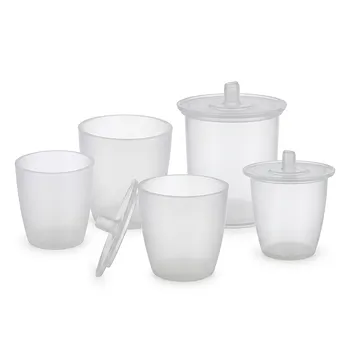
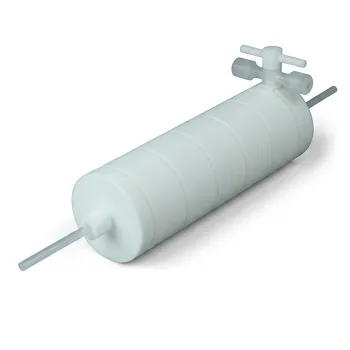
Aggressive fluorinated reagents can attack unsuitable containers, seals, or processing surfaces. Chemical-inert fluoropolymer labware, including PTFE or PFA components, helps prevent equipment degradation and reduces the risk of introducing metal oxide or other contaminants.
Equipment compatibility is part of process control, not merely a convenience.
Making the Right Choice for Your Goal
The appropriate passivation strategy depends on whether the priority is storage stability, formulation compatibility, energetic performance, or handling safety.
- If your primary focus is air stability: Use a chemically bonded fluorocarbon monolayer to limit oxygen and moisture access to exposed aluminum surfaces.
- If your primary focus is energetic performance: Keep the passivation layer thin and controlled enough to protect the metallic core without creating an excessive reaction barrier.
- If your primary focus is fluoropolymer compatibility: Select a fluorinated surface treatment and chemically inert PTFE/PFA contact materials to minimize incompatibility and contamination.
- If your primary focus is handling safety: Treat the fluorocarbon shell as a risk-reduction measure that can cushion particles and suppress pyrophoric behavior, while retaining full energetic-material controls.
A well-designed fluorocarbon monolayer makes reactive aluminum nanoparticles more manageable by controlling surface chemistry without sacrificing the metallic core that provides their energetic value.
Summary Table:
| Mechanism | Function | Benefit |
|---|---|---|
| Carboxylate anchoring | Chemical bond to aluminum surface | Strong attachment, durable coating |
| Fluorinated chain barrier | Shields from oxygen/moisture | Reduces oxidation and pyrophoricity |
| Surface passivation | Controlled reactivity | Preserves metallic core for energetic use |
| Mechanical cushioning | Compliant shell reduces particle contact | Lowers handling sensitivity |
| Chemical compatibility | Fluorinated outer layer | Suitable for PTFE/PFA systems |
Enhance the stability and safety of your aluminum nanoparticle formulations with KINTEK's high-performance PTFE and PFA labware. Our fluoropolymer products ensure chemical compatibility and contamination-free processing. Contact us today to find the right solution for your needs—contact our experts and elevate your research.
Related Products
- PTFE PFA Vacuum Filtration System Corrosion Resistant Customizable Shatterproof Laboratory Device
- High Purity PFA Crucible and Corrosion Resistant PTFE Beaker for Trace Analysis and Custom Laboratory Applications
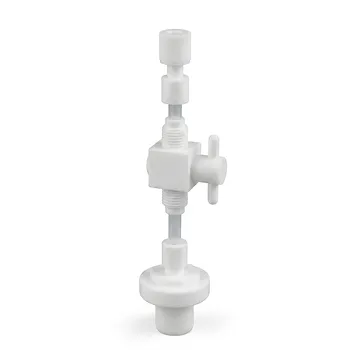
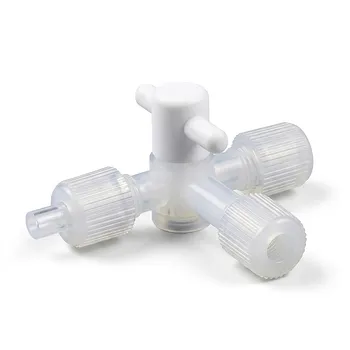
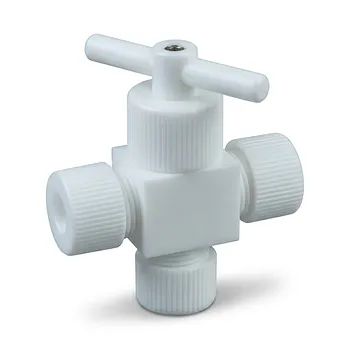
- High Purity PFA PTFE Flare Stop Valves Customizable 2-Way 3-Way Reducing Fluoropolymer Fluid Control Solutions
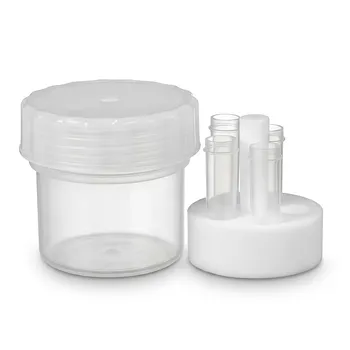
- Corrosion Resistant PTFE Support with PFA Transparent Reaction Tank and High Purity PFA Sampling Tube for Trace Analysis
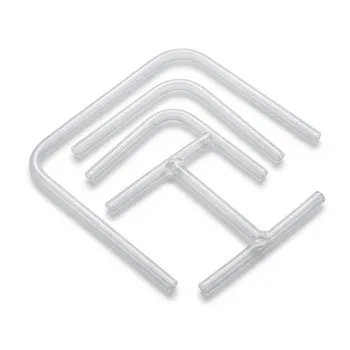
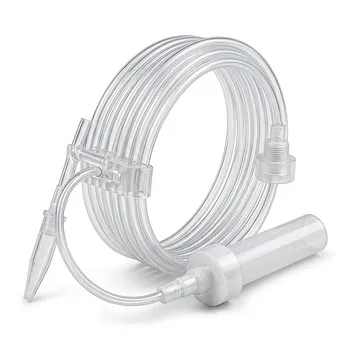
- High Purity PFA Coiled Tubing Custom PTFE Machining PFA Welding and Precision Bending Solutions
People Also Ask
- What makes PTFE filtration systems advantageous for industrial and scientific use? Unmatched Chemical & Thermal Stability
- How does the hydrophobicity of PTFE filters benefit their use? Ensure Uninterrupted Gas Flow and Solvent Filtration
- What temperature resistance do PTFE filters offer? Unmatched Thermal Stability from -200°C to +260°C
- Which chemicals are fully compatible with PTFE filters? Discover Unmatched Chemical Resistance
- What sizes and pore options are available for PTFE filters? Choose the Right Filter for Your Application