Knowledge PTFE(Teflon) Labware How does direct chemical functionalization at the particle surface affect the mechanical strength of fluoropolymer matrix composites compared to conventional fluoropolymer binders like PTFE? Achieve 2.6x compressive strength
Author avatar

Tech Team · Kintek

Updated 3 months ago

How does direct chemical functionalization at the particle surface affect the mechanical strength of fluoropolymer matrix composites compared to conventional fluoropolymer binders like PTFE? Achieve 2.6x compressive strength


Direct chemical functionalization strengthens fluoropolymer matrix composites by converting the particle–polymer interface from a weak physical contact into a chemically bonded load-transfer network. In the referenced system, functionalized metal nanoparticles increased peak compressive strength from 11.0 MPa for the neat polymer to 28.5 MPa at particle loadings up to 60 wt%—more than a twofold improvement. Conventional PTFE-based binders generally do not form equivalent direct bonds with embedded particles, leaving interfacial gaps that reduce reinforcement efficiency.

The key advantage is interfacial load transfer: chemically reactive groups on the particle surface bond directly with the fluoropolymer matrix, improving structural integrity and compressive strength while preserving the composite’s intended chemical reactivity.

Why Conventional PTFE Interfaces Are Mechanically Weak

PTFE resists direct adhesion

PTFE has extremely low surface energy, poor wettability, and strong carbon–fluorine bonds. These properties provide excellent chemical resistance but make it difficult for the polymer to chemically bond with metal particles or other reinforcement phases.

Physical contact is not the same as reinforcement

In a conventional PTFE or Viton blend, particles may be surrounded by polymer without forming strong particle-to-matrix bonds. Microscopy evidence of interfacial gaps indicates that the polymer can separate locally from the particle under applied stress.

Interfacial gaps create failure sites

An unbonded interface acts as a stress concentrator. Instead of transferring load efficiently into the rigid particle, applied compression can produce local debonding, void growth, or particle pull-out.

This limits how much mechanical benefit can be obtained from adding otherwise strong particles.

How Direct Functionalization Changes the Interface

Reactive groups create direct chemical bonding

The metal nanoparticles are first functionalized with reactive monomers before composite formation. These surface-bound reactive species can chemically bond with the fluoropolymer matrix during processing or polymer formation.

The result is a more integrated interface than the weak physical adhesion typically associated with untreated PTFE systems.

The interface becomes a load-transfer pathway

When the matrix and particle are chemically connected, stress can be transferred from the relatively compliant fluoropolymer into the stiffer metal phase. The particles therefore contribute more effectively to the composite’s resistance to deformation.

This is the central mechanical difference between bonded reinforcement and simply dispersing particles in a fluoropolymer binder.

Interfacial gaps are reduced or eliminated

The referenced TEM observations showed that direct functionalization eliminated the interfacial gaps seen in conventional systems. Removing these gaps improves structural continuity and reduces the number of locations where cracks or debonding can initiate.

Resulting Mechanical Improvement

Compressive strength increases substantially

Compression testing showed peak strength increasing from 11.0 MPa for the neat polymer to 28.5 MPa with functionalized metal nanoparticle loading up to 60 wt%.

That represents an increase of approximately 2.6 times, or more than a doubling of the neat polymer’s peak compressive strength.

Higher loading becomes mechanically useful

In a poorly bonded system, increasing particle content can introduce defects faster than it adds reinforcement. With direct chemical bonding, higher particle loading can instead produce a continuous, mechanically integrated reinforcement structure.

The functionalized interface is therefore what allows a high particle fraction to improve strength rather than simply increase brittleness or interfacial failure.

Structural integrity improves without eliminating reactivity

The approach strengthens the composite while retaining the material’s intended chemical functionality. This is important where the fluoropolymer composite must combine mechanical durability with chemical activity or environmental resistance.

Direct Functionalization Versus Conventional PTFE Binders

Conventional PTFE: primarily physical adhesion

Untreated PTFE particles or matrices typically rely on physical contact, friction, limited mechanical interlocking, or processing-induced adhesion. Because PTFE is chemically inert and poorly wetting, these mechanisms are often insufficient for efficient stress transfer.

Functionalized interface: chemically integrated reinforcement

Functionalized nanoparticles provide reactive sites that connect the particle surface directly to the matrix. This reduces debonding and allows the particle phase to carry a greater share of the applied load.

Surface treatments address a different problem

Plasma treatment, sodium etching, roughening, and related methods can improve adhesion to a fluoropolymer surface. They are useful for bonding PTFE or PFA to metals, glass, or other substrates, but they generally modify the existing surface after polymer formation.

Direct particle functionalization is more targeted: it builds chemical compatibility at the particle–matrix interface throughout the composite, not only at an external surface or bonded assembly.

Understanding the Trade-offs

The strength improvement is system-specific

The reported increase from 11.0 to 28.5 MPa demonstrates the effect in the referenced material system. It should not be treated as a universal value for every fluoropolymer, particle chemistry, functional group, or processing condition.

High particle loading can increase processing demands

Loadings approaching 60 wt% may increase viscosity, complicate dispersion, and make void-free processing more difficult. Functionalization improves the interface, but it does not automatically prevent particle agglomeration or processing defects.

Chemical bonding must be properly matched

The reactive monomer, particle surface chemistry, fluoropolymer composition, and processing conditions must be compatible. Poorly matched chemistry may produce incomplete bonding or leave unreacted species that weaken the composite.

Strength is not the only mechanical property

Improved compressive strength does not necessarily mean equivalent improvements in tensile strength, fracture toughness, fatigue life, or impact resistance. A complete evaluation should measure the properties relevant to the intended service conditions.

Making the Right Choice for Your Goal

The appropriate interface strategy depends on whether the priority is bulk composite strength, surface adhesion, or processing simplicity.

  • If your primary focus is maximum compressive strength: Use direct chemical functionalization of the particle surface to maximize particle–matrix bonding and load transfer.
  • If your primary focus is bonding PTFE to a metal, glass, or polymer substrate: Use plasma treatment, chemical etching, roughening, or another validated surface-preparation method.
  • If your primary focus is chemical resistance with modest reinforcement: A conventional PTFE binder may be adequate, but expect weaker interfacial load transfer and greater sensitivity to gaps or debonding.
  • If your primary focus is high particle loading: Optimize functional-group chemistry, dispersion, and processing together rather than relying on functionalization alone.

Direct chemical functionalization makes the particle interface an active structural component, which is why it can deliver substantially higher mechanical strength than conventional unbonded PTFE-based composite systems.

Summary Table:

Aspect Conventional PTFE Binder Direct Chemical Functionalization
Interface Type Physical contact, weak adhesion Chemical bonding, integrated interface
Load Transfer Poor, with interfacial gaps Efficient, through chemical bonds
Compressive Strength 11.0 MPa (neat) 28.5 MPa (at 60 wt% loading)
Reinforcement Efficiency Limited by gaps and debonding High, particles contribute effectively
Processing Demands Lower Higher due to functionalization and loading
Suitability General chemical resistance High-strength, high-loading composites

Ready to strengthen your fluoropolymer composites? At KINTEK, we specialize in high-performance PTFE and PFA lab supplies and custom CNC machining. Whether you need advanced composite components or bespoke lab setups, our expertise ensures superior mechanical properties. Contact us today to discuss your project and get the best solutions for your high-strength, chemically resistant needs.

Related Products

People Also Ask

Related Products

Custom PTFE Filtration System Acid Resistant Chemical Semiconductor Fluoropolymer Filter Assembly

Custom PTFE Filtration System Acid Resistant Chemical Semiconductor Fluoropolymer Filter Assembly

Custom-engineered PTFE filtration systems designed for extreme chemical resistance in semiconductor and heavy chemical industries. These bespoke fluoropolymer units offer universal acid compatibility, zero-contamination performance, and exceptional durability for high-purity fluid processing and corrosive media handling at scale.

Custom PTFE Flask 250ml High Purity Fluoropolymer Laboratory Vessel for Chemical Research

Custom PTFE Flask 250ml High Purity Fluoropolymer Laboratory Vessel for Chemical Research

Engineered for extreme chemical resistance, this custom PTFE flask 250ml provides a high-purity environment for corrosive reactions. Featuring a leak-proof design and optional stirring paddle compatibility, it ensures reliable performance in demanding laboratory and industrial applications. Ideal for precision chemistry.

High Purity PFA Chromatography Column with Collection Bottle Corrosion Resistant Fluoropolymer Filtration System for Trace Analysis

High Purity PFA Chromatography Column with Collection Bottle Corrosion Resistant Fluoropolymer Filtration System for Trace Analysis

High-performance PFA chromatography column and collection bottle system offers exceptional chemical resistance and ultra-low metal ion leaching for trace analysis. Durable corrosion-resistant fluoropolymer construction serves as a premium glass alternative for demanding laboratory filtration and high-purity purification.

Custom PFA Tubing 1/4 Inch High Purity Corrosion Resistant Fluoropolymer Tube with Welding and Machining Services

Custom PFA Tubing 1/4 Inch High Purity Corrosion Resistant Fluoropolymer Tube with Welding and Machining Services

Precision 1/4 inch PFA tubing offering universal chemical resistance and high transparency. Customizable through expert welding and mold opening, these corrosion-resistant tubes ensure reliable fluid transfer in semiconductor and pharmaceutical environments for demanding industrial applications.

Custom PTFE Reaction Tank Corrosion Resistant Fluoropolymer Chemical Processing Barrel 10L 20L 30L

Custom PTFE Reaction Tank Corrosion Resistant Fluoropolymer Chemical Processing Barrel 10L 20L 30L

High-performance custom PTFE reaction tanks provide extreme corrosion resistance and chemical inertness for fluorochemical processing. Available in 10L, 20L, and 30L capacities, these bespoke laboratory barrels ensure pure environments for sensitive industrial applications and demanding laboratory workflows with custom configurations.

Custom PTFE Insulating Gaskets and Corrosion Resistant Fluoropolymer Seals for Industrial Electrical Applications

Custom PTFE Insulating Gaskets and Corrosion Resistant Fluoropolymer Seals for Industrial Electrical Applications

Premium custom PTFE insulating gaskets offer exceptional corrosion resistance, superior dielectric strength, and wide temperature stability. Ideal for demanding industrial environments, these anti-aging fluoropolymer components ensure reliable electrical isolation and long-term sealing performance in extreme conditions for procurement.

Custom PTFE Condenser Tube 100ml Serpentine and Straight Fluoropolymer Laboratory Heat Exchanger with Flask Adapters

Custom PTFE Condenser Tube 100ml Serpentine and Straight Fluoropolymer Laboratory Heat Exchanger with Flask Adapters

Engineered for extreme chemical resistance, this custom 100ml PTFE condenser tube features straight or serpentine designs with integrated adapters for laboratory flasks. Ideal for high-purity trace analysis and corrosive solvent recovery in demanding industrial research environments worldwide.

Custom PFA Pear Shaped Flask High Purity Corrosion Resistant Labware Custom Molded Fluoropolymer Flask Glass Replacement Solution

Custom PFA Pear Shaped Flask High Purity Corrosion Resistant Labware Custom Molded Fluoropolymer Flask Glass Replacement Solution

Engineered for high-purity trace analysis, this custom PFA pear-shaped flask offers exceptional chemical resistance and low leaching. Replace fragile glass with durable precision-molded fluoropolymer solutions. Our custom fabrication ensures exact specifications for every critical process.

High Temperature Resistant PTFE Thermal Insulation Board Corrosion Resistant Metal Free Fluoropolymer Stand for Ultra Clean Laboratories

High Temperature Resistant PTFE Thermal Insulation Board Corrosion Resistant Metal Free Fluoropolymer Stand for Ultra Clean Laboratories

Advanced custom PTFE thermal insulation boards and metal-free stands designed for ultra-clean laboratory environments. These high-purity fluoropolymer solutions offer exceptional corrosion resistance and thermal stability for demanding trace analysis and semiconductor manufacturing processes.

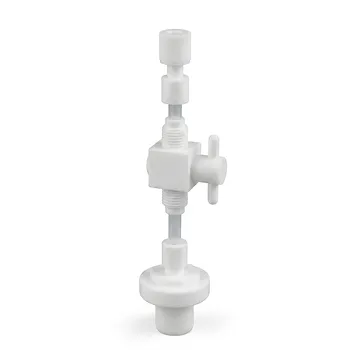
High Purity PFA PTFE Flare Stop Valves Customizable 2-Way 3-Way Reducing Fluoropolymer Fluid Control Solutions

High Purity PFA PTFE Flare Stop Valves Customizable 2-Way 3-Way Reducing Fluoropolymer Fluid Control Solutions

Engineered for semiconductor and chemical processing, these customizable PFA flare stop valves offer zero-leakage performance and high-purity fluid handling. Available in 2-way and 3-way configurations, they ensure zero heavy metal leaching for critical laboratory and industrial processes.

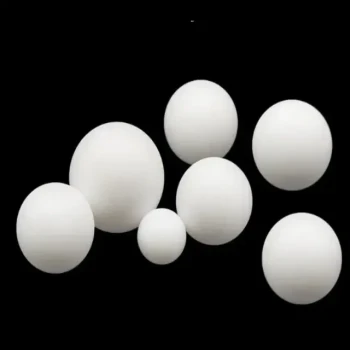
Custom PTFE Teflon Balls for Advanced Industrial Applications

Custom PTFE Teflon Balls for Advanced Industrial Applications

Precision PTFE balls for chemical, medical & industrial use. High-performance, low-friction, chemical-resistant. Custom sizes available. Get a quote today!

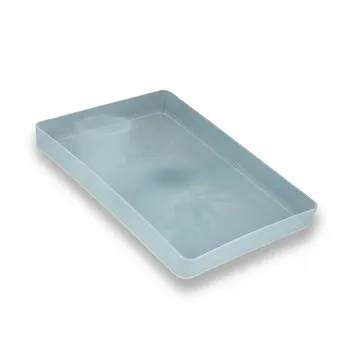
Customizable PFA Square Tray Corrosion Resistant High Temperature Large Petri Dish Electrolytic Cell

Customizable PFA Square Tray Corrosion Resistant High Temperature Large Petri Dish Electrolytic Cell

Acquire premium customizable PFA square trays engineered for extreme chemical resistance and high-temperature stability. Ideal for electrolytic cells and large-scale Petri applications, these precision-machined fluoropolymer solutions ensure unmatched purity and long-term durability in demanding laboratory research environments.

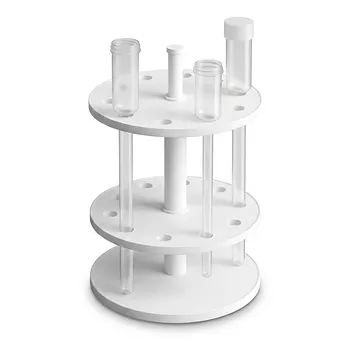
Custom PFA Micro Column Rack and PTFE Machined Storage Solutions for Trace Analysis

Custom PFA Micro Column Rack and PTFE Machined Storage Solutions for Trace Analysis

Engineered for high-purity laboratory environments, this custom PFA micro column rack and PTFE machined solution provides unmatched corrosion resistance and ultra-low metal background levels for critical trace analysis, sample preparation, and aggressive chemical storage applications.

High Purity PFA Coiled Tubing Custom PTFE Machining PFA Welding and Precision Bending Solutions

High Purity PFA Coiled Tubing Custom PTFE Machining PFA Welding and Precision Bending Solutions

Premium PFA coiled tubing and custom fluoropolymer fabrication solutions for semiconductor and chemical processing. Expert CNC machining, precision welding, and tailored bending services ensure high-purity fluid transfer and zero-leakage performance in corrosive environments. Contact us for bespoke industrial specifications today.

Custom Corrosion Resistant PFA PTFE Multi Neck Laboratory Reaction Flask GL Standard Mouth Fluoropolymer Flasks

Custom Corrosion Resistant PFA PTFE Multi Neck Laboratory Reaction Flask GL Standard Mouth Fluoropolymer Flasks

High-purity PFA multi-neck flasks offer ultimate chemical resistance for trace analysis and corrosive chemical processing. Featuring custom 2, 3, or 4 neck configurations and GL standard joints, these vessels are precision-machined for demanding industrial laboratory environments.

High Temperature Resistant Thickened PTFE Beaker 2000ml for Chemical Processing and Laboratory Trace Analysis

High Temperature Resistant Thickened PTFE Beaker 2000ml for Chemical Processing and Laboratory Trace Analysis

This thickened 2000ml PTFE beaker is engineered for high-temperature chemical resistance, withstanding hot plate heating up to 200°C without deformation. Our custom fluoropolymer vessels provide exceptional durability for demanding laboratory trace analysis and corrosive fluid processing applications.

PTFE Distillation Condensation Apparatus High Temperature Hydrofluoric Acid Resistant Fluorination Reaction Flask

PTFE Distillation Condensation Apparatus High Temperature Hydrofluoric Acid Resistant Fluorination Reaction Flask

Premium PTFE distillation condensation apparatus engineered for extreme chemical resistance and high-temperature fluorination processes. Fully customizable configurations ensure superior performance in hydrofluoric acid environments and ultra-pure trace analysis applications for industrial and laboratory procurement.

PFA Eggplant Flask Custom Molded Pear Shaped Laboratory Flask Corrosion Resistant Glass Alternative

PFA Eggplant Flask Custom Molded Pear Shaped Laboratory Flask Corrosion Resistant Glass Alternative

High-purity PFA eggplant flasks offer exceptional chemical resistance and ultra-low metal leaching for trace analysis. These custom-molded fluoropolymer pear-shaped flasks provide a durable, non-contaminating, and high-performance alternative to traditional glass in demanding modern semiconductor and chemical laboratory environments.

Large Capacity PTFE Reaction Flask 20L Custom Multi Neck Laboratory Boiling Flask Fluoropolymer Chemical Processing Vessel

Large Capacity PTFE Reaction Flask 20L Custom Multi Neck Laboratory Boiling Flask Fluoropolymer Chemical Processing Vessel

Optimized for extreme chemical resistance, this customizable 20L PTFE flask supports multi-neck configurations for complex laboratory reactions. Engineered for high-purity trace analysis and corrosive chemical processing, it ensures leak-free performance and exceptional durability in demanding industrial research environments.

Custom PTFE Petri Dish 200mm High Purity Corrosion Resistant Low Background Laboratory Ware

Custom PTFE Petri Dish 200mm High Purity Corrosion Resistant Low Background Laboratory Ware

Procure custom 200mm PTFE petri dishes designed for high-purity trace analysis. These corrosion-resistant units offer ultra-low background levels and zero leaching, ensuring sample integrity in demanding laboratory environments. Contact our engineering team for bespoke fluoropolymer fabrication services today for quotes.


Leave Your Message