Evaluating the long-term cycling stability of composite electrode materials requires a battery testing system to act as both a precision controller and a high-resolution data logger. By automating thousands of charge-discharge cycles under strictly defined electrical parameters, these systems quantify the material's ability to maintain its electrochemical integrity over time.
Core Takeaway: A battery testing system provides the empirical evidence needed to verify durability by correlating precise galvanostatic control with real-time capacity retention data. It transforms the physical degradation of composite materials into a measurable decay rate, enabling researchers to validate structural stability and chemical efficiency.
Precision Control and Data Acquisition
Automated Galvanostatic Cycling
The system manages the core evaluation process by performing "galvanostatic" charge-discharge cycles, where it applies a constant current to the electrode. This automation allows for the testing of materials over thousands of cycles without manual intervention, which is essential for determining if a composite can survive real-world usage.
High-Sensitivity Monitoring
High-precision voltage and current sensors detect minute fluctuations in performance that might indicate internal material failure. By recording these metrics at high frequencies, the system can identify the exact point where a composite electrode begins to lose its initial capacitance or experience structural breakdown.
Rate Capability Mapping
Beyond long-term stability at a single speed, these systems test the material at various "C-rates" (from 0.1 C to 2 C). This reveals how the composite handles rapid energy transfer, which is a critical indicator of its long-term robustness under high-stress conditions.
The Role of the Testing Fixture
Minimizing Contact Resistance
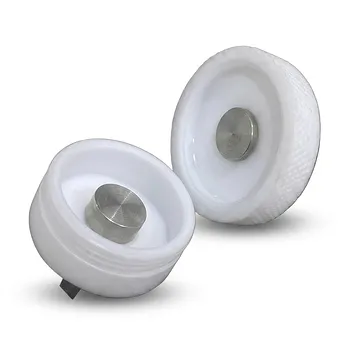
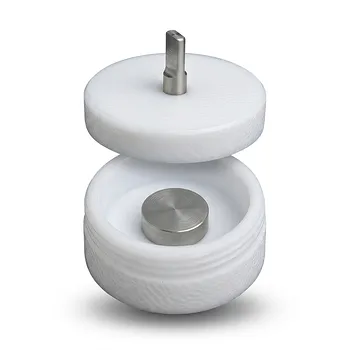
The battery testing system is often integrated with specialized fixtures that ensure tight, consistent physical contact between the electrode, catalyst layer, and membrane. Stable mechanical pressure is vital to minimize ohmic contact resistance, ensuring that the recorded data reflects the material's properties rather than poor electrical connections.
Environmental Sealing and Leakage Prevention
Long-term tests—sometimes exceeding hundreds or thousands of hours—require a fixture that prevents electrolyte leakage and evaporation. For flow batteries or composite systems using volatile electrolytes, the fixture maintains a sealed reaction vessel, ensuring the chemical environment remains constant throughout the stability trial.
Uniform Electrolyte Distribution
In advanced composite testing, such as flow batteries, the fixture includes integrated channels to ensure the electrolyte flows uniformly over the electrode surface. This uniformity is necessary to ensure that the entire surface of the composite material is being evaluated equally, preventing localized degradation that could skew stability data.
Understanding the Trade-offs and Pitfalls
Mechanical vs. Electrochemical Degradation
One common pitfall is failing to distinguish between the degradation of the composite material itself and the failure of the test fixture. If the fixture loses pressure over time, the resulting "capacity decay" may be a mechanical artifact rather than a failure of the electrode chemistry.
The Impact of Current Density
While high-current testing (acceleration) provides faster results, it may mask certain degradation mechanisms, such as the polysulfide shuttle effect, that are more prominent during slower cycles. Relying solely on accelerated testing can lead to an overestimation of a material's practical lifespan in low-drain applications.
Data Overload and Signal Noise
The high sensitivity of modern systems can sometimes capture electrical noise that looks like material instability. Accurate evaluation requires careful calibration of the testing environment to ensure that "jitter" in the voltage curve is a reflection of the composite’s behavior and not external electromagnetic interference.
How to Apply This to Your Research
Making the Right Choice for Your Goal
To get the most out of your battery testing system, align your testing parameters with the specific failure modes of your composite material.
- If your primary focus is material durability: Configure the system for long-term galvanostatic cycling (3000+ cycles) to calculate an accurate capacity retention percentage.
- If your primary focus is chemical efficiency: Monitor the Faraday and coulombic efficiency closely to detect active material crossover or parasitic side reactions.
- If your primary focus is high-power performance: Utilize multi-rate testing (from 0.1 C up to 5 C) to identify the threshold where the composite structure begins to fail under kinetic stress.
By leveraging high-precision control and stable fixture design, you can transform raw electrochemical data into a definitive assessment of an electrode's long-term viability.
Summary Table:
| Feature | Function in Stability Evaluation | Key Research Benefit |
|---|---|---|
| Galvanostatic Cycling | Automates thousands of charge-discharge cycles | Quantifies capacity retention and durability. |
| High-Precision Sensors | Monitors minute voltage/current fluctuations | Identifies early-stage structural or chemical failure. |
| Rate Capability Mapping | Tests material across various C-rates | Evaluates robustness under high-stress conditions. |
| Specialized Fixtures | Ensures uniform pressure and environmental sealing | Eliminates mechanical artifacts and ohmic resistance. |
Elevate Your Battery Research with KINTEK’s Precision Fluoropolymer Solutions
Precise data in long-term cycling stability depends on the integrity of your testing environment. KINTEK provides the high-performance hardware required to eliminate experimental variables. From high-purity PTFE/PFA labware (beakers, reagent bottles, and digestion tubes) that prevent contamination, to advanced battery testing fixtures, electrochemical cells, and hydrothermal synthesis liners, we manufacture the critical components your research demands.
Whether you need standard consumables like stirring bars and O-rings or bespoke laboratory setups via our end-to-end custom CNC fabrication, KINTEK delivers unmatched chemical resistance and precision. Ensure your composite material evaluations are backed by the world's finest fluoropolymer engineering.
Ready to optimize your lab setup? Contact us today to discuss your custom requirements!
References
- Yue Li, Xiaojuan Jin. Hydrothermal fabrication of reduced graphene oxide/activated carbon/MnO<sub>2</sub> hybrids with excellent electrochemical performance for supercapacitors. DOI: 10.1039/c7ra07056j
This article is also based on technical information from Kintek Knowledge Base .
Related Products
- Corrosion Resistant PTFE Coin Cell Battery Testing Clamps and Acid Proof Custom Fluoropolymer Battery Fixtures
- Acid Resistant PTFE Button Cell Battery Test Fixture Customizable Machining High Purity Electrochemical Testing Clamp
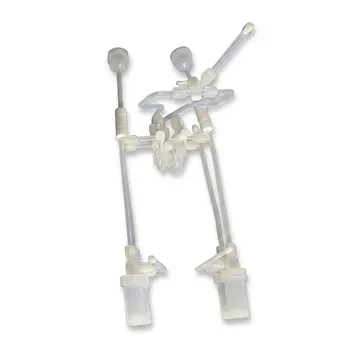
- High Purity PFA Nitrogen Purge System Corrosion Resistant 4 and 6 Position Evaporation Setup Customizable Laboratory Trace Analysis Equipment
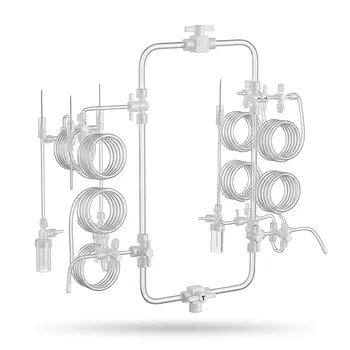
- PFA Nitrogen Blowdown System 4-Position 6-Position Corrosion Resistant Multi Sample Evaporator with Customizable PFA Valves
People Also Ask
- What is the thermal operating range for PTFE battery clamps in electrochemical research? Stability from -200°C to +260°C
- What are the primary functions and material compositions of PTFE battery clamps? Ensure Precision & Chemical Resistance
- How do coin cell testing fixtures evaluate ZIF-derived LCO cycling stability? Ensure Battery Research Precision
- What are the electrical insulation and signal integrity advantages of using PTFE battery clamps? Ensure Data Accuracy
- How does the chemical inertness of PTFE benefit laboratory-scale battery testing? Ensure high-purity research results.