Trace metal residues can turn an otherwise excellent fluoropolymer dielectric into a lossy, temperature-sensitive electrical material. Metallic residues from catalyst-based synthesis behave as ionic impurities within the polymer matrix. At concentrations below 100 ppm, they can broaden the electric displacement–electric field (D–E) hysteresis loop, increase dielectric loss, and raise energy dissipation. The effect becomes more severe at elevated temperatures because the ions become more mobile.
High-purity fluoropolymers retain low-loss insulation performance only when ionic contamination is tightly controlled. Trace metals may have little effect on the material’s chemical appearance or mechanical properties, yet still compromise electrical stability, especially under heat or high electric fields.
Why Trace Metals Affect Fluoropolymer Dielectrics
The polymer matrix is normally highly insulating
Fluoropolymers are valued in dielectric applications because their highly fluorinated structures provide chemical inertness, high dielectric strength, and low dielectric loss. Thin films can exhibit dielectric strength in the approximate range of 120–140 kV/mm, while the dielectric constant can remain relatively stable at about 4.8 at 1 MHz, depending on the specific material and test conditions.
The low-polarizability character of many fluorinated structures also helps limit dielectric interference. This is important in high-voltage insulation, sensors, electrochemical cells, analytical instruments, and energy-storage components.
Metal residues introduce mobile charge
Residual metal species from traditional metal-catalyzed synthesis can remain dispersed through the fluoropolymer. In electrical operation, these species may function as ionic impurities rather than as inert structural components.
Under an applied electric field, mobile ions can migrate or redistribute within the polymer. Their movement adds a charge-transport mechanism that is not present, or is much less significant, in a highly purified fluoropolymer.
Trace concentration does not mean negligible impact
The critical issue is not simply the amount of metal measured by mass. The electrical effect depends on whether the residue exists in a mobile or ionically active form and how it interacts with the polymer matrix.
Consequently, concentrations below 100 ppm can still produce a measurable degradation in dielectric behavior. A component may satisfy a general chemical-purity specification while failing the more demanding requirements of a low-loss dielectric application.
How Electrical Performance Degrades
D–E hysteresis loops become broader
A clean, low-loss dielectric generally exhibits a relatively narrow D–E hysteresis loop. When trace ionic impurities are present, ionic movement contributes to the measured displacement during field cycling.
This produces a broader hysteresis loop, indicating that more electrical energy is being dissipated during each cycle. The loop therefore becomes a practical signature of contamination-related dielectric loss.
Dielectric loss increases
The energy represented by the area inside the D–E loop is lost rather than recovered. As the loop broadens, the material dissipates more energy as heat during repeated electrical operation.
This matters in capacitive devices, high-frequency systems, sensors, and energy-storage structures, where even modest losses can reduce efficiency, distort measurements, or create thermal instability.
Insulation becomes less stable
Trace-metal-induced ion mobility can also increase leakage-related behavior and make insulation performance more dependent on operating conditions. The fluoropolymer may still possess high intrinsic dielectric strength, but its practical electrical response becomes less predictable.
This distinction is important: high breakdown strength does not guarantee low dielectric loss or stable insulation when ionic contamination is present.
Why Temperature Makes the Problem Worse
Heating increases ionic mobility
At higher operating temperatures, ions generally have greater ability to move through or between regions of the polymer matrix. The resulting charge redistribution becomes more pronounced under an applied field.
The same metal concentration can therefore cause substantially more electrical degradation at elevated temperature than at room temperature.
Loss becomes more condition-dependent
Temperature-sensitive ion movement makes dielectric performance depend more strongly on the thermal history and operating temperature of the component. This can produce changes in hysteresis, leakage, and energy dissipation during service.
For electronics, sensors, and energy-storage devices, that dependence creates a reliability concern because the dielectric response may shift as the component heats during operation.
Thermal stability is not sufficient by itself
Fluoropolymers are chemically and thermally robust, but those properties do not eliminate contamination-driven electrical loss. A material can remain structurally intact while its electrical performance deteriorates because the residual ions become more active.
Qualification testing should therefore assess electrical behavior at the intended temperature range, not only physical degradation or decomposition.
Where the Impact Matters Most
High-voltage insulation
High-purity fluoropolymer parts can isolate electrodes and reduce the risk of stray current leakage or electrical breakdown in high-voltage systems. Ionic residues undermine this isolation by adding a mobile-charge contribution to the dielectric response.
The result may be higher dissipation and less stable insulation under sustained electric fields.
High-frequency and analytical equipment
Precision electrochemical cells, probe holders, fluid-transfer components, and analytical fixtures often depend on low electrical interference. Increased dielectric loss can contribute to signal distortion or unwanted coupling, particularly when the surrounding system is designed for very small currents or high-frequency measurements.
In these applications, contamination control supports measurement integrity as much as it supports material reliability.
Energy-storage components
Dielectric loss converts part of the electrical energy into heat. In energy-storage devices, this can reduce efficiency and increase thermal stress during repeated charging and discharging.
A low-loss fluoropolymer is therefore valuable not only for its insulating capability but also for minimizing unnecessary energy dissipation.
Understanding the Trade-offs
Purity improvements can require different synthesis routes
Avoiding metal contamination may require non-metal-catalyzed synthesis, more rigorous purification, or tighter control of processing equipment and component fabrication. These measures can increase manufacturing complexity or cost.
The benefit is electrical performance that is more consistent with the intrinsic properties expected from the fluoropolymer.
Bulk purity does not guarantee component purity
Even when the polymer resin is highly pure, metal contamination can be introduced during compounding, machining, handling, or contact with production equipment. CNC-machined parts and fluid-transfer components therefore require contamination control throughout the manufacturing chain.
Testing only the incoming resin may miss residues added later.
Electrical specifications should match the application
A general-purpose fluoropolymer component may perform adequately where dielectric loss is not critical. The cost and effort of ultra-high purity are harder to justify unless the application involves sensitive signals, high fields, elevated temperatures, or repeated energy cycling.
Purity requirements should be based on the complete electrical operating envelope rather than on a generic material label.
Other molecular features also influence dielectric behavior
Fluorinated side groups generally contribute little to overall dipole polarization, helping maintain low dielectric loss. However, bulky side groups can introduce secondary molecular relaxations below the glass-transition temperature, while polar groups incorporated into the main chain can increase permittivity and raise the glass-transition temperature.
Metal residues are therefore not the only factor affecting dielectric response, but they are a particularly important avoidable source of ionic loss.
How to Apply This to Your Project
Select the material and manufacturing process according to the electrical failure mode you need to control.
- If your primary focus is low dielectric loss: Specify a high-purity fluoropolymer with tightly controlled ionic and trace-metal contamination, and verify performance using D–E hysteresis or comparable dielectric-loss testing.
- If your primary focus is high-temperature insulation: Evaluate dielectric loss, leakage behavior, and hysteresis at the maximum operating temperature because increased ion mobility can magnify contamination effects.
- If your primary focus is precision electrochemical or analytical measurement: Control contamination during resin processing, machining, cleaning, and handling so the finished component does not introduce stray currents or dielectric interference.
- If your primary focus is high-voltage isolation: Consider both dielectric strength and ionic purity; a high breakdown rating alone does not establish low-loss, stable insulation.
- If your primary focus is energy-storage efficiency: Minimize mobile ionic residues to reduce hysteretic energy dissipation and temperature-dependent electrical losses.
Controlling trace metals is essential to preserve the low-loss, stable insulation performance that makes high-purity fluoropolymers suitable for demanding dielectric applications.
Summary Table:
| Factor | Impact of Trace Metals |
|---|---|
| D-E Hysteresis Loop | Broadens, indicating more energy dissipation |
| Dielectric Loss | Increases, reducing efficiency and causing heat |
| Temperature Stability | Worse at high temperatures, less predictable |
| Insulation Reliability | Less stable, higher leakage risk |
| Application Suitability | Compromised for high-voltage, high-frequency, analytical, and energy storage uses |
Ensure your high-purity fluoropolymer components deliver low-loss dielectric performance. At KINTEK, our PTFE and PFA labware, fluid handling, and custom-machined parts are manufactured with strict contamination control, making them ideal for demanding dielectric applications. Contact us today to discuss your requirements.
Related Products
- Custom PTFE Insulating Gaskets and Corrosion Resistant Fluoropolymer Seals for Industrial Electrical Applications
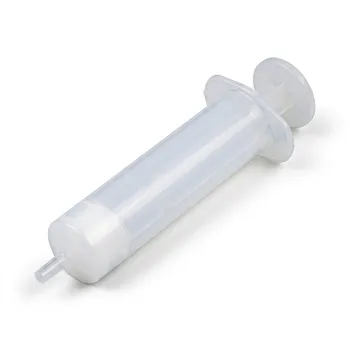
- High Purity PFA Syringe 10ml Corrosion Resistant Translucent Fluoropolymer Sampling Unit for Trace Analysis
- High Purity PFA Chromatography Column with Collection Bottle Corrosion Resistant Fluoropolymer Filtration System for Trace Analysis
- High Purity 4L PFA Reaction Tank for Proton Exchange Membrane Electrolysis Water Oxygen Separation Systems
- High Purity PFA PTFE Flare Stop Valves Customizable 2-Way 3-Way Reducing Fluoropolymer Fluid Control Solutions
People Also Ask
- What are the three primary types of PTFE available for gaskets and seals? Choose the Right Material for Your Application
- Why is PTFE an ideal material choice for sealing gaskets, valves, and fluid transfer tubing exposed to extremely aggressive chemicals? Discover Its Superior Chemical Resistance and Reliability
- How is PTFE utilized in seals and gaskets? Leverage Its Chemical & Temperature Resistance
- What are the key properties of PTFE that make it suitable for seals and gaskets? Unlock Superior Sealing Performance
- How are custom PTFE parts used in the automotive sector? Enhance Vehicle Performance & Durability