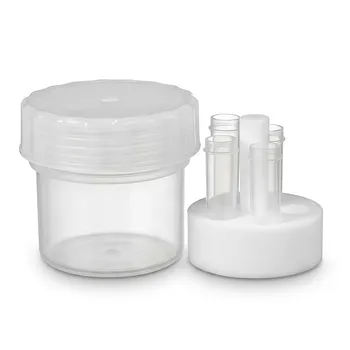
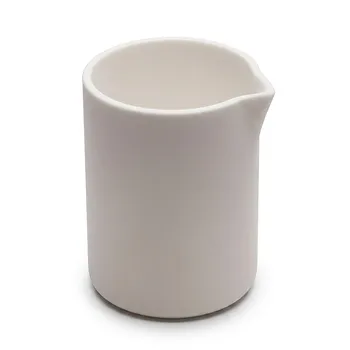
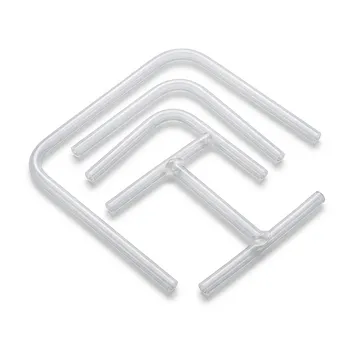
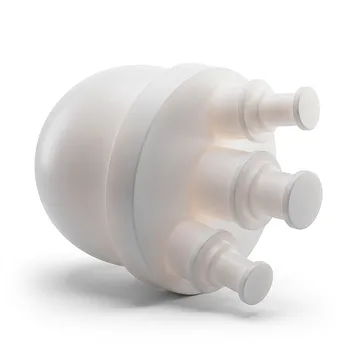
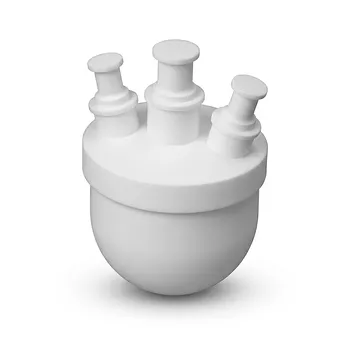
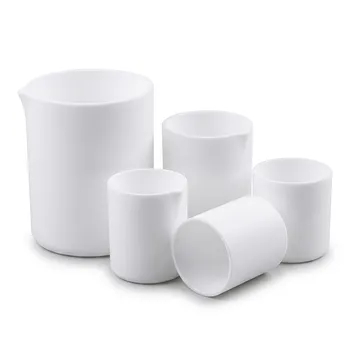
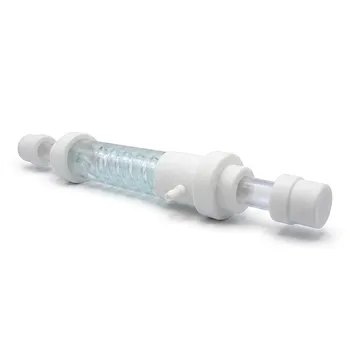
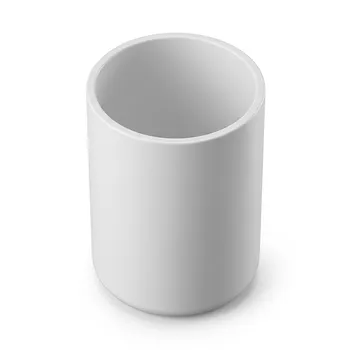
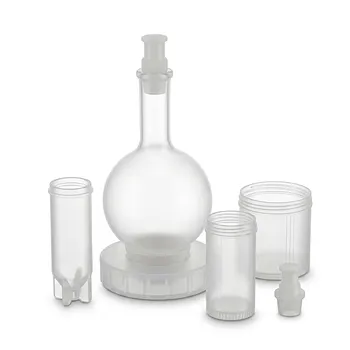
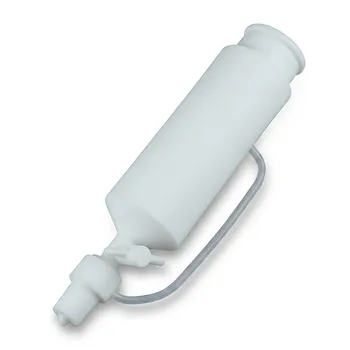
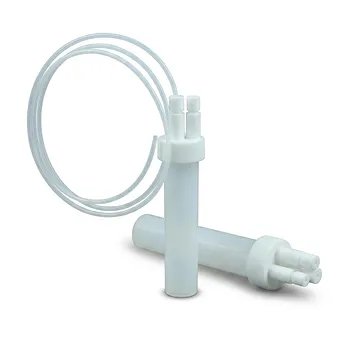
Thermoplastic fluoropolymers enable high-purity fluid handling by combining chemical inertness, low contamination potential, and precision-processable forms. Materials such as PFA retain the corrosion resistance and thermal stability associated with fluoroplastics while remaining melt-processable into tubing, fittings, valves, containers, and reaction components. Where molding is unsuitable, fluoropolymer stock can also be CNC-machined into complex, application-specific laboratory parts.
Core takeaway: Thermoplastic fluoropolymers protect fluid and sample integrity while giving manufacturers practical routes to produce precise, chemically resistant components. Their value comes from the combination of purity, surface behavior, thermal performance, and manufacturing flexibility.
Why Fluoropolymers Support High-Purity Fluid Handling
They resist aggressive chemicals
Fluoropolymers provide strong resistance to corrosive reagents, concentrated acids, solvents, and other aggressive process fluids. This helps prevent tubing, valves, vessels, and fittings from degrading during service.
The result is a longer-lasting fluid path with less risk that the component itself will react with or contaminate the fluid.
They minimize extractables and leaching
High-purity grades of materials such as PFA have very low levels of extractable organic and metallic contaminants. This is particularly important in trace analysis, semiconductor processing, and ultrapure laboratory workflows.
A chemically compatible component does more than survive exposure; it must also avoid introducing measurable contaminants into the fluid or sample.
Their smooth surfaces reduce retention
Fluoropolymers have very low surface energy, producing hydrophobic, oleophobic, and non-stick behavior. Liquids are less likely to adhere to the internal or external surface of a component.
This can improve liquid recovery, reduce analyte loss, and make cleaning and rinsing more effective.
They reduce cross-contamination risk
Low adhesion and low absorption help limit the retention of previous samples or reagents on container walls and fluid paths. This is valuable when a system handles low-concentration analytes or changes between chemically different fluids.
Proper cleaning, validation, and component design remain necessary, but the material provides a favorable baseline for contamination control.
How They Enable Precision Laboratory Components
PFA supports complex molded geometries
PFA is a thermoplastic fluoropolymer synthesized from tetrafluoroethylene and perfluoroalkyl vinyl ether monomers. Unlike fluoroplastics that cannot be conventionally melt-processed, PFA can be molded into useful geometries while retaining high chemical and thermal performance.
This supports production of fluid-transfer tubing, fittings, valves, high-purity containers, and specialized reaction equipment.
CNC machining handles custom designs
Some fluoropolymers have extremely high melt viscosity or may degrade before they can be conventionally melted and shaped. In these cases, direct machining from solid PTFE or PFA stock can be more suitable than attempting to mold the part.
CNC machining enables non-standard geometries such as custom electrochemical cells, microwave digestion vessels, specialized valves, and application-specific manifolds.
Machining preserves design flexibility
Laboratory equipment is often produced in low volumes or requires rapid customization. Machining allows engineers to modify dimensions, ports, channels, sealing features, and interfaces without creating dedicated molding tooling.
The manufacturing route must still be controlled carefully so that machining residues, surface damage, and dimensional variation do not compromise purity or performance.
Low friction supports moving components
Fluoropolymers offer very low friction and self-lubricating behavior. This is useful in valve elements, sliding interfaces, seals, and other components where lubricants could introduce contamination.
Lower friction can also reduce wear and improve actuation consistency, although the design must account for the material’s mechanical behavior under load.
Performance Benefits Across Laboratory Applications
Thermal stability supports demanding processes
Fluoropolymers retain useful performance across broad temperature ranges compared with many conventional polymers. This makes them suitable for laboratory systems exposed to heated reagents, thermal cycling, or elevated-temperature processing.
The exact temperature limit depends on the polymer grade, stress level, exposure time, and processing history. Component designs should therefore use the manufacturer’s validated operating limits rather than a generic fluoropolymer temperature value.
Electrical insulation benefits specialized equipment
Fluoropolymers also provide strong electrical insulation. This can be important in electrochemical cells, analytical instruments, sensors, and laboratory assemblies where the fluid-contacting material must not create unintended electrical paths.
Flexible grades accommodate movement
Some fluoropolymer terpolymers offer lower melting temperatures, greater flexibility, and strong resistance to chemical and fuel permeation compared with more rigid fluoroplastics. These characteristics can support flexible tubing, gaskets, and compliant sealing components.
The appropriate choice depends on whether the application prioritizes flexibility, rigidity, purity, permeation resistance, or temperature capability.
Flame and weather resistance improve durability
Fluoropolymers generally provide strong resistance to environmental exposure and flame propagation. These properties can increase component durability in demanding laboratory and industrial settings, although they do not eliminate the need for suitable system-level safety controls.
Manufacturing and Material Selection Considerations
Choose the polymer for the application
“Fluoropolymer” is a material family, not a single performance specification. PFA, PTFE, and more flexible fluoropolymer formulations differ in melt processability, stiffness, temperature capability, flexibility, and permeability.
Selection should begin with the actual fluid chemistry, temperature, pressure, dimensional requirements, purity target, and cleaning process.
Control formulation quality
A high fluoropolymer concentration is important when long-term surface stability and degradation resistance are required. Poorly suited blends or formulations with excessive non-fluoropolymer content may experience greater surface degradation, including roughening, cracking, chalking, or leaching.
For high-purity service, the formulation, grade, additives, and manufacturing history should be documented and verified.
Control the entire manufacturing process
Material purity alone does not guarantee a clean component. Mold release agents, machining fluids, tools, packaging materials, handling practices, and cleaning procedures can all affect the finished part.
High-purity production therefore requires controlled processing, appropriate cleaning, clean packaging, and—where necessary—extractables, ionic contamination, particle, and dimensional testing.
Understanding the Trade-offs
Chemical resistance does not solve every mechanical problem
Fluoropolymers are chemically robust, but their mechanical performance varies by grade and design. Loads, pressure, temperature, dimensional tolerances, sealing forces, and long-term deformation must be evaluated during component design.
A chemically compatible material can still be unsuitable if it cannot maintain its geometry or sealing performance.
Melt processing is not universally practical
PFA is melt-processable, but other fluoropolymers may have very high melt viscosity or may degrade before conventional processing is feasible. Complex parts may therefore require CNC machining, specialized forming, or a different fluoropolymer grade.
The most chemically resistant material is not automatically the easiest or most economical material to manufacture.
Low adhesion is not the same as zero retention
Fluoropolymer surfaces reduce droplet and analyte retention, but geometry, surface finish, flow conditions, dead legs, and cleaning procedures still influence recovery and cross-contamination.
Poorly designed channels or fittings can undermine the advantages of an otherwise excellent material.
Purity claims require application-specific validation
Extractable levels, contamination performance, and compatibility depend on the exact grade and manufacturing process. A component intended for ultrapure water may require different qualification from one used with concentrated acids, organic solvents, or trace-metal analysis.
Testing should reflect the real fluid, temperature, exposure time, and cleaning cycle.
How to Apply This to Your Project
Use the material’s chemical resistance and processability together rather than evaluating either property in isolation.
- If your primary focus is ultrapure fluid handling: Select a high-purity fluoropolymer grade with low extractables, smooth surfaces, and a documented cleaning and packaging process.
- If your primary focus is custom laboratory equipment: Use CNC machining from suitable fluoropolymer stock when complex, low-volume, or non-standard geometries make molding impractical.
- If your primary focus is flexible tubing or sealing: Evaluate flexible fluoropolymer formulations for mechanical compliance, chemical resistance, and permeation performance.
- If your primary focus is trace analysis: Prioritize low adsorption, low ionic and organic contamination, effective drainability, and validated sample-recovery performance.
- If your primary focus is long service life: Confirm the formulation, temperature limit, mechanical loading, and exposure conditions rather than relying only on the general label “fluoropolymer.”
When material grade, component geometry, and manufacturing controls are selected as one system, thermoplastic fluoropolymers provide a reliable foundation for clean, precise, and chemically demanding laboratory fluid handling.
Summary Table:
| Property | Benefit | Example Application |
|---|---|---|
| Chemical resistance | Withstands aggressive chemicals, prolongs component life | Tubing, valves, fittings |
| Low extractables | Minimizes contamination in trace analysis | High-purity containers |
| Smooth surface | Reduces retention and cleaning effort | Sample vessels |
| Low friction | Enables moving parts without lubricants | Valve seals, sliding interfaces |
| Thermal stability | Handles high temperatures and cycling | Reaction vessels, heating systems |
| Electrical insulation | Prevents electrical interference | Electrochemical cells |
| Flexibility | Conforms to movement and sealing needs | Flexible tubing, gaskets |
| Moldability (PFA) | Enables complex geometries | Fittings, containers |
| CNC machinability | Allows custom, low-volume parts | Custom cells, manifolds |
Unlock the full potential of fluoropolymers for your lab. Contact KINTEK today for expert guidance and custom solutions. Our PTFE and PFA components—from basic labware to advanced electrochemical cells—are engineered for purity and precision. With comprehensive CNC machining capabilities, we deliver tailored parts and high-volume orders. Get in touch with us to discuss your requirements and see how we can enhance your fluid handling and component manufacturing.
Related Products
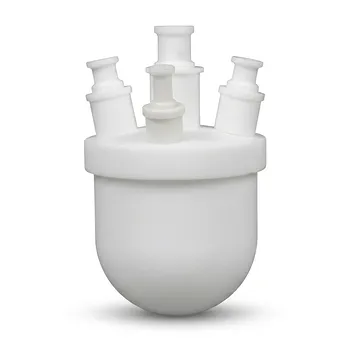
- Custom PTFE Flask 250ml High Purity Fluoropolymer Laboratory Vessel for Chemical Research
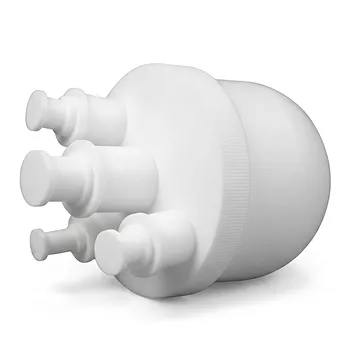
- High Purity PTFE Single Neck Reaction Flask Acid Resistant Customizable Fluoropolymer Laboratory Reactor
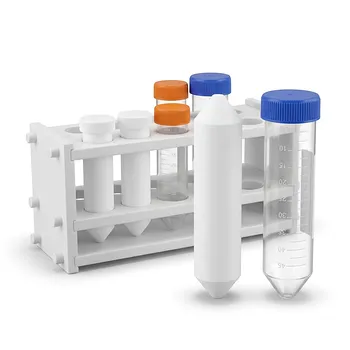
- High Purity PTFE Centrifuge Tubes for Trace Analysis Custom Laboratory Centrifugation Containers with Racks
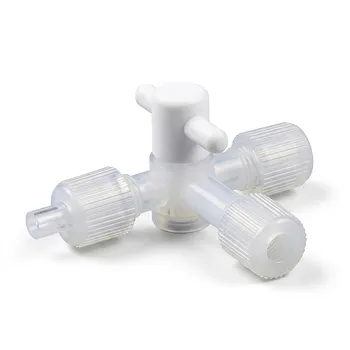
- Corrosion Resistant High Purity PFA Valve and Weldable Transparent Tubing for Semiconductor Fluid Transfer
- Corrosion Resistant PTFE Support with PFA Transparent Reaction Tank and High Purity PFA Sampling Tube for Trace Analysis
People Also Ask
- What are the key steps for structural integrity in molded PTFE lab reaction vessels? Master fine powder processing.
- When synthesizing TFVE monomers involving reactive organometallic reagents and aggressive polar solvents, what material performance characteristics are required? Ensure purity with PTFE/PFA.
- Why Are High-Purity Fluoropolymer Vessels and Tubing Critical for Trace Analysis? Prevent Contamination Reliably
- Why do PTFE fluoropolymer laboratory vessels and containers exhibit superior chemical resistance against harsh solvents and corrosive acids compared to standard plastic labware? Discover the molecular secrets
- How do choice of solvent and chain transfer activity affect molecular weight during vinylidene fluoride (VDF) radical polymerization? Learn Key Factors for High-MW PVDF