Thermal changes and solvent exposure can reorganize the fluoropolymer interface, changing its composition, permeability, adhesion, dimensional stability, and mechanical performance. Solvents may drive the surface between collapsed and swollen states, while heating can accelerate molecular mobility, additive removal, segment migration, and solvent uptake. The result is that a fluoropolymer’s nominal chemical resistance does not fully predict how its surface or component will perform under real operating conditions.
The key insight is that fluoropolymer performance is dynamic at the interface. Temperature and solvent exposure can alter which molecular segments, additives, and defects are present at the surface, so material selection must consider the combined effects of chemical environment, temperature, exposure duration, and processing history.
How Thermal Changes Reorganize the Interface
Segment migration changes surface composition
Fluorinated and protonated segments can redistribute across a compounded interface as temperature changes. This molecular migration can promote the recovery of a more ordered, fluorine-rich surface after thermal or mechanical disturbance.
Because fluorinated groups generally support low surface energy and liquid repellency, their return to the interface can help restore surface behavior. The same reorganization may also change adhesion, wetting, and adsorption characteristics.
Heating increases molecular mobility
Higher temperatures give polymer segments greater mobility, allowing the interface to respond more quickly to stress, solvent contact, or microscopic damage. This can support limited healing of small mechanical defects, but it can also accelerate unwanted diffusion and softening.
In solvent-containing environments, increased mobility often makes absorption and permeability more rapid. A component that is stable at room temperature may therefore swell, lose stiffness, or change dimensions at elevated temperature.
Processing temperature affects the final structure
Thermal processing and post-cure baking influence cross-linking density, crystallinity, film formation, and the removal of residual solvents, surfactants, and organic additives. These structural features determine how the finished interface responds to friction, chemicals, and mechanical loading.
Incomplete baking can leave volatile or mobile residues near the surface. The consequences may include weaker scratch resistance, higher wear, inconsistent friction, and leachable contamination in high-purity applications.
Atmosphere controls thermal degradation
The surrounding atmosphere is as important as temperature when fluoropolymers are exposed to extreme heat. PTFE is more thermally stable in vacuum or inert gas than in air, where oxidative degradation occurs more rapidly and causes greater material loss.
For high-temperature apparatus, an inert atmosphere can reduce oxidation-related damage. This does not eliminate the need to respect the material’s temperature limits, but it changes the degradation pathway and rate.
How Solvents Change Interfacial Behavior
Solvent uptake can switch the polymer between collapsed and swollen states
A solvent can enter the polymer and expand the distance between chains. This swollen state increases flexibility and may raise surface permeability, whereas a collapsed state generally presents a denser and less penetrable interface.
The transition is governed by solvent chemistry, temperature, exposure time, polymer structure, and cross-linking. It can affect liquid repellency, adhesion, friction, dimensional stability, and the transport of molecules through the component.
Swelling changes mechanical performance
Absorbed solvent can plasticize the polymer, making it softer and more flexible while reducing strength or dimensional precision. In seals, tubing, containers, and machined components, this may cause leakage, interference, loss of fit, or stress-related failure.
The severity varies substantially by solvent and grade. Fluorocarbon elastomers generally resist hydrocarbons, chlorinated solvents, and mineral acids well, while standard compounds can swell excessively in polar solvents such as ketones, esters, and ethers.
Solvent exposure can alter adhesion and wetting
When solvent molecules or mobile additives reach the interface, they can change surface energy and the availability of bonding sites. Adhesion may decrease if the surface becomes plasticized or contaminated, although swelling and molecular rearrangement can also temporarily increase physical contact.
This is particularly important for coated systems. A coating may retain its bulk chemical resistance while its interface becomes more permeable or less firmly attached to the substrate.
Higher temperature accelerates absorption
Temperature strongly magnifies solvent uptake for some fluoropolymer structures. Benzene exposure, for example, may produce modest weight changes at room temperature but much larger increases at elevated temperatures, especially in thin films or less dimensionally stable structures.
The practical implication is that room-temperature compatibility data cannot be treated as proof of high-temperature compatibility. Absorption rates and dimensional changes must be evaluated at the actual process temperature and exposure duration.
How These Changes Affect Performance
Liquid repellency can become time-dependent
A fluorine-rich, well-ordered surface typically supports low wetting and reduced liquid interaction. Solvent-induced swelling or thermal reorganization can temporarily change the molecular groups exposed at the interface, causing repellency to decline or vary during service.
Performance may recover after cooling, drying, or reordering, but recovery is not guaranteed if the exposure causes permanent oxidation, chemical attack, additive loss, or mechanical damage.
Permeability and contamination risk can increase
Swelling opens additional pathways for solvent and solute transport. This can increase permeability and make it easier for chemicals, additives, or degradation products to move through the coating or component.
For analytical equipment and high-purity fluid systems, residual processing materials are an additional concern. Proper baking and validation help reduce leachables, particulate generation, and sample adsorption.
Friction and wear depend on thermal history
The tribological behavior of a fluoropolymer depends on its cross-linking, crystallinity, residual additives, and surface condition. Heating that improves film formation may improve durability, while insufficient or inconsistent baking can leave a softer, less stable surface.
Friction and wear measurements should therefore be performed on parts processed using the finalized production baking cycle. Testing a differently processed laboratory sample may not represent the performance of the finished component.
Mechanical integrity may deteriorate before chemical compatibility appears to fail
A component can show little visible chemical attack while losing substantial tensile strength or dimensional stability. ECTFE, for example, can resist MEK without stress cracking at moderate temperatures, yet extended exposure at higher temperatures can cause severe mechanical-property loss.
This distinction matters for containment systems. Chemical resistance must be assessed together with strength retention, elongation, creep, swelling, and pressure or load requirements.
Selecting Fluoropolymer Materials for Real Conditions
Fluorine content improves some forms of resistance
In fluorocarbon elastomers, increasing fluorine content generally improves resistance to hydrocarbons, chlorinated solvents, and mineral acids. Higher-fluorine terpolymers and specialized grades such as FEPM or FFKM may provide better dimensional stability in demanding chemical environments.
However, higher fluorine content is not a universal solution. The specific solvent family, temperature, mechanical load, and required sealing or purity performance still determine whether a grade is suitable.
Polar solvents require particular caution
Ketones, esters, and ethers can cause excessive swelling in standard fluorocarbon vulcanizates. Amines, alkalis, and certain strong acids can also chemically attack grades that perform well against many hydrocarbons.
For amine-rich fluids, aggressive alkalis, or high-purity chemical transfer, material selection should focus on the complete exposure profile rather than a generic label such as “fluoropolymer.”
Component geometry changes the risk
Thin films may absorb solvent and plasticize more readily than thicker or more crystalline structures. Seals, tubing, coatings, and containers can therefore show different dimensional responses even when they are made from related polymer families.
Design reviews should consider wall thickness, exposed surface area, internal pressure, mechanical restraint, and the possibility that a swollen component will be unable to expand freely.
Understanding the Trade-offs
Chemical resistance does not mean zero absorption
A fluoropolymer may resist chemical attack while still absorbing enough solvent to swell or soften. “Compatible” should therefore be separated into at least three questions: does the material resist chemical degradation, does it retain its mechanical properties, and does it maintain its dimensions?
Ignoring the second and third questions can lead to seal failure or poor fluid containment without obvious surface corrosion.
Thermal stability does not guarantee high-temperature serviceability
A material may survive a short thermal exposure yet fail under long-duration loading, solvent contact, or repeated thermal cycling. High temperature accelerates diffusion, plasticization, additive loss, oxidation, and mechanical relaxation.
The operating limit must reflect the combined environment, not temperature alone.
Surface recovery can mask cumulative damage
Segment migration may restore a fluorine-rich surface after minor damage, making the coating appear to recover its repellency. That recovery does not necessarily restore bulk strength, adhesion, thickness, or resistance to continued solvent ingress.
Performance should be monitored using the property that matters to the application, such as leakage rate, mass change, adhesion, friction, permeability, or extractables.
Generic compatibility charts have limited value
A chart measured at room temperature and short exposure time may not predict behavior near a solvent’s boiling point or after extended immersion. Material grade, cure state, crystallinity, geometry, and atmosphere can all change the result.
Application-specific testing is especially important when the component is safety-critical, exposed to pressure, used in high-purity processing, or operated near the material’s thermal limit.
Making the Right Choice for Your Goal
Use the complete temperature-solvent-mechanical profile to define the required fluoropolymer grade and processing condition.
- If your primary focus is liquid repellency: Choose a formulation and processing cycle that preserve an ordered, fluorine-rich interface after the expected thermal and solvent exposures.
- If your primary focus is dimensional stability: Measure solvent uptake and swelling at the actual operating temperature, exposure duration, and component geometry.
- If your primary focus is high-purity fluid handling: Validate post-cure baking, residual additives, leachables, particulate generation, and sample adsorption using production-processed components.
- If your primary focus is sealing or containment: Evaluate strength retention, creep, stress cracking, and pressure performance in addition to chemical resistance.
- If your primary focus is high-temperature operation: Account for the surrounding atmosphere, thermal cycling, solvent acceleration, and long-term mechanical degradation rather than relying only on a nominal temperature rating.
Reliable fluoropolymer performance comes from matching interfacial behavior, bulk properties, processing history, and real operating conditions as one system.
Summary Table:
| Factor | Effect on Interface | Performance Impact |
|---|---|---|
| Thermal changes | Segment migration, increased mobility, processing effects, atmosphere-dependent degradation | Surface composition shifts, potential healing or accelerated damage, property changes |
| Solvent exposure | Swelling, plasticization, altered adhesion/wetting, temperature-accelerated absorption | Dimensional changes, mechanical softening, permeability changes, contamination risk |
| Combined effects | Dynamic interface behavior, time-dependent repellency, cumulative damage | Need for application-specific testing and material selection |
Ensure your fluoropolymer components deliver reliable performance under real-world conditions. Contact KINTEK today at our contact form. As the exclusive provider of high-performance PTFE and PFA lab supplies, we offer comprehensive solutions—from basic labware to custom-machined parts and high-purity fluid systems. Our experts will help you select the right material and design to withstand thermal and solvent challenges, ensuring optimal performance and durability.
Related Products
- Custom PTFE Insulating Gaskets Corrosion Resistant Teflon Seals Tailored Engineering Plastic Components
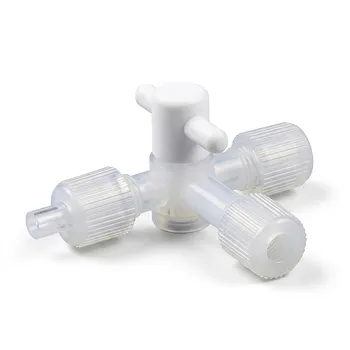
- Corrosion Resistant High Purity PFA Valve and Weldable Transparent Tubing for Semiconductor Fluid Transfer
- Custom PTFE Insulating Gaskets and Corrosion Resistant Fluoropolymer Seals for Industrial Electrical Applications
- High Purity PFA Chromatography Column with Collection Bottle Corrosion Resistant Fluoropolymer Filtration System for Trace Analysis
- High Purity PTFE Dispersion Disk for Food and Cosmetic Processing Non Stick Corrosion Resistant Large Stirring Paddle Customizable Fluoropolymer Impeller
People Also Ask
- How are custom PTFE parts used in the automotive sector? Enhance Vehicle Performance & Durability
- Why is PTFE an ideal material choice for sealing gaskets, valves, and fluid transfer tubing exposed to extremely aggressive chemicals? Discover Its Superior Chemical Resistance and Reliability
- What is the temperature range that PTFE gaskets can withstand? A Guide from -200°C to +260°C
- What thickness options are available for PTFE gaskets? Select the Right Seal for Your Application
- How do fillers improve the mechanical performance of PTFE gaskets compared to virgin PTFE? Boost Strength & Reliability