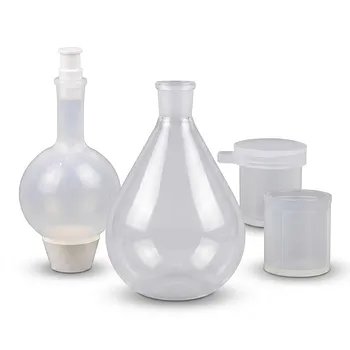
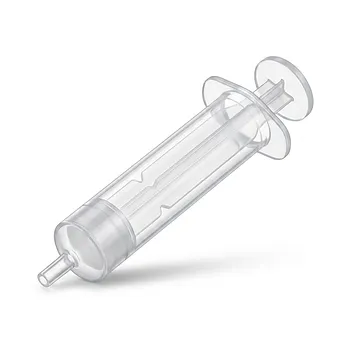
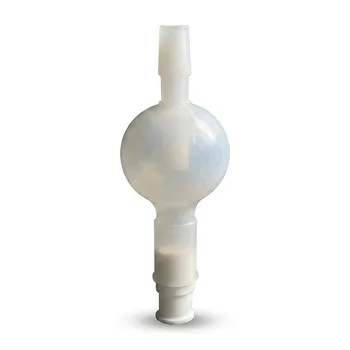
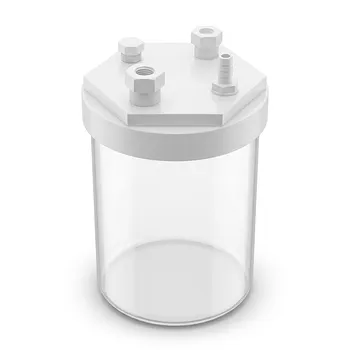
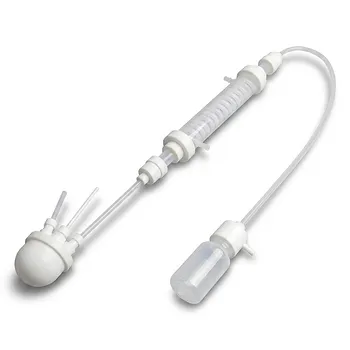
Fluorinated polymers improve laboratory apparatus by keeping surfaces clean, chemically stable, and minimally interactive with samples. Their low surface energy creates non-stick and non-wetting behavior, reducing analyte adhesion, liquid retention, and cross-contamination. Their strong carbon–fluorine bonds and chemically shielded polymer backbones provide resistance to aggressive acids, bases, organic solvents, and elevated temperatures, helping reaction vessels and containment systems maintain integrity without introducing significant contaminants.
The central advantage is controlled non-interaction: fluorinated polymers reduce unwanted surface adsorption while resisting chemical attack, making them valuable for high-purity reactions, trace analysis, sample storage, and harsh digestion workflows.
How Surface Energy Supports Sample Integrity
Reducing analyte adhesion
Low surface energy makes fluoropolymer surfaces difficult for many liquids and dissolved species to wet or spread across. As a result, target analytes are less likely to adsorb onto vessel walls or remain trapped as persistent residues.
This is especially important in trace analysis, where even small losses to container surfaces can distort measured concentrations.
Improving sample recovery
Non-stick behavior helps samples drain more completely from containers, tubing, centrifuge vessels, and transfer components. Less residual material remains behind after pouring, rinsing, or fluid transfer.
Materials such as PTFE, PFA, and FEP are therefore useful where maximum recovery of a limited or valuable sample is required.
Limiting cross-contamination
Low wetting and low liquid retention make fluoropolymer components easier to rinse and clean between operations. This reduces carryover from one sample or reagent to the next.
The benefit is not that contamination becomes impossible; rather, the surface makes contamination easier to control through appropriate cleaning and handling procedures.
Supporting fluid transfer
In tubing, valves, and transfer lines, low surface energy and a low coefficient of friction help liquids move with less retention and fewer persistent deposits. This is useful for aggressive reagents as well as high-purity analytical samples.
The exact performance still depends on tubing geometry, flow conditions, surface finish, and the chemical properties of the fluid.
How Chemical Inertness Protects Apparatus and Samples
Resisting aggressive reagents
Fluoropolymers are particularly resistant to many strong acids, bases, organic solvents, and oxidizing or otherwise aggressive chemical environments. Their carbon–fluorine bonds and fluorine-rich molecular structure help shield the polymer backbone from chemical attack.
This allows reaction vessels, digestion containers, reagent bottles, and fluid-handling components to remain functional during demanding laboratory processes.
Preventing vessel degradation
A chemically incompatible container can swell, embrittle, crack, dissolve, or release degradation products into a reaction. Fluorinated polymers substantially reduce these failure modes across a broad range of laboratory conditions.
Maintaining vessel integrity also supports consistent reaction volumes, controlled containment, and reliable repeatability.
Protecting high-purity workflows
For trace analysis, the container must not become a meaningful source of background contamination. Chemically inert fluoropolymers are selected because they generally have low moisture absorption and a low tendency to contribute extractable or reactive species under suitable operating conditions.
Compatibility must still be verified for the specific polymer grade, temperature, reagent concentration, exposure time, and pressure.
Withstanding thermal and chemical processing
Fluorinated polymers also provide high thermal stability, which is important in operations such as acid digestion and other elevated-temperature workflows. Fully fluorinated materials are generally preferred when the process combines high temperature with aggressive chemistry.
Among commonly used perfluoropolymers, PTFE, PFA, and FEP offer different balances of thermal performance, fabrication, flexibility, and mechanical behavior. Material selection should therefore consider the complete operating envelope rather than chemical resistance alone.
Choosing the Material for the Application
PTFE for maximum inertness and temperature resistance
PTFE is commonly considered when the priority is exceptional chemical resistance, low surface interaction, and high-temperature endurance. It is well suited to liners, crucibles, seals, machined components, and demanding reaction environments.
Its processing and mechanical characteristics may limit some designs, particularly where tight dimensional control or complex fabrication is required.
PFA for high-purity containment and fabrication
PFA combines strong chemical resistance with useful melt-processability and transparency compared with PTFE. It is often selected for high-purity bottles, vessels, tubing, and components where cleanability and sample visibility are valuable.
It provides a practical choice for systems that require both chemical inertness and more flexible manufacturing options.
FEP for non-wetting and flexible components
FEP provides excellent non-stick and non-wetting performance and is useful in wash bottles, transfer lines, tubing, and other components requiring fluid handling or flexibility. It can support complete sample recovery and simplified cleaning.
Its thermal performance is generally lower than that of PTFE and PFA, so it should be matched carefully to the process temperature.
Understanding the Trade-offs
Chemical resistance does not mean universal compatibility
No fluoropolymer is automatically compatible with every chemical, temperature, pressure, or mechanical load. Certain highly reactive conditions, permeation concerns, radiation environments, or combinations of heat and stress can still create failure risks.
Compatibility charts and application-specific testing remain necessary for critical systems.
Low surface energy can complicate bonding
The same non-stick behavior that prevents sample adhesion also makes fluoropolymers difficult to glue, coat, print, or bond. Mechanical retention, specialized surface treatment, or purpose-designed fittings may be required.
This matters when constructing custom reaction apparatus or integrating fluoropolymer parts with glass, metal, or other plastics.
Mechanical strength may be lower
Greater fluorination generally improves chemical and thermal stability but can reduce mechanical strength, rigidity, or ease of processing relative to some partially fluorinated alternatives. Components exposed to load, pressure, impact, or dimensional tolerances require appropriate mechanical design.
Partially fluorinated materials may be preferable when structural strength is more important than maximum inertness.
Permeation and handling still matter
Low surface interaction does not eliminate diffusion through thin walls or contamination introduced by fittings, seals, cleaning agents, or handling. A chemically resistant vessel can still be unsuitable if its thickness, permeability, or connection design does not meet the application.
How to Apply This to Your Project
Fluoropolymer performance should be evaluated as a combination of surface behavior, chemical compatibility, temperature, mechanical loading, and purity requirements.
- If your primary focus is trace analytical accuracy: Choose a low-adhesion, chemically inert material such as PFA or PTFE, and validate cleaning, blanks, and potential extractables for the specific workflow.
- If your primary focus is harsh chemical digestion: Prioritize the fluoropolymer with sufficient thermal and chemical resistance for the reagent, temperature, pressure, and exposure time.
- If your primary focus is sample recovery and fluid transfer: Use low-wetting components such as FEP, PFA, or PTFE tubing and vessels designed to minimize dead volume and retained liquid.
- If your primary focus is mechanical strength or dimensional stability: Consider partially fluorinated alternatives or reinforced designs, provided their chemical resistance remains adequate.
- If your primary focus is custom apparatus integration: Plan for the low bonding affinity of fluoropolymers and use suitable mechanical connections, seals, or validated surface treatments.
The right fluorinated polymer is the one that minimizes unwanted chemical and surface interactions without compromising the apparatus’s mechanical, thermal, or containment requirements.
Summary Table:
| Property | Benefit | Application Example |
|---|---|---|
| Low surface energy | Non-stick, non-wetting, reduces analyte adhesion | Trace analysis, sample recovery |
| Chemical inertness | Resists acids, bases, solvents, and high temperatures | Digestion vessels, reaction containers |
| Low contamination | Minimizes extractables and cross-contamination | High-purity storage and reactions |
| Thermal stability | Maintains integrity under elevated temperatures | Acid digestion, high-temperature reactions |
Elevate your lab's performance with KINTEK's high-purity PTFE and PFA apparatus. Our custom fabrication ensures exact fit for your reaction vessels, sample containment, and fluid handling needs. Whether you require standard labware or bespoke CNC-machined components, we deliver reliability and precision to support your critical workflows. Contact us today to discuss your requirements and discover how our fluoropolymer solutions can enhance your results! [#ContactForm]
Related Products
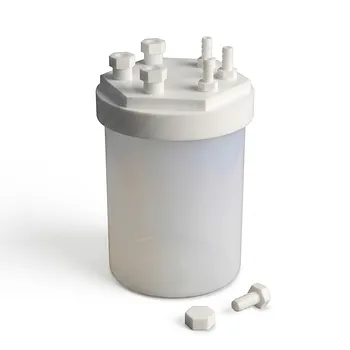
- PFA Chemical Reaction Tank with Customizable Fittings for Corrosive Solvent Synthesis and High Purity Lab Applications
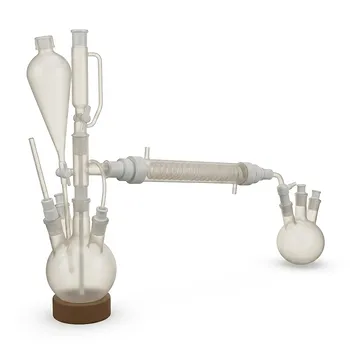
- PTFE Distillation Condensation Apparatus High Temperature Hydrofluoric Acid Resistant Fluorination Reaction Flask
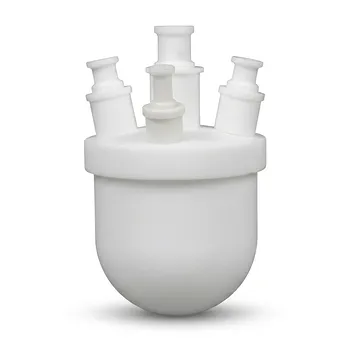
- Custom PTFE Flask 250ml High Purity Fluoropolymer Laboratory Vessel for Chemical Research
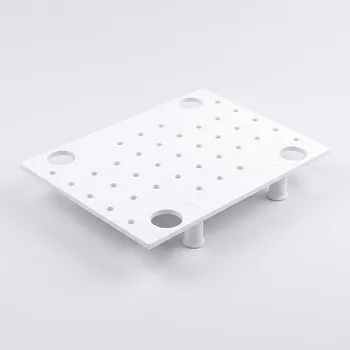
- High Temperature Resistant PTFE Thermal Insulation Board Corrosion Resistant Metal Free Fluoropolymer Stand for Ultra Clean Laboratories
- Custom PTFE Insulating Gaskets and Corrosion Resistant Fluoropolymer Seals for Industrial Electrical Applications
People Also Ask
- How does the molecular structure of fluorinated polymers contribute to the extreme thermal stability and chemical resistance required for high-performance laboratory reaction vessels and digestion containers? Discover the science behind PTFE and PFA for your lab.
- How do choice of solvent and chain transfer activity affect molecular weight during vinylidene fluoride (VDF) radical polymerization? Learn Key Factors for High-MW PVDF
- What role do low-surface-energy fluoropolymer reaction vessels play in preventing fouling during particle synthesis and emulsion polymerization?
- Why are fluoropolymer reaction vessels essential for SnO2/rGO synthesis? The Key to High-Performance Composites
- When synthesizing TFVE monomers involving reactive organometallic reagents and aggressive polar solvents, what material performance characteristics are required? Ensure purity with PTFE/PFA.