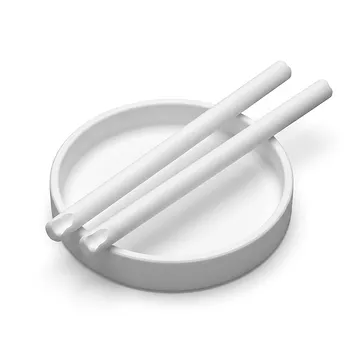
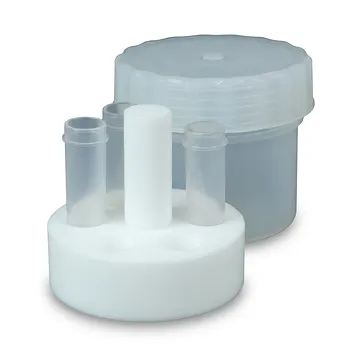
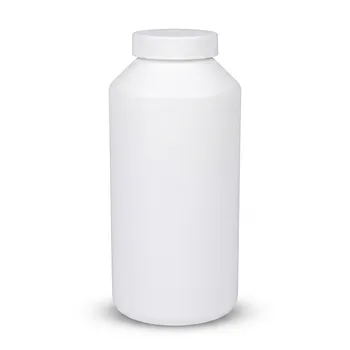
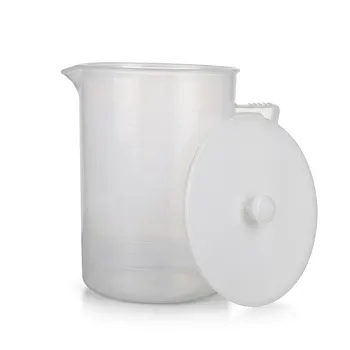
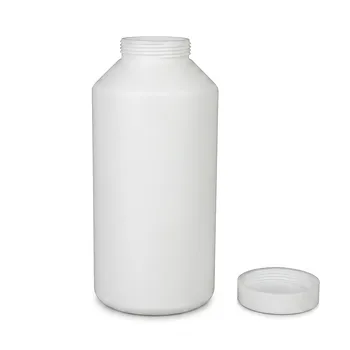
PTFE fluoropolymers benefit precision laboratory fluid transfer by resisting wetting, adhesion, and friction. Their exceptionally low surface energy causes aqueous solutions and many organic fluids to form droplets instead of spreading across internal surfaces, while their low-friction, inherently lubricious surfaces reduce fluid drag and mechanical resistance. Together, these properties improve liquid discharge, sample recovery, cleaning, and repeatability in tubing, fittings, valves, reagent bottles, vessels, and other analytical labware.
The central benefit is lower surface interaction: less liquid and residue remain on the component, so more of the intended sample reaches the next stage with reduced carryover and simpler cleaning.
Why Low Surface Energy Matters in the Laboratory
It Reduces Liquid Spreading
Wetting describes how readily a liquid spreads across a solid surface. Because PTFE has very low solid surface energy, approximately 18-19 mJ/m² at room temperature, many liquids form relatively high-contact-angle droplets rather than coating the material.
This is especially valuable inside narrow tubing, fittings, and valves, where a thin residual film can represent a meaningful fraction of a small sample volume.
It Limits Adhesion
Low surface energy weakens the tendency of liquids, dissolved compounds, particles, and biological macromolecules to adhere to PTFE surfaces. The material is therefore highly non-stick and resistant to the buildup of many laboratory residues.
This does not mean that every substance will completely fail to adhere. Liquid composition, temperature, exposure time, surface condition, and contamination still influence wetting and adhesion.
It Creates a Chemically Inert Interface
The fluorine-saturated structure of PTFE places fluorinated segments at the polymer interface. This produces a low-energy, non-reactive barrier between the material and the surrounding fluid.
For high-purity handling, that barrier helps limit unwanted interaction between the sample and the component surface, supporting cleaner measurements and more reliable chemical processing.
How These Properties Improve Fluid Transfer
More Complete Liquid Discharge
In PTFE and PFA tubing, fittings, valves, and containers, non-wetting surfaces reduce droplet retention and residual coating after dispensing. More of the transferred liquid can therefore leave the component rather than remaining on its walls.
This supports complete volumetric delivery, which matters when the sample is scarce, highly concentrated, or being measured at trace levels.
Lower Sample Hold-Up
Internal fluid hold-up is the amount of material left behind in a transfer path or vessel. Low adhesion and low wetting reduce this retained volume, helping the delivered sample more closely reflect the intended sample quantity.
The effect is particularly important in small-volume transfers, serial processing, dilution workflows, and instrument interfaces where residual material can affect the next operation.
Reduced Carryover and Cross-Contamination
Residual droplets and films can transfer material from one run to another. By reducing the surfaces available for liquid and analyte retention, PTFE components lower a common source of carryover.
This is useful in trace analysis and batch processing, where even a small residue may influence a subsequent blank, calibration solution, or sample.
Smoother Fluid Movement
PTFE also has an extremely low coefficient of friction. A commonly cited dynamic value is approximately 0.04, compared with a substantially higher value for polyethylene under the referenced comparison conditions.
In fluid transfer assemblies, low friction supports smooth movement through tubing and reduces resistance at interfaces, helping valves, fittings, and moving components operate with less mechanical drag and wear.
How Non-Wetting Benefits Analytical Labware
Trace Analysis Vessels
PTFE beakers, dishes, digestion vessels, and related labware reduce the tendency of trace compounds to remain on vessel walls. This improves recovery when a sample is rinsed, transferred, concentrated, or prepared for measurement.
Lower residue retention also helps reduce the risk that material from one preparation will contaminate another.
Digestion and Reaction Vessels
During chemical digestion or reaction procedures, the sample may be exposed to aggressive reagents and elevated temperatures. PTFE surfaces provide a non-stick interface that can make post-process recovery and cleaning easier.
The low-adhesion surface is valuable when the digest must be quantitatively transferred because losses on the vessel wall can distort the final analytical result.
Reagent Bottles and Containers
In reagent bottles and sample containers, non-wetting behavior reduces the amount of liquid left behind after pouring or dispensing. It can also make rinsing more effective by limiting persistent films and droplets.
For high-purity applications, reduced surface interaction helps preserve the intended composition of the reagent or sample.
Tubing, Fittings, and Valves
Internal surfaces in transfer components can trap droplets, particles, and dissolved compounds at junctions or changes in direction. PTFE and PFA help limit this retention across the fluid path.
Their low friction also supports predictable operation in valves and fittings, where mechanical resistance and residue buildup can otherwise affect handling consistency.
The Connection Between Recovery, Cleaning, and Accuracy
Better Recovery Is More Than Convenience
Recovering more of the original sample improves the relationship between the prepared sample and the quantity ultimately analyzed. This is central to trace work, where losses that appear minor in absolute terms may be significant relative to the sample.
Non-wetting surfaces support recovery by reducing both liquid retention and adhesion to the component.
Faster and More Consistent Cleaning
A surface that resists wetting and adhesion generally leaves fewer persistent residues behind. That can simplify rinsing and reduce the effort required to prepare labware for the next use.
The practical benefit is not merely shorter cleaning time. Consistent cleaning also helps make blank levels and carryover behavior more predictable between runs.
More Reliable Repeated Workflows
Precision laboratory systems depend on repeatable behavior across many cycles. Reduced hold-up, smoother flow, and consistent discharge help limit variation introduced by the transfer hardware itself.
This makes the material particularly useful when the workflow involves repeated dosing, sequential sampling, or strict contamination control.
Understanding the Trade-offs
Non-Wetting Is Not Universal
Low surface energy does not guarantee that every liquid will remain non-wetting. Some fluids, formulations, surfactants, or contaminated samples may spread more readily or leave residues despite the PTFE surface.
Performance should therefore be evaluated with the actual sample chemistry and operating conditions.
Contact Angle Depends on Surface Condition
Contact angles above 150 degrees are associated with appropriately textured superhydrophobic surfaces, not with every ordinary PTFE component. A smooth PTFE part may still provide strong non-wetting behavior without reaching that threshold.
Surface texture, roughness, cleanliness, and measurement method all affect the observed contact angle.
Flow Precision Requires System-Level Design
Low friction and low adhesion help fluid transfer, but they do not by themselves determine total dosing accuracy. Tubing dimensions, fittings, valve geometry, pump behavior, pressure, trapped air, temperature, and calibration also contribute.
PTFE should be selected as part of a properly designed transfer system rather than treated as a standalone guarantee of precision.
Cleaning Does Not Replace Good Procedure
PTFE can simplify cleaning, but aggressive or poorly controlled samples may still require validated rinsing and inspection procedures. A non-stick surface reduces retention; it does not eliminate the need for appropriate laboratory controls.
Making the Right Choice for Your Goal
The best application depends on whether the primary concern is sample recovery, contamination control, or mechanical handling performance.
- If your primary focus is maximum sample recovery: Use PTFE or PFA contact surfaces in tubing, vessels, and fittings to reduce droplet retention, wall adhesion, and residual sample hold-up.
- If your primary focus is trace-analysis cleanliness: Choose low-adhesion fluoropolymer labware and validate rinsing procedures to minimize residue and carryover between preparations.
- If your primary focus is repeatable fluid transfer: Combine low-friction fluoropolymer components with controlled tubing geometry, valve design, and calibrated dispensing equipment.
- If your primary focus is rapid changeover between samples: Use non-wetting components to simplify cleaning, while confirming compatibility with the specific fluids and contaminants in the workflow.
When precision and purity matter, low surface energy helps the laboratory control where the sample goes and how much of it remains behind.
Summary Table:
| Property | Benefit | Application |
|---|---|---|
| Low surface energy (18-19 mJ/m²) | Prevents liquid spreading, reduces adhesion | Tubing, fittings, valves, labware |
| Non-stick surface | Minimizes residue and sample hold-up | Trace analysis vessels, reagent bottles |
| Low coefficient of friction (~0.04) | Smoother fluid movement, less drag | Valves, fittings, moving components |
| Chemical inertness | Reduces sample contamination | Digestion vessels, reaction apparatus |
| Easy cleaning | Simplifies rinsing, reduces carryover | All labware, transfer components |
Enhance your lab's precision and purity with KINTEK's high-performance PTFE and PFA labware. Our products are exclusively dedicated to fluoropolymers, offering everything from basic beakers to custom machined parts and high-volume orders. Experience reduced sample hold-up, improved recovery, and faster cleaning. Contact us today to discuss your specific needs and get a quote. Get in touch now!
Related Products
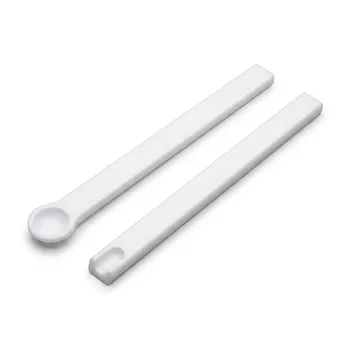
- Corrosion Resistant PTFE Sampling Spoon for High Purity Solid Powder Reagent Handling and Laboratory Chemical Transfer
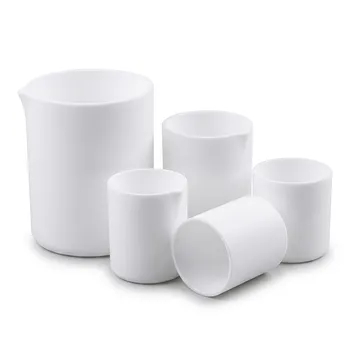
- Large Scale PTFE Beakers and Flasks for High Temperature Corrosion Resistant Laboratory Applications with Custom CNC Fabrication
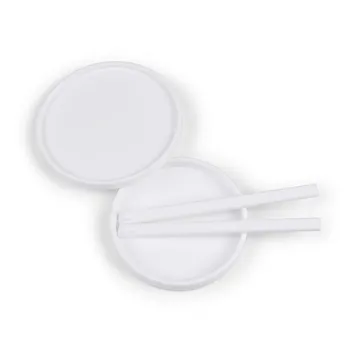
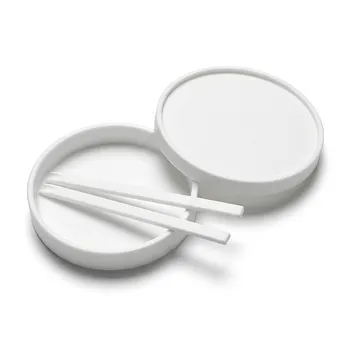
- Custom PTFE Petri Dish 30mm Corrosion Resistant Low Background Non Leaching Laboratory Ware
- Custom Polytetrafluoroethylene PTFE Petri Dishes 60mm Corrosion Resistant Low Background Labware
- Custom PTFE Petri Dish 120mm Diameter Corrosion Resistant Low Background High Purity Labware
People Also Ask
- How does PTFE's chemical resistance make it suitable for high-purity lab supplies and transfer systems? Discover its key benefits in handling extreme corrosives.
- How do the high melting point and non-flowing melt characteristics of PTFE influence custom machining? Discover key fabrication insights and design tips for lab fluid components.
- How do fluoropolymers benefit fluid transfer systems and sample prep containers? Non-stick performance for improved recovery, reduced contamination, and easier cleaning.
- What factors should be considered when selecting a PTFE shovel for laboratory use? Ensure Chemical Inertness & Sample Integrity
- What standard ASTM test methods are used to characterize the raw physical and thermal properties of fluoropolymers like PTFE, PFA, and PVDF? Learn the resin-specific test panels for powders, melting, and flow.