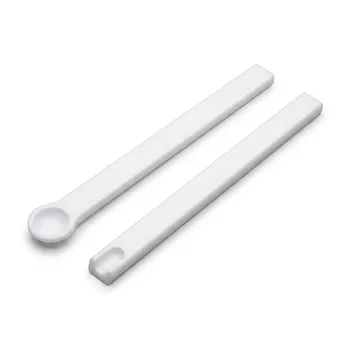
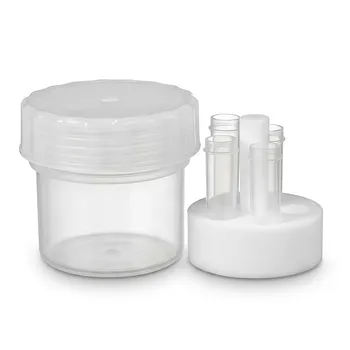
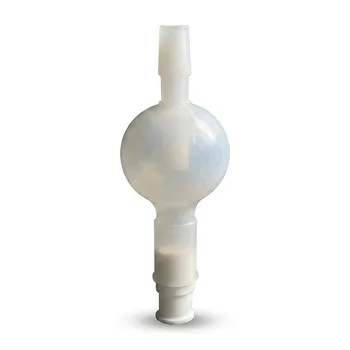
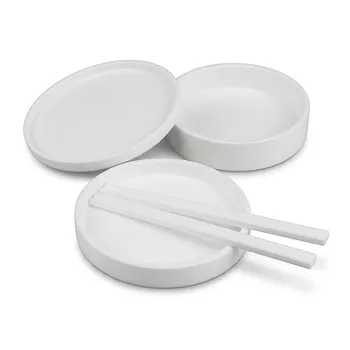
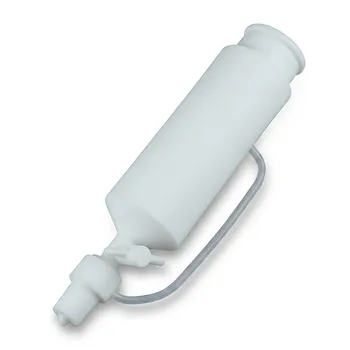
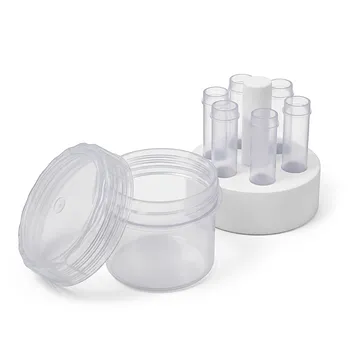
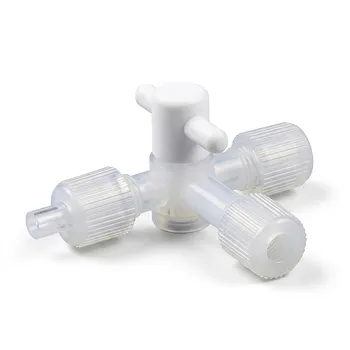
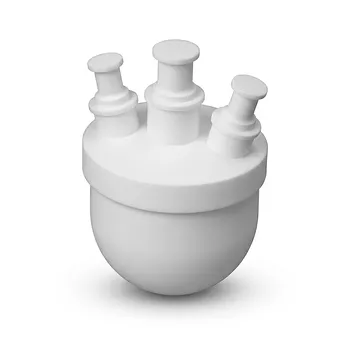
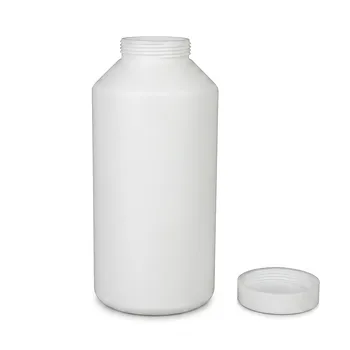
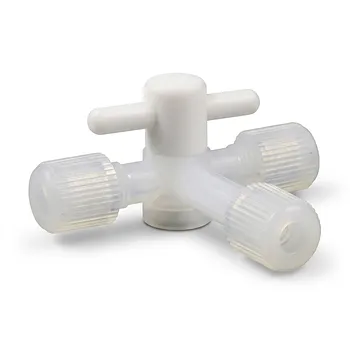
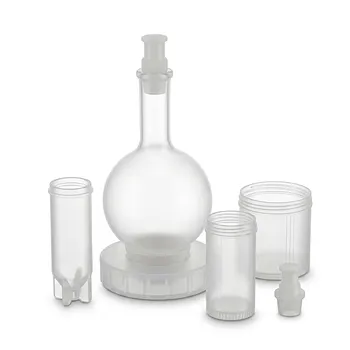
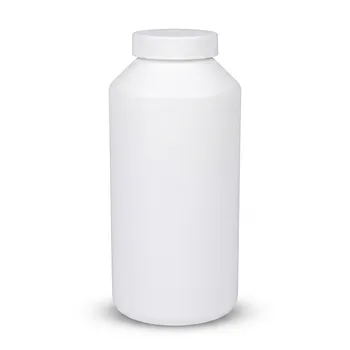
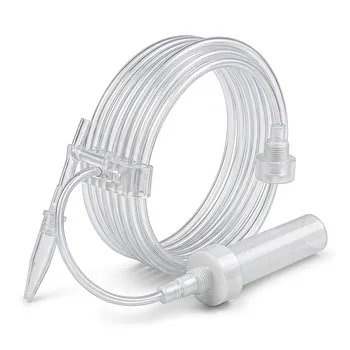
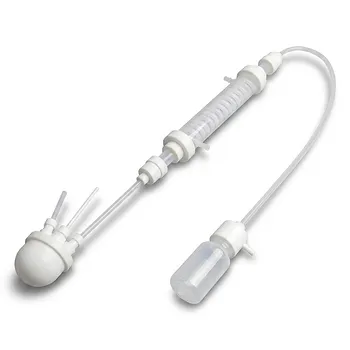
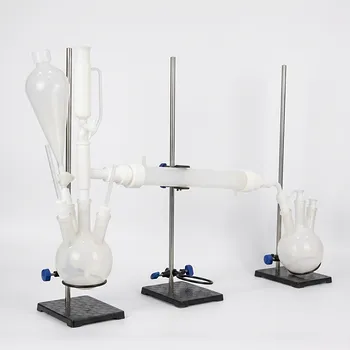
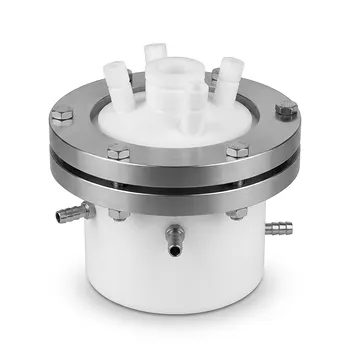
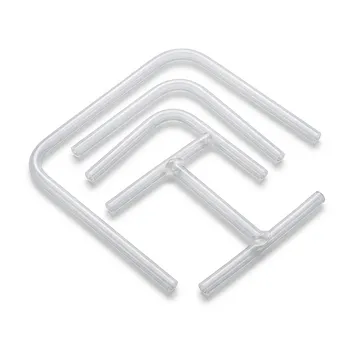
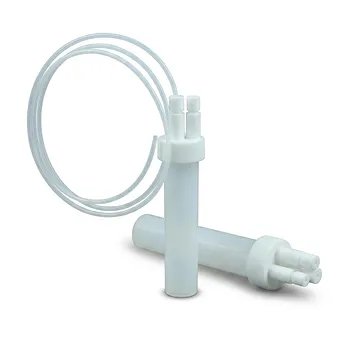
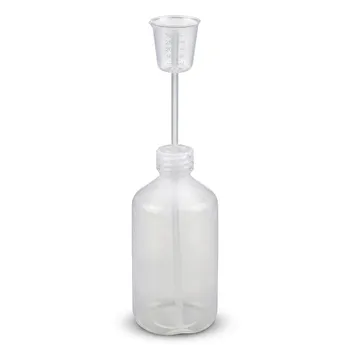
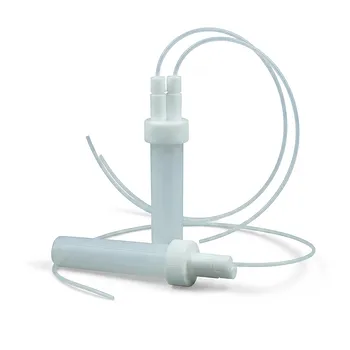
PTFE is suitable for high-purity laboratory supplies and chemical transfer systems because it remains chemically inert when exposed to many of the acids, bases, solvents, and fluorinated compounds that attack conventional materials. This resistance helps PTFE components retain their shape and containment function while minimizing chemical reaction, dissolution, and contaminant leaching. As a result, PTFE is widely used for reagent bottles, digestion vessels, tubing, valves, fittings, and custom-machined fluid-handling parts used in demanding analytical and processing environments.
PTFE acts as a chemically protective barrier between aggressive media and the laboratory system. Its low reactivity preserves equipment integrity and helps protect ultra-trace samples from contamination during preparation, transfer, and analysis.
Why PTFE Resists Extreme Corrosive Agents
The Fluorinated Molecular Structure
PTFE is built around a carbon backbone protected by fluorine atoms. The strong carbon-fluorine bonds and dense fluorine sheath shield the carbon chain from chemical attack.
This structure makes PTFE highly resistant to many concentrated acids, bases, organic solvents, halogenated hydrocarbons, ketones, alcohols, and other aggressive chemicals. It also remains insoluble in virtually all common laboratory solvents.
Resistance to Fluorinated Compounds
Many conventional metals and standard plastics deteriorate when exposed to highly reactive fluorinated compounds. PTFE is substantially more inert in these environments, which is one reason it has historically been selected for handling exceptionally reactive materials such as uranium hexafluoride.
This does not mean that PTFE is universally immune under every possible combination of chemical concentration, temperature, pressure, and exposure time. Application-specific compatibility testing remains necessary, particularly for unusual fluorinating conditions or elevated temperatures.
Stability Across Demanding Conditions
PTFE maintains useful chemical inertness across a broad temperature range, including cryogenic and elevated-temperature laboratory environments. Its high thermal stability supports processes such as chemical digestion, aggressive reagent handling, and reaction preparation.
Chemical compatibility and mechanical performance are separate considerations. PTFE may resist the chemical medium while still requiring design allowances for creep, pressure, dimensional tolerances, or thermal expansion.
How Chemical Inertness Protects High-Purity Work
Preventing Sample Leaching
A container or fluid path can contaminate a sample if its material dissolves, reacts, or releases additives. Because PTFE does not readily dissolve or react with most laboratory chemicals, it minimizes the risk of material-derived contamination.
This is particularly important in trace analysis, where contamination at very low concentrations can affect measurement accuracy or obscure the presence of the target compound.
Preserving Sample Composition
Reactive equipment surfaces can adsorb, catalyze, or chemically alter sample components. PTFE's low surface energy and non-reactive surface reduce the likelihood that aggressive reagents or analytes will interact with the equipment.
The result is more reliable sample preparation and transfer, especially when the laboratory must preserve the original composition of a small or highly sensitive sample.
Maintaining Fluid-Handling Integrity
Tubing, valves, fittings, and machined PTFE components must contain corrosive media without cracking, dissolving, or losing functional dimensions. PTFE's chemical resistance allows these parts to serve as dependable barriers between the process fluid and surrounding equipment.
That protection is valuable in transfer systems carrying concentrated acids, aggressive solvents, and reactive fluorinated chemicals. It also reduces the need to replace components damaged by routine chemical exposure.
Where PTFE Is Used
Digestion and Reaction Equipment
PTFE digestion vessels, tubes, crucibles, and reaction apparatus can withstand severe chemical treatment while limiting contamination from the vessel itself. This supports sample decomposition, preparation, and controlled reactions involving strong acids or bases.
The material's thermal stability also helps when chemical digestion combines corrosive reagents with elevated temperatures.
Reagent Bottles and Containers
PTFE reagent bottles and containers provide non-reactive storage and handling surfaces for aggressive laboratory chemicals. Their resistance helps preserve both the container and the reagent during repeated use.
Low surface energy also makes PTFE relatively easy to clean, supporting workflows where cross-contamination must be minimized.
Tubing, Valves, and Fittings
PTFE tubing and valves are used to move corrosive chemicals through laboratory and process systems. Their chemical inertness protects the fluid path from attack and reduces the risk that the system will introduce foreign material into the stream.
For higher-purity or more demanding applications, PTFE may be combined with related fluoropolymers such as PFA, selected according to the required flexibility, transparency, dimensional performance, and fabrication method.
Understanding the Trade-offs
Chemical Resistance Does Not Equal Universal Compatibility
PTFE resists an exceptionally broad range of chemicals, but no material should be treated as compatible with every chemical under every condition. Extreme temperature, pressure, concentration, exposure duration, radiation, or highly specialized fluorinating environments can change performance.
Compatibility decisions should therefore consider the complete operating envelope rather than relying only on a general resistance chart.
Mechanical Design Still Matters
PTFE can deform gradually under sustained load, particularly at elevated temperatures. This behavior, commonly described as creep, can affect threaded connections, seals, valve seats, and pressure-containing parts.
Designers must account for support, compression, dimensional stability, and operating temperature even when chemical attack is not a concern.
Purity Depends on Manufacturing and Handling
PTFE itself is highly non-reactive, but purity can still be affected by processing residues, machining debris, fittings, seals, cleaning methods, or poor handling practices. Material selection should include the required grade, manufacturing controls, surface condition, and cleaning protocol.
For ultra-trace work, the entire fluid path must be evaluated as a system. Selecting PTFE for only one component does not eliminate contamination risks from the remaining components.
PTFE and PFA Serve Different Design Needs
PTFE is an excellent choice when maximum chemical inertness, low friction, and robust fabricated components are priorities. PFA can be preferable where melt-processable construction, transparency, or certain fabrication and inspection requirements are important.
The correct choice depends on the application rather than on chemical resistance alone.
How to Apply This to Your Project
The strongest material decision connects the chemical environment with the purity, temperature, pressure, and mechanical requirements of the system.
- If your primary focus is ultra-trace sample purity: Use high-purity PTFE components throughout the wetted path and control manufacturing, cleaning, and handling to limit leachable contamination.
- If your primary focus is aggressive acid or solvent transfer: Select PTFE tubing, valves, fittings, or machined components after checking compatibility at the actual concentration, temperature, pressure, and exposure duration.
- If your primary focus is chemical digestion or reaction work: Use PTFE vessels and apparatus that combine chemical inertness with adequate thermal and mechanical support.
- If your primary focus is system durability: Evaluate PTFE's creep, sealing, pressure, and dimensional behavior alongside its excellent resistance to chemical attack.
- If your primary focus is visual inspection or fabrication flexibility: Compare PTFE with PFA, since related fluoropolymers may better suit transparent or melt-processed components.
PTFE's chemical resistance makes it a dependable foundation for high-purity laboratory and chemical transfer systems when chemical compatibility is evaluated together with mechanical design and contamination control.
Summary Table:
| Feature | Benefit |
|---|---|
| Fluorinated structure | Resists acids, bases, solvents & fluorinated compounds |
| Low reactivity | Minimizes contamination and preserves sample integrity |
| Thermal stability | Suitable for digestion and high-temperature processes |
| Broad chemical compatibility | Reliable for tubing, vessels, and custom components |
| Low surface energy | Easy to clean and reduces adsorption |
Elevate your lab's purity and performance with our high-purity PTFE and PFA solutions—from custom-machined components to complete fluid handling systems. Our expert team ensures chemical compatibility and contamination control for your most demanding applications. Contact us today to discuss your requirements and get a tailored quote.
Related Products
- Corrosion Resistant PTFE Sampling Spoon for High Purity Solid Powder Reagent Handling and Laboratory Chemical Transfer
- Corrosion Resistant PTFE Support with PFA Transparent Reaction Tank and High Purity PFA Sampling Tube for Trace Analysis
- High Purity PFA Chromatography Column with Collection Bottle Corrosion Resistant Fluoropolymer Filtration System for Trace Analysis
- Custom PTFE Petri Dish 200mm High Purity Corrosion Resistant Low Background Laboratory Ware
- Custom PTFE Constant Pressure Separatory Funnel 100ml Fluoropolymer Labware for Corrosive Chemical Transfer
People Also Ask
- How do the high melting point and non-flowing melt characteristics of PTFE influence custom machining? Discover key fabrication insights and design tips for lab fluid components.
- How do the low surface energy and non-wetting properties of PTFE fluoropolymers benefit precision laboratory fluid transfer components and analytical labware? Discover the advantages for your lab.
- How do fluoropolymers benefit fluid transfer systems and sample prep containers? Non-stick performance for improved recovery, reduced contamination, and easier cleaning.
- What factors should be considered when selecting a PTFE shovel for laboratory use? Ensure Chemical Inertness & Sample Integrity
- What standard ASTM test methods are used to characterize the raw physical and thermal properties of fluoropolymers like PTFE, PFA, and PVDF? Learn the resin-specific test panels for powders, melting, and flow.