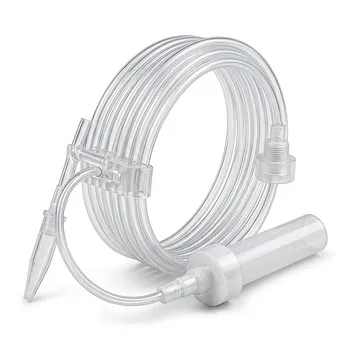
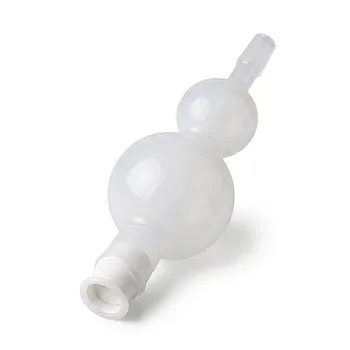
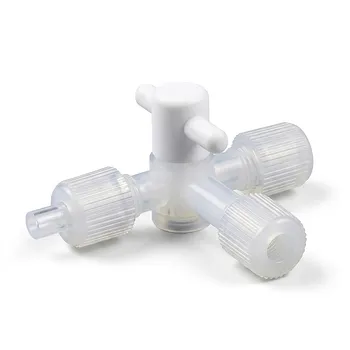
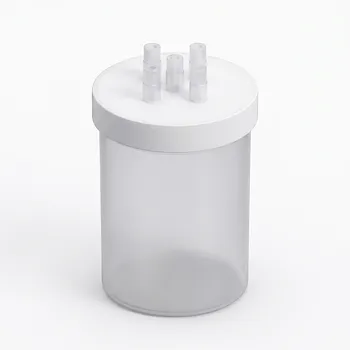
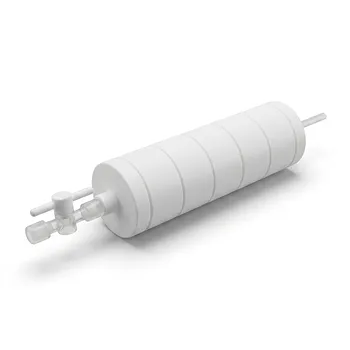
PTFE and PFA resist chemical attack because their carbon backbones are surrounded by tightly bonded fluorine atoms. In both fluoropolymers, strong carbon–fluorine (C–F) bonds and dense fluorine shielding make the polymer difficult for acids, bases, solvents, and reactive reagents to penetrate or chemically disrupt. This molecular stability allows PTFE and PFA laboratory supplies—such as vessels, tubing, reagent bottles, and digestion components—to remain highly inert and minimize contamination.
The key principle is molecular protection: fluorine atoms form a strong, continuous shield around the carbon backbone, while the polymer’s low surface energy limits wetting, absorption, and interaction with laboratory chemicals.
How the Atomic Structure Creates Chemical Resistance
A fully fluorinated carbon backbone
PTFE consists of repeating –CF₂–CF₂– units. PFA has a closely related perfluorinated backbone, with small perfluoroalkoxy groups incorporated to improve melt processability.
In both materials, most of the exposed molecular surface is fluorine rather than hydrogen or other more chemically reactive groups. This gives the polymer a highly stable, nonreactive outer structure.
Strong carbon–fluorine bonds
Fluorine is the most electronegative element, so it draws electron density strongly toward itself in the C–F bond. The resulting bond is short, strong, and difficult for chemical reagents to break under ordinary laboratory conditions.
The C–F bond is commonly cited at approximately 116 kcal/mol, making it substantially stronger than typical carbon–hydrogen or carbon–oxygen bonds. This high bond strength is a major reason PTFE and PFA resist thermal degradation and chemical attack.
Fluorine shields the carbon backbone
The carbon chain is the structural framework of the polymer, but it is largely covered by fluorine atoms. Their size, arrangement, and strong covalent attachment create a dense protective sheath around the underlying carbon–carbon bonds.
This shielding makes it difficult for aggressive molecules to reach and react with the backbone. Chemical resistance therefore comes from both bond strength and physical protection.
Why Laboratory Chemicals Have Limited Effect
Resistance to acids, bases, and oxidizing agents
Many laboratory acids and bases cannot readily break the C–F bonds or penetrate the fluorinated structure. PTFE and PFA therefore maintain their integrity when exposed to a broad range of corrosive reagents.
Their resistance also extends to many oxidizing and reducing environments, although performance always depends on concentration, temperature, exposure time, and the specific chemical combination.
Low chemical interaction with solvents
The fluorinated surface has very low surface energy and is both hydrophobic and oleophobic. As a result, many aqueous and organic liquids do not readily wet, swell, or dissolve the material.
This helps prevent reagent bottles, tubing, and vessels from absorbing sample components or releasing polymer-derived contaminants into the sample.
Reduced permeation and sample loss
The dense fluorinated structure also limits the movement of many molecules through the polymer matrix. This can reduce solvent permeation, evaporation-related losses, and transport of hydrocarbon compounds through tubing or containers.
The result is particularly valuable in trace analysis, where even small amounts of contamination or sample loss can affect measurement accuracy.
How PTFE and PFA Translate Molecular Stability into Labware Performance
PTFE for maximum inertness and broad compatibility
PTFE is widely used for reaction vessels, beakers, digestion tubes, liners, gaskets, and transfer components where chemical inertness is the primary requirement.
Its strong fluorinated structure provides excellent resistance to aggressive reagents and high temperatures, while its low-friction, nonwetting surface can make cleaning easier.
PFA for chemically resistant, processable components
PFA retains the perfluorinated chemical structure of PTFE but is modified with perfluoroalkoxy groups. This changes its processing behavior, allowing it to be melt-processed into items such as bottles, tubing, fittings, and complex laboratory components.
Its chemical resistance remains broadly comparable to PTFE for many laboratory applications, while its greater processability can support transparent and more intricate designs.
Protection during digestion and thermal processing
Microwave digestion and other heated laboratory procedures expose containers to combinations of corrosive chemicals, pressure, and elevated temperature. PTFE and PFA resist chemical attack under these conditions because their molecular bonds and fluorinated surfaces remain stable across a wide operating range.
However, the safe operating limit must be selected for the complete chemical and temperature profile rather than assumed from polymer identity alone.
Understanding the Trade-offs
Chemical resistance is not absolute
PTFE and PFA are highly resistant, but no material is universally inert. Certain conditions—including very high temperatures, elemental fluorine, molten alkali metals, and other specialized reagents—can attack or damage fluoropolymers.
Always consult compatibility data for the exact chemical, concentration, temperature, pressure, and exposure duration.
Low surface energy complicates manufacturing
The same low surface energy that prevents contamination and wetting also makes fluoropolymers difficult to bond, coat, and print. Layer-to-layer adhesion can be poor, and conventional adhesives often perform inadequately without specialized surface treatment.
Processing can be demanding
PTFE has extremely high melt viscosity and is not conventionally processed like ordinary thermoplastics. PFA is more readily melt-processable, but high-temperature processing still requires careful control because fluoropolymer decomposition products can be hazardous and corrosive.
For precision components, machining or specialized manufacturing methods may be preferable to standard molding or additive manufacturing.
Mechanical properties require consideration
Chemical inertness does not eliminate issues such as creep, deformation under load, or dimensional changes at elevated temperature. A fluoropolymer component may resist a reagent perfectly while still requiring mechanical support or an appropriate pressure rating.
How to Apply This to Your Laboratory
The molecular structure explains why PTFE and PFA are strong choices, but selection should also account for geometry, temperature, pressure, purity, and chemical exposure.
- If your primary focus is maximum chemical inertness: Choose PTFE or PFA components after verifying compatibility with the specific reagent and operating conditions.
- If your primary focus is transparent bottles or complex melt-processed parts: Consider PFA, which combines perfluorinated chemical resistance with greater processing flexibility.
- If your primary focus is trace analysis and sample purity: Use fluoropolymer vessels and fluid paths to reduce leaching, adsorption, wetting, and permeation risks.
- If your primary focus is heated digestion or aggressive reactions: Confirm the complete temperature–chemical combination and the component’s mechanical limitations rather than relying on chemical resistance alone.
PTFE and PFA protect laboratory samples because their strong, fluorine-shielded molecular architecture makes chemical attack difficult while their low-energy surfaces minimize unwanted interaction.
Summary Table:
| Factor | PTFE | PFA |
|---|---|---|
| Structure | Linear -CF2-CF2- | Perfluorinated with PFA side groups |
| Key Bond | C-F (116 kcal/mol) | C-F (similar) |
| Chemical Resistance | Excellent | Excellent |
| Processability | Poor (not melt-processable) | Good (melt-processable) |
| Transparency | Opaque | Transparent possible |
| Typical Uses | Vessels, liners, gaskets | Bottles, tubing, fittings |
Trust KINTEK for precision PTFE/PFA labware. Our products offer unmatched chemical resistance for your most demanding applications. Contact us today to discuss your needs!
Related Products
- PTFE PFA Vacuum Filtration System Corrosion Resistant Customizable Shatterproof Laboratory Device
- High Purity PFA Crucible and Corrosion Resistant PTFE Beaker for Trace Analysis and Custom Laboratory Applications
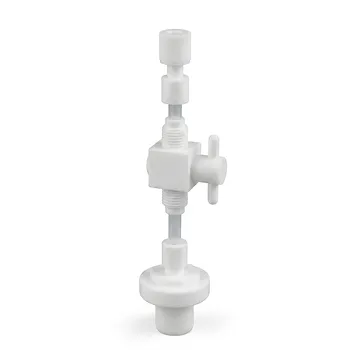
- High Purity PFA PTFE Flare Stop Valves Customizable 2-Way 3-Way Reducing Fluoropolymer Fluid Control Solutions
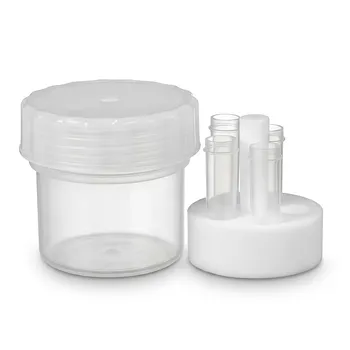
- Corrosion Resistant PTFE Support with PFA Transparent Reaction Tank and High Purity PFA Sampling Tube for Trace Analysis
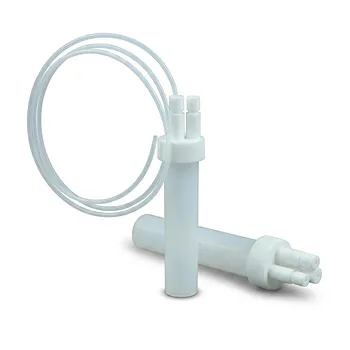
- High Purity PFA Coiled Tubing Custom PTFE Machining PFA Welding and Precision Bending Solutions
People Also Ask
- What makes PTFE filtration systems advantageous for industrial and scientific use? Unmatched Chemical & Thermal Stability
- How does the hydrophobicity of PTFE filters benefit their use? Ensure Uninterrupted Gas Flow and Solvent Filtration
- What temperature resistance do PTFE filters offer? Unmatched Thermal Stability from -200°C to +260°C
- Which chemicals are fully compatible with PTFE filters? Discover Unmatched Chemical Resistance
- What steps are involved in selecting the proper PTFE filter? A 4-Step Guide to Optimal Filtration