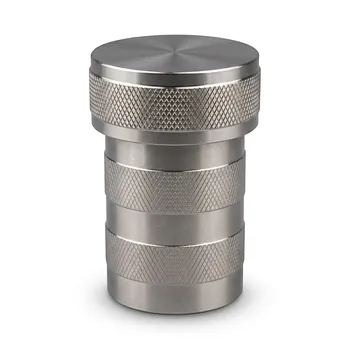
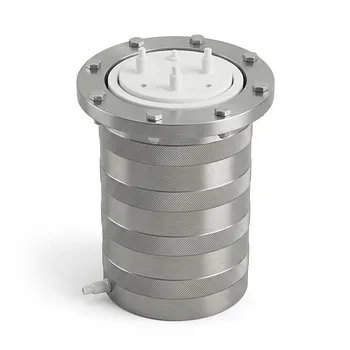
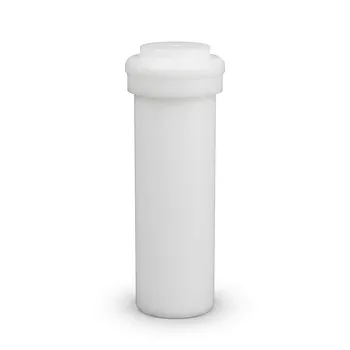
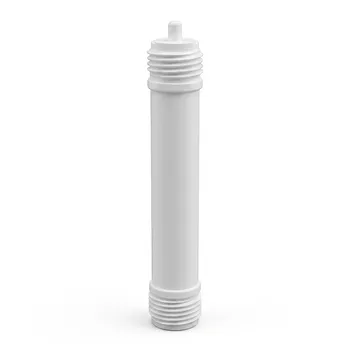
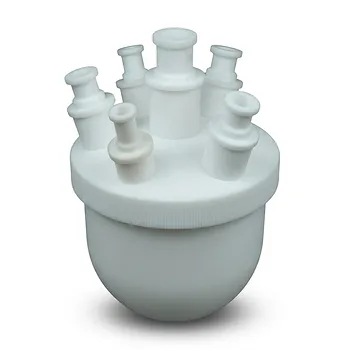
The transition from traditional one-pot synthesis to split synthesis requires a fundamental shift from static reaction vessels to highly customized, modular laboratory hardware. While one-pot methods rely on standard autoclaves, split synthesis demands specialized reaction vessels with custom-fabricated liners and interfaces designed for mid-reaction filtration and centrifugation. These systems must be engineered with high-precision CNC fabrication to maintain structural integrity under autogenous pressures exceeding 1.6 MPa while facilitating frequent manual or automated interventions.
Core Takeaway: Split synthesis replaces the "set-and-forget" nature of one-pot methods with a dynamic hardware requirement. Success depends on custom-engineered, CNC-machined components that allow for mid-cycle phase separation without compromising the high-pressure environment required for zeolite formation.
The Engineering Requirements of Mid-Reaction Intervention
Moving Beyond the Standard Autoclave
In traditional one-pot synthesis, the reaction vessel remains sealed throughout the process, requiring minimal customization. Split synthesis, however, involves removing up to 80% of the liquid phase or isolating solid phases at specific intervals.
This necessitates modular hardware that can be disassembled and reassembled during the crystallization process. Standard off-the-shelf liners are rarely sufficient for these complex workflows.
Specialized Interfaces for Phase Separation
Custom-fabricated liners must include specialized interfaces that allow for seamless connection to filtration or centrifugation equipment. This ensures that the solid-liquid separation occurs quickly and without contaminating the precursor materials.
The goal is to enable frequent opening and reflux operations that would be impossible with traditional, rigid autoclave designs. This hardware flexibility is the primary driver for improved aluminum distribution control in the final zeolite.
Precision Fabrication and Pressure Management
The Necessity of CNC Machining
Because these vessels are opened and closed mid-reaction, the tolerances for seals and threads are incredibly tight. High-precision CNC fabrication is mandatory to ensure that the customized components fit perfectly every time.
Poor machining leads to catastrophic failure or leakage during the heating cycle. Precision engineering is the only way to guarantee experimental repeatability across multiple synthesis batches.
Withstanding Autogenous Pressures
Zeolite synthesis often occurs at high temperatures, generating significant internal pressure. The customized hardware must be rated to withstand autogenous pressures exceeding 1.6 MPa.
Customized liners and interfaces must balance the need for easy accessibility with the structural rigidity required for safety. This dual requirement makes the design phase significantly more complex than for traditional methods.
Understanding the Trade-offs
Increased Complexity and Cost
The primary trade-off for the precision offered by split synthesis is a dramatic increase in capital expenditure. Custom CNC-machined hardware is significantly more expensive to design, produce, and maintain than standard laboratory equipment.
Maintenance and Failure Points
Modular systems introduce multiple potential failure points, particularly at the custom interfaces and seals. Frequent disassembly increases the wear and tear on components, requiring a rigorous maintenance schedule to prevent pressure-related accidents.
Applying This to Your Research Goal
Choosing the Right Infrastructure
- If your primary focus is rapid screening of new zeolite frameworks: Stick to traditional one-pot synthesis to minimize hardware setup time and complexity.
- If your primary focus is precise control over aluminum distribution: Invest in custom CNC-machined vessels that support modular mid-reaction phase separation.
- If your primary focus is industrial scalability and repeatability: Focus on developing automated interfaces that reduce human error during the separation and reflux stages.
Ultimately, the shift to split synthesis is an investment in hardware precision to achieve a level of chemical control that traditional methods simply cannot match.
Summary Table:
| Feature | Traditional One-Pot Synthesis | Split Synthesis (Advanced) |
|---|---|---|
| Hardware Type | Standard sealed autoclaves | Custom modular reaction vessels |
| Vessel Design | Static, "set-and-forget" | Dynamic, intervention-ready |
| Customization | Minimal; uses standard liners | High; requires custom CNC interfaces |
| Intervention | No mid-reaction access | Facilitates filtration/centrifugation |
| Pressure Rating | Standard high-pressure | >1.6 MPa with precision sealing |
| Precision Focus | Basic chemical yields | Precise aluminum distribution control |
Elevate Your Zeolite Synthesis with Precision Engineering
Transitioning from one-pot to split synthesis requires more than just standard labware—it demands high-precision, custom-engineered hardware that performs under pressure. At KINTEK, we specialize in the end-to-end custom CNC fabrication of high-performance fluoropolymer components designed specifically for challenging chemical environments.
Whether you need custom PTFE or PFA hydrothermal synthesis liners, specialized high-pressure digestion vessels, or complex fluid transfer components like tubes, fittings, and valves, we deliver the precision required for experimental repeatability. From everyday basic labware (beakers, crucibles, reagent bottles) to advanced bespoke laboratory setups and non-standard machined parts, KINTEK is your absolute partner for fluoropolymer excellence.
Ready to optimize your modular reaction system? Contact our engineering team today to discuss your custom fabrication needs!
References
- Sven Robijns, Michiel Dusselier. Split Syntheses: Introducing Bottom-Up Control over Aluminum in SSZ-13 and ZSM-5 Zeolites. DOI: 10.1021/jacsau.4c00551
This article is also based on technical information from Kintek Knowledge Base .
Related Products
- High Temperature Corrosion Resistant Hydrothermal Synthesis Reactor with TFM Inner Liner and Straight Cylinder Design
- PTFE Lined High Pressure Digestion Vessel 50ml High Temperature Hydrothermal Synthesis Tank
- High Pressure Custom TFM Reactor Stainless Steel Outer Vessel PTFE Inner Cup for Corrosive Synthesis
- High Purity TFM Microwave Digestion Vessels for Trace Analysis and Custom Sample Preparation Systems
- High Purity PTFE Microwave Digestion Vessel for Soil and Food Analysis Acid Resistant Fluoropolymer Sample Preparation Liners
People Also Ask
- What is the role of a corrosion-resistant reactor in the synthesis of lignin-based carbon dots? Ensure Maximum Purity
- What are the technical advantages of using hydrothermal synthesis reactors for advanced electronic & optical nanomaterials?
- How does a hydrothermal synthesis reactor facilitate the production of crystalline materials with tailored morphologies? Precision Crystal Growth
- Why is the sealing reliability of a hydrothermal synthesis reactor critical for 24-hour cycles? Ensure Nano-Precision
- What role do hydrothermal synthesis reactors play in CQD preparation? Achieve High-Purity Nanomaterial Synthesis