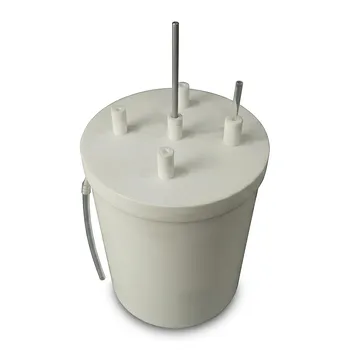
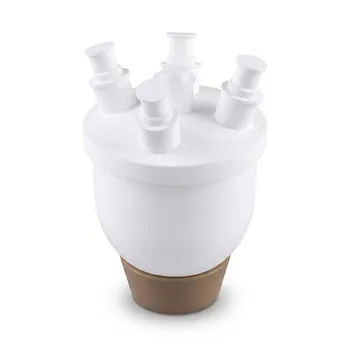
Maintaining chemical equilibrium and stoichiometric precision is the primary reason sealed reaction vessels are indispensable in the esterification of oleic acid. By preventing the evaporation of volatile methanol at elevated process temperatures, these vessels ensure that the reaction has the necessary surplus of alcohol to drive the conversion of fatty acids into biodiesel.
Core Takeaway: Sealed reaction vessels act as a closed system that preserves the critical oil-to-alcohol molar ratio, preventing reactant loss and ensuring the reaction reaches maximum conversion efficiency.
Maintaining Thermodynamic Equilibrium
Preventing Methanol Evaporation
Esterification often requires operating temperatures around 90 degrees Celsius, which is significantly higher than the boiling point of methanol (approximately 64.7°C).
In an open system, the methanol would rapidly evaporate, leaving the reaction mixture and halting the conversion process prematurely.
A sealed vessel creates a pressurized environment that keeps the methanol in the liquid phase or contains it as a saturated vapor, preventing its escape from the system.
Sustaining the Molar Ratio
The esterification of oleic acid is a reversible reaction that requires an excess of alcohol to shift the equilibrium toward the formation of methyl esters.
If methanol levels drop due to evaporation, the oil-to-alcohol molar ratio shifts, which can stall the reaction or even trigger the reverse reaction.
By sealing the vessel, engineers ensure the stoichiometric environment remains constant, which is vital for achieving the high conversion rates required for industrial-grade biodiesel.
Operational Control and Optimization
Observation of Mixing Dynamics
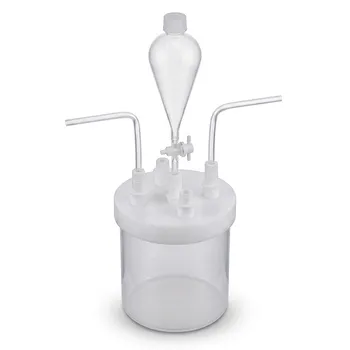
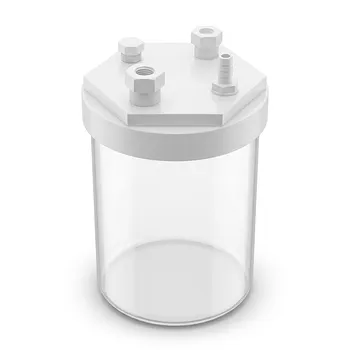
Using transparent glass or specialized viewing ports in a sealed apparatus allows technicians to monitor the physical behavior of the reactants.
Because biodiesel production often involves a heterogeneous catalytic system, seeing the interaction between the solid catalyst and the liquid reactants is crucial.
Visual access enables the optimization of stirring and mixing dynamics, ensuring that the oleic acid and methanol are in constant contact with the catalyst surface.
Temperature and Pressure Stability
A sealed environment provides superior control over the thermal energy within the system, leading to more uniform reaction kinetics.
This stability prevents "cold spots" that could occur if heat were lost through the continuous evaporation of solvents in an unsealed container.
Consistent pressure and temperature ensure that the reaction rate remains predictable and repeatable across different batches.
Understanding the Trade-offs
Pressure Accumulation Risks
The primary risk of using sealed vessels is the buildup of internal pressure as methanol vaporizes and expands.
Vessels must be rated for the specific pressures generated at 90 degrees Celsius to prevent mechanical failure or explosions.
This requirement necessitates more expensive, specialized reaction apparatus compared to simple atmospheric mixing tanks.
Material Limitations
While transparent glass allows for observation, it is more fragile and sensitive to thermal shock than stainless steel alternatives.
Engineers must balance the need for visual monitoring with the structural integrity required for high-pressure, high-temperature chemical processing.
How to Apply This to Your Project
Recommendations for Implementation
When designing or selecting a vessel for oleic acid esterification, your choice should be dictated by your specific production goals and safety requirements.
- If your primary focus is maximizing conversion yield: Utilize a high-pressure sealed reactor to maintain a 6:1 or higher methanol-to-oil ratio without risk of reactant loss.
- If your primary focus is process optimization and R&D: Invest in a sealed glass reactor to observe the stirring dynamics and ensure the heterogeneous catalyst is being utilized effectively.
- If your primary focus is safety and cost-scaling: Ensure all sealed vessels are equipped with pressure relief valves and are constructed from materials compatible with both the acidity of oleic acid and the volatility of methanol.
Implementing a sealed reaction environment is the single most effective way to ensure the stoichiometric stability required for high-quality biodiesel production.
Summary Table:
| Benefit | Mechanism | Impact on Production |
|---|---|---|
| Methanol Retention | Prevents evaporation above 64.7°C | Maintains required surplus of alcohol for conversion |
| Equilibrium Shift | Closed system environment | Drives reversible reaction toward methyl ester formation |
| Process Stability | Pressure & thermal energy control | Ensures uniform reaction kinetics and batch repeatability |
| Visual Optimization | Transparent viewing ports | Allows for real-time monitoring of stirring and catalyst dynamics |
Optimize Your Biodiesel Synthesis with KINTEK
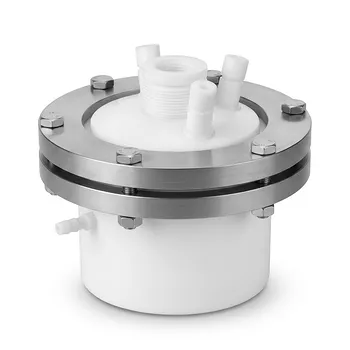
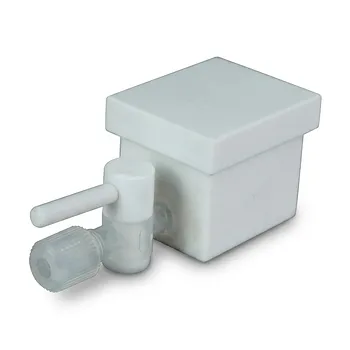
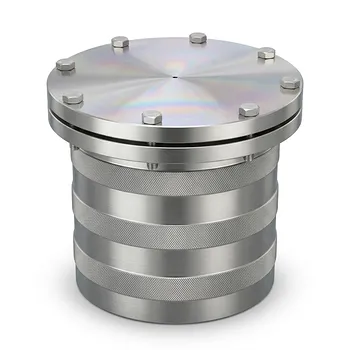
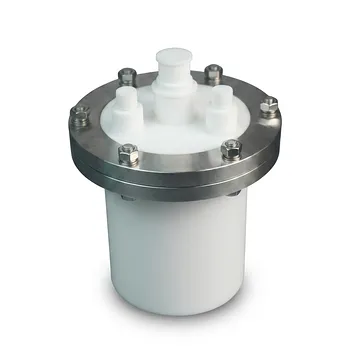
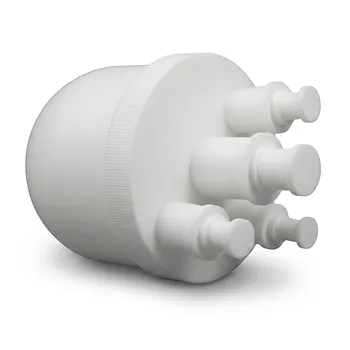
Achieving high-purity methyl esters requires precision and high-performance materials. At KINTEK, we manufacture virtually all imaginable laboratory supplies crafted from high-performance fluoropolymers like PTFE and PFA. From sealed reaction vessels, hydrothermal synthesis liners, and microchannel reactors to essential fluid transfer components like tubing, fittings, and valves, our products ensure your stoichiometric ratios remain perfect and your yields remain high.
Whether you need everyday basic labware (beakers, separatory funnels, and burettes) or advanced custom CNC-fabricated reaction apparatus, we provide everything from complex non-standard machined parts to high-volume orders. Contact us today to discover how our exclusive focus on high-performance materials can enhance your laboratory's efficiency and safety.
References
- Michelle Pains Duarte, Rafik Naccache. Microwave-assisted synthesis of a sulfonated carbon-based catalyst for efficient esterification of oleic acid into biodiesel. DOI: 10.1039/d5cy00736d
This article is also based on technical information from Kintek Knowledge Base .
Related Products
- Custom PTFE Reaction Apparatus Flange Sealed Corrosion Resistant Jacketed Vessel with Stirring Bar and Thermometer Ports
- Corrosion Resistant PTFE Evaporation Cell Electrophoresis Tank 400ml Flame Retardant Insulated Reaction Vessel Customizable
- Custom TFM Reaction Vessel with Stainless Steel Jacket and PTFE Inner Cup for High Corrosion Resistance
- High Purity PTFE Corrosion Resistant Reaction Vessel with Luer Fittings and Caps for Trace Analysis
- PTFE 10L Reaction Vessel with Stirring Paddle Customizable Corrosion Resistant High Temperature Reactor for Biopharmaceutical and Chemical Processing
People Also Ask
- How do perfluorinated solvent environments influence the selection of reaction vessels and fluid handling components in nonaqueous emulsion polymerizations? Choose fluoropolymer materials.
- Why are high-purity PTFE or PFA reaction vessels recommended for the synthesis of PANI-TiC hybrid materials? - Guide
- Why are fluoroplastic (PTFE) reaction vessels recommended for Methylene Blue (MB) adsorption kinetic experiments?
- Why is a PTFE reaction vessel required for Ti3C2Tx MXene synthesis? Ensure Safe HF Etching & High Purity
- Why is a high-quality PTFE reaction vessel required for the etching preparation of Ti3C2Tx MXene? Ensure Pure Synthesis.