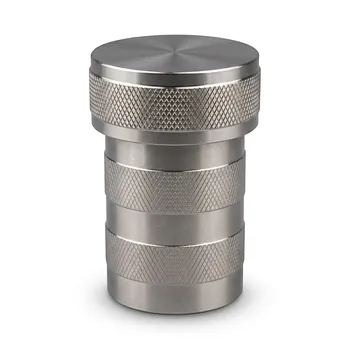
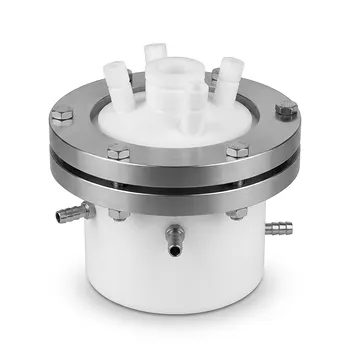
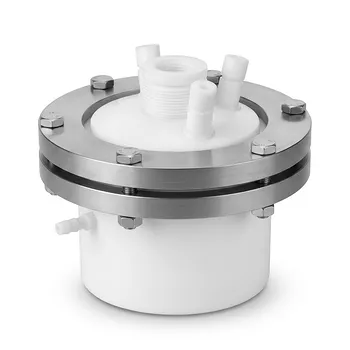
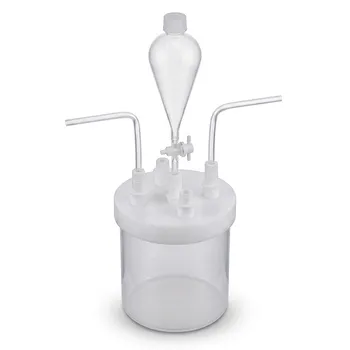
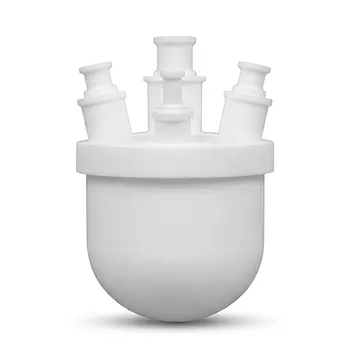
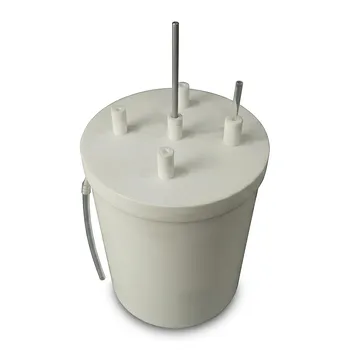
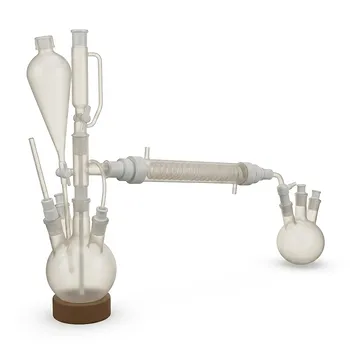
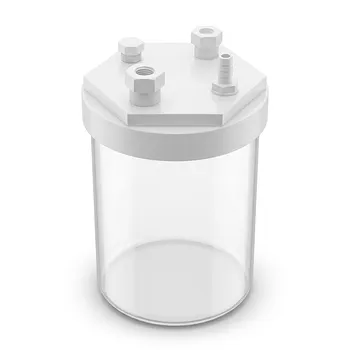
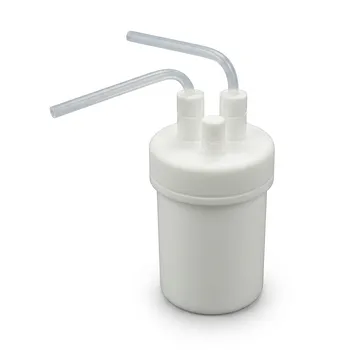
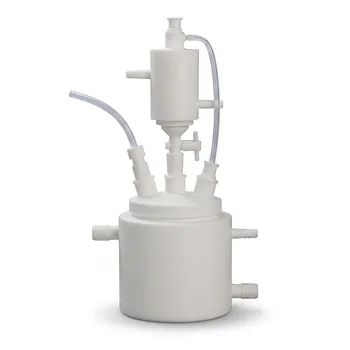
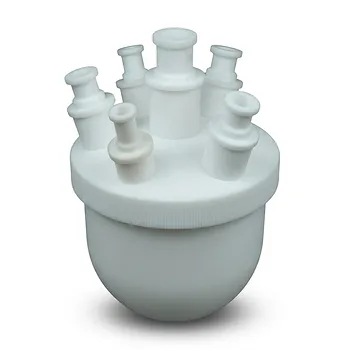
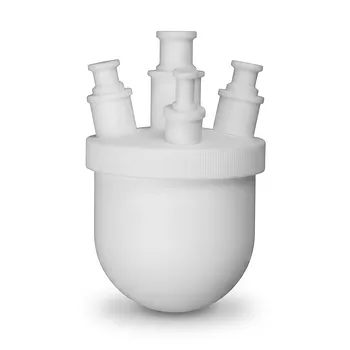
Sealed hydrothermal synthesis reactors facilitate the removal of iron matrices by creating a high-pressure, high-temperature environment that accelerates chemical reaction kinetics. At temperatures such as 120°C, these reactors allow hydrochloric acid (HCl) to penetrate deep into the composite structure, dissolving iron and other impurities that would remain trapped under standard atmospheric conditions. This process ensures the recovery of pure, discrete alpha-Al2O3 (alumina) nanoparticles without damaging their structural integrity.
Core Takeaway: By leveraging the combined effects of elevated pressure and temperature, sealed reactors enable selective corrosion, ensuring that acid can permeate the entire composite matrix to remove deep-seated impurities that room-temperature processes cannot reach.
The Role of Hydrothermal Conditions in Matrix Dissolution
Enhanced Reaction Kinetics
The primary advantage of using a sealed reactor is the significant boost to reaction kinetics. At 120°C, the rate at which hydrochloric acid reacts with the iron matrix is exponentially faster than at room temperature.
This thermal energy allows the acid to overcome the activation energy barriers required to break down the iron-based bonds within the composite. Consequently, the dissolution process is not only more thorough but also considerably faster.
Improved Acid Permeability
In a standard open-vessel environment, acid often fails to reach the core of dense nanoparticle composites. The pressurized environment inside a sealed hydrothermal reactor forces the liquid acid into the microscopic pores and interstices of the composite.
This increased permeability ensures that iron atoms embedded deep within the alpha-Al2O3 structure are exposed to the solvent. Without this pressure, the outer layers of the composite might dissolve while the inner "core" remains contaminated.
Selective Corrosion and Alumina Stability
Maintaining Structural Integrity
A critical aspect of this process is the selectivity of the corrosion. While hydrochloric acid is aggressive toward the iron matrix at high temperatures, alpha-Al2O3 is known for its extreme chemical stability and resistance to acid attack.
The reactor parameters are calibrated to ensure the iron is completely dissolved while the alpha-alumina nanoparticles remain untouched. This results in the recovery of high-quality, discrete particles rather than a degraded or partially dissolved product.
Removal of Deep-Seated Impurities
Beyond the primary iron matrix, hydrothermal synthesis is effective at removing other residual impurities that may be trapped during the initial composite formation. The high-energy environment ensures that these secondary contaminants are also solubilized.
By the end of the hydrothermal cycle, the iron is transitioned into a soluble chloride solution. This allows the solid, pure alumina nanoparticles to be easily separated through standard filtration or centrifugation.
Understanding the Trade-offs
Equipment and Safety Requirements
Working with sealed reactors at high temperatures and pressures introduces significant safety considerations. The reactor must be rated for the specific pressures generated by HCl at 120°C to prevent mechanical failure or explosions.
Additionally, the corrosive nature of hot hydrochloric acid requires specialized reactor liners, typically made of PTFE (Teflon) or other acid-resistant materials. Standard stainless steel reactors would be rapidly destroyed by the process.
Precision in Parameter Control
Hydrothermal processing requires precise control over dwell time and temperature. While alpha-alumina is stable, excessive exposure or higher-than-intended temperatures could eventually lead to surface modifications of the nanoparticles.
Over-pressurization can also lead to issues with the seal integrity of the reactor. Maintaining a strict protocol for heating and cooling rates is essential to ensure consistent batch quality and equipment longevity.
How to Apply This to Your Project
When utilizing hydrothermal reactors for matrix removal, your approach should be dictated by your specific purity requirements and the scale of your synthesis.
- If your primary focus is maximum purity: Utilize higher temperatures (up to 120°C) and longer dwell times to ensure that every trace of the iron matrix is fully reached by the acid.
- If your primary focus is nanoparticle surface integrity: Monitor the concentration of the hydrochloric acid carefully to ensure it is sufficient for iron removal without unnecessarily stressing the Al2O3 crystal lattice.
- If your primary focus is process safety: Ensure the use of high-quality PTFE-lined autoclaves and never exceed the maximum fill volume, as this can cause dangerous pressure spikes during heating.
By mastering the hydrothermal environment, you can achieve a level of purification that is simply impossible with open-air chemical leaching.
Summary Table:
| Feature | Mechanism | Benefit for Nanoparticle Recovery |
|---|---|---|
| High Temperature (120°C) | Boosts Reaction Kinetics | Rapidly breaks iron bonds and overcomes activation energy barriers. |
| Pressurized Environment | Increases Acid Permeability | Forces HCl into microscopic pores to reach deep-seated iron impurities. |
| Selective Corrosion | Differential Chemical Stability | Dissolves the iron matrix while keeping alpha-Al2O3 particles intact. |
| Fluoropolymer Lining | Chemical Inertness (PTFE/PFA) | Protects reactor integrity from hot, corrosive hydrochloric acid. |
Elevate Your Nanoparticle Research with KINTEK’s Fluoropolymer Expertise
At KINTEK, we specialize in providing the high-performance tools necessary for demanding processes like hydrothermal matrix removal. Achieving extreme purity in alpha-Al2O3 synthesis requires equipment that can survive aggressive acids and high-pressure cycles without leaching contaminants.
From hydrothermal synthesis liners, microwave digestion vessels, and high-purity trace analysis instruments to everyday essentials like PTFE beakers, reagent bottles, and centrifuge tubes, we manufacture virtually every laboratory supply imaginable from premium fluoropolymers. Our capabilities extend to comprehensive fluid transfer components (tubing, valves, fittings) and advanced reaction apparatus such as custom electrochemical cells and microchannel reactors.
Why choose KINTEK?
- Unmatched Material Focus: Absolute focus on high-performance PTFE and PFA.
- Bespoke Engineering: End-to-end custom CNC fabrication for non-standard machined parts and unique lab setups.
- Scalable Solutions: From individual specialized tools to high-volume consumable orders.
Ensure the integrity of your samples and the longevity of your equipment with KINTEK’s acid-resistant solutions.
Contact Our Technical Team Today for a Custom Quote
References
- Sanxu Pu, Jiangong Li. Disperse fine equiaxed alpha alumina nanoparticles with narrow size distribution synthesised by selective corrosion and coagulation separation. DOI: 10.1038/srep11575
This article is also based on technical information from Kintek Knowledge Base .
Related Products
- High Temperature Corrosion Resistant Hydrothermal Synthesis Reactor with TFM Inner Liner and Straight Cylinder Design
- Custom PTFE Reaction System with Hose Barb Fittings Corrosion Resistant High Sealing 2L 4L Lab Reactor with Separatory Funnel
- Custom PTFE Reaction Apparatus Flange Sealed Corrosion Resistant Jacketed Vessel with Stirring Bar and Thermometer Ports
- PTFE Lined High Pressure Digestion Vessel 50ml High Temperature Hydrothermal Synthesis Tank
- High Pressure Custom TFM Reactor Stainless Steel Outer Vessel PTFE Inner Cup for Corrosive Synthesis
People Also Ask
- What is the role of a corrosion-resistant reactor in the synthesis of lignin-based carbon dots? Ensure Maximum Purity
- What are the technical advantages of using hydrothermal synthesis reactors for advanced electronic & optical nanomaterials?
- How does a hydrothermal synthesis reactor facilitate the production of crystalline materials with tailored morphologies? Precision Crystal Growth
- Why is the sealing reliability of a hydrothermal synthesis reactor critical for 24-hour cycles? Ensure Nano-Precision
- What role do hydrothermal synthesis reactors play in CQD preparation? Achieve High-Purity Nanomaterial Synthesis