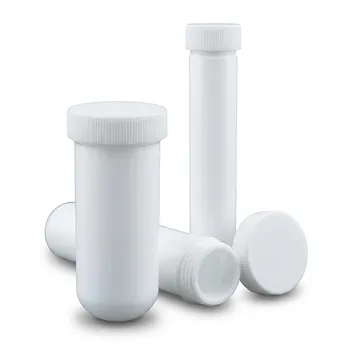
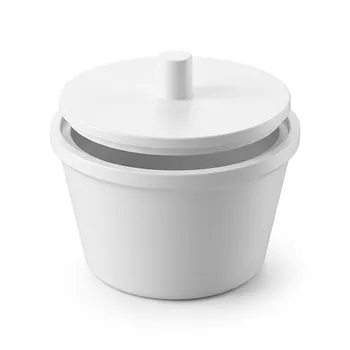
PTFE-lined high-pressure autoclaves are the critical enabler for zeolite topology transformations involving aggressive acid treatments. These specialized vessels provide a chemically inert environment that withstands corrosive hydrochloric acid and ethanol mixtures at temperatures reaching 190°C, ensuring the structural integrity of the reaction zone while facilitating the selective rearrangement of atoms within the zeolite framework.
The core value of a PTFE-lined autoclave lies in its ability to isolate highly corrosive reagents from the structural metal of the pressure vessel. This isolation prevents vessel failure, eliminates metallic contamination of the zeolite, and ensures that the observed chemical transformations are a result of the intended catalysts rather than interference from the container walls.
Maintaining Chemical Stability in Corrosive Environments
Resistance to Concentrated Mineral Acids
Zeolite topology transformations frequently require high concentrations of hydrochloric acid (HCl) at elevated temperatures. PTFE (polytetrafluoroethylene) possesses an exceptionally stable molecular structure that remains non-reactive even when exposed to these harsh acidic hydrothermal conditions.
Thermal Integrity at High Temperatures
At the 190°C threshold common in these experiments, standard materials often degrade or react. The PTFE liner maintains its structural integrity, providing a stable internal "reaction zone" that allows for the addition or removal of specific atoms within the zeolite framework without the liner itself breaking down.
Protecting the Integrity of Experimental Data
Preventing Metal Ion Contamination
If the acidic reaction media were to contact the stainless steel outer shell of the autoclave, metal ions would leach into the solution. The PTFE liner acts as a critical shield, ensuring the high purity of synthesized zeolite precursors and preventing unwanted metal atoms from incorporating into the zeolite topology.
Eliminating Parasitic Catalytic Reactions
Metal surfaces can act as unintended catalysts, potentially decomposing reagents like hydrogen peroxide or organic structure-directing agents. By shielding the stainless steel walls, PTFE ensures that the measured yield and selectivity accurately reflect the catalytic performance of the zeolite being studied.
Optimizing the Physical Reaction Environment
Precise Control of Working Volume
Liners can be used to adjust the effective working volume of a standard autoclave (for example, reducing a 50 mL vessel to 33 mL). This adjustment is vital for optimizing the gas-liquid phase contact and maintaining the autogenous pressure required for successful framework crystallization.
Facilitating Product Recovery
The extremely smooth, "non-stick" surface of PTFE is beneficial during the final stages of the experiment. It allows researchers to easily recover and collect solid precipitates and synthesized powder sediments without the material adhering to the vessel walls.
Understanding the Trade-offs
Temperature and Pressure Limitations
While PTFE is highly inert, it is a thermoplastic with a finite service temperature, typically limited to 250°C or lower. Exceeding these temperatures can lead to liner deformation (creeping), which may compromise the seal or make the liner difficult to remove from the stainless steel shell.
Thermal Conductivity Issues
PTFE is an insulator, meaning it has lower thermal conductivity than the metal shell surrounding it. This can lead to a lag between the temperature of the oven and the actual temperature of the reaction mixture, requiring careful calibration of heating profiles.
How to Apply This to Your Research
If you are designing a zeolite transformation experiment, consider these recommendations based on your specific operational goals:
- If your primary focus is extreme chemical purity: Always inspect the PTFE liner for staining or pitting before use, as trapped contaminants from previous experiments can leach into your new synthesis gel.
- If your primary focus is kinetic accuracy: Account for the thermal lag caused by the PTFE liner by using an internal thermocouple or allowing extra equilibration time for the vessel to reach the target 190°C.
- If your primary focus is maximizing yield: Use a liner that has been specifically sized to optimize the headspace in your autoclave, ensuring the correct autogenous pressure is maintained for framework stabilization.
By leveraging the chemical inertness and physical properties of PTFE-lined autoclaves, researchers can safely execute the high-energy transformations required to engineer next-generation zeolite topologies.
Summary Table:
| Feature | Benefit for Zeolite Research |
|---|---|
| Acid Resistance | High stability against HCl and concentrated mineral acids at 190°C. |
| Metal-Free Zone | Prevents leaching of stainless steel ions to ensure high-purity synthesis. |
| Non-Stick Surface | Facilitates easy recovery of solid precipitates and synthesized powders. |
| Variable Volume | Allows precise adjustment of effective working volume for optimal pressure. |
| Chemical Inertness | Eliminates parasitic catalytic reactions from the metal vessel walls. |
Elevate Your Research with KINTEK’s High-Performance Fluoropolymers
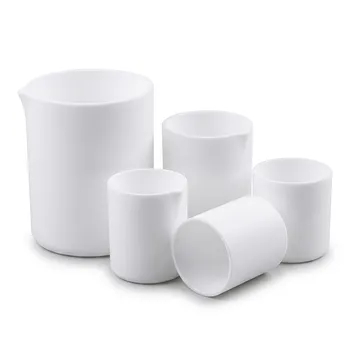
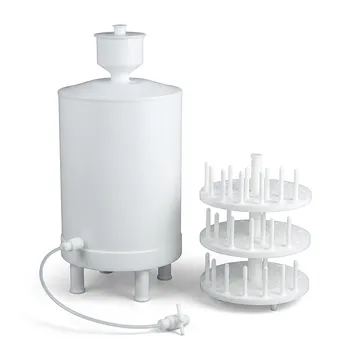
Ensure absolute chemical purity and structural integrity in your zeolite experiments with KINTEK’s specialized laboratory solutions. From everyday basic labware (beakers, measuring cylinders, and reagent bottles) to advanced reaction apparatus like PTFE-lined high-pressure autoclaves, microwave digestion vessels, and custom electrochemical cells, KINTEK manufactures virtually all imaginable supplies crafted from high-performance PTFE and PFA.
Backed by end-to-end custom CNC fabrication, we deliver everything from complex non-standard machined parts to high-volume orders tailored to your specific hydrothermal synthesis needs. Protect your data from metal contamination and optimize your yields with our precision-engineered components.
Ready to upgrade your lab setup? Contact us today to discuss your custom requirements!
References
- Yi Luo, Peng Wu. Atomic-scale insights into topotactic transformations in an extra-large-pore zeolite using time-resolved 3D electron diffraction. DOI: 10.1038/s44160-024-00715-1
This article is also based on technical information from Kintek Knowledge Base .
Related Products
- PTFE Lined High Pressure Digestion Vessel 50ml High Temperature Hydrothermal Synthesis Tank
- Custom TFM Reaction Vessel with Stainless Steel Jacket and PTFE Inner Cup for High Corrosion Resistance
- High Pressure Custom TFM Reactor Stainless Steel Outer Vessel PTFE Inner Cup for Corrosive Synthesis
- High Pressure PTFE Digestion Vessel Inner Cup Holder Custom Corrosion Resistant Low Background Teflon
- High Temperature Corrosion Resistant Hydrothermal Synthesis Reactor with TFM Inner Liner and Straight Cylinder Design
People Also Ask
- What are the benefits of using a PTFE-lined vessel for carbon-sulfur cathode treatment? Maximize Purity & Performance
- Why are PTFE-lined pressure digestion vessels required for the preparation of Ag/CeO2 catalysts? Purity & Performance
- What safety features are typically incorporated into high-pressure PTFE digestion vessel designs? Ensure Lab Safety
- What is the function of PTFE lined high-pressure vessels in g-C3N4 synthesis? Achieve High-Purity Material Growth
- Role of High-Pressure Digestion Tanks in Perovskite Synthesis: Achieve Superior Stability and Latent Heat