PTFE and PFA provide dramatically better protection against aggressive reagents than standard laboratory plastics. Both fluoropolymers are effectively inert toward strong acids, strong bases, oxidants, and many organic solvents—including aromatic, aliphatic, and chlorinated solvents, esters, and ketones—at ambient and elevated temperatures. Their 24-hour water absorption is also extremely low: 0% for PTFE and less than 0.03% for PFA, compared with substantially higher absorption in materials such as Nylon and Polyacetal.
For chemically aggressive or high-purity applications, PTFE and PFA minimize both chemical attack and moisture-related contamination. They are far less likely than standard engineering plastics to swell, degrade, leach, or retain sample components.
Why PTFE and PFA Resist Aggressive Chemicals
The fluorinated structure provides chemical protection
PTFE and PFA are perfluorinated polymers, meaning their carbon backbones are extensively shielded by fluorine atoms. The strong carbon–fluorine bonds and dense fluorine sheath make it difficult for acids, bases, oxidants, and solvents to attack the polymer chain.
This structure gives both materials exceptionally broad chemical resistance compared with partially fluorinated or non-fluorinated plastics.
Resistance extends across major reagent classes
PTFE and PFA are rated as having little to no effect from many aggressive reagent groups, including:
- Strong and weak acids
- Strong and weak bases
- Strong oxidizing agents
- Aromatic hydrocarbons
- Aliphatic hydrocarbons
- Chlorinated solvents
- Esters
- Ketones
This broad resistance makes them suitable for reagent storage, digestion, cleaning, trace analysis, and chemical fluid handling.
Resistance remains strong at elevated temperatures
The cited performance remains exceptional at both approximately 25°C and 93°C. That matters because chemical attack often accelerates as temperature increases.
However, “chemically inert” should not be interpreted as unlimited compatibility under every possible condition. Actual performance still depends on reagent concentration, temperature, exposure time, mechanical stress, and the specific formulation or component design.
Water Absorption and Contamination Control
PTFE absorbs essentially no water
PTFE exhibits 0% water absorption over 24 hours in the referenced comparison. It therefore resists swelling and does not readily retain moisture within the material.
This is valuable when vessels or components must be dried thoroughly between samples or exposed repeatedly to aqueous reagents.
PFA has extremely low absorption
PFA shows less than 0.03% water absorption over 24 hours. Although not identical to PTFE’s reported zero value, this is still extremely low for laboratory use.
PFA’s low absorption helps reduce moisture-related dimensional changes, chemical retention, and the possibility of cross-contamination between procedures.
Standard plastics absorb considerably more
The reference comparison reports approximately 0.2–1.9% water absorption for Nylon and 0.23% for Polyacetal over the same general period. That is materially higher than the values reported for PTFE and PFA.
Absorbed water can contribute to swelling, dimensional change, altered mechanical properties, and retention of dissolved chemicals or sample residues.
How They Compare with Standard Laboratory Plastics
Nylon and Polyacetal are more vulnerable to chemical attack
Standard engineering plastics such as Nylon and Polyacetal can perform well in ordinary laboratory or industrial service, but they are not equivalent to PTFE or PFA for severe chemical exposure.
Strong acids and oxidants can cause significant degradation in these materials, including loss of strength, surface damage, dimensional instability, or premature failure.
Fluoropolymers better protect sample integrity
PTFE and PFA have low surface energy and are highly non-wetting. Combined with their low water absorption, this reduces the likelihood that sample components will be absorbed into the vessel wall or retained after cleaning.
That characteristic is particularly important in trace analysis, where small amounts of carryover or leached material can affect results.
Lower absorption reduces vessel-related variability
A plastic that absorbs moisture or chemicals can change over repeated use. The resulting swelling, residue retention, or degradation may introduce variability that is difficult to distinguish from an analytical problem.
PTFE and PFA provide a more stable vessel environment, helping keep the analytical variable in the sample rather than in the container.
Choosing Between PTFE and PFA
PTFE suits heavy-duty and custom-machined components
PTFE is commonly supplied as stock shapes and then machined into custom parts. It is well suited to reaction vessels, microwave digestion components, custom electrochemical cells, and robust laboratory hardware.
Its very low friction and non-wetting behavior are additional advantages where sliding, release, or easy cleaning matters.
PFA suits molded and fluid-handling components
PFA is melt-processible, allowing it to be molded or extruded into complex shapes. It is therefore widely suited to tubing, valves, fittings, fluid-transfer components, and seamless trace-analysis vessels.
PFA can also offer useful mechanical and processing advantages, including improved structural integrity after molding and good resistance to cracking under demanding service conditions.
Both materials support high-purity work
For reagent storage, digestion, and trace analysis, both PTFE and PFA provide the core benefits that standard plastics often cannot: broad chemical inertness, minimal absorption, and low contamination potential.
The practical choice is usually determined less by chemical resistance than by the required manufacturing method, flexibility, geometry, mechanical design, and temperature conditions.
Understanding the Trade-offs
Chemical resistance is not the only design criterion
PTFE and PFA should not be selected solely because they resist a reagent. The component must also withstand pressure, mechanical loading, thermal cycling, abrasion, and any dimensional tolerances required by the process.
A chemically compatible material can still be unsuitable if the part is poorly supported or exposed to conditions beyond its mechanical design limits.
PTFE is difficult to conventionally process
PTFE is non-melt-processible by conventional molding and extrusion methods. This limits manufacturing options and often makes custom machining the practical route for complex parts.
That limitation can increase fabrication complexity compared with molded engineering plastics.
PFA may be preferable for complex geometries
PFA’s melt-processability makes it easier to produce tubing, fittings, valves, and other intricate components. It may be the more practical option when a design requires seamless molded or extruded construction.
The final choice should still account for the specific application’s mechanical, thermal, and dimensional requirements.
Verify unusual or extreme service conditions
The broad resistance of PTFE and PFA does not eliminate the need for a compatibility review. Highly unusual reagent combinations, prolonged exposure, elevated pressure, or temperatures near the material’s operating limits should be evaluated using supplier data and application-specific testing.
How to Apply This to Your Project
The right choice depends on whether your priority is chemical purity, part geometry, processing flexibility, or heavy-duty construction.
- If your primary focus is maximum chemical resistance: Choose PTFE or PFA rather than Nylon or Polyacetal for strong acids, bases, oxidants, and aggressive organic solvents.
- If your primary focus is minimizing moisture and cross-contamination: Prefer PTFE or PFA, with PTFE reporting 0% and PFA less than 0.03% 24-hour water absorption.
- If your primary focus is custom, heavy-duty laboratory hardware: Consider PTFE for machined digestion vessels, reaction components, or electrochemical cell bodies.
- If your primary focus is tubing, valves, fittings, or complex molded parts: Consider PFA because it combines fluoropolymer chemical resistance with melt-processability.
- If your primary focus is routine laboratory service with mild reagents: Standard plastics may be adequate, but confirm their water absorption and reagent compatibility before using them with aggressive chemicals.
For aggressive reagents and high-purity laboratory work, PTFE and PFA provide the strongest combination of chemical inertness and minimal water absorption among the materials compared here.
Summary Table:
| Property | PTFE | PFA | Nylon | Polyacetal |
|---|---|---|---|---|
| 24-hour water absorption | 0% | <0.03% | 0.2–1.9% | 0.23% |
| Resistance to strong acids | Excellent | Excellent | Poor | Moderate |
| Resistance to strong bases | Excellent | Excellent | Moderate | Moderate |
| Resistance to oxidants | Excellent | Excellent | Poor | Moderate |
| Resistance to organic solvents | Excellent | Excellent | Moderate | Moderate |
| Typical applications | Custom-machined parts, digestion vessels | Tubing, fittings, molded parts | General labware | General labware |
Ready to upgrade your lab's chemical handling and sample integrity? KINTEK is exclusively dedicated to high-performance fluoropolymers, manufacturing virtually all imaginable laboratory supplies crafted from PTFE and PFA. From everyday basic labware to high-purity trace analysis instruments, cleaning/storage tanks, and comprehensive fluid transfer components, we deliver absolutely everything from complex custom-machined parts to high-volume orders. Our end-to-end PTFE/PFA custom CNC machining capabilities ensure your specific needs are met with precision. Contact us today to discuss your application and experience the KINTEK advantage!
Related Products
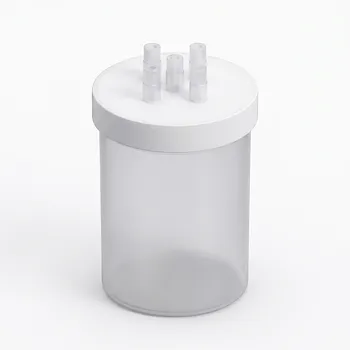
- PTFE PFA Vacuum Filtration System Corrosion Resistant Customizable Shatterproof Laboratory Device
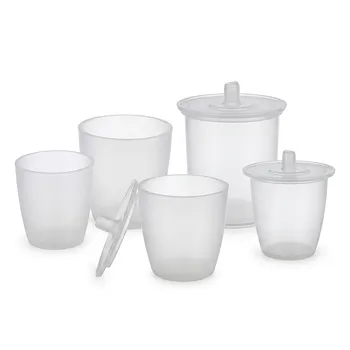
- High Purity PFA Crucible and Corrosion Resistant PTFE Beaker for Trace Analysis and Custom Laboratory Applications
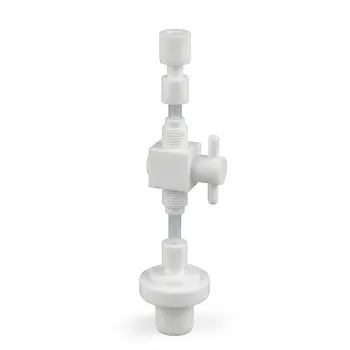
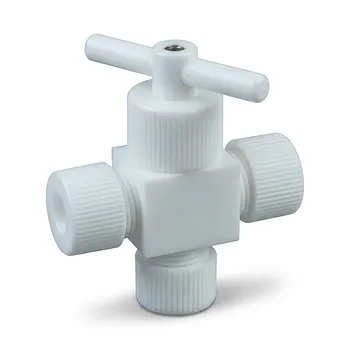
- High Purity PFA PTFE Flare Stop Valves Customizable 2-Way 3-Way Reducing Fluoropolymer Fluid Control Solutions
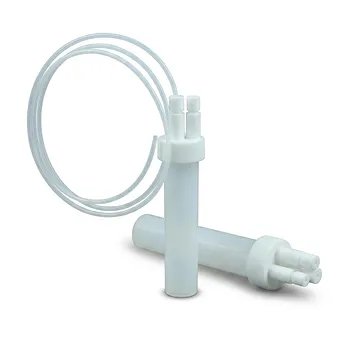
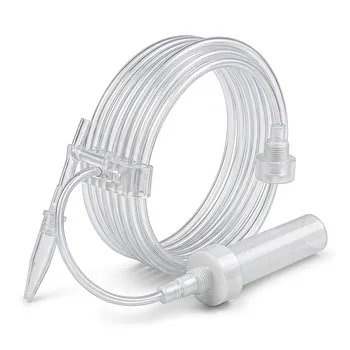
- High Purity PFA Coiled Tubing Custom PTFE Machining PFA Welding and Precision Bending Solutions
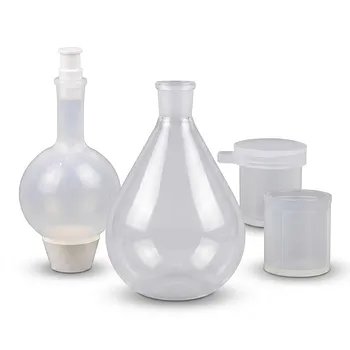
- Custom PFA Reaction Bottles High Purity PTFE Reaction Vessels Corrosion Resistant Petrochemical Containers
People Also Ask
- What makes PTFE filtration systems advantageous for industrial and scientific use? Unmatched Chemical & Thermal Stability
- How does the hydrophobicity of PTFE filters benefit their use? Ensure Uninterrupted Gas Flow and Solvent Filtration
- What temperature resistance do PTFE filters offer? Unmatched Thermal Stability from -200°C to +260°C
- Which chemicals are fully compatible with PTFE filters? Discover Unmatched Chemical Resistance
- What sizes and pore options are available for PTFE filters? Choose the Right Filter for Your Application