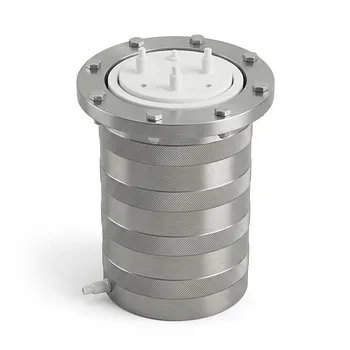
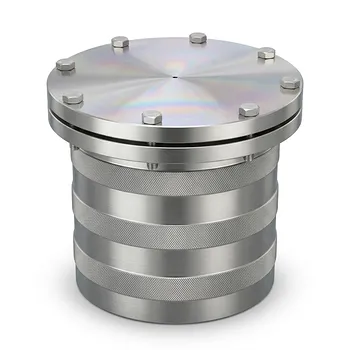
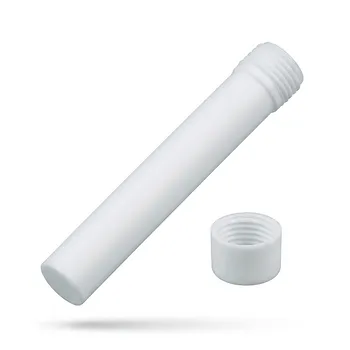
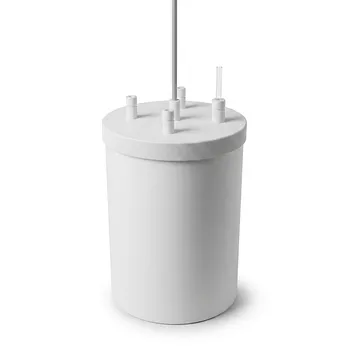
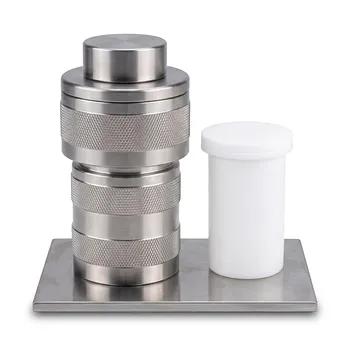
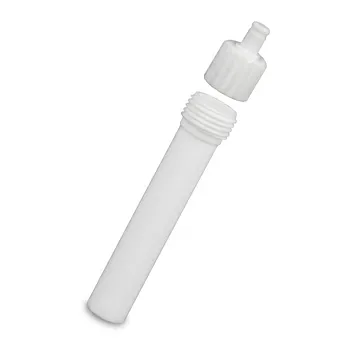
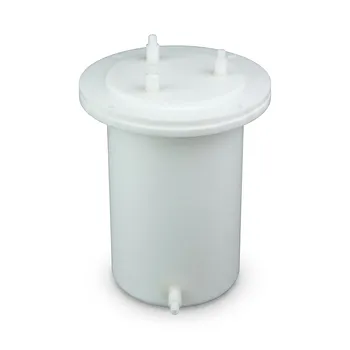
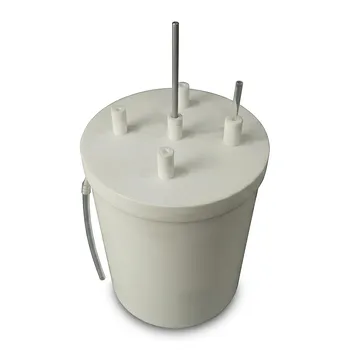
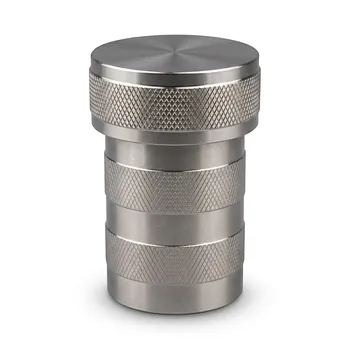
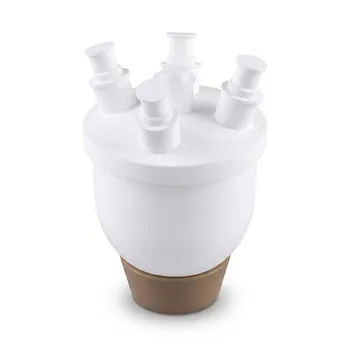
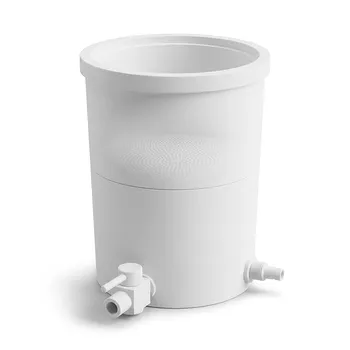
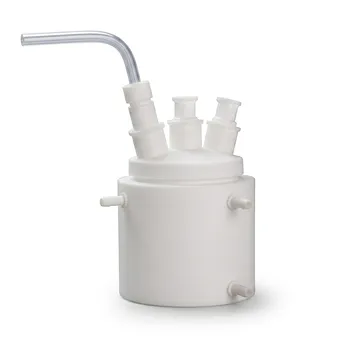
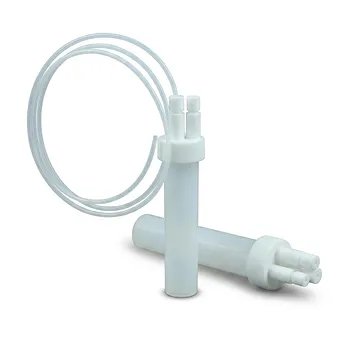
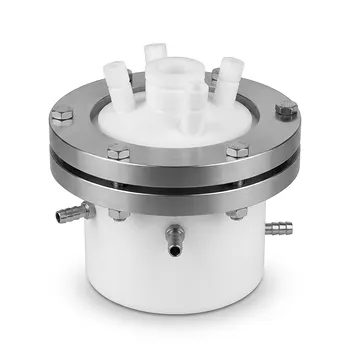
High-pressure reactors with high-purity fluoropolymer liners serve as the critical "clean room" environment for Bismuth Trioxide ($Bi_2O_3$) synthesis. These vessels enable the precise control of high-temperature, high-pressure conditions required to form nanospheres while shielding the reaction from metallic contamination. By providing a chemically inert surface, they ensure the final catalyst maintains the high purity and specific morphology necessary for advanced applications.
Core Takeaway: The combination of a high-pressure metal autoclave and a high-purity fluoropolymer liner (like PTFE) creates a stable, non-reactive environment that facilitates the uniform growth of $Bi_2O_3$ nanospheres while protecting the equipment from corrosive precursors.
Ensuring Chemical Purity and Integrity
Prevention of Metallic Contamination
High-purity fluoropolymer liners, such as Polytetrafluoroethylene (PTFE), act as a physical barrier between the reaction solution and the metal walls of the reactor. This prevents the introduction of impurity ions from the steel autoclave body into the bismuth-based precursors. Without this barrier, metallic leaching would compromise the chemical purity and catalytic performance of the synthesized nanospheres.
Resistance to Corrosive Environments
Hydrothermal synthesis of bismuth-based nanomaterials often involves strong bases or organic solvents that can be highly corrosive at elevated temperatures. Fluoropolymer liners offer superior resistance to these chemicals, ensuring that the vessel does not degrade during the reaction. This chemical inertness is vital for maintaining a stable environment where only the intended chemical transformations occur.
Facilitating Template-Based Synthesis
The structural integrity of the liner ensures that template-based synthesis processes remain consistent. Because the liner does not react with the surfactants or precursors, the self-assembly of bismuth ions into nanospheres can proceed without interference. This leads to more predictable and reproducible results in the lab and in production.
Controlling Morphology through Thermodynamic Stability
Harnessing Autogenous Pressure
The sealed environment of a high-pressure reactor allows for the generation of autogenous pressure as the temperature rises. This internal pressure facilitates the full reaction of bismuth precursors and promotes the growth of nanostructures with high crystallinity. The pressure is a key driver in forcing the material into the desired nanosphere geometry.
Precision Temperature Management
Fluoropolymer liners are designed to remain stable at temperatures reaching 200°C to 205°C. This thermal stability allows for extended reaction times, which are often necessary to achieve uniform particle size distribution. Consistent heat distribution within the liner helps prevent "hot spots" that could cause irregular crystal growth or aggregation.
Non-Stick Properties for Product Recovery
The non-stick surface of high-purity fluoropolymers minimizes the adhesion of $Bi_2O_3$ nanospheres to the vessel walls. This significantly improves the recovery rate of the target product after the synthesis is complete. Furthermore, it simplifies the cleaning process, reducing the risk of cross-contamination between different experimental batches.
Understanding the Trade-offs and Limitations
Thermal Boundaries
While PTFE and PFA liners are robust, they have strict thermal limits, generally around 200°C to 250°C. Exceeding these temperatures can cause the liner to soften or deform, leading to potential leaks or contamination of the sample with fluoropolymer fragments. Users must carefully monitor internal temperatures to stay within the safe operating envelope of the material.
Pressure Sensitivity
The liner itself does not provide structural strength; it relies on the external metal autoclave to withstand the high internal pressures. If the liner is not properly seated or if the autoclave is damaged, the liner can fail under pressure. This "creep" or deformation can occur if the cooling process is too rapid or if the pressure exceeds the design specifications of the vessel assembly.
How to Apply This to Your Synthesis Goals
To achieve the best results in the hydrothermal synthesis of Bismuth Trioxide, your choice of equipment should align with your specific research or production targets.
- If your primary focus is maximum purity: Use a high-purity PTFE or PFA liner to ensure zero contact between the bismuth precursors and the metallic reactor body.
- If your primary focus is uniform nanosphere size: Prioritize a reactor with a sealed, high-pressure design to leverage autogenous pressure, which promotes consistent crystal growth.
- If your primary focus is high-yield recovery: Opt for liners with a polished, non-stick finish to minimize product loss and ensure easy collection of the synthesized powder.
Selecting the right combination of liner material and reactor pressure rating is the most effective way to guarantee the structural and chemical success of your $Bi_2O_3$ nanospheres.
Summary Table:
| Feature | Benefit for $Bi_2O_3$ Synthesis | Material Focus |
|---|---|---|
| Chemical Inertness | Prevents metallic leaching and ion contamination | High-Purity PTFE/PFA |
| Autogenous Pressure | Facilitates uniform crystal growth and nanosphere shape | Sealed Metal Autoclave |
| Non-Stick Surface | Maximizes product recovery and simplifies cleaning | Polished Fluoropolymer |
| Thermal Stability | Maintains integrity during 200°C+ hydrothermal cycles | PTFE/PFA Liners |
| Corrosion Resistance | Withstands aggressive bismuth precursors and bases | Fluoropolymer Lining |
Elevate Your Material Synthesis with KINTEK’s Fluoropolymer Expertise
Precision in nanosphere synthesis requires equipment that never compromises on purity. KINTEK specializes in high-performance PTFE and PFA laboratory solutions designed for the most demanding hydrothermal environments.
From everyday basic labware like beakers, crucibles, and reagent bottles to advanced hydrothermal synthesis liners and microwave digestion vessels, we provide the tools necessary for zero-contamination research. Our capabilities extend to comprehensive fluid transfer components, sample prep tools (including filters and pipettes), and custom-engineered reaction apparatus like electrochemical cells and battery testing fixtures.
Why choose KINTEK?
- End-to-End Customization: Our custom CNC fabrication delivers bespoke laboratory setups and complex non-standard parts tailored to your specific reaction parameters.
- Absolute Purity: We focus exclusively on high-performance fluoropolymers to protect your samples from metallic leaching.
- Scalable Solutions: We support everything from individual research kits to high-volume industrial orders.
Ready to optimize your $Bi_2O_3$ synthesis and ensure repeatable, high-purity results? Contact us today to discuss your project requirements.
References
- Xiaoyi Jiang, Ning Yan. Integrating hydrogen utilization in CO2 electrolysis with reduced energy loss. DOI: 10.1038/s41467-024-45787-x
This article is also based on technical information from Kintek Knowledge Base .
Related Products
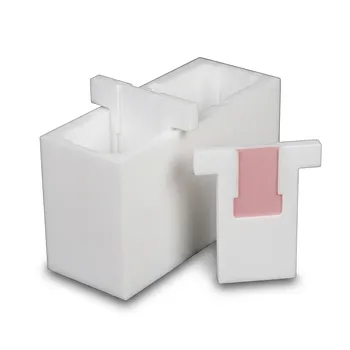
- High Pressure Custom TFM Reactor Stainless Steel Outer Vessel PTFE Inner Cup for Corrosive Synthesis
- Custom TFM Reaction Vessel with Stainless Steel Jacket and PTFE Inner Cup for High Corrosion Resistance
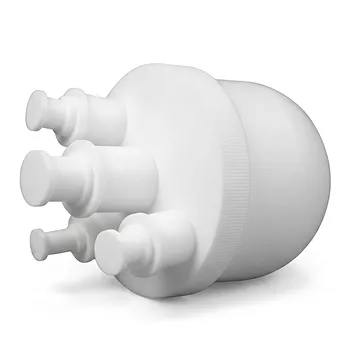
- High Purity TFM Microwave Digestion Vessels PTFE Acid Evaporation Liners Domestic GT-400 Equivalent Laboratory Reaction Containers
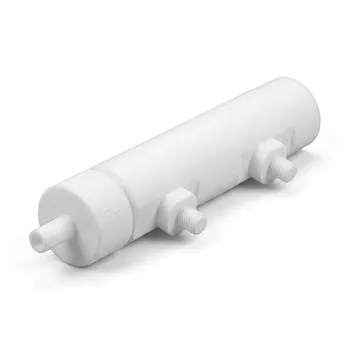
- High Purity PTFE Reaction Vessel Polyfluortetraethylene Cylindrical Tank Petrochemical Reaction Container
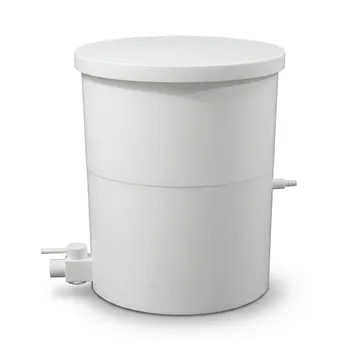
- High Purity PTFE Reaction Vessel with Electric Stirring System and Customizable 5L Tank including Buchner Funnel Filtration Assembly
People Also Ask
- Why is a PTFE-lined reactor required for Mn2O3 synthesis? Achieve High Purity & Corrosion Resistance
- What is the technical value of 180 bar pressure for MgO nanostructures? Unlock Superior Crystallinity and Morphology
- What are the technical advantages of using high-pressure PTFE reaction vessels during metal digestion? Expert Insights.
- How does the regulation of initial pressure within a high-pressure reaction system affect the production of MIL-100(Fe)?
- Why is a high-pressure reactor necessary for the esterification reaction between oleic acid and methanol at 150°C? Guide