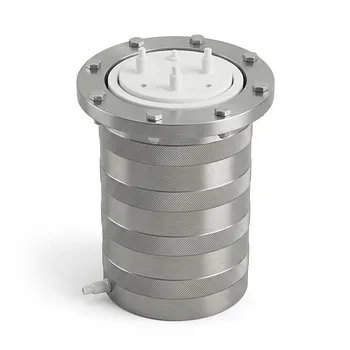
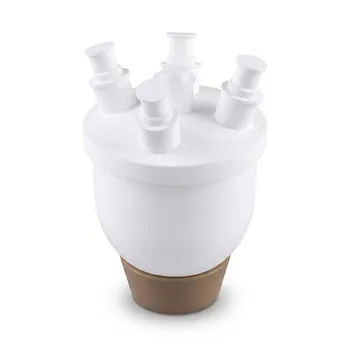
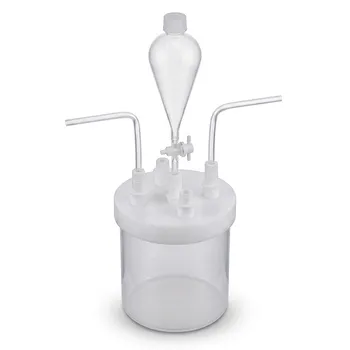
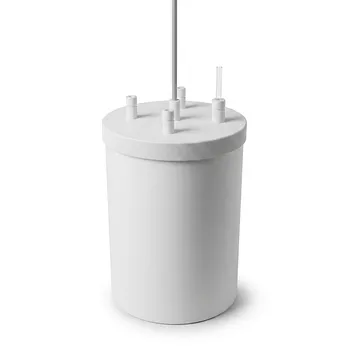
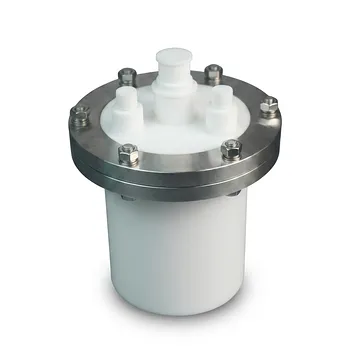
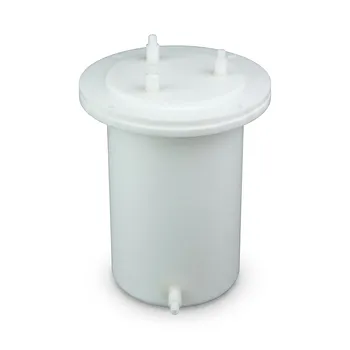
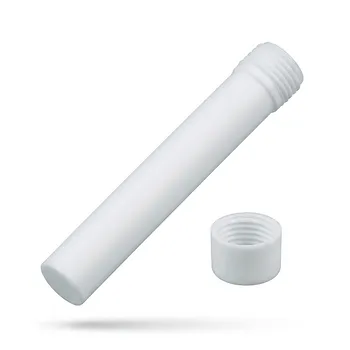
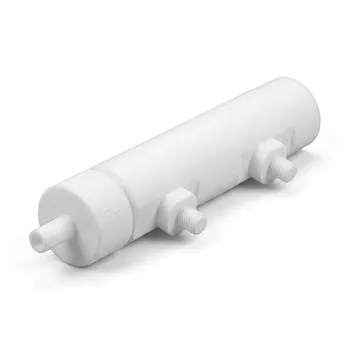
High-pressure reaction vessels and their fluoropolymer liners are the critical infrastructure enabling the hydrothermal synthesis of lithium-sulfur (Li-S) battery cathodes. These systems create a sealed, high-temperature, and high-pressure environment that allows graphene precursors and sulfur compounds to interact at the molecular level. This process ensures that sulfur is uniformly distributed across the graphene surface or intercalated between its layers, which is essential for the material's electrochemical performance.
High-pressure vessels provide the necessary thermodynamic conditions for uniform sulfur-graphene composite formation, while PTFE or PFA liners act as chemically inert barriers that prevent metal contamination and ensure the purity of the resulting cathode material.
Creating the Hydrothermal Environment for Sulfur Distribution
Molecular Level Interaction
The reaction vessel maintains a constant, elevated temperature and pressure for several to dozens of hours. This specific environment facilitates the molecular-level interaction between sulfur and graphene, which is difficult to achieve under ambient conditions.
Ensuring Uniformity
Within this sealed system, the high-pressure aqueous environment forces sulfur to distribute uniformly on the graphene surface or within its layered structure. This uniformity is vital for Li-S batteries, as it prevents sulfur agglomeration and improves the electrical conductivity of the cathode.
Morphology Control
The stable physicochemical environment provided by the vessel allows for the controlled growth of nanocrystals and porous structures. This control over the microscopic morphology ensures that the synthesized materials meet the specific requirements for high-performance battery applications.
The Role of PTFE and PFA Liners
Chemical Isolation and Purity
High-purity liners made from PTFE (Polytetrafluoroethylene) or PFA (Perfluoroalkoxy) isolate the reaction media from the metal body of the autoclave. This prevents the metal reactor from leaching ions into the solution, which would otherwise contaminate the cathode and degrade its electrochemical activity.
Corrosion Resistance
Hydrothermal synthesis often involves strong acids, bases, or organic solvents that would easily erode a stainless steel reactor shell. PTFE and PFA offer superior chemical resistance, protecting the structural integrity of the high-pressure vessel while maintaining a chemically neutral space for crystal growth.
Thermal and Physical Stability
These fluoropolymer liners are chosen for their ability to remain stable under high-pressure conditions at temperatures typically reaching up to 220°C. They provide a reliable reaction carrier that can withstand the internal stresses of the hydrothermal process without compromising the sample.
Understanding the Trade-offs and Limitations
Temperature Constraints
While PTFE is highly versatile, it has a functional upper temperature limit, often around 220°C to 250°C. Exceeding these limits can cause the liner to soften or deform, leading to potential leaks or the failure of the pressure seal.
Thermal Expansion Mismatch
Fluoropolymers like PTFE have a different coefficient of thermal expansion than the metal autoclave body. Rapid heating or cooling can lead to mechanical stress between the liner and the shell, which may eventually cause the liner to crack or "creep" over time.
Pressure Limitations
The liner itself does not provide structural strength; it relies on the metal autoclave to contain the pressure. If the liner is improperly seated or if the vessel is overfilled, the resulting pressure can cause the polymer to flow into the seal areas, necessitating frequent replacement.
How to Apply This to Your Project
Making the Right Choice for Your Goal
- If your primary focus is Maximum Chemical Purity: Utilize high-purity PFA liners, as they offer lower trace-metal leaching compared to standard grades of PTFE.
- If your primary focus is High-Yield Material Recovery: Leverage the non-stick properties of PTFE liners to ensure the complete collection of synthesized sulfur-graphene composites after the reaction.
- If your primary focus is Structural Consistency: Ensure strict adherence to temperature ramp rates to prevent liner deformation and maintain the controlled morphology of the nanocrystals.
By precisely controlling the hydrothermal environment through these specialized vessels and liners, researchers can produce high-purity, structurally optimized cathode materials that are essential for the next generation of lithium-sulfur batteries.
Summary Table:
| Component | Role in Hydrothermal Synthesis | Key Benefit for Li-S Cathodes |
|---|---|---|
| High-Pressure Vessel | Creates sealed high T/P environment | Enables molecular-level sulfur distribution on graphene. |
| PTFE/PFA Liner | Provides chemical isolation & corrosion resistance | Prevents metal contamination; ensures high electrochemical purity. |
| Sealed System | Maintains thermodynamic stability | Facilitates controlled growth of nanocrystals and porous structures. |
| Non-stick Surface | Simplifies material recovery | Maximizes yield of synthesized sulfur-graphene composites. |
Elevate Your Battery Research with KINTEK’s Precision Fluoropolymers
Achieving the perfect sulfur-graphene composite requires equipment that guarantees both chemical purity and structural integrity. At KINTEK, we specialize in high-performance fluoropolymer solutions tailored for advanced material synthesis.
From high-purity hydrothermal synthesis liners (PTFE & PFA) and microwave digestion vessels to custom electrochemical cells and battery testing fixtures, we provide the critical infrastructure your lab needs. Our expertise extends from everyday essentials like beakers and reagent bottles to complex, bespoke laboratory setups and non-standard parts crafted through end-to-end custom CNC fabrication.
Whether you require high-volume consumables or a unique reaction apparatus, KINTEK delivers the absolute focus on quality your research demands.
Ready to optimize your hydrothermal synthesis? Contact us today to discuss your custom project!
References
- Jackie Y. Ying. Graphene in Lithium-Sulfur Batteries: Challenges, Improvement Strategies and Future Prospects. DOI: 10.54254/2755-2721/2025.20051
This article is also based on technical information from Kintek Knowledge Base .
Related Products
- PTFE Lined High Pressure Digestion Vessel 50ml High Temperature Hydrothermal Synthesis Tank
- High Pressure Custom TFM Reactor Stainless Steel Outer Vessel PTFE Inner Cup for Corrosive Synthesis
- High Performance Customizable PTFE Reaction Vessel and Corrosion Resistant Polytetrafluoroethylene Flask for Chemical Laboratory Use
- High Purity PFA Reaction Vessel for Biopharmaceutical Synthesis and Corrosive Chemical Fluid Handling with Customizable Tube Fittings
- Custom TFM Reaction Vessel with Stainless Steel Jacket and PTFE Inner Cup for High Corrosion Resistance
People Also Ask
- What are the benefits of using a PTFE-lined vessel for carbon-sulfur cathode treatment? Maximize Purity & Performance
- Why are PTFE-lined pressure digestion vessels required for the preparation of Ag/CeO2 catalysts? Purity & Performance
- What is the function of high-pressure PTFE digestion vessels in mineral analysis? Optimize Sample Mineralization
- What safety features are typically incorporated into high-pressure PTFE digestion vessel designs? Ensure Lab Safety
- What is the function of PTFE lined high-pressure vessels in g-C3N4 synthesis? Achieve High-Purity Material Growth