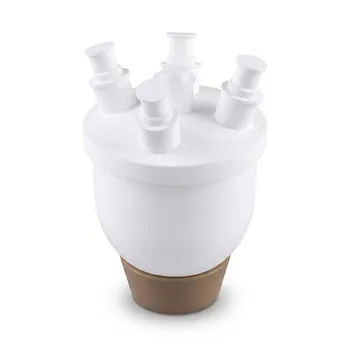
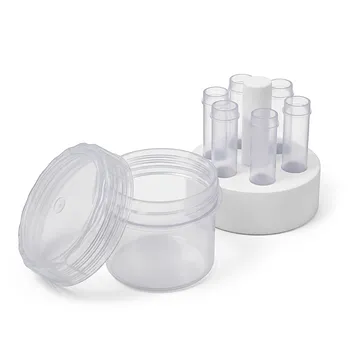
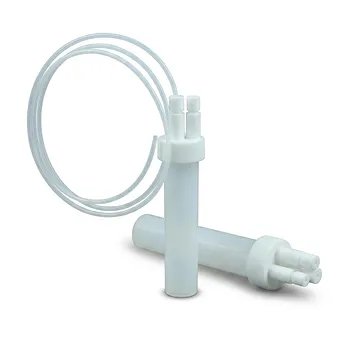
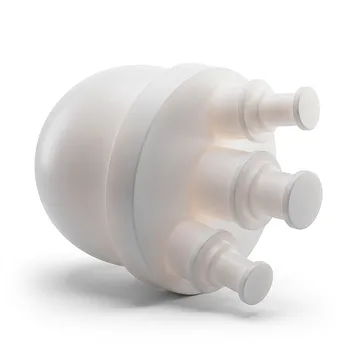
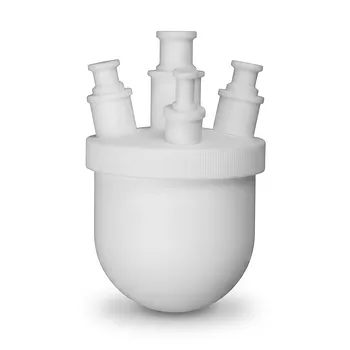
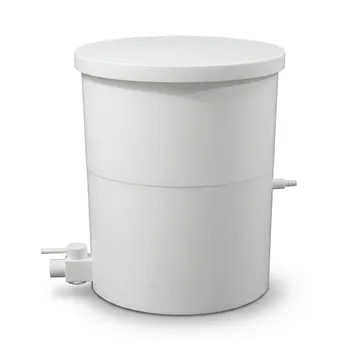
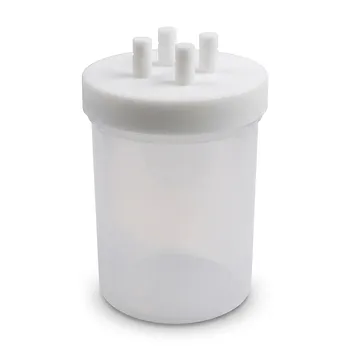
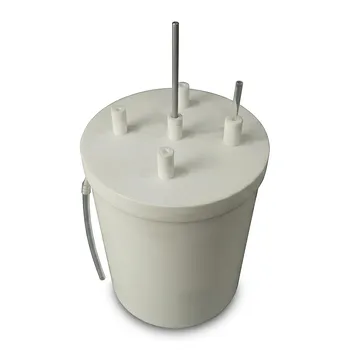
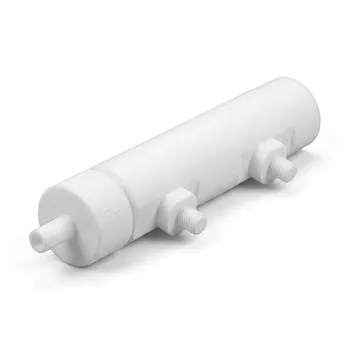
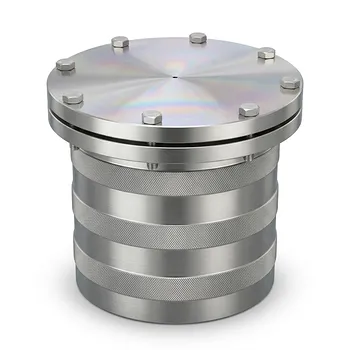
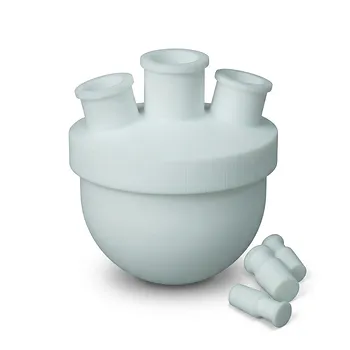
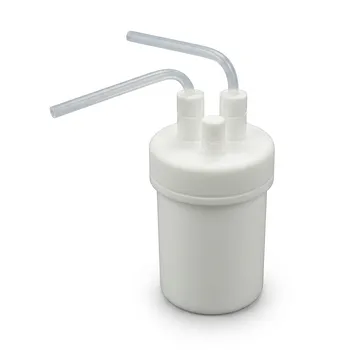
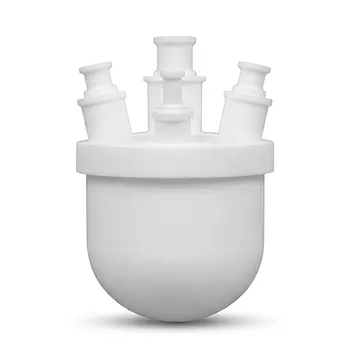
High-performance PTFE or PFA reaction vessels act as a critical chemical barrier that prevents the introduction of metallic ions and silica impurities. By providing an exceptionally inert environment during high-temperature synthesis, these materials ensure that the europium (Eu) ions maintain their characteristic optical emission intensity and the magnetic iron (Fe) core retains its structural integrity. This level of purity is the primary driver for the sensitivity and reliability of the resulting diagnostic and therapeutic platforms.
Core Takeaway: PTFE and PFA vessels eliminate the leaching of external contaminants that would otherwise quench luminescence or disrupt the magnetic properties of Fe@Eu nanoparticles. This chemical isolation is essential for ensuring the functional performance and reproducibility of high-sensitivity nanomaterials.
Preventing Metallic and Silica Contamination
Physical Isolation from Reactor Bodies
High-purity liners made of PTFE (Polytetrafluoroethylene) or PFA (Perfluoroalkoxy) provide physical isolation between the reaction solution and the metal reactor body. This prevents the solution from directly contacting steel or alloy surfaces, which would otherwise introduce iron, nickel, or chromium ions into the synthesis.
Resistance to Chemical Leaching
These fluoropolymers are virtually chemically inert, meaning they do not react with the precursor solutions even under supercritical conditions. Unlike glass vessels, they do not leach silica impurities, which can interfere with the delicate surface chemistry required for Fe@Eu nanoparticle formation.
Corrosion Resistance Against Harsh Precursors
The synthesis of iron-based nanoparticles often involves high concentrations of ammonium hydroxide (NH4OH) and various corrosive iron salts. PTFE and PFA effectively resist these chemicals, ensuring that no trace impurities from the vessel walls enter the colloidal suspension during the nucleation process.
Protecting Functional Nanoparticle Properties
Preserving Europium Optical Performance
The optical emission intensity of rare-earth europium ions is highly sensitive to the presence of foreign metallic ions. Even trace levels of contamination can quench luminescence, significantly reducing the effectiveness of the nanoparticles in imaging and diagnostic applications.
Maintaining Magnetic Core Integrity
The superparamagnetic properties of the iron oxide core depend on a precise chemical composition and crystal structure. By preventing the leaching of impurity ions that could interfere with iron ion growth, PTFE and PFA liners ensure the magnetic response remains consistent and predictable.
Ensuring Surface Ligand Encapsulation
Because these vessels prevent organic metabolites or precursors from adsorbing to the vessel walls, capping ligands can fully encapsulate the nanoparticle surfaces. This total encapsulation is vital for the long-term stability and biocompatibility of the Fe@Eu complex.
Enhancing Synthesis Consistency and Yield
Non-Stick Surface and Recovery
The non-stick properties of fluoropolymers minimize particle loss by preventing the nanocolloids from adhering to the container walls. This facilitates the complete recovery of the prepared material and simplifies the cleaning process, reducing the risk of cross-contamination between batches.
Controlled Nucleation and Growth
High-purity liners provide a stable physicochemical environment that allows for precise control over molecular reorientation and nucleation. This stability is essential for achieving the specific microscopic morphologies required for advanced electrochemical or therapeutic activities.
Understanding the Trade-offs
Thermal Limitations
While PFA and PTFE offer superior purity, they have lower thermal conductivity and temperature limits compared to metallic or ceramic alternatives. PTFE typically has a maximum continuous service temperature of approximately 260°C, which may limit certain high-temperature synthesis routes.
Mechanical Deformation Under Pressure
Under the high pressures characteristic of hydrothermal synthesis, fluoropolymer liners are susceptible to creep or deformation. Users must ensure the liners are properly supported by a high-strength outer shell to maintain the integrity of the reaction volume.
Applying This to Your Synthesis Goals
How to Choose Based on Your Project Needs
The selection of your reaction vessel should align with the specific performance requirements of your nanoparticles.
- If your primary focus is Optical Sensitivity: Use PFA liners to ensure the absolute lowest possible trace metal contamination, as Eu luminescence is highly prone to quenching.
- If your primary focus is High-Yield Production: Leverage the non-stick properties of PTFE to maximize the recovery of your nanocolloids and reduce loss during transfer.
- If your primary focus is Long-Duration Reactions: Select high-purity PFA for its superior resistance to long-term immersion in acidic or corrosive precursors, ensuring consistent growth over 72+ hours.
Utilizing high-purity fluoropolymer vessels is a foundational requirement for translating Fe@Eu nanoparticle synthesis from laboratory experimentation to high-performance clinical and diagnostic applications.
Summary Table:
| Feature | Fluoropolymer Benefit (PTFE/PFA) | Impact on Fe@Eu Synthesis |
|---|---|---|
| Chemical Inertness | Zero leaching of metallic ions or silica | Preserves Eu luminescence & magnetic integrity |
| Corrosion Resistance | Resists harsh precursors (NH4OH, salts) | Ensures stable nucleation and crystal growth |
| Surface Energy | Non-stick, hydrophobic properties | Maximizes particle recovery & prevents loss |
| Thermal Range | Stable up to 260°C | Ideal for high-temperature hydrothermal routes |
Elevate Your Synthesis Precision with KINTEK
Don't let trace impurities compromise your research. KINTEK provides the ultimate chemical barrier for your high-sensitivity nanomaterials. We offer an exhaustive range of laboratory solutions, from everyday basic labware (beakers, crucibles, reagent bottles) and high-purity trace analysis instruments to comprehensive fluid transfer components (tubing, fittings, valves) and sample prep tools (filters, pipettes, spatulas).
Need something unique? Our expertise extends to advanced reaction apparatus, including custom electrochemical cells and microwave digestion vessels. Backed by end-to-end custom CNC fabrication, we deliver everything from high-volume consumables like O-rings and stirring bars to complex, non-standard machined parts—all with an absolute focus on high-performance PTFE and PFA.
Ensure the integrity of your Fe@Eu nanoparticles today. Contact KINTEK now to request a quote or custom consultation!
References
- Evangelia Tsitsou, Eleni Κ. Efthimiadou. Engineering of two-in-one Fe@Eu nanoparticles through hydrothermal synthesis: bimetallic hybrids for theranostic applications. DOI: 10.1039/d5ma00659g
This article is also based on technical information from Kintek Knowledge Base .
Related Products
- High Performance Customizable PTFE Reaction Vessel and Corrosion Resistant Polytetrafluoroethylene Flask for Chemical Laboratory Use
- High Purity Corrosion Resistant PFA Reaction Vessel with PTFE Holder and Integrated Sampling Tube for Trace Analysis
- Custom PFA Reaction Bottles High Purity PTFE Reaction Vessels Corrosion Resistant Petrochemical Containers
- High Purity Custom PTFE Large Volume 15L Flask Corrosion Resistant Low Trace Background Fluoropolymer Reaction Vessel
- Corrosion Resistant PTFE Support with PFA Transparent Reaction Tank and High Purity PFA Sampling Tube for Trace Analysis
People Also Ask
- What are the key steps for structural integrity in molded PTFE lab reaction vessels? Master fine powder processing.
- Why is a PTFE reaction vessel required for Ti3C2Tx MXene synthesis? Ensure Safe HF Etching & High Purity
- Why are fluoroplastic (PTFE) reaction vessels recommended for Methylene Blue (MB) adsorption kinetic experiments?
- Ion Activation Reaction Vessel Requirements: Why PTFE is Critical for Membrane Performance
- How do perfluorinated solvent environments influence the selection of reaction vessels and fluid handling components in nonaqueous emulsion polymerizations? Choose fluoropolymer materials.