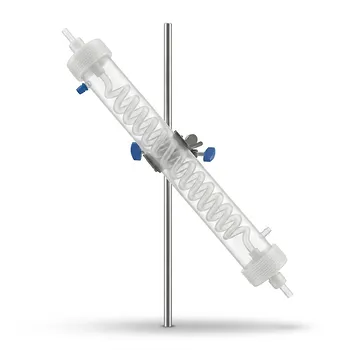
Fluoropolymer surfaces resist chemical adhesion because they combine extremely low surface energy with exceptional chemical stability. Liquids spread poorly across these hydrophobic surfaces, while solids, residues, and biological contaminants have little tendency to bond or remain attached. At the same time, the strong carbon-fluorine backbone protects the material from reacting with strong acids, harsh solvents, and many aggressive disinfectants, making fluoropolymers suitable for repeatedly cleaned laboratory equipment.
Low surface energy reduces sticking, while chemical resistance protects the material itself. Together, these properties make fluoropolymer labware easier to rinse, less prone to sample retention, and more durable under demanding cleaning cycles.
How Fluoropolymer Surfaces Prevent Adhesion
Low Surface Energy Limits Wetting
Fluoropolymers such as PTFE and PFA have exceptionally low surface energy. A liquid contacting the surface tends to form droplets rather than spread into a continuous film.
Poor wetting reduces the area of contact between the contaminant and the surface. This makes residues easier to remove through rinsing, draining, or gentle mechanical cleaning.
Non-Stick Chemistry Reduces Residue Retention
The fluorinated surface presents a chemically neutral, low-friction interface. Many solids, dissolved compounds, polymer melts, and biological materials therefore have difficulty forming strong interactions with it.
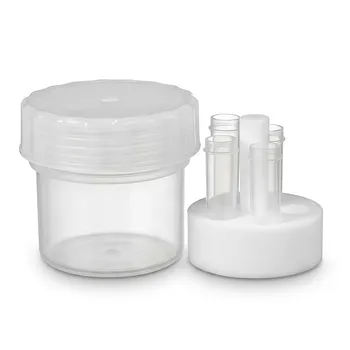
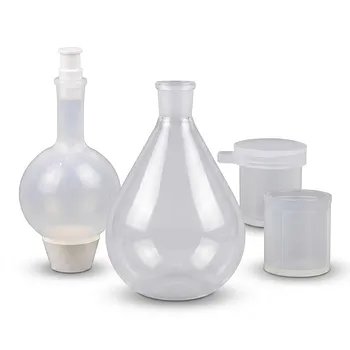
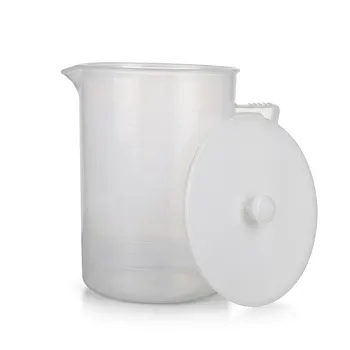
This is why fluoropolymer beakers, reagent bottles, wash bottles, tubing, and storage tanks can minimize sample carryover and material buildup.
Smooth, Low-Friction Interfaces Reduce Clogging
In fluid-handling systems, low surface friction helps materials move across the fluoropolymer rather than accumulate at the wall. This can reduce clogging, die buildup, and residue formation in PTFE or PFA tubing, valves, and reaction equipment.
The benefit is both chemical and mechanical: the surface resists reaction with the fluid while also reducing drag and attachment.
Why Fluoropolymers Withstand Aggressive Cleaning
Strong Carbon-Fluorine Bonds Provide Stability
Fluoropolymers have a highly stable carbon-fluorine molecular backbone. The strength and chemical stability of this structure make the polymer resistant to many aggressive acids, organic solvents, corrosive aqueous mixtures, and disinfectants.
Unlike reactive materials, the fluoropolymer surface generally does not provide an easy site for chemical attack. This helps prevent cracking, staining, swelling, and surface degradation during repeated exposure.
The Material Acts as a Chemical Barrier
Dense molecular packing and the hydrophobic character of fluorinated chains limit the penetration of moisture, oxygen, and dissolved ions. In vessels, tanks, bottles, tubing, and fittings, this creates a durable barrier between the contained chemical and the underlying equipment.
That barrier helps prevent corrosion of protected substrates, sample leaching, and contamination from the surrounding environment.
Resistance Protects Long-Term Performance
Metals can pit or rust, while conventional engineering plastics may swell, soften, or degrade in aggressive media. Fluoropolymer components are less susceptible to these failure modes when the material is correctly selected for the chemical and operating temperature.
Maintaining dimensional stability is particularly important for caps, fittings, reaction vessels, and fluid paths that must remain reliable through many cleaning cycles.
What Happens During Repeated Disinfection
Surface Degradation Is Minimized
Aggressive disinfectants can attack susceptible polymers by extracting additives, breaking molecular chains, or causing surface oxidation. Fluoropolymers are comparatively resistant because their molecular backbone is chemically stable and contains few readily reactive sites.
As a result, properly selected fluoropolymer equipment can retain its non-stick and chemical-resistant surface characteristics over extended laboratory use.
Residues Are Easier to Remove
Because disinfectants and contaminants are less likely to wet and bond strongly to the surface, rinsing is generally more effective. This helps reduce retained cleaning chemicals and residual samples between procedures.
The practical result is lower maintenance effort and less risk of cross-contamination, provided the equipment is rinsed and handled according to the application’s cleaning requirements.
Bulk Form Matters
Solid molded or machined fluoropolymer components generally provide better solvent resistance than very thin fluoropolymer films. Thin films can absorb certain aromatic hydrocarbons or ketones and may show swelling, clouding, or increased flexibility.
For solvent storage and transfer, thicker molded or solid components are therefore preferable when dimensional stability and low absorption are important.
Understanding the Trade-offs
Chemical Resistance Is Not Universal
“Chemically inert” should be treated as a strong general description, not an unlimited guarantee. Compatibility depends on the specific fluoropolymer, chemical concentration, temperature, exposure time, pressure, and mechanical stress.
A compatibility chart or manufacturer test data should guide material selection for concentrated reagents, elevated temperatures, and unusual solvent combinations.
Adhesion to Other Materials Can Be Difficult
The same low surface energy that prevents contamination from sticking also makes standard PTFE difficult to bond to metals and other polymers. Mechanical fastening or specialized surface treatment may be required.
Functionalized fluoropolymers can address this limitation by introducing reactive groups, such as anhydride, epoxy, or hydroxyl groups, that form stronger bonds with substrates while preserving useful fluoropolymer properties at the exposed surface.
Mechanical Requirements Still Matter
Fluoropolymers offer high chemical resistance, but their mechanical behavior varies by grade and temperature. Some applications may require attention to creep, dimensional tolerances, pressure ratings, or support structures.
Chemical compatibility alone is not enough to determine whether a component is suitable for a reaction vessel, fitting, valve, or storage tank.
Cleaning Conditions Require Verification
A fluoropolymer may tolerate a disinfectant chemically but still be affected by extreme temperature, abrasion, pressure cycling, or prolonged exposure. Mechanical damage can create sites where residue accumulates even when the polymer itself remains chemically stable.
Cleaning protocols should therefore control both chemical exposure and physical handling.
Making the Right Choice for Your Goal
Select the material and component design according to the failure mode you are trying to prevent.
- If your primary focus is minimizing sample retention: Choose a low-surface-energy fluoropolymer such as PTFE or PFA, combined with smooth molded or machined surfaces that are easy to rinse.
- If your primary focus is repeated exposure to disinfectants and strong acids: Verify chemical and temperature compatibility for the specific grade, concentration, and cleaning cycle before deployment.
- If your primary focus is solvent handling: Prefer solid, thick-walled molded or machined components over thin films, especially when aromatic hydrocarbons or ketones are involved.
- If your primary focus is bonding fluoropolymer to another material: Use mechanical fastening or a qualified functionalized fluoropolymer and substrate-treatment process rather than relying on ordinary adhesive bonding.
- If your primary focus is long equipment service life: Evaluate chemical resistance together with permeability, dimensional stability, pressure, temperature, and mechanical-wear requirements.
Understanding both the non-stick surface behavior and the chemical stability of fluoropolymers allows you to design laboratory equipment that is easier to clean, less prone to contamination, and more reliable under aggressive operating conditions.
Summary Table:
| Property | Benefit for Labs |
|---|---|
| Low surface energy | Prevents sticking, easy rinsing, low sample retention |
| Chemical stability | Withstands harsh acids, solvents, disinfectants |
| Non-stick chemistry | Reduces residue buildup and cross-contamination |
| Durability | Long-lasting performance despite repeated cleaning |
Enhance your lab's reliability with our PTFE and PFA labware, engineered for chemical resistance and easy cleaning. Whether you need standard beakers, custom reaction vessels, or high-purity analytical tools, our end-to-end machining capabilities deliver precision and performance. Contact us today to discuss your requirements and experience the KINTEK difference! Contact us.
Related Products
- High Purity PFA Chromatography Column with Collection Bottle Corrosion Resistant Fluoropolymer Filtration System for Trace Analysis
- Customizable PFA Square Tray Corrosion Resistant High Temperature Large Petri Dish Electrolytic Cell
- Custom PTFE Insulating Gaskets and Corrosion Resistant Fluoropolymer Seals for Industrial Electrical Applications
- High Temperature Resistant PTFE Thermal Insulation Board Corrosion Resistant Metal Free Fluoropolymer Stand for Ultra Clean Laboratories
- Custom PFA Tubing 1/4 Inch High Purity Corrosion Resistant Fluoropolymer Tube with Welding and Machining Services
People Also Ask
- What are the primary functional and temperature differences between PFA and FEP when selecting melt-processible fluoropolymers for custom laboratory apparatus?
- Why is the chemical stability of polymer endgroups critical when selecting melt-processible fluoropolymers like PFA for high-purity laboratory apparatus? Choose Stable Endgroups for Reliable Performance
- What are the characteristics of PFA material? A Guide to Its High-Performance Balance
- Why is Perfluoroalkoxy alkane (PFA) preferred over glass or stainless steel in pharmaceutical process development? Pure Yield
- Why is PFA superior for cleaning and preventing cross-contamination? The Gold Standard for Ultra-Trace Lab Hygiene