Fluorinated side groups generally improve chemical resistance while reducing solvent solubility. Short groups such as trifluoroethoxy units can preserve solubility in selected polar solvents, including THF, acetone, and methyl ethyl ketone, which supports solution processing. Longer, more fluorine-rich, or fluorinated aryloxy side groups greatly restrict solvent penetration and can make the polymer insoluble in most conventional organic solvents. In fuel and hydraulic-fluid applications, this lower solubility helps preserve dimensional stability and limits swelling, extraction, and chemical degradation.
The central design principle is that side-chain architecture controls both processability and chemical resistance: short or less fluorinated groups can provide useful solution solubility, while longer and more fluorine-dense groups create stronger solvent barriers and greater resistance to hydrocarbon fuels and aggressive fluids.
How Fluorinated Side Groups Change Polymer Behavior
Fluorine Reduces Solvent Compatibility
Fluorinated segments have low polarizability and low surface energy compared with many hydrocarbon-based polymer segments. As fluorine content increases, ordinary organic solvents generally interact less effectively with the polymer and penetrate its structure less readily.
This produces a progression from soluble or swellable materials to polymers that are effectively insoluble in common organic liquids. The exact transition depends on the polymer backbone, side-chain length, fluorine density, crystallinity, and solvent chemistry.
Side-Chain Length Controls Solubility
Short trifluoroethoxy side groups can retain enough compatibility with selected polar solvents for solution processing. Materials with these groups may dissolve in solvents such as THF, acetone, and methyl ethyl ketone under suitable conditions.
Adding more CF2 units increases fluorine density and strengthens the solvent-repellent character of the side chain. Incorporating fluorinated aryloxy groups can reduce solubility even more, sometimes producing near-complete insolubility across conventional organic solvents.
Fluorine Density Creates a Solubility Gradient
Low-fluorine polymers can remain soluble in non-fluorinated solvents such as toluene, chloroform, THF, and acetone. At higher fluorine levels, solubility becomes limited to specialized fluorinated solvents, such as perfluorohexanes, perfluorodecalin, or certain hydrochlorofluorocarbons.
This gradient is useful because it allows formulators to select a material according to the manufacturing requirement. A polymer intended for coating or solution casting may need controlled solubility, while a finished fuel-contact component usually benefits from maximum insolubility.
Why Lower Solubility Improves Fuel Resistance
Solvent Penetration Is Limited
When a fluoropolymer is poorly solvated, fuel molecules have greater difficulty entering and disrupting the polymer matrix. This reduces the likelihood of chain separation, plasticization, extraction of low-molecular-weight species, and permanent dimensional change.
The result is improved resistance to hydrocarbon fuels, lubricants, hydraulic fluids, and aggressive organic media. The polymer remains a stable barrier rather than becoming a reservoir for the contacting fluid.
Swelling Is Reduced
Chemical resistance is not only a question of whether a polymer visibly dissolves. A material can remain intact while absorbing enough liquid to swell, soften, distort, or compromise a seal.
Higher fluorine content substantially reduces this risk. One reported comparison shows benzene volume swelling decreasing from approximately 20% to 3% as fluorine content increases from about 65% to 71%.
Dimensional Stability Protects Components
Reduced swelling is particularly important in tubing, valves, storage tanks, laboratory vessels, gaskets, and joints. Dimensional changes can create leakage, alter flow paths, impair sealing, or contaminate a fluid-handling process.
Highly fluorinated materials, including fully fluorinated resins such as PTFE and PFA, are therefore used when broad chemical compatibility and long-term dimensional stability are more important than solution processability.
How Surface Behavior Supports Chemical Performance
Fluorinated Groups Migrate to Interfaces
Fluorinated side chains have very low surface energy and tend to concentrate at the outermost surface during phase separation. This gives the material a fluorine-rich interface even when the overall fluorinated additive concentration is low.
Surface enrichment reduces liquid adhesion and improves non-wetting behavior. It can help prevent fuel residues, oils, water, and trace samples from remaining on laboratory vessels or fluid-transfer surfaces.
Longer Side Chains Increase Repellency
Extending a fluorinated side chain, for example from a trifluoropropyl group toward nonafluorohexyl or heptadecafluorodecyl structures, can lower surface energy substantially. Reported surface-energy values can reach approximately 7.0 to 11.1 mN/m, with water contact angles reaching roughly 120° to 141°.
This surface effect is distinct from bulk solvent resistance. A low-energy surface minimizes adhesion, while high fluorine density throughout the polymer limits absorption and swelling within the bulk material.
Surface Modification Need Not Alter the Bulk
Because fluorinated segments preferentially partition to the interface, strong non-wetting performance may be achieved at relatively low additive loadings, around 0.5 wt% to 1.0 wt% in the cited context. Beyond that range, additional fluorinated material may provide diminishing surface benefits because the interface is already substantially fluorine-rich.
This approach can improve liquid release and contamination control without necessarily changing the base matrix's mechanical behavior or adhesion to the substrate.
Matching Side-Chain Architecture to the Application
Solution-Processed Materials
If the material must be dissolved for coating, casting, impregnation, or repair, a shorter or less fluorine-dense side group may be appropriate. Controlled solubility in THF, acetone, or methyl ethyl ketone can make manufacturing practical.
The trade-off is that easier dissolution usually indicates greater compatibility with at least some solvents. That can also mean more swelling or chemical interaction during service.
Fuel and Hydraulic-Fluid Components
For components exposed continuously to diesel, heavy hydrocarbons, lubricants, or hydraulic fluids, a longer and more fluorine-rich side-chain architecture generally provides a stronger barrier. The key performance targets are low uptake, low swelling, retained strength, and stable dimensions.
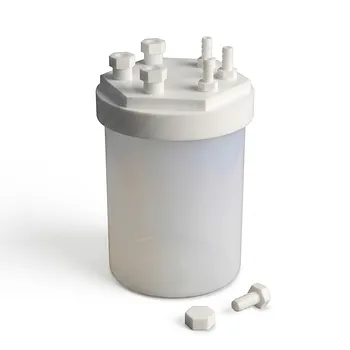
Fluoropolymer labware, tanks, and tubing have demonstrated resistance to diesel fuels and heavy hydrocarbon solvents, including decahydronaphthalene, over service conditions ranging from ambient temperatures to approximately 100 °C, depending on the specific grade and design.
High-Purity and Aggressive-Chemical Systems
Fully fluorinated polymers provide the broadest resistance when the application involves mixtures of acids, bases, organic solvents, or high-purity fluids. PTFE and PFA are difficult to dissolve in ordinary organic solvents and generally provide stronger chemical inertness than partially fluorinated materials.
Partially fluorinated polymers can still be the better choice when they provide a needed balance of flexibility, fabrication, adhesion, or processability. Chemical compatibility must be evaluated for the actual polymer grade and exposure conditions.
Understanding the Trade-offs
Maximum Insolubility Can Limit Fabrication
A polymer that is highly resistant to solvents may be difficult to process through solution methods. Highly fluorinated materials may require melt processing, sintering, machining, or specialized dispersion techniques instead.
Solubility should therefore be treated as a manufacturing property as well as a chemical-resistance property. The most chemically inert grade is not automatically the easiest material to fabricate.
Longer Side Chains Can Reduce Thermal Margin
Bulky perfluoroalkyl side groups can provide excellent resistance to common organic solvents, including chloroform, acetone, alcohols, DMF, and DMSO. However, side-chain degradation or rearrangement can lower the thermal decomposition threshold compared with fully fluorinated PTFE or standard PFA resins.
One cited material showed thermal breakdown onset near 294 °C. This illustrates why solvent resistance and maximum service temperature must be assessed separately.
Contact Angle Does Not Prove Bulk Compatibility
A high water contact angle demonstrates low surface wettability, but it does not by itself establish resistance to fuel absorption, swelling, permeation, or long-term chemical attack. Surface repellency and bulk chemical compatibility are related but different properties.
Material selection should include immersion, swelling, permeation, tensile-retention, and thermal-aging data for the actual fluid and temperature range.
Chemical Resistance Is Not Determined by Fluorine Alone
Fluorine content is a powerful predictor of solvent resistance, but it is not the only variable. Backbone chemistry, crystallinity, molecular weight, crosslinking, additives, morphology, temperature, exposure time, and mechanical stress can all affect performance.
A compatibility table is useful for screening, but validation under representative operating conditions is necessary for safety-critical seals, joints, and containment systems.
How to Apply This to Your Project
The correct choice depends on whether the priority is solution processing, fuel resistance, dimensional stability, surface release, or high-temperature operation.
- If your primary focus is solution processing: Choose a polymer with shorter or less fluorine-dense side groups that retains solubility in a compatible solvent such as THF, acetone, or methyl ethyl ketone.
- If your primary focus is hydrocarbon-fuel resistance: Favor longer, more fluorine-rich side groups and verify low swelling and low fluid uptake in the specific fuel.
- If your primary focus is dimensional stability: Select a higher-fluorine formulation, potentially a fully fluorinated resin such as PTFE or PFA, and test it under the expected temperature and pressure.
- If your primary focus is non-wetting and sample recovery: Use a fluorinated surface architecture that concentrates at the interface, while confirming that the bulk polymer also resists the contacting fluid.
- If your primary focus is high-temperature chemical service: Check side-chain thermal-decomposition data rather than assuming that greater fluorine content guarantees the highest continuous-use temperature.
Fluorinated side groups let engineers tune the balance between processability and chemical durability, but the final selection must match the complete solvent, temperature, and mechanical exposure profile.
Summary Table:
| Side Group Type | Solubility in Common Solvents | Chemical Resistance | Typical Applications |
|---|---|---|---|
| Short trifluoroethoxy | Soluble in THF, acetone, MEK | Moderate | Solution-processed coatings |
| Longer perfluoroalkyl | Limited to fluorinated solvents | High | Fuel hoses, seals |
| Fluorinated aryloxy | Insoluble in most organics | Very high | Aggressive chemical handling |
| Fully fluorinated (PTFE/PFA) | Insoluble in most organics | Excellent | High-purity labware, tanks |
Choose the right fluoropolymer for your fuel and chemical handling needs. With KINTEK's exclusive PTFE/PFA labware and custom CNC machining, we deliver exceptional chemical resistance and dimensional stability. Contact us today to optimize your application and ensure long-term performance. #ContactForm
Related Products
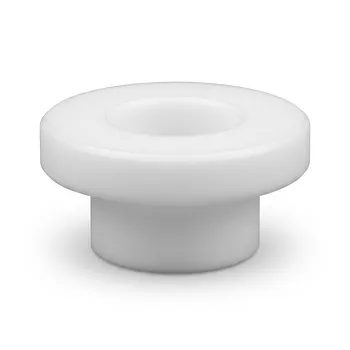
- Custom PTFE Insulating Gaskets and Corrosion Resistant Fluoropolymer Seals for Industrial Electrical Applications
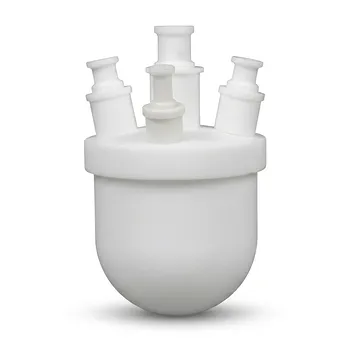
- Custom PTFE Flask 250ml High Purity Fluoropolymer Laboratory Vessel for Chemical Research
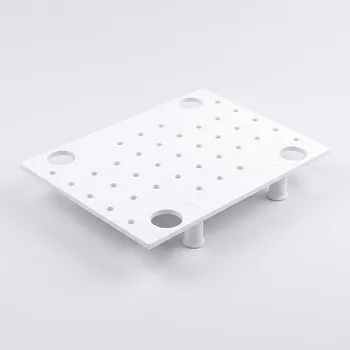
- High Temperature Resistant PTFE Thermal Insulation Board Corrosion Resistant Metal Free Fluoropolymer Stand for Ultra Clean Laboratories
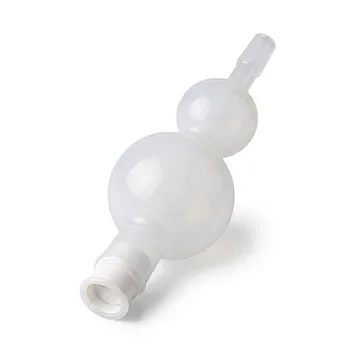
- High Purity PFA Chromatography Columns and Collection Bottles Corrosion Resistant Fluoropolymer Filtration Systems for Trace Analysis
- Custom PTFE Teflon Balls for Advanced Industrial Applications
People Also Ask
- What are the three primary types of PTFE available for gaskets and seals? Choose the Right Material for Your Application
- Why is PTFE an ideal material choice for sealing gaskets, valves, and fluid transfer tubing exposed to extremely aggressive chemicals? Discover Its Superior Chemical Resistance and Reliability
- How is PTFE utilized in seals and gaskets? Leverage Its Chemical & Temperature Resistance
- What are the key properties of PTFE that make it suitable for seals and gaskets? Unlock Superior Sealing Performance
- How are custom PTFE parts used in the automotive sector? Enhance Vehicle Performance & Durability