Fluorinated segments provide a useful molecular duality: they protect the polymer from chemical and thermal attack while also creating a low-energy phase that can reorganize at the material interface. Strong C–F bonding and fluorine-rich shielding preserve the bulk structure, whereas low interfacial energy and microphase segregation allow surface properties—such as adhesion, wettability, and chemical affinity—to change in response to solvents or temperature.
The bulk and surface perform different jobs: fluorinated segments stabilize the polymer internally, but their tendency to migrate toward interfaces enables dynamic control of surface behavior without sacrificing overall chemical integrity.
Why Fluorinated Segments Remain Chemically Stable
Strong carbon–fluorine bonding
Fluorine’s high electronegativity produces strong carbon–fluorine (C–F) bonds. These bonds are difficult to cleave, helping fluorinated segments withstand aggressive acids, bases, oxidizing environments, and organic solvents.
The surrounding fluorine atoms also form an electron-rich protective layer around the polymer backbone. This shielding reduces the accessibility of the underlying carbon framework to chemical attack.
Protection of the polymer backbone
In highly fluorinated or perfluorinated materials, fluorine can densely surround the carbon chain. This steric and electronic protection helps preserve the backbone during demanding chemical and thermal operations.
As a result, materials such as PTFE and PFA can maintain structural integrity and resist leaching or degradation in applications involving corrosive reagents, high temperatures, and high-purity samples.
Thermal robustness
The combination of strong C–F bonding, backbone protection, and fluorinated functional groups can raise resistance to thermal decomposition. In some cross-linkable fluorinated systems containing groups such as pendant –CF₃, reported thermal degradation onset temperatures in air reach approximately 480–530°C, depending on molecular architecture.
This stability is valuable in microwave digestion vessels, crucibles, reaction tubes, and other components exposed to severe processing conditions.
Why the Same Segments Respond at the Surface
Low interfacial energy drives surface migration
Fluorinated groups generally have very low surface energy. A polymer can therefore reduce its overall interfacial energy by placing fluorine-rich segments at a surface or vapor interface rather than keeping them uniformly distributed throughout the bulk.
This process is often called surface segregation or surface enrichment.
Microphase segregation creates a responsive architecture
When fluorinated segments are chemically linked to non-fluorinated segments, the two types of segments may prefer different local environments. Fluorinated regions tend to associate with one another, while non-fluorinated regions favor more polar or chemically different surroundings.
This preference can produce nanoscale or microscale domains. The material retains a connected, structurally stable polymer network, but its surface composition can reorganize as environmental conditions change.
Solvents and temperature alter the balance
Solvent contact can selectively interact with one segment more strongly than another, changing which domains are energetically favored at the interface. Temperature shifts can likewise increase segmental mobility and alter the extent of fluorinated-domain segregation.
In fluorinated multi-block copolymers, larger fluorinated block lengths and higher operating temperatures can enhance fluorine enrichment at the vapor interface. The result is a surface whose composition and energy respond to processing or service conditions.
What Surface Responsiveness Changes
Adhesion and non-stick behavior
A fluorine-rich surface has low surface energy, which reduces the tendency of liquids, analytes, and reactive species to spread across or adhere to it. This supports non-stick behavior and minimizes sample retention.
However, the surface is not permanently limited to one interaction state. If the surrounding solvent or temperature changes the arrangement of the blocks, the relative exposure of fluorinated and non-fluorinated domains can change the level of adhesion.
Chemical affinity and wettability
Surface segregation changes which chemical groups are presented to the environment. A fluorinated surface generally favors low interaction with many substances, while exposure of non-fluorinated segments can increase interfacial interactions with selected solvents or chemical species.
This provides a route to tune wettability, chemical affinity, and surface energy through molecular design rather than through a separate coating.
Reduced contamination and sample loss
Low surface energy can limit the adsorption of target analytes and reactive compounds onto container walls. In trace analysis and high-purity processing, that can help reduce sample retention and protect measurements from contamination associated with degradation or extractable materials.
The bulk fluorinated structure remains responsible for chemical resistance; the surface-enriched fluorinated layer supplies the low-adhesion interface.
How Bulk Stability and Surface Mobility Coexist
Stability does not mean molecular immobility
Chemical stability means the polymer resists bond-breaking reactions and degradation. It does not mean every segment is fixed permanently in place.
Fluorinated segments can remain chemically intact while undergoing limited physical rearrangement, particularly at interfaces where small changes in free energy can favor a different segment distribution.
The interface is more mobile than the bulk
Reorganization is most likely near a surface, solvent boundary, or vapor interface. Molecules in these regions experience different interactions from those inside the polymer, so modest segmental movement can produce a large change in surface composition without disrupting the bulk.
This separation of functions is central to the material’s performance: the interior provides durability, while the interface provides adaptability.
Architecture controls the response
The balance between stability and responsiveness depends on factors such as:
- Fluorinated block length
- Fluorine content
- Chemical contrast between fluorinated and non-fluorinated blocks
- Cross-link density
- Operating temperature
- Solvent identity and exposure time
Greater fluorination generally strengthens chemical resistance and lowers surface energy, but the speed and extent of surface reorganization depend on the polymer’s morphology and mobility.
Understanding the Trade-offs
Higher fluorination is not automatically better
Increasing fluorine content often improves chemical resistance, thermal endurance, non-stick behavior, and friction performance. It can also reduce interfacial interaction so strongly that bonding, printing, coating, or intentional adhesion becomes difficult.
The optimum fluorine content is therefore determined by whether the application prioritizes inertness or controlled interaction.
Surface response may be slow or incomplete
Surface segregation is governed by molecular mobility and domain structure. A highly cross-linked or rigid material may preserve its structure well but respond slowly to changes in solvent or temperature.
Conversely, a more mobile material may adapt more readily but require careful evaluation for dimensional stability and long-term performance.
Surface enrichment does not eliminate bulk contamination risks
A fluorine-rich interface can reduce adsorption and sample retention, but it does not by itself guarantee zero extractables or leachables. Purity depends on the complete formulation, processing history, additives, cleaning procedure, and service conditions.
Extreme conditions can change morphology
Repeated thermal cycling, prolonged solvent exposure, or temperatures near processing limits may alter domain organization. Performance should therefore be evaluated under the actual chemical, thermal, and mechanical conditions rather than inferred from fluorine content alone.
How to Apply This to Your Project
Fluorinated segments are most effective when their chemical stability and interfacial behavior are designed together.
- If your primary focus is chemical and thermal resistance: Favor highly fluorinated or perfluorinated architectures, such as PTFE- or PFA-type materials, and verify performance under the exact acids, bases, solvents, temperatures, and exposure times involved.
- If your primary focus is low adhesion and sample retention: Use fluorine-rich surfaces to obtain low surface energy, non-stick behavior, and reduced analyte adsorption.
- If your primary focus is dynamic surface control: Consider block or segmented architectures that preserve fluorinated-domain segregation while allowing sufficient segmental mobility for solvent- or temperature-driven reorganization.
- If your primary focus is controlled adhesion: Avoid assuming that maximum fluorination is ideal; incorporate non-fluorinated or functional domains capable of providing the required interfacial interaction.
- If your primary focus is high-purity laboratory use: Evaluate not only chemical inertness, but also leachables, extractables, surface retention, thermal cycling, and long-term morphology under real operating conditions.
By separating bulk protection from surface adaptation, fluorinated polymer design can deliver both long-term durability and responsive interfacial performance.
Summary Table:
| Feature | Chemical Stability | Surface Responsiveness |
|---|---|---|
| Role | Protect bulk structure | Adapt surface properties |
| Mechanism | Strong C-F bonds, shielding | Surface segregation, low interfacial energy |
| Driving Force | Bond strength | Minimize interfacial energy |
| Stimuli | None required | Solvents, temperature, environment |
| Result | Resistance to chemicals/heat | Tunable adhesion, wettability |
| Trade-offs | May hinder adhesion | Can be slow or incomplete |
| Design Optimization | High fluorination | Balance segment lengths, mobility |
To leverage fluoropolymer expertise for your high-purity and custom lab solutions, contact KINTEK today! As a leader in PTFE and PFA products, we offer everything from basic labware to custom CNC-machined parts. Our materials provide the chemical stability and dynamic surface properties you need for trace analysis, sample prep, and custom equipment. Reach out to discuss your specific requirements — Contact us now and let KINTEK enhance your lab's performance!
Related Products
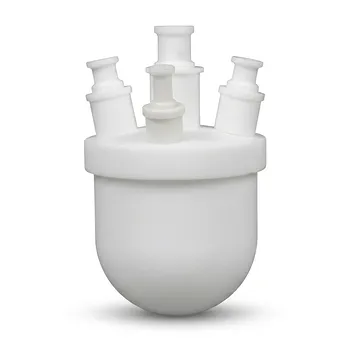
- Custom PTFE Flask 250ml High Purity Fluoropolymer Laboratory Vessel for Chemical Research
- Custom PTFE Insulating Gaskets and Corrosion Resistant Fluoropolymer Seals for Industrial Electrical Applications
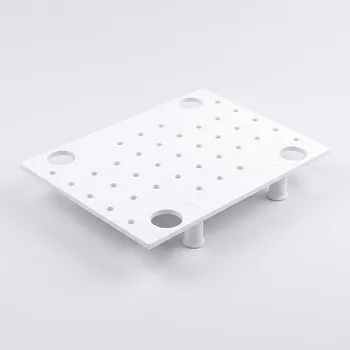
- High Temperature Resistant PTFE Thermal Insulation Board Corrosion Resistant Metal Free Fluoropolymer Stand for Ultra Clean Laboratories
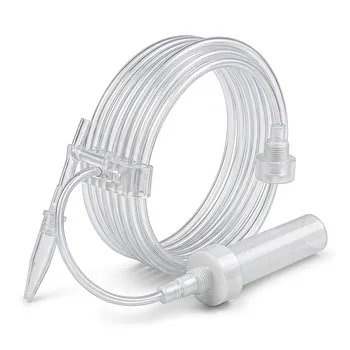
- Custom PFA Tubing 1/4 Inch High Purity Corrosion Resistant Fluoropolymer Tube with Welding and Machining Services
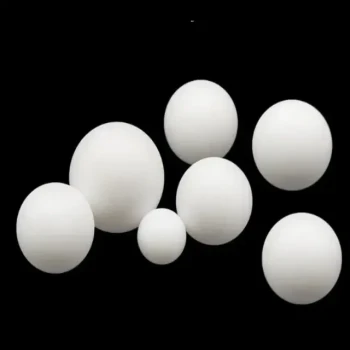
- Custom PTFE Teflon Balls for Advanced Industrial Applications
People Also Ask
- What are the key steps for structural integrity in molded PTFE lab reaction vessels? Master fine powder processing.
- When synthesizing TFVE monomers involving reactive organometallic reagents and aggressive polar solvents, what material performance characteristics are required? Ensure purity with PTFE/PFA.
- Why Are High-Purity Fluoropolymer Vessels and Tubing Critical for Trace Analysis? Prevent Contamination Reliably
- Why do PTFE fluoropolymer laboratory vessels and containers exhibit superior chemical resistance against harsh solvents and corrosive acids compared to standard plastic labware? Discover the molecular secrets
- How do choice of solvent and chain transfer activity affect molecular weight during vinylidene fluoride (VDF) radical polymerization? Learn Key Factors for High-MW PVDF