Fluorinated oligomers achieve low surface energy by concentrating perfluoroalkyl groups at the outermost interface. During processing or curing, these fluorinated segments migrate toward the surface because their low polarizability and weak intermolecular attraction reduce interfacial free energy. When organized into concentrated domains rather than randomly dispersed, they create an efficient fluorine-rich surface that can reach approximately 12–15 mN/m, strongly resisting water and oily liquids.
Core takeaway: Fluorinated oligomers work through both chemical segregation and surface organization. Fluorine-rich groups lower the energetic benefit of liquid contact, while concentrated domains—and, where necessary, surface texture—reduce wetting, adhesion, and liquid retention.
How Fluorinated Oligomers Lower Surface Energy
Fluorine creates a low-energy interface
Perfluoroalkyl groups have very low polarizability and therefore weak dispersion interactions with neighboring molecules. This reduces the attractive forces between the modified surface and contacting liquids.
The result is a surface that is difficult for liquids to spread across. Water experiences this as hydrophobicity, while many oils and organic liquids experience it as oleophobicity.
Fluorinated groups migrate to the surface
During coating, curing, or processing, fluorinated segments are thermodynamically driven toward the material’s outermost surface. Positioning these groups at the interface lowers the system’s total interfacial energy.
This mechanism allows a relatively small amount of fluorinated oligomer to have a disproportionate effect on surface behavior. The bulk material can retain its original mechanical and chemical properties while the outer surface gains fluorinated functionality.
Pendant groups form the active outer layer
In many fluorinated oligomers, pendant perfluoroalkyl or fluoroalkoxy groups extend from the oligomer backbone. These groups become exposed at the interface and form the primary liquid-contacting layer.
Their effectiveness depends not only on fluorine content, but also on whether the groups can orient and remain concentrated at the surface.
Why Oligomer Organization Matters
Concentrated domains improve fluorine efficiency
A random distribution of fluorinated groups can leave non-fluorinated portions of the polymer exposed. Liquids may then interact with those higher-energy regions, reducing repellency.
Small, concentrated fluorinated domains create a more continuous low-energy surface. This increases the functional impact of each fluorinated segment and improves non-stick performance.
Surface orientation controls liquid contact
The oligomer’s architecture influences how effectively its fluorinated groups present themselves to the environment. Fluoroalkyl-endcapped oligomers, for example, can place fluorinated functionality at strategically important positions in the surface layer.
The objective is not simply to add fluorine to the formulation. It is to ensure that fluorinated groups are accessible, oriented outward, and retained at the interface.
Chain length can affect solvent resistance
Longer fluoroalkyl or fluoroalkoxy groups can increase resistance to organic liquids and aggressive solvents. This is useful when a surface must repel not only water but also alcohols, oils, or other low-surface-tension liquids.
However, chain length is only one design variable. Surface coverage, oligomer compatibility, curing behavior, and morphology also determine the final result.
How Low Surface Energy Produces Liquid Repellency
Wetting becomes thermodynamically unfavorable
A liquid spreads when the energetic benefit of contacting the solid outweighs the cost of increasing its own surface area. Fluorinated surfaces reduce the solid–liquid attraction, making spreading less favorable.
Instead of forming a continuous film, a droplet tends to remain more compact. This produces higher contact angles and less liquid adhesion.
Water and oils behave differently
Water is relatively easy to repel because its high surface tension makes it less likely to spread on a low-energy fluorinated surface. Organic liquids are more difficult because many have much lower surface tension.
Therefore, a surface can show strong water repellency without being truly oil-repellent. Achieving broad liquid repellency requires sufficiently low surface energy and, often, additional structural design.
Reduced adhesion improves handling
When droplets do not spread or strongly adhere, they leave less residue on tubing, vessels, valves, and protective surfaces. This supports easier cleaning, lower fluid retention, and more complete recovery of valuable or contamination-sensitive samples.
These benefits are particularly important in trace analysis and high-purity fluid handling, where small residual droplets can cause sample loss or cross-contamination.
The Role of Surface Texture
Chemistry alone may not repel low-tension liquids
Very low surface energy is necessary but may not be sufficient to repel oils, alcohols, and solvents with surface tensions below approximately 30 mN/m. Such liquids can still penetrate or spread across a chemically fluorinated but smooth surface.
This is why “fluorinated” and “superamphiphobic” should not be treated as interchangeable descriptions.
Roughness can amplify repellency
Hierarchical micro- and nanoscale roughness can trap air beneath a droplet. In a stable Cassie–Baxter state, the droplet contacts a combination of fluorinated solid and trapped air rather than fully wetting the surface.
This can increase apparent contact angles, reduce contact-angle hysteresis, and lower roll-off angles. Droplets are then more likely to roll or bounce away instead of remaining attached.
Re-entrant structures support difficult liquids
Re-entrant or overhanging geometries can help stabilize a composite solid–air interface, particularly for low-surface-tension liquids. They complement the chemical effect of fluorinated groups rather than replacing it.
The strongest repellency generally comes from low-energy chemistry plus deliberately engineered topography.
Understanding the Trade-offs
Low surface energy can reduce coating adhesion
The same weak intermolecular interactions that provide non-stick behavior can make a fluorinated layer difficult to bond to or overcoat. Surface preparation and anchoring chemistry may therefore be required.
A formulation must balance repellency with sufficient attachment to the substrate and resistance to wear.
Surface migration can change over time
Fluorinated groups may redistribute during processing, storage, or exposure to liquids. If the surface layer is not well anchored, performance can decline through rearrangement, abrasion, or removal of the fluorinated component.
Durability must therefore be evaluated under the actual chemical, thermal, and mechanical conditions of use.
Roughness can increase fouling in some applications
Texturing improves repellency when it maintains trapped air, but defects or contamination can fill the texture and reduce performance. Rough surfaces may also be harder to clean if the intended wetting state is lost.
For precision fluid handling, a smooth low-energy surface may be preferable when cleanliness and reproducibility matter more than maximum static contact angle.
Environmental and regulatory considerations remain important
Some fluorinated chemistries raise environmental and regulatory concerns, particularly when they contain mobile or persistent fluorinated species. Selecting an oligomer requires consideration of composition, molecular weight, anchoring, migration, end-of-life behavior, and applicable regulations.
Performance claims should be based on the specific formulation and test liquids rather than on fluorine content alone.
How to Apply This to Your Project
The correct design depends on whether the priority is general non-stick behavior, oil repellency, durability, or analytical cleanliness.
- If your primary focus is water repellency: Use an oligomer that can migrate and orient pendant perfluoroalkyl groups at the interface, producing a continuous low-energy surface.
- If your primary focus is oil and solvent repellency: Combine very low surface energy with concentrated fluorinated domains and, where appropriate, hierarchical or re-entrant surface texture.
- If your primary focus is sample recovery and contamination control: Prioritize a well-anchored, smooth fluorinated layer that minimizes droplet adhesion and liquid retention without creating difficult-to-clean texture.
- If your primary focus is long-term durability: Evaluate fluorinated-group retention, coating adhesion, abrasion resistance, and chemical stability under real operating conditions.
- If your primary focus is formulation efficiency: Optimize oligomer architecture and surface segregation rather than simply increasing total fluorine concentration.
Understanding both where fluorinated groups reside and how the surface is structured is the key to designing reliable liquid-repellent fluoropolymer modifications.
Summary Table:
| Mechanism | Key Principle | Impact on Repellency |
|---|---|---|
| Fluorine's low polarizability | Reduces intermolecular attraction with liquids | Higher water and oil contact angles |
| Surface migration | Fluorinated groups move to the outermost surface | Efficient use of fluorine at the interface |
| Concentrated domains | Dense packing of perfluoroalkyl groups | More continuous low-energy surface |
| Pendant group orientation | Fluorinated groups exposed and aligned | Enhanced non-stick performance |
| Surface texture (optional) | Hierarchical roughness or re-entrant geometry | Amplifies repellency, especially for low-tension liquids |
This table summarizes the primary mechanisms by which fluorinated oligomers achieve low surface energy and liquid repellency.
Ready to optimize your fluoropolymer surface modifications? KINTEK's exclusive PTFE and PFA labware, tubing, valves, and custom CNC-machined components leverage these advanced fluorinated oligomer principles to deliver superior liquid repellency, low surface energy, and contamination control. Whether you need high-purity trace analysis tools or comprehensive fluid handling systems, our expertise ensures your lab achieves maximum performance. Contact us today to discuss your application and discover how our bespoke solutions can improve sample recovery, reduce cleaning time, and enhance your workflow reliability. Get in touch with our specialists for a tailored consultation.
Related Products
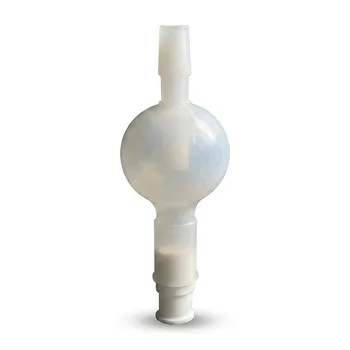
- High Purity PFA Chromatography Column with Collection Bottle Corrosion Resistant Fluoropolymer Filtration System for Trace Analysis
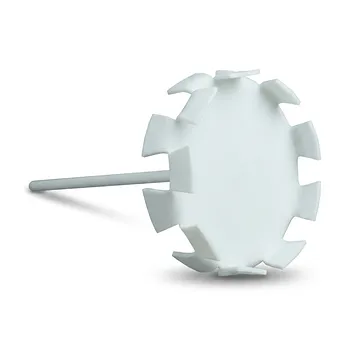
- High Purity PTFE Dispersion Disk for Food and Cosmetic Processing Non Stick Corrosion Resistant Large Stirring Paddle Customizable Fluoropolymer Impeller
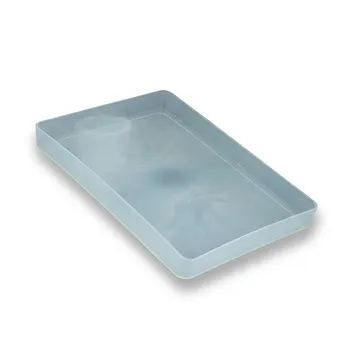
- Customizable PFA Square Tray Corrosion Resistant High Temperature Large Petri Dish Electrolytic Cell
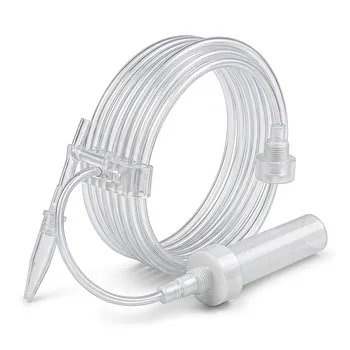
- Custom PFA Tubing 1/4 Inch High Purity Corrosion Resistant Fluoropolymer Tube with Welding and Machining Services
- High Temperature Resistant Insulating TFM Separator and Ultra Clean Laboratory PTFE Baffle Plate with Customizable Pore Size and Hole Configuration
People Also Ask
- What are the primary functional and temperature differences between PFA and FEP when selecting melt-processible fluoropolymers for custom laboratory apparatus?
- Why is the chemical stability of polymer endgroups critical when selecting melt-processible fluoropolymers like PFA for high-purity laboratory apparatus? Choose Stable Endgroups for Reliable Performance
- What are the characteristics of PFA material? A Guide to Its High-Performance Balance
- Why is Perfluoroalkoxy alkane (PFA) preferred over glass or stainless steel in pharmaceutical process development? Pure Yield
- Why is PFA superior for cleaning and preventing cross-contamination? The Gold Standard for Ultra-Trace Lab Hygiene