Post-polymerization side-group exchange enables fluoropolymer surfaces to be redesigned without rebuilding the polymer itself. A primary fluorinated polymer is exposed to alternative fluoroalkoxides in solution or at a surface interface, allowing a controlled fraction of existing fluorinated side groups to be replaced. Because the reaction can be confined largely to the interface, properties such as wettability, surface energy, and chemical resistance can change while the bulk polymer retains its mechanical strength, thermal stability, and structural integrity.
Core takeaway: Use controlled side-group exchange to create a thin, chemically tailored surface on an otherwise unchanged fluoropolymer substrate. Reaction conditions determine the degree of substitution and therefore the final interfacial behavior.
How Side-Group Exchange Modifies the Surface
Replace Existing Surface Chemistry
The process introduces alternative fluoroalkoxide-derived side groups onto the polymer. These groups partially replace existing fluorinated side groups rather than changing the entire polymer backbone.
This distinction is important: the backbone and most of the bulk material remain intact, while the outer chemical environment is adjusted.
Target the Interface Rather Than the Bulk
Treatment can be performed in solution or directly at the polymer–environment interface. With suitable control of exposure and reaction conditions, modification can be concentrated near the surface.
The result is a chemically functional outer layer supported by the original fluoropolymer. The surface can therefore exhibit new behavior without requiring a new bulk formulation.
Tune the Degree of Substitution
The extent of side-group exchange is controlled through variables such as:
- Reaction time
- Temperature
- Alternative fluoroalkoxide concentration
- Exposure conditions
- Solution or interface treatment method
Partial substitution is often preferable to complete replacement because it allows the surface properties to be adjusted incrementally.
Which Surface Characteristics Can Be Controlled?
Wettability and Surface Energy
Changing the fluorinated side groups can alter how liquids interact with the surface. This may increase or decrease wettability, depending on the chemical structure introduced and the intended application.
Surface energy is especially important for fluid handling, coating behavior, contamination control, and contact with biological or chemical media.
Chemical Resistance at the Contact Surface
The modified interface can be designed to provide a different level or type of chemical resistance. This is useful when the surface encounters solvents, reactive fluids, or aggressive processing environments.
The underlying bulk fluoropolymer continues to provide its established structural and thermal performance.
Interfacial Functionality
Side-group exchange can introduce surface chemistry suited to a particular contact environment. In practical terms, this can help tailor how the material interacts with fluids, adjacent materials, or functional coatings.
The technique is therefore more precise than treating the entire component as a chemically different polymer.
Why Bulk Properties Can Be Preserved
The Backbone Remains Unchanged
The primary advantage comes from modifying side groups rather than reconstructing the polymer backbone. The molecular framework responsible for much of the fluoropolymer’s bulk behavior is preserved.
This supports retention of mechanical strength, thermal stability, and structural integrity.
The Modification Can Be Surface-Limited
When the treatment is controlled at the interface, only a relatively shallow region needs to undergo exchange. The interior remains substantially the original material.
This creates a useful separation between surface function and bulk performance: the surface handles interaction with the environment, while the bulk carries load and maintains dimensional stability.
Low Modifier Levels Can Be Effective
Fluorinated modifiers tend to have low surface energy and can concentrate at the outer interface during film formation or processing. Consequently, a small modifier concentration—reported in the supplementary reference as 2 wt% or less in relevant modifier systems—may be sufficient to populate the surface frontier.
That behavior allows surface characteristics to be dominated by the fluorinated modifier while the bulk matrix retains its original properties and substrate adhesion.
Where This Approach Is Useful
Fluid Transfer Components
Tubing, seals, and other fluid-contact components can benefit from a surface tailored for wettability or resistance to specific chemical environments.
The bulk fluoropolymer can continue to provide the flexibility, strength, and thermal durability required for service.
Catheters and Medical Contact Surfaces
Catheter surfaces may require carefully controlled interactions with fluids and biological environments. Surface-focused chemical modification can address those requirements without replacing the complete catheter material.
Any medical use would still require independent validation of biocompatibility, extractables, sterilization stability, and long-term durability.
Protective Insulation Layers
Insulation surfaces may need enhanced resistance to environmental exposure or improved compatibility with adjacent materials. Side-group exchange can modify the contact surface while retaining the bulk dielectric and mechanical characteristics of the fluoropolymer system.
Specialized Coatings and Films
Thin films can use surface-directed fluorinated chemistry to obtain low-energy or hydrophobic interfaces. The bulk film can retain its original adhesion and structural behavior when the modifier remains concentrated primarily at the surface.
Understanding the Trade-offs
Surface Selectivity Must Be Verified
A nominally surface-only treatment can affect the near-surface region more deeply than intended if reaction conditions are too aggressive. Excessive time, temperature, or reagent concentration may increase the depth of modification.
Characterization should therefore distinguish surface properties from bulk properties rather than assuming that the treatment is perfectly confined to the outermost layer.
More Substitution Is Not Always Better
Increasing the substitution level does not automatically improve performance. A highly modified surface may provide the wrong wettability, alter adhesion, or reduce compatibility with a particular fluid or coating.
The correct target is the required interfacial behavior, not maximum chemical conversion.
Processing Uniformity Matters
Complex geometries, narrow tubing, internal lumens, and porous or textured surfaces may not receive identical reagent exposure. Flow, access, temperature distribution, and reaction time can all affect uniformity.
Qualification should include representative component geometries, especially where internal surfaces are functionally important.
Surface Properties May Change During Service
The final behavior depends on the stability of the exchanged side groups and their resistance to the operating environment. Fluids, temperature cycling, cleaning, sterilization, or mechanical abrasion may alter the modified interface over time.
Long-term testing should reproduce actual service conditions rather than relying only on initial contact-angle or surface-energy measurements.
How to Apply This to Your Project
The practical workflow is to define the required interface first, then select the exchange chemistry and conditions that achieve it with minimal bulk exposure.
- If your primary focus is wettability: Adjust side-group identity and substitution level to reach the required surface energy, then verify behavior with the actual process fluid rather than water alone.
- If your primary focus is chemical resistance: Select an alternative fluoroalkoxide suited to the contact environment and validate resistance after realistic temperature, exposure, and cleaning cycles.
- If your primary focus is preserving mechanical and thermal performance: Use the mildest effective treatment and confirm that bulk strength, thermal stability, dimensions, and structural integrity remain unchanged.
- If your primary focus is complex components: Develop a surface-access and exposure process that produces uniform exchange on both external and internal contact surfaces.
- If your primary focus is low-additive formulation: Exploit the tendency of low-surface-energy fluorinated modifiers to concentrate at the interface, while verifying that the modifier remains stable and does not migrate undesirably.
Controlled side-group exchange turns a fluoropolymer into a surface-engineered material: the interface is customized for its environment while the bulk remains fit for its structural role.
Summary Table:
| Surface Property | How It's Affected | Key Control Factors |
|---|---|---|
| Wettability | Can be increased or decreased | Side group identity, substitution level |
| Surface Energy | Altered to meet application needs | Fluorinated modifier concentration |
| Chemical Resistance | Customized at the contact surface | Alternative fluoroalkoxide choice |
| Interfacial Functionality | Tailored for specific environments | Reaction time, temperature, exposure conditions |
| Bulk Properties (Strength, Thermal Stability) | Unchanged | Reaction confined to surface, backbone preserved |
Unlock the potential of surface-engineered fluoropolymers for your application. At KINTEK, we specialize in high-performance PTFE and PFA lab supplies, leveraging our expertise in fluoropolymer chemistry to deliver custom solutions. Whether you need tailored fluid transfer components, medical-grade surfaces, or protective coatings, our team can help you achieve precise surface modifications without compromising bulk integrity. Contact us today to discuss your project and discover how our products can enhance your research or manufacturing processes. Get in touch with our experts!
Related Products
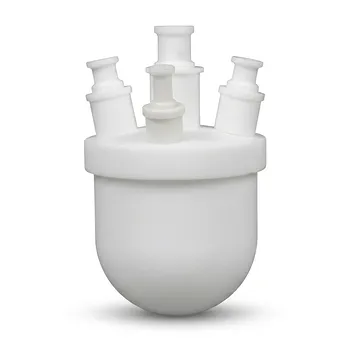
- Custom PTFE Flask 250ml High Purity Fluoropolymer Laboratory Vessel for Chemical Research
- Custom PTFE Insulating Gaskets and Corrosion Resistant Fluoropolymer Seals for Industrial Electrical Applications
- High Temperature Resistant PTFE Thermal Insulation Board Corrosion Resistant Metal Free Fluoropolymer Stand for Ultra Clean Laboratories
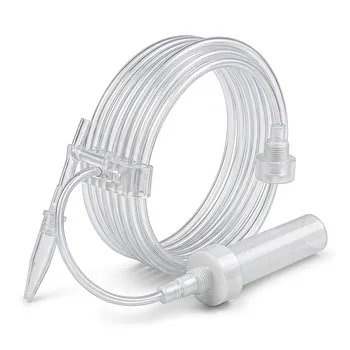
- Custom PFA Tubing 1/4 Inch High Purity Corrosion Resistant Fluoropolymer Tube with Welding and Machining Services
- Custom PTFE Teflon Balls for Advanced Industrial Applications
People Also Ask
- What are the key steps for structural integrity in molded PTFE lab reaction vessels? Master fine powder processing.
- When synthesizing TFVE monomers involving reactive organometallic reagents and aggressive polar solvents, what material performance characteristics are required? Ensure purity with PTFE/PFA.
- Why Are High-Purity Fluoropolymer Vessels and Tubing Critical for Trace Analysis? Prevent Contamination Reliably
- Why do PTFE fluoropolymer laboratory vessels and containers exhibit superior chemical resistance against harsh solvents and corrosive acids compared to standard plastic labware? Discover the molecular secrets
- How do choice of solvent and chain transfer activity affect molecular weight during vinylidene fluoride (VDF) radical polymerization? Learn Key Factors for High-MW PVDF