Fluoropolymers are classified as homopolymers or copolymers according to their monomer composition. Under the cited ASTM-based industry convention, a homopolymer contains at least 99% by weight of one primary monomer and no more than 1% of a secondary monomer, while a copolymer contains more than 1% by weight of one or more comonomers. Major fluoropolymer families are founded primarily on tetrafluoroethylene (TFE), vinylidene fluoride (VF₂), and chlorotrifluoroethylene (CTFE), although some commercial materials use additional monomers.
The key distinction is compositional: homopolymers are essentially based on one monomer, while copolymers deliberately incorporate more than 1% of other monomers to modify performance. TFE, VF₂, and CTFE form the principal monomer foundations for many major fluoropolymer families.
How Fluoropolymers Are Classified
Homopolymers
A homopolymer is defined here as a polymer containing 99% or more by weight of one monomer and 1% or less of a secondary monomer.
This category represents materials whose properties are dominated by a single repeating-unit chemistry. PTFE, produced primarily from TFE, is the best-known example.
Copolymers
A copolymer contains more than 1% by weight of one or more comonomers in addition to its principal monomer.
Adding comonomers can change crystallinity, melt processability, flexibility, toughness, and other properties. PFA, for example, is based on TFE but incorporates a perfluoroalkyl vinyl ether comonomer to provide melt processability while retaining high chemical resistance.
Why the threshold matters
The 1% threshold provides a practical industry boundary between a polymer that is compositionally dominated by one monomer and one intentionally modified through meaningful comonomer content.
This is a composition-based classification, not a complete description of performance. Two materials in the same category can still differ substantially in processing behavior and mechanical properties.
The Primary Monomer Foundations
Tetrafluoroethylene (TFE)
TFE is the foundation of several major fluoropolymers, including PTFE and TFE-based copolymers such as PFA.
TFE-derived polymers are associated with strong chemical inertness and high thermal stability. Their exact processing and mechanical behavior depend on whether TFE is used alone or modified with comonomers.
Vinylidene fluoride (VF₂)
VF₂, also written as vinylidene fluoride, is the primary monomer for PVDF.
PVDF is valued for a balance of chemical resistance, mechanical strength, and flexibility. Its properties differ from those of PTFE because the polymer backbone and fluorine-to-hydrogen composition are different.
Chlorotrifluoroethylene (CTFE)
CTFE serves as the foundation for chlorotrifluoroethylene-based fluoropolymers.
The chlorine substituent changes the polymer’s structure and can influence crystallinity, flexibility, permeability, and processing characteristics. CTFE-based materials therefore occupy a distinct position within the broader fluoropolymer family.
An important qualification about PVF
PVF, or polyvinyl fluoride, is based on vinyl fluoride (VF), not directly on TFE, VF₂, or CTFE.
Therefore, the three-monomer list is best understood as the principal foundation for many major commercial fluoropolymers—not as an exhaustive list of every fluorinated monomer used commercially. This distinction is important when identifying a material from its chemical composition.
How Composition Influences Material Selection
Thermal stability
Monomer selection and polymer structure influence the temperature range in which a fluoropolymer can operate reliably.
TFE-based materials such as PTFE are commonly selected where high thermal stability and chemical inertness are central requirements, while the specific grade and formulation still need to be evaluated.
Chemical inertness
Fluorinated polymer structures generally provide strong resistance to aggressive chemicals, but resistance is not identical across all fluoropolymer families.
The chemical environment, temperature, exposure time, stress level, and polymer grade should all be considered rather than relying only on the material family name.
Mechanical flexibility
Comonomers can be used to modify rigidity, flexibility, toughness, and processability.
This is one reason copolymers are important: they can preserve key fluoropolymer advantages while making the material more suitable for fabrication or applications requiring greater flexibility.
Understanding the Trade-offs
A homopolymer is not automatically the best choice
A high level of compositional uniformity does not guarantee the best practical performance for every application.
Homopolymers may offer strong chemical or thermal performance, but they can also present processing limitations compared with appropriately designed copolymers.
Copolymer modification involves compromise
Comonomers can improve melt processability or flexibility, but changing the composition may also alter crystallinity, thermal behavior, mechanical strength, or chemical resistance.
The correct choice therefore depends on the required balance of properties, not simply on whether the polymer is classified as a homopolymer or copolymer.
Do not treat monomer classification as a complete specification
The homopolymer/copolymer distinction describes composition, but it does not replace a material specification.
Laboratory and engineering decisions should also consider grade, molecular weight, processing history, reinforcement, temperature limits, and application-specific chemical exposure.
How to Apply This to Your Project
Monomer classification is most useful as a first screening tool before comparing detailed material specifications.
- If your primary focus is chemical inertness: Start with TFE-, VF₂-, and CTFE-based fluoropolymer families, then verify resistance under the actual chemical, temperature, and stress conditions.
- If your primary focus is thermal stability: Evaluate TFE-based materials such as PTFE and PFA, while checking the specific operating-temperature limits of the selected grade.
- If your primary focus is flexibility or toughness: Consider copolymers whose comonomers are used to modify mechanical behavior, rather than selecting solely by homopolymer status.
- If your primary focus is accurate material identification: Confirm the actual monomer composition, remembering that PVF is based on vinyl fluoride and is not derived from TFE, VF₂, or CTFE.
Understanding both the compositional classification and the underlying monomers enables more reliable fluoropolymer selection.
Summary Table:
| Classification | Definition | Example |
|---|---|---|
| Homopolymer | ≥99% by weight of one monomer, ≤1% secondary | PTFE (from TFE) |
| Copolymer | >1% by weight of one or more comonomers | PFA (TFE + perfluoroalkyl vinyl ether) |
| Primary Monomers | TFE, VF₂, CTFE | PVDF (from VF₂), CTFE-based polymers |
Need high-performance fluoropolymer labware? KINTEK manufactures a full range of PTFE and PFA products, from basic beakers to custom CNC-machined parts. Our expertise ensures precise material selection for your application. Contact us today to discuss your requirements and benefit from our end-to-end custom manufacturing.
Related Products
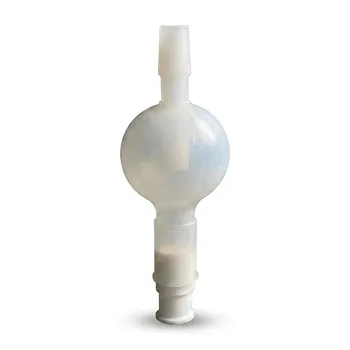
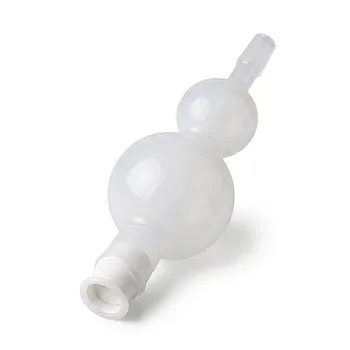
- High Purity PFA Chromatography Column with Collection Bottle Corrosion Resistant Fluoropolymer Filtration System for Trace Analysis
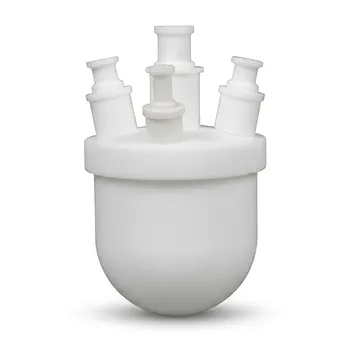
- Custom PTFE Flask 250ml High Purity Fluoropolymer Laboratory Vessel for Chemical Research
- High Purity PFA Chromatography Columns and Collection Bottles Corrosion Resistant Fluoropolymer Filtration Systems for Trace Analysis
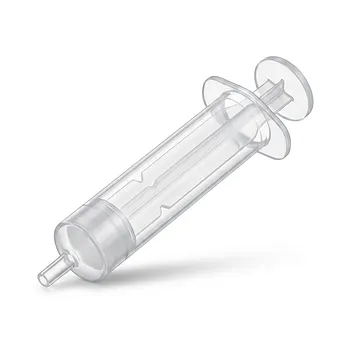
- Corrosion Resistant PFA Syringe Translucent Visual Fluoropolymer Labware 10ml Chemical Handling Tool
- Custom PFA Tubing 1/4 Inch High Purity Corrosion Resistant Fluoropolymer Tube with Welding and Machining Services
People Also Ask
- What are the primary functional and temperature differences between PFA and FEP when selecting melt-processible fluoropolymers for custom laboratory apparatus?
- How does PPVE modify PTFE to make melt-processable PFA? Discover key benefits and applications.
- Why is the chemical stability of polymer endgroups critical when selecting melt-processible fluoropolymers like PFA for high-purity laboratory apparatus? Choose Stable Endgroups for Reliable Performance
- What are the characteristics of PFA material? A Guide to Its High-Performance Balance
- Why is Perfluoroalkoxy alkane (PFA) preferred over glass or stainless steel in pharmaceutical process development? Pure Yield