KINTEK standard and customized electrochemical cells provide controlled, chemically compatible platforms for battery development, electrocatalysis, corrosion evaluation, photoelectrochemistry, trace analysis, fuel-cell research, and in-situ spectroscopy. Our range includes PTFE and PFA reaction cells, H-type divided cells with replaceable membranes, five-port three-electrode cells, jacketed temperature-control vessels, flat-plate corrosion cells, gas-diffusion and membrane-electrode assembly reactors, button-cell fixtures, and high-transmittance quartz photoelectrochemical and spectroelectrochemical cells. Select proven laboratory configurations or specify vessel volume, ports, electrode spacing, windows, flow channels, sealing method, and sample geometry for a setup that fits your protocol.
Toggle Categories
Get Instant Support
Choose your preferred way to connect with our team
Response Time
Within 8 hours on working days, 24 hours on holidays
Standard & Customized Electrochemical Cells
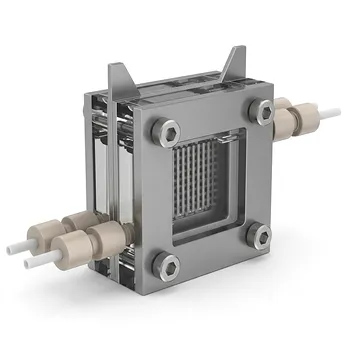
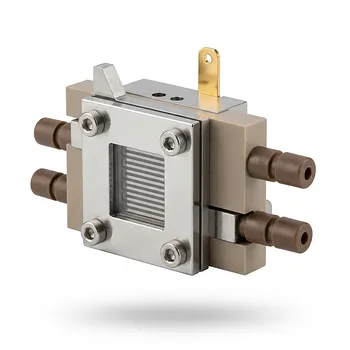
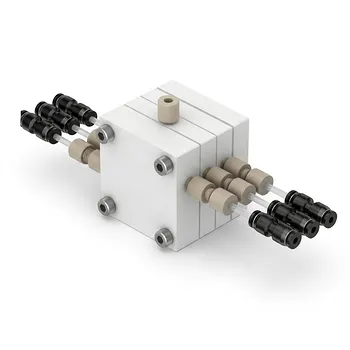
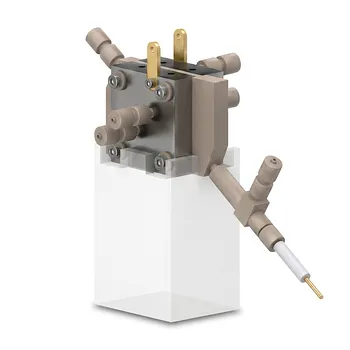
Precision Electrochemical Cells for Controlled, Repeatable Research
Electrochemical results depend on more than the potentiostat, electrode material, and electrolyte composition. The cell itself establishes the physical conditions under which charge transfer, mass transport, gas evolution, light exposure, temperature, and interfacial reactions occur. A poorly matched vessel can introduce leakage, contamination, unstable electrode placement, uncontrolled resistance, nonuniform flow, or inconsistent illuminated area. KINTEK electrochemical cells are designed to give researchers a stable and configurable experimental environment, helping laboratories obtain data that is more repeatable, interpretable, and relevant to real operating conditions.
Our portfolio covers both standard research cells and custom electrochemical reaction systems. It includes conventional three-electrode cells, hermetic five-port vessels, H-type divided cells, membrane-electrode assembly electrolyzers, gas-diffusion cells, flat-sample corrosion cells, button-cell test fixtures, photoelectrochemical cells, and thin-layer spectroelectrochemical cells. Across these formats, we apply our specialization in high-performance fluoropolymers to critical wetted parts, sealing interfaces, lids, supports, fixtures, tubing connections, and custom-machined components.
Material choices built around chemical compatibility
PTFE and PFA are central to many KINTEK cell designs because demanding electrochemical systems often involve conditions that quickly compromise ordinary labware. Strong acids, bases, oxidizing solutions, concentrated salt electrolytes, fluorinated media, metal-ion solutions, and aggressive cleaning procedures can create contamination and durability concerns. High-purity fluoropolymer components offer exceptional chemical inertness, low extractables, strong dielectric properties, and resistance to corrosion. These characteristics are valuable when the objective is to measure the electrochemical behavior of the sample rather than the response of the cell material.
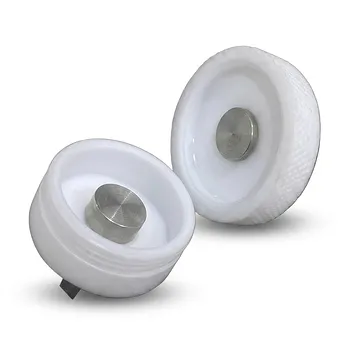
For high-purity electrochemistry, trace analysis, and corrosive electrolyte studies, all-PTFE vessels can minimize unwanted interactions with the reaction medium. PTFE lids, compression seals, rotating plugs, membrane supports, Luggin capillary assemblies, and flat-sample clamps help maintain a chemically resistant boundary at the points where leaks or contamination are most likely to occur. Fluoropolymer construction also provides electrical insulation around electrodes and fixtures, reducing the likelihood of unintended conductive paths or stray-current effects.
Where optical access is essential, our quartz photoelectrochemical and spectroelectrochemical cells combine optically transparent quartz bodies or windows with chemically resistant PTFE covers and sealing components. High-transmittance quartz supports experiments involving UV-Vis, NIR, irradiation-dependent catalysis, semiconductor photoelectrodes, and in-situ optical monitoring. The glue-free fused construction available for selected quartz cells helps preserve optical clarity and improves suitability for temperature-sensitive or chemically demanding workflows.
Borosilicate glass electrochemical cells provide another versatile option for routine and advanced laboratory research. Their visible transparency enables direct observation of gas evolution, liquid level, mixing, and electrode position, while PTFE lids and seals protect the ports and wetted interfaces. Jacketed glass cells can be selected when temperature control is an important variable, allowing connection to a circulating bath for more consistent thermal conditions during kinetic measurements, corrosion tests, or extended electrolysis.
Cell formats for diverse electrochemical methods
A standard three-electrode configuration remains one of the most useful arrangements for electrochemical characterization. It separates the working electrode, reference electrode, and counter electrode so that the potential of the working electrode can be controlled and measured with greater confidence. KINTEK five-port and multi-port cells provide flexible access for these electrodes as well as gas inlet and outlet lines, thermometers, sampling tools, condensers, or additional probes. Port layouts can be selected to suit common methods such as cyclic voltammetry, chronoamperometry, chronopotentiometry, electrochemical impedance spectroscopy, linear polarization resistance, Tafel analysis, and bulk electrolysis.
H-type electrochemical cells are especially useful for divided electrolysis, electrocatalysis, CO2 reduction, nitrogen reduction, hydrogen evolution, oxygen evolution, and other reactions where products, ions, or gases must be separated between anodic and cathodic chambers. A replaceable membrane installed between the chambers permits ion transport while reducing cross-contamination and unwanted product crossover. Researchers can choose membrane types based on proton, cation, anion, or other ion-transfer requirements, then replace the membrane efficiently as the experimental program changes.
KINTEK H-type cells can incorporate Luggin capillaries that position the reference-electrode sensing point closer to the working electrode. This geometry helps reduce uncompensated solution resistance and associated IR drop, an important consideration when comparing catalyst activity, measuring polarization behavior, or operating at higher current density. Gas-purge ports can support inerting, reactive-gas introduction, dissolved-oxygen control, or gas-saturation experiments. Sampling ports can provide access for monitoring gas-phase or liquid-phase products without fully disrupting a controlled reaction setup.
For investigations requiring exact thermal control, jacketed electrochemical cells circulate heating or cooling fluid around the reaction chamber. Temperature affects electrolyte conductivity, diffusion, solubility, viscosity, reaction kinetics, catalyst stability, and gas behavior. A jacketed configuration makes it easier to maintain comparable conditions between experiments and can improve confidence when studying temperature-dependent mechanisms or scaling an electrochemical process.
Photoelectrochemical and spectroelectrochemical capability
Photoelectrochemical testing requires a cell that makes illumination conditions explicit and repeatable. The location of the window, its transmission characteristics, the optical path, the sealing design, and the working-electrode orientation all influence experimental quality. KINTEK photoelectrochemical cells are available with front, side, or top illumination arrangements, with high-transmittance quartz windows or all-quartz chambers where required. PTFE lid systems provide robust chemical resistance while allowing electrode ports, gas connections, and adjustable sample configurations.
These cells are suited to research involving photocatalysis, photoelectrolysis, solar-fuel production, water splitting, CO2 conversion, semiconductor characterization, dye-sensitized systems, and light-assisted degradation studies. A sealed photoelectrochemical cell with gas-purge capability can support oxygen-sensitive reactions, controlled CO2 feed, inert-atmosphere testing, or product analysis. Where the experiment requires a more open arrangement, quartz mini cells and open-system designs provide convenient access while retaining chemically compatible interfaces.
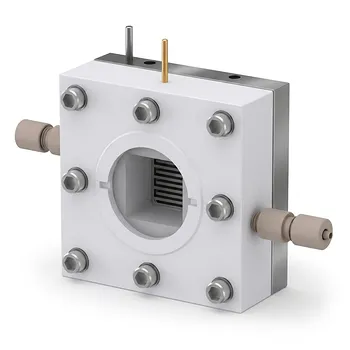
Thin-layer spectroelectrochemical cells are designed for in-situ observation of electrochemically driven changes. By controlling the thickness of the electrolyte layer and integrating electrodes into an optically accessible geometry, these cells can help researchers correlate applied potential or current with spectral changes. UV-Vis and NIR spectroelectrochemistry are valuable for studying redox states, reaction intermediates, adsorption behavior, molecular transformations, conductive polymers, battery materials, coordination compounds, and catalytic mechanisms. High optical transmission, hermetic sealing, and uniform sample electrolysis are particularly important when signals are weak or transient.
Corrosion and coating evaluation cells
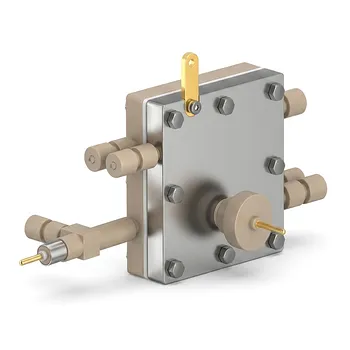
Corrosion experiments require reliable control of the exposed sample area, electrolyte contact, reference-electrode placement, and environmental conditions. KINTEK flat-plate and spherical corrosion cells are engineered for metal specimens, coated panels, sheet samples, and other defined surfaces. Customizable exposure windows help establish a known test area, which is essential when calculating current density, corrosion rate, coating resistance, and related metrics.
PTFE clamping structures and seals are useful for isolating the sample from the fixture and preventing edge leakage. The result is a more defined exposed region for electrochemical impedance spectroscopy, potentiodynamic polarization, open-circuit potential monitoring, accelerated corrosion testing, and localized corrosion studies. Flat-sample cells can also support sample preparation workflows associated with microscopy or scanning electron microscopy, allowing researchers to evaluate surface changes before and after controlled electrochemical exposure.
Luggin capillary options further support corrosion measurements by improving reference-electrode positioning near the specimen surface. Gas-purge connections can be used to introduce oxygen, nitrogen, carbon dioxide, hydrogen sulfide simulants, or other controlled atmospheres, depending on the test protocol. Jacketed versions enable temperature-controlled immersion conditions for studies that must reflect process environments, environmental exposure, or elevated-temperature service conditions.
Gas diffusion, flow-field, and membrane-electrode systems
As electrochemical research moves toward industrially relevant current densities and continuous operation, conventional beaker-style configurations may not provide the necessary control over reactant delivery, water management, pressure, or active-area definition. KINTEK gas-diffusion electrochemical cells, membrane-electrode assembly cells, and serpentine-flow-field reaction cells are intended for advanced electrocatalysis, fuel-cell testing, electrochemical synthesis, CO2 reduction, wastewater treatment, and electrolyzer development.
In a gas-diffusion setup, a gaseous reactant is delivered to a catalyst layer through a gas-diffusion electrode while the electrolyte or ion-conducting membrane supports ionic transport. This configuration can reduce mass-transfer limits encountered when gases must first dissolve in bulk liquid. It is particularly relevant to CO2 electroreduction, oxygen reduction, hydrogen oxidation, and other gas-involving processes. Proper flow-channel geometry, electrode compression, sealing, current-collector selection, and gas distribution all affect cell performance and measurement reliability.
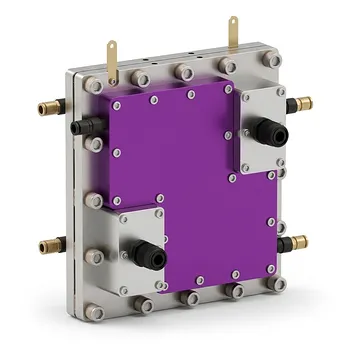
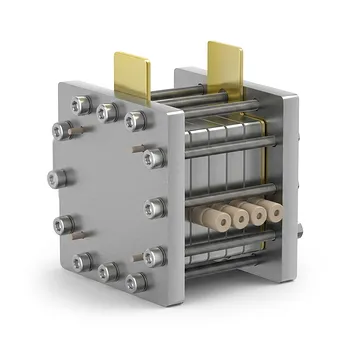
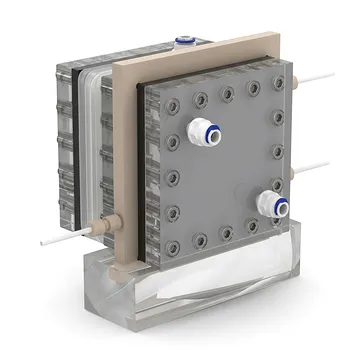
Membrane-electrode assembly and zero-gap designs bring electrodes into close contact with an ion-exchange membrane or solid electrolyte. This can reduce ionic path length and enable high-current-density operation, but it also increases the importance of mechanical alignment, channel design, uniform compression, and chemical compatibility. KINTEK systems can incorporate materials such as PEEK, titanium, graphite, PTFE, and other application-appropriate components to balance conductivity, corrosion resistance, insulation, structural support, and machining precision.
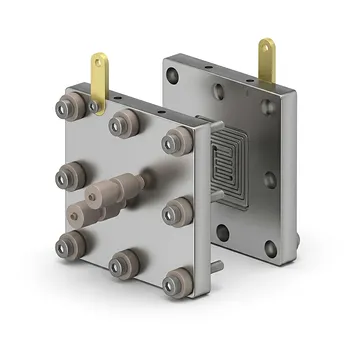
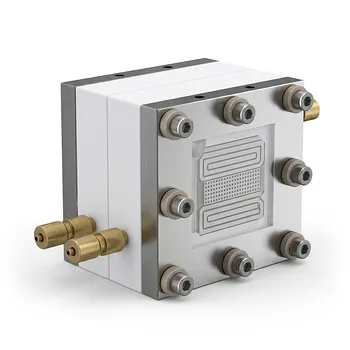
Serpentine flow fields guide gas or liquid through a controlled path across an active electrode area. When properly designed, they can improve reactant distribution and help manage transport of products, heat, and liquid water. Graphite plate membrane-electrode reaction cells with titanium endplates are suitable for catalyst screening and process development where a robust, structured flow-field environment is required. Geometry can be tailored to the active area, feed direction, pressure requirements, slurry behavior, and intended operating regime.
Custom cell engineering for real experimental conditions
Many important research problems cannot be solved with a catalog cell alone. Electrode dimensions may be unusual, a slurry may have nonstandard rheology, the required electrolyte volume may be limited, optical illumination may need to occur at a particular angle, or the experiment may require a specialized flow path. KINTEK provides custom electrochemical-cell design and manufacturing supported by end-to-end PTFE/PFA CNC machining capabilities.
Custom cell development can begin with the functional variables that matter to your experiment: electrode type and size, reference-electrode location, counter-electrode arrangement, reaction volume, pressure, temperature, membrane format, gas inlet position, liquid inlet and outlet configuration, sampling requirement, optical window size, and desired sealing approach. From there, the physical structure can be designed to make those variables controllable rather than incidental.
For slurry electrodes and flow-assisted battery research, customized channel structures and electrode gaps can be designed around the rheological behavior of the suspension. A channel that is too narrow may cause blockage or excessive pressure drop; one that is too wide may lead to uneven distribution or dead zones. Thoughtful flow-field design helps create more uniform electrolyte and slurry delivery, supporting more representative characterization of charge-transfer efficiency, polarization behavior, and electrochemical stability.
For CO2 reduction and other gas-fed electrochemical reactions, electrode spacing, electrolyte flow path, gas inlet pressure, and residence time can strongly influence selectivity. Precise control of these variables can help researchers study reaction intermediates at the catalyst surface and investigate conditions associated with deeper reduction pathways or multi-carbon product formation. A custom cell does not replace careful experimental design, but it provides the engineered hardware required to hold that design constant from run to run.
Customizable PTFE and PFA linings, supports, lids, clamps, fittings, and reaction vessels are particularly valuable when long-term exposure to concentrated electrolytes or corrosive media is expected. Their chemical resistance helps protect the apparatus while reducing the chance that wetted components will alter the reaction environment. KINTEK can also develop nonstandard parts for integration with existing potentiostats, gas-delivery systems, thermal circulators, analytical instruments, and laboratory fixtures.
Practical advantages for laboratory teams
Choosing a purpose-built KINTEK electrochemical cell can improve experimental efficiency in several practical ways:
- More reproducible geometry: Defined electrode positions, exposure areas, chamber volumes, and port layouts reduce variability between users and test runs.
- Improved chemical durability: PTFE, PFA, quartz, borosilicate glass, PEEK, titanium, and graphite options help match the cell to the electrolyte and operating conditions.
- Reliable sealing: Compression designs, PTFE components, O-rings, flanges, and precision-machined interfaces support gas-tight or liquid-tight operation where required.
- Lower risk of contamination: High-purity fluoropolymer wetted parts are well suited to sensitive analytical and trace-level applications.
- Flexible experimental control: Gas purging, sampling, temperature circulation, membrane separation, illumination, and flow delivery can be incorporated into one coordinated system.
- Reduced IR-drop uncertainty: Luggin capillary and electrode-spacing options can help optimize reference positioning and reduce uncompensated resistance effects.
- Adaptability across projects: Replaceable membranes, interchangeable windows, adjustable fixtures, and modular ports allow laboratories to evolve configurations as research priorities change.
- Support for scale-up thinking: Gas-diffusion, flow-field, and membrane-electrode formats enable studies that more closely reflect transport and current-density conditions beyond small static cells.
Work with a fluoropolymer specialist
KINTEK is exclusively focused on high-performance fluoropolymer laboratory solutions. That specialization matters when an electrochemical system needs more than a generic vessel. We understand that the lid, seal, threaded connection, membrane holder, cell body, optical interface, electrode fixture, and flow channel must work together as one controlled experimental platform. Our manufacturing capability supports standard products, modified catalog configurations, and fully bespoke assemblies, from complex one-off research prototypes to repeatable production orders.
To request a suitable standard cell or discuss a custom design, contact our technical team. Share your electrolyte chemistry, electrode dimensions, operating temperature and pressure, target reaction, illumination requirements, membrane type, gas or liquid flow conditions, and any drawing or sketch you have. We can help translate your experimental requirements into a practical electrochemical-cell configuration with the materials, ports, sealing, and precision-machined details your research demands.
REQUEST A QUOTE
Our professional team will reply to you within one business day. Please feel free to contact us!
Related Articles
Beyond the Textbook: Why Your Electrolytic Cell Needs More Voltage Than You Calculated
Discover why theoretical voltage calculations often fail in practice and how precision-engineered cell design can overcome kinetic barriers and ohmic drops.
Why Electrode Polarities Flip—And How to Ensure Your Battery Tests Never Fail
Confused by cathode and anode polarities? Learn the science behind the "flip" between galvanic and electrolytic cells and how precision hardware ensures reliable results.
Why Your Results Drift in Harsh Electrolytes—and the Atomic Armor That Fixes It
Discover how the molecular structure of PTFE prevents contamination and equipment failure in battery testing and chemical research, ensuring long-term data integrity.

Beyond the Circuit: Why Material Choice is the Hidden Variable in Your Electrolytic Cell’s Performance
Struggling with inconsistent electrolysis results? Discover how the fundamental principles of electrolytic cells collide with material science, and why PTFE/PFA is the key to reliable data.
Why Your Electrolysis Results Are Drifting: The Hidden Impact of Cell Environment on Non-Spontaneous Reactions
Stop struggling with inconsistent electrochemical data. Learn how the fundamental principles of electrolysis demand a precision-engineered cell environment to succeed.
The Invisible Creep: Why Your PTFE Battery Clamps Fail and How to Achieve Perfect Contact
Discover why over-tightening PTFE battery fixtures leads to material creep and data inaccuracy, and learn the engineering balance for stable electrochemical testing.
Why Inconsistent Battery Test Results Start at the Clamp—And How to Fix It
Discover how contact resistance and PTFE material properties impact battery testing accuracy, and learn how to achieve stable, low-resistance measurements.