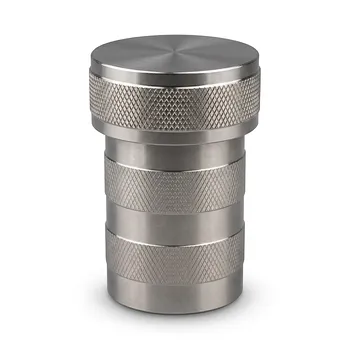
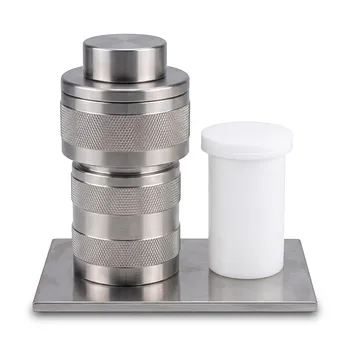
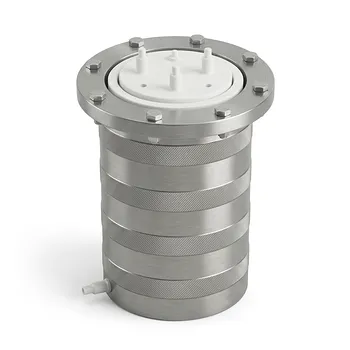
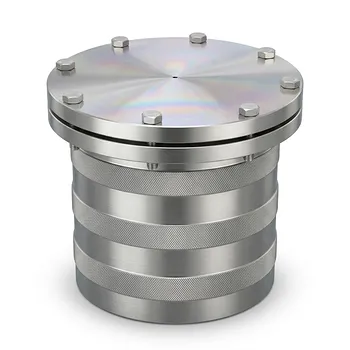
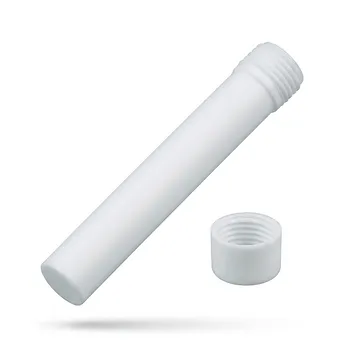
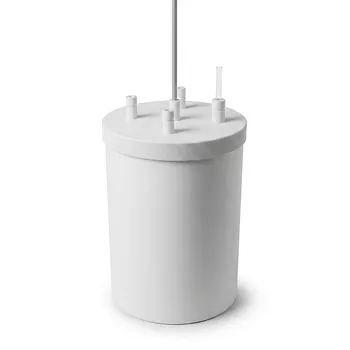
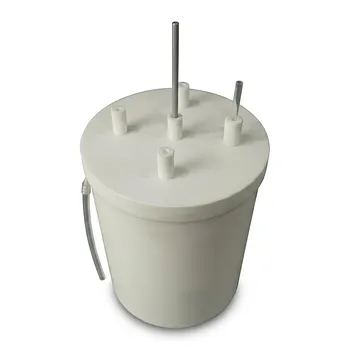
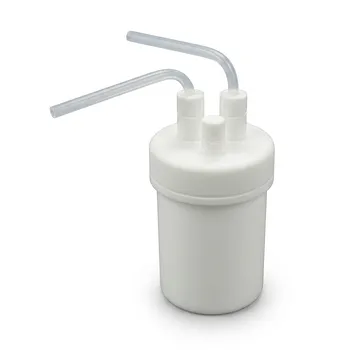
The necessity of high-purity PTFE or PFA liners in TiO2 nanotube synthesis is a matter of both chemical integrity and reactor safety. To transform titanium precursors into nanotubes, the hydrothermal process requires highly concentrated sodium hydroxide (NaOH) acting as a mineralizer. These fluoropolymer liners provide a chemically inert barrier that prevents the corrosive base from attacking the reactor's metal shell while ensuring no metallic impurities contaminate the final nanomaterial.
High-purity PTFE or PFA liners are critical because they provide complete chemical isolation between the aggressive reaction media and the reactor’s metallic structure. This isolation is the only way to maintain the specific electronic properties of TiO2 nanotubes while protecting the high-pressure vessel from catastrophic corrosion.
Managing Aggressive Chemical Environments
Resistance to Strong Alkaline Media
The synthesis of TiO2 nanotubes typically involves high-concentration NaOH solutions, often exceeding 3M to 10M. At the elevated temperatures required for hydrothermal synthesis, these strong bases become exceptionally aggressive. PTFE (Polytetrafluoroethylene) and PFA (Perfluoroalkoxy) are utilized because they possess near-total chemical inertness, resisting alkaline attack that would dissolve or pit other materials.
Protection of the Pressure Vessel
Hydrothermal reactors are usually constructed from high-strength stainless steel to withstand significant internal pressures. Without a liner, the concentrated NaOH would cause stress corrosion cracking or uniform thinning of the reactor walls. The liner acts as a sacrificial but durable shield, ensuring the structural integrity of the outer metal shell remains uncompromised during the reaction.
Maintaining High Material Purity
Eliminating Metal Ion Leaching
When caustic solutions contact stainless steel at high temperatures, metal ions such as iron, nickel, and chromium leach into the reaction mixture. For TiO2 nanotubes, these ions act as unwanted dopants that can enter the crystal lattice. High-purity liners prevent this leaching, ensuring that the synthesized nanotubes remain free of external metallic interference.
Preserving Photocatalytic Activity
The "Deep Need" for purity in TiO2 nanotubes is driven by their application in photocatalysis. Even trace amounts of metal impurities can create recombination centers for electron-hole pairs, significantly reducing the material's efficiency. By using PTFE or PFA, researchers ensure the precise electronic structure required for high-performance photocatalytic activity is maintained.
Facilitating Material Collection
Fluoropolymers possess naturally low surface energy, giving them excellent non-stick properties. This allows the synthesized TiO2 nanopowders to be easily collected from the liner walls after the reaction is complete. This "mold-release" characteristic minimizes sample loss and prevents cross-contamination between different synthesis batches.
Understanding the Trade-offs
Temperature and Pressure Limitations
While chemically robust, PTFE and PFA have physical limits; PTFE typically shouldn't exceed 220°C to 250°C in hydrothermal applications. Beyond these temperatures, the material may soften or "creep," leading to potential seal failure or deformation of the liner.
Gas Permeability Concerns
At very high temperatures and pressures, certain small molecules can permeate the fluoropolymer matrix. If the space between the liner and the metal wall is not managed correctly, trapped gases can cause the liner to collapse or bulge when the reactor is depressurized.
Purity Gradations
Not all PTFE is equal; "high-purity" refers to liners manufactured without recycled scrap or specific additives that could leach trace elements. For single-atom catalysis or sensitive electronic applications, the higher cost of virgin PFA is often justified by its smoother surface finish and even lower trace-element leaching compared to standard PTFE.
How to Apply This to Your Project
Before beginning your hydrothermal synthesis, evaluate your specific experimental parameters to choose the correct liner configuration.
- If your primary focus is maximum photocatalytic efficiency: Use high-purity virgin PFA liners to ensure the absolute lowest possible trace metal contamination and the smoothest reaction interface.
- If your primary focus is high-volume screening at standard temperatures (<200°C): High-quality PTFE liners are the most cost-effective solution, providing the necessary base resistance and protection for the autoclave shell.
- If your primary focus is structural safety and longevity: Always inspect liners for thinning or discoloration after each run and ensure the filling ratio (usually 60-80%) is strictly followed to prevent internal pressure spikes.
Selecting the right liner material is not merely a preference but a technical requirement for producing high-quality, functional TiO2 nanotubes safely.
Summary Table:
| Feature | Benefit in TiO2 Synthesis | Technical Reason |
|---|---|---|
| Chemical Inertness | Protects Pressure Vessel | Resists aggressive NaOH (3M-10M) used as a mineralizer. |
| High Purity | Preserves Photocatalysis | Prevents leaching of Fe, Ni, and Cr ions from stainless steel. |
| Non-Stick Surface | Efficient Sample Recovery | Low surface energy allows easy collection of synthesized nanopowders. |
| Thermal Stability | Safe Operation | Maintains structural integrity up to 220°C - 250°C. |
| Material Quality | Lower Trace Elements | Virgin PFA/PTFE avoids recycled contaminants for sensitive electronic apps. |
Elevate Your Research Precision with KINTEK
Ensure the integrity of your nanomaterial synthesis with KINTEK’s high-performance fluoropolymer solutions. From high-purity hydrothermal synthesis liners and microwave digestion vessels to everyday labware like beakers, crucibles, and reagent bottles, we specialize in high-performance PTFE and PFA manufacturing.
Whether you require standard consumables, high-purity trace analysis instruments, or bespoke laboratory setups crafted through our end-to-end custom CNC fabrication, KINTEK provides the absolute focus on purity your work demands. From fluid transfer components to complex reaction apparatus, we deliver everything you need to maintain a contamination-free environment.
Contact our experts today to discuss your custom project or high-volume order!
References
- Tanti Haryati, Yudi Aris Sulistiyo. Two-Stage Hydrothermal Synthesis of TiO₂ Nanotubes with Variation of Precursor Type for Diazinon Photodegradation. DOI: 10.14710/jksa.28.4.195-199
This article is also based on technical information from Kintek Knowledge Base .
Related Products
- High Temperature Corrosion Resistant Hydrothermal Synthesis Reactor with TFM Inner Liner and Straight Cylinder Design
- PTFE Lined High Pressure Digestion Vessel 50ml High Temperature Hydrothermal Synthesis Tank
- High Pressure Custom TFM Reactor Stainless Steel Outer Vessel PTFE Inner Cup for Corrosive Synthesis
- Custom TFM Reaction Vessel with Stainless Steel Jacket and PTFE Inner Cup for High Corrosion Resistance
- Customizable Polytetrafluoroethylene PTFE Reactor and Corrosion Resistant Teflon Flask
People Also Ask
- What is the role of a corrosion-resistant reactor in the synthesis of lignin-based carbon dots? Ensure Maximum Purity
- What are the technical advantages of using hydrothermal synthesis reactors for advanced electronic & optical nanomaterials?
- How does a hydrothermal synthesis reactor facilitate the production of crystalline materials with tailored morphologies? Precision Crystal Growth
- Why is the sealing reliability of a hydrothermal synthesis reactor critical for 24-hour cycles? Ensure Nano-Precision
- What role do hydrothermal synthesis reactors play in CQD preparation? Achieve High-Purity Nanomaterial Synthesis