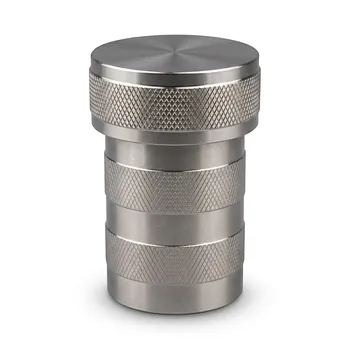
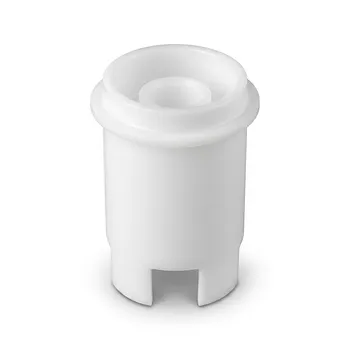
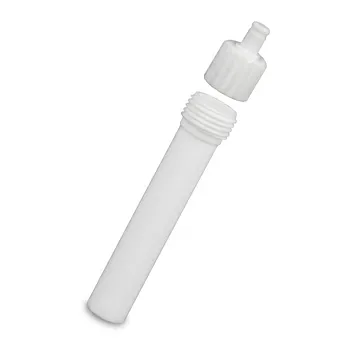
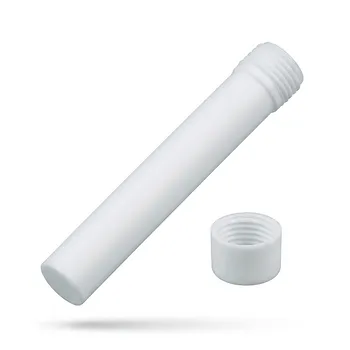
High-pressure autoclaves with PTFE liners are essential for $Ti_3C_2@NiCo_2S_4$ synthesis because they provide the sealed, high-temperature environment required for crystal growth while protecting the equipment from corrosive byproducts. At the 200 °C reaction temperature, the PTFE liner acts as a chemically inert barrier against hydrogen sulfide ($H_2S$) generated during the process, ensuring the final nanocomposite remains free from metallic impurities.
Core Takeaway: The autoclave-liner system functions as a dual-purpose reactor: the stainless steel shell provides the mechanical strength to withstand autogenous pressure, while the PTFE liner ensures chemical purity and prevents vessel corrosion during the hydrothermal reaction.
The Role of High Pressure and Temperature
Facilitating Crystal Growth
The hydrothermal synthesis of $Ti_3C_2@NiCo_2S_4$ requires a high-temperature environment, specifically 200 °C. At this temperature, the internal environment generates autogenous pressure, which is vital for the uniform nucleation and in-situ growth of $NiCo_2S_4$ onto the $Ti_3C_2$ MXene sheets.
Maintaining the Liquid Phase
The sealed autoclave prevents the solvent from evaporating, allowing the reaction to occur in a superheated liquid state. This high-pressure environment facilitates the synergistic interaction between the components, promoting the dense and uniform anchoring of nanostructures.
Chemical Protection and Corrosion Resistance
Resisting Hydrogen Sulfide ($H_2S$)
During the synthesis, thiourea is often used as a sulfur source, which decomposes to release hydrogen sulfide ($H_2S$). Without a PTFE liner, this highly corrosive gas would directly attack the stainless steel walls of the autoclave, leading to structural degradation of the vessel.
Chemical Inertness of PTFE
Polytetrafluoroethylene (PTFE) is chosen for its exceptional chemical stability across a wide pH range. It effectively shields the metal shell from the strong electrolyte environments and acidic or alkaline precursors used in the synthesis of complex sulfides and MXene composites.
Ensuring Material Purity and Quality
Preventing Metal Ion Leaching
One of the most critical functions of the PTFE liner is preventing metal ion contamination. If the reaction solution contacts the stainless steel shell, iron, nickel, or chromium ions can leach into the sample, compromising the electrochemical activity and purity of the $Ti_3C_2@NiCo_2S_4$ nanocomposites.
Surface Smoothness and Recovery
The extremely smooth surface of PTFE minimizes the adhesion of synthesized nanosheets to the container walls. This property maximizes the recovery of the final material and ensures that the morphology of the crystals is not disrupted by sticking to the reaction vessel.
Understanding the Trade-offs
Temperature Limitations
While PTFE is highly inert, it has a physical limit; it begins to soften and deform if temperatures exceed 250 °C. For reactions requiring higher temperatures, researchers must pivot to PPL (polyphenylene polymers) or quartz liners, which offer higher thermal thresholds but different chemical resistances.
Pressure Risks and Sealing
The stainless steel shell is responsible for safety, but the sealing mechanism relies on the proper fit of the PTFE liner. Over-tightening or using a warped liner can lead to pressure leaks, which drop the internal temperature and prevent the proper formation of the $NiCo_2S_4$ crystal structure.
Making the Right Choice for Your Goal
When performing hydrothermal synthesis for advanced nanocomposites, your equipment choice dictates the success of the material morphology and purity.
- If your primary focus is phase purity: Always use a fresh or thoroughly cleaned PTFE liner to eliminate any risk of cross-contamination or metal leaching from the autoclave body.
- If your primary focus is morphological control: Ensure the autoclave is rated for the specific autogenous pressure at 200 °C to maintain the stable environment necessary for uniform anchoring on MXene sheets.
- If your primary focus is vessel longevity: Never run hydrothermal reactions involving thiourea or strong acids in a bare stainless steel vessel, as $H_2S$ and acidic vapors will cause rapid pitting and failure.
Proper utilization of a PTFE-lined autoclave transforms a volatile chemical reaction into a controlled environment for precision nanomaterial engineering.
Summary Table:
| Feature | Function in Synthesis | Key Benefit |
|---|---|---|
| PTFE Liner | Chemical barrier against H2S and precursors | Prevents metal ion leaching and vessel corrosion |
| SS Shell | Structural reinforcement | Maintains safety under high autogenous pressure |
| Sealed Design | Superheated liquid phase maintenance | Facilitates uniform nucleation on MXene sheets |
| Inert Surface | Minimal nanostructure adhesion | High material recovery and morphology control |
Elevate Your Hydrothermal Synthesis with KINTEK’s Precision Fluoropolymer Solutions
Achieving the perfect $Ti_3C_2@NiCo_2S_4$ nanocomposite requires equipment that refuses to compromise on purity. At KINTEK, we specialize in manufacturing high-performance PTFE and PFA laboratory supplies designed to withstand the most demanding chemical environments.
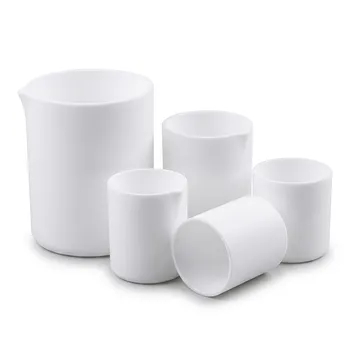
From essential hydrothermal synthesis liners, microwave digestion vessels, and reagent bottles to advanced electrochemical cells, battery testing fixtures, and microchannel reactors, KINTEK provides an absolute focus on high-performance fluoropolymers. Our capabilities extend from everyday labware like beakers, crucibles, and centrifuge tubes to comprehensive fluid transfer components (tubing, valves, fittings) and sample prep tools (filters, pipettes, tweezers).
Backed by end-to-end custom CNC fabrication, we deliver everything from complex non-standard machined parts to high-volume orders. Ensure your research remains free from contamination—contact us today to get the bespoke laboratory setup your high-performance materials deserve!
References
- Abhinaba Das, Pallab Bhattacharya. Ti3C2-Mxene-dispersion and morphology controlled battery-type nickel cobalt sulphide based nanocomposites for the application as aqueous asymmetric supercapacitor with improved rate. DOI: 10.1186/s11671-025-04396-3
This article is also based on technical information from Kintek Knowledge Base .
Related Products
- PTFE Lined High Pressure Digestion Vessel 50ml High Temperature Hydrothermal Synthesis Tank
- Custom TFM Reaction Vessel with Stainless Steel Jacket and PTFE Inner Cup for High Corrosion Resistance
- High Temperature Corrosion Resistant Hydrothermal Synthesis Reactor with TFM Inner Liner and Straight Cylinder Design
- High Pressure Custom TFM Reactor Stainless Steel Outer Vessel PTFE Inner Cup for Corrosive Synthesis
- High Pressure PTFE Digestion Vessel Inner Cup Holder Custom Corrosion Resistant Low Background Teflon
People Also Ask
- What are the benefits of using a PTFE-lined vessel for carbon-sulfur cathode treatment? Maximize Purity & Performance
- Why are PTFE-lined pressure digestion vessels required for the preparation of Ag/CeO2 catalysts? Purity & Performance
- What safety features are typically incorporated into high-pressure PTFE digestion vessel designs? Ensure Lab Safety
- What is the function of PTFE lined high-pressure vessels in g-C3N4 synthesis? Achieve High-Purity Material Growth
- Role of High-Pressure Digestion Tanks in Perovskite Synthesis: Achieve Superior Stability and Latent Heat