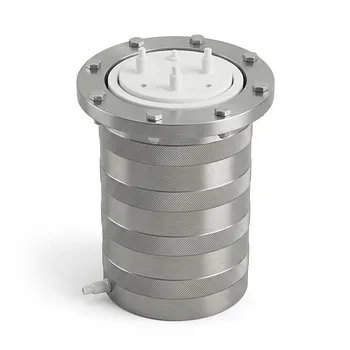
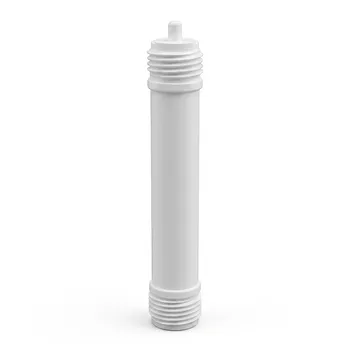
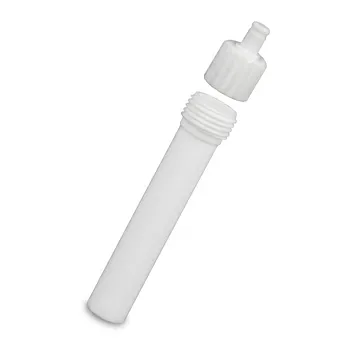
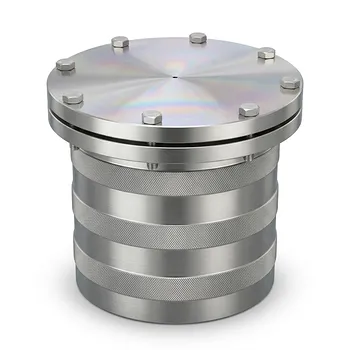
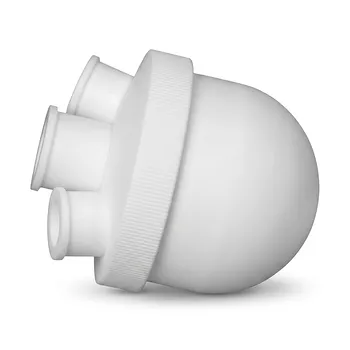
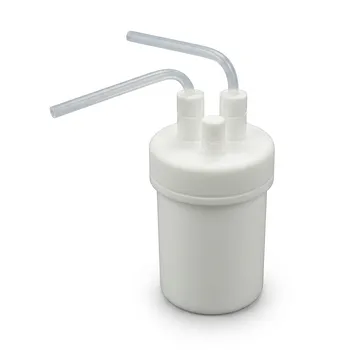
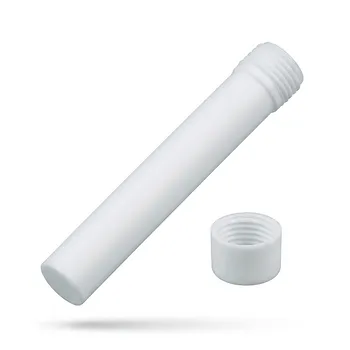
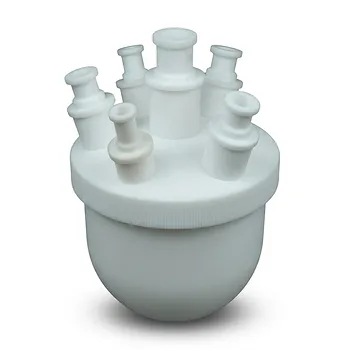
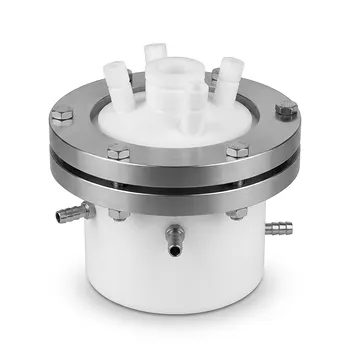
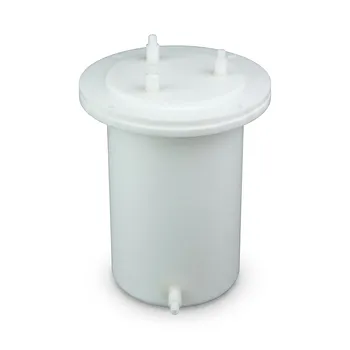
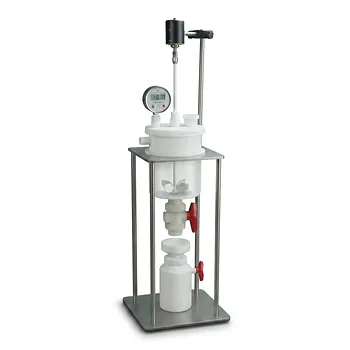
PTFE liners are the critical barrier that enables the high-pressure, high-temperature environment required for solvothermal synthesis. In the production of Cobalt-based metal-organic frameworks (MOFs), these liners provide the necessary chemical inertness to withstand aggressive organic solvents like N,N-dimethylformamide (DMF) at temperatures ranging from 100°C to 120°C. By isolating the reaction, they prevent the corrosive degradation of the stainless steel autoclave and eliminate the risk of external metal ions contaminating the delicate crystal structure.
PTFE liners ensure the structural and chemical integrity of MOFs by providing a chemically inert "reaction pocket" within a pressurized vessel. This isolation is essential for preventing precursor contamination and protecting the hardware from the corrosive effects of polar organic solvents.
Protecting the Reactor Hardware
Resistance to Polar Organic Solvents
Organic solvents like DMF become significantly more aggressive when heated above their boiling points under pressure. PTFE (Polytetrafluoroethylene) is exceptionally resistant to these solvents, ensuring that the liquid does not degrade the liner or reach the outer metal shell.
High-Temperature Thermal Stability
The solvothermal synthesis of Cobalt-MOFs often requires sustained heating for 36 to 48 hours. PTFE maintains its mechanical properties and chemical resistance throughout these long reaction windows, providing a stable environment for the duration of the process.
Prevention of Autoclave Corrosion
Without a liner, the combination of metal salts and organic solvents would quickly corrode the stainless steel body of the autoclave. The PTFE liner acts as a physical shield, extending the lifespan of the expensive high-pressure equipment.
Ensuring Chemical and Structural Purity
Eliminating Metal Ion Leaching
In MOF synthesis, the purity of the metal node is paramount to the material's final properties. PTFE prevents iron, nickel, or chromium ions from leaching out of the stainless steel autoclave and integrating into the Cobalt-based framework, which would otherwise result in a compromised, impure product.
Facilitating Controlled Nucleation
The low surface energy and smooth texture of PTFE influence how crystals form during the reaction. These "non-stick" properties prevent the MOF crystals from adhering too strongly to the vessel walls, which can encourage more uniform nucleation within the solution or on specific substrates.
Maintaining Regular Crystal Morphology
A clean reaction environment, free from stray metal ions or corrosion byproducts, is essential for achieving well-defined crystal shapes. PTFE ensures that the chemical potential of the solution remains governed only by the intended precursors, leading to higher quality single crystals.
Understanding the Trade-offs
Thermal Conductivity Limitations
PTFE is an insulator, meaning it does not conduct heat as efficiently as the surrounding stainless steel. This creates a thermal lag, requiring researchers to account for the time it takes for the internal solution to reach the target temperature.
Temperature and Pressure Thresholds
While PTFE is robust, it has a functional limit, typically around 250°C, above which it begins to soften and "creep" or deform. If the reaction temperature exceeds these limits, the liner may lose its seal, leading to leaks or damage to the autoclave.
Mechanical Deformation Over Time
Repeated heating and cooling cycles can cause the PTFE liner to lose its original shape due to thermal expansion differences between the plastic and the metal. Liners must be inspected regularly for "flaring" at the rim to ensure a proper pressure seal is maintained.
How to Apply This to Your Project
Recommendations for Successful Synthesis
- If your primary focus is high-purity crystal growth: Always use a fresh or thoroughly acid-washed PTFE liner to ensure no residual metal ions from previous experiments interfere with the Cobalt nodes.
- If your primary focus is reactor longevity: Never exceed the recommended temperature rating of the liner, as PTFE deformation can allow corrosive DMF vapors to reach and pit the interior of the stainless steel vessel.
- If your primary focus is maximizing product yield: Leverage the non-stick properties of PTFE by using mechanical agitation or ultrasonic cleaning to recover microcrystals that may have settled at the bottom of the liner.
By understanding the protective and isolating role of the PTFE liner, researchers can reliably produce high-quality Cobalt-based MOFs while maintaining the integrity of their laboratory equipment.
Summary Table:
| Key Feature | Benefit to MOF Synthesis | Hardware Protection |
|---|---|---|
| Chemical Inertness | Prevents DMF/solvent degradation; ensures pure reaction environment. | Shields stainless steel from corrosive organic solvents. |
| Metal-Free Surface | Eliminates leaching of Fe, Ni, or Cr ions into the crystal structure. | Prevents pitting and surface erosion of the autoclave body. |
| High-Temp Stability | Supports sustained 100°C–120°C reactions for 36-48 hours. | Maintains a reliable pressure seal under solvothermal conditions. |
| Non-Stick Texture | Promotes uniform nucleation and easy recovery of microcrystals. | Simplifies cleaning and prevents buildup of reaction residues. |
Elevate Your Solvothermal Synthesis with KINTEK Expertise
Precise Cobalt-MOF synthesis demands the highest standards of material purity and equipment reliability. At KINTEK, we specialize in high-performance fluoropolymer solutions tailored for the most demanding laboratory environments. From high-purity PTFE/PFA liners and digestion vessels to bespoke laboratory setups and custom CNC-fabricated components, we provide the tools you need to ensure crystal integrity and reactor longevity.
Whether you require standard labware like beakers and reagent bottles, or advanced derivative apparatus such as electrochemical cells and hydrothermal synthesis liners, KINTEK offers end-to-end solutions with an absolute focus on fluoropolymer excellence. Ready to optimize your lab's performance?
Contact KINTEK Today to Discuss Your Custom Requirements
References
- Pandi Muthukumar, Chundong Wang. Unlocking a Water Coordination Environment in Co-Based Metal–Organic Frameworks for Advanced Nitrate-to-Ammonia Electroreduction. DOI: 10.1021/jacs.5c07066
This article is also based on technical information from Kintek Knowledge Base .
Related Products
- PTFE Lined High Pressure Digestion Vessel 50ml High Temperature Hydrothermal Synthesis Tank
- High Pressure Custom TFM Reactor Stainless Steel Outer Vessel PTFE Inner Cup for Corrosive Synthesis
- High Purity PTFE Microwave Digestion Vessel for Soil and Food Analysis Acid Resistant Fluoropolymer Sample Preparation Liners
- High Purity PTFE Microwave Digestion Vessel Replacement Liner for Acid Sample Preparation and Trace Analysis
- Custom TFM Reaction Vessel with Stainless Steel Jacket and PTFE Inner Cup for High Corrosion Resistance
People Also Ask
- What are the benefits of using a PTFE-lined vessel for carbon-sulfur cathode treatment? Maximize Purity & Performance
- Why are PTFE-lined pressure digestion vessels required for the preparation of Ag/CeO2 catalysts? Purity & Performance
- What safety features are typically incorporated into high-pressure PTFE digestion vessel designs? Ensure Lab Safety
- What is the function of PTFE lined high-pressure vessels in g-C3N4 synthesis? Achieve High-Purity Material Growth
- Role of High-Pressure Digestion Tanks in Perovskite Synthesis: Achieve Superior Stability and Latent Heat