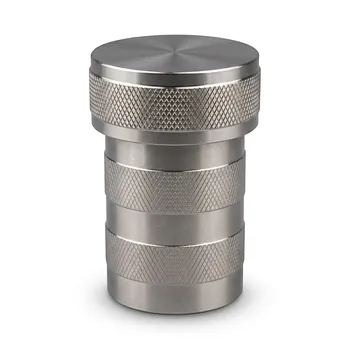
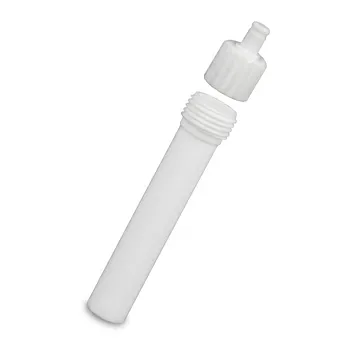
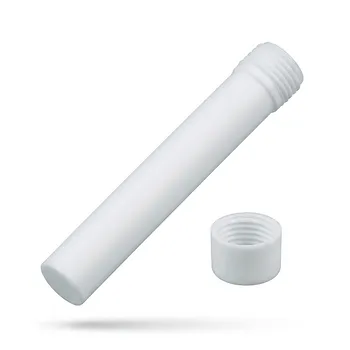
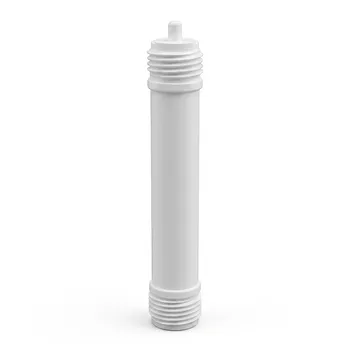
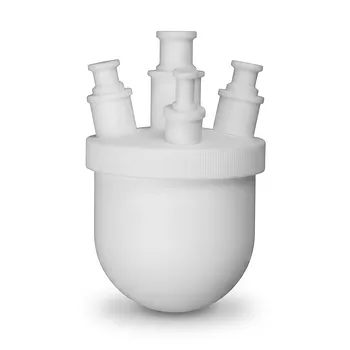
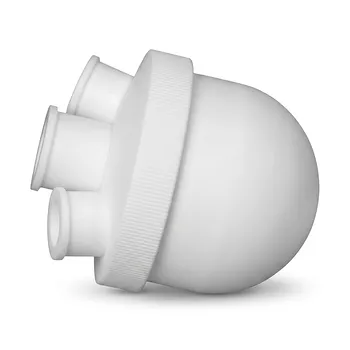
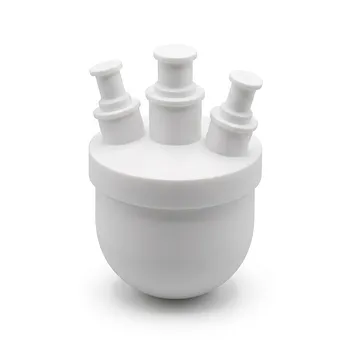
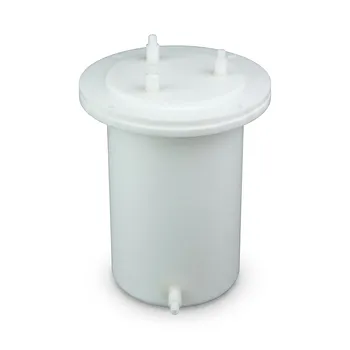
The necessity of high-pressure PTFE liners in the hydrothermal synthesis of iridium oxyhydroxide stems from the extreme chemical and physical environment required for the reaction. These liners provide a critical, chemically inert barrier that withstands highly alkaline KOH solutions at temperatures reaching 250°C and pressures near 55 bar. Without this isolation, the reaction medium would corrode the metallic autoclave, introducing impurities that compromise the catalyst's integrity.
Core Takeaway: PTFE liners are essential because they provide a chemically inert environment that prevents strong alkaline precursors from eroding the reactor body. This isolation ensures the high purity of iridium oxyhydroxide by eliminating metal ion contamination that would otherwise degrade catalyst performance.
Managing Aggressive Chemical Environments
Resistance to Strong Alkaline Corrosion
The synthesis of iridium oxyhydroxide typically employs highly alkaline solutions, such as potassium hydroxide (KOH). At elevated temperatures, these solutions become extremely corrosive to standard laboratory metals and alloys.
Polytetrafluoroethylene (PTFE) is uniquely resistant to such chemical attacks. It maintains its structural integrity where stainless steel or other metals would undergo rapid surface erosion.
Stability Under High Temperature and Pressure
Hydrothermal synthesis occurs under "superheated" conditions, reaching temperatures up to 250°C and pressures of approximately 55 bar. These conditions are necessary to drive the phase transformation into iridium oxyhydroxide.
A high-pressure PTFE liner acts as a sealed vessel within the autoclave. It provides the necessary thermal stability and mechanical resilience to contain the reaction without leaking or reacting with the precursors.
Ensuring Material Purity and Catalyst Efficacy
Prevention of Metal Ion Leaching
When corrosive precursors come into direct contact with a metallic autoclave body, metal ions (such as iron, nickel, or chromium) can leach into the reaction medium. These foreign ions act as contaminants in the final product.
In iridium oxyhydroxide, the purity of catalyst active sites is paramount. PTFE liners ensure that the resulting material is free from equipment-derived impurities, ensuring consistent electrochemical performance.
Controlled Microstructure Growth
The inert nature of PTFE provides a "clean slate" for crystal growth. By preventing unwanted side reactions with the vessel walls, researchers can achieve more controlled growth of the material’s microstructure.
This level of control is vital for synthesizing nanopowders or single-crystal materials with specific optoelectronic or catalytic properties. The liner ensures that the chemical energy of the reaction is spent solely on the target synthesis.
Understanding the Trade-offs and Limitations
Temperature Ceiling and Deformation
While PTFE is exceptionally inert, it has a definite thermal limit. Operating near or above 250°C can lead to the "creeping" or mechanical deformation of the liner, which may compromise the seal.
If the temperature exceeds the material's safety threshold, the PTFE can release toxic vapors or lose its structural shape. Users must ensure the outer stainless steel shell is properly rated to provide the mechanical support the PTFE lacks at high heat.
Porosity and Cleaning Challenges
Despite its non-stick properties, PTFE can be slightly porous at a microscopic level under high pressure. This means that cross-contamination between different experimental batches is possible if the liner is not meticulously cleaned.
Over time, repeated exposure to high-pressure cycles can cause the liner to discolor or become brittle. Regular inspection is required to ensure that micro-cracks do not develop, which could lead to a catastrophic failure of the inner vessel.
How to Apply This to Your Project
Effective hydrothermal synthesis requires matching your liner material to your specific chemical precursors and target outcomes.
- If your primary focus is catalyst purity: Always utilize a virgin, high-purity PTFE liner to eliminate the risk of metallic leaching from the autoclave walls.
- If your primary focus is product recovery: Leverage the non-stick, "mold-release" properties of PTFE to ensure you can fully collect nano-sized iridium oxyhydroxide particles without loss.
- If your primary focus is equipment longevity: Use the liner as a sacrificial barrier to prevent the permanent pitting and erosion of your expensive stainless steel pressure vessels.
By maintaining the integrity of the reaction environment through PTFE isolation, you ensure the synthesis of high-performance, uncontaminated functional materials.
Summary Table:
| Factor | Reaction Environment Requirement | Role of PTFE Liner |
|---|---|---|
| Chemical Resistance | Concentrated KOH (Highly Alkaline) | Provides an inert barrier against corrosive attack. |
| Purity Control | Low tolerance for metallic impurities | Prevents metal ion leaching from the autoclave body. |
| Temperature | Up to 250°C | Maintains thermal stability and structural integrity. |
| Pressure | Approx. 55 bar | Safely contains reaction media without leakage. |
| Material Recovery | High-yield collection of nanopowders | Non-stick surface ensures easy product retrieval. |
Elevate Your Synthesis with KINTEK’s Precision Fluoropolymers
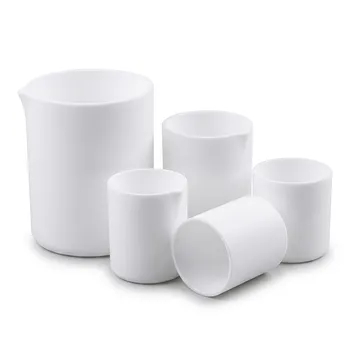
Achieving the highest purity in hydrothermal synthesis requires reaction vessels that never compromise your results. KINTEK specializes in high-performance fluoropolymer solutions, offering an exhaustive range of laboratory supplies from standard PTFE/PFA labware (beakers, crucibles, and digestion tubes) to advanced reaction apparatus like hydrothermal synthesis liners and custom electrochemical cells.
Whether you need everyday consumables like stirring bars and seal tapes or bespoke laboratory setups via our end-to-end custom CNC fabrication, KINTEK delivers the durability and chemical inertness your research demands. From high-volume orders to complex non-standard machined parts, we provide absolutely everything for your high-performance lab environment.
Ready to optimize your catalyst production? Contact KINTEK today for custom-engineered laboratory solutions!
References
- Cyriac Massué, Robert Schlögl. Reactive Electrophilic O<sup>I−</sup> Species Evidenced in High‐Performance Iridium Oxohydroxide Water Oxidation Electrocatalysts. DOI: 10.1002/cssc.201701291
This article is also based on technical information from Kintek Knowledge Base .
Related Products
- PTFE Lined High Pressure Digestion Vessel 50ml High Temperature Hydrothermal Synthesis Tank
- High Temperature Corrosion Resistant Hydrothermal Synthesis Reactor with TFM Inner Liner and Straight Cylinder Design
- High Pressure Custom TFM Reactor Stainless Steel Outer Vessel PTFE Inner Cup for Corrosive Synthesis
- Custom TFM Reaction Vessel with Stainless Steel Jacket and PTFE Inner Cup for High Corrosion Resistance
- High Purity PTFE Microwave Digestion Vessel Replacement Liner for Acid Sample Preparation and Trace Analysis
People Also Ask
- What are the benefits of using a PTFE-lined vessel for carbon-sulfur cathode treatment? Maximize Purity & Performance
- Why are PTFE-lined pressure digestion vessels required for the preparation of Ag/CeO2 catalysts? Purity & Performance
- What safety features are typically incorporated into high-pressure PTFE digestion vessel designs? Ensure Lab Safety
- What is the function of PTFE lined high-pressure vessels in g-C3N4 synthesis? Achieve High-Purity Material Growth
- Role of High-Pressure Digestion Tanks in Perovskite Synthesis: Achieve Superior Stability and Latent Heat