The transition matters because it links environmental responsibility directly to measurement reliability. Replacing APFO/PFOA with ether-containing or otherwise non-bioaccumulative surfactants produces fluoropolymer resins with fewer persistent residues. When those resins are used to manufacture PTFE or PFA labware, they reduce the risk that surfactant-derived extractables will enter reagents and samples during ultra-trace analysis.
PFOA-free polymerization is not only an environmental improvement; it is a contamination-control measure. Cleaner resins and effective post-polymerization washing help ultra-trace laboratories reduce background signals, cross-contamination, and uncertainty in elemental measurements.
Why Surfactants Matter During Fluoropolymer Production
Their role in emulsion polymerization
Fluorinated surfactants are used to stabilize polymer particles in aqueous emulsion polymerization. They help control particle formation and prevent reactions that can interrupt polymerization.
Without effective stabilization, producing consistent fluoropolymer resin can become more difficult. The challenge is therefore to retain the required processing performance without leaving problematic residues in the finished material.
Why APFO and PFOA became concerns
Historically, ammonium perfluorooctanoate (APFO) and related PFOA chemistry were widely used in fluoropolymer production. These long-chain perfluorinated compounds are highly persistent and can accumulate in biological systems.
Some residual surfactant can remain in polymer dispersions or coagulated resin, even after polymerization. The environmental persistence of these compounds drove regulatory action and the development of replacement technologies.
How the Transition Improves Labware Purity
Cleaner resin means fewer potential extractables
Laboratory equipment is not made from chemically pure polymer in an abstract sense; it is made from a specific resin produced by a specific process. Residual surfactants, processing additives, and insufficient washing can therefore influence the material’s extractable profile.
Using resins produced with alternative surfactants, combined with appropriate washing and finishing, reduces the likelihood that organic or ionic impurities will leach from labware into analytical samples.
Ultra-trace methods have little contamination margin
In ICP-MS, elemental analysis, environmental testing, and digestion workflows, target concentrations may be extremely low. A contaminant released from a digestion tube, vessel, bottle, or fitting can produce a measurable background or a false elevated result.
This is particularly important when the contaminant affects the same elements or chemical species being measured. Even a small contribution from labware can compromise blanks, calibration checks, and sample-to-sample comparability.
PTFE and PFA provide a strong materials foundation
PTFE and PFA are valued because their highly fluorinated structures provide excellent chemical resistance, low wetting, and low adsorption for many applications. They generally require fewer conventional additives than many other polymer classes.
However, the chemical inertness of the base polymer does not automatically guarantee ultra-low extractables. Resin history, surfactant selection, washing, fabrication, and cleaning all contribute to final labware performance.
Why Alternative Surfactants Are Significant
They reduce persistent bioaccumulative residues
Ether-containing fluorinated carboxylic acids and related fluoropolyether structures were developed to replace long-chain PFOA-type surfactants. Their molecular designs and degradation behavior are intended to avoid the same degree of environmental persistence and bioaccumulation.
This reduces the environmental burden associated with fluoropolymer manufacturing and supports compliance with evolving restrictions on legacy perfluorinated substances.
They preserve the manufacturing function
The replacement is technically significant because the surfactant must still stabilize the polymerization process. It must lower surface tension and support consistent latex-particle formation without compromising resin quality.
A replacement that is environmentally preferable but produces inconsistent or contaminated resin would not solve the laboratory’s underlying problem. The value comes from combining process performance with a cleaner residue profile.
They support high-purity product specifications
Modern high-purity fluoropolymer products may also use improved washing procedures or alternative polymerization approaches, including granular suspension methods. These measures are intended to lower residual surfactants and other extractable contaminants before the resin becomes finished labware.
For trace-analysis vessels and fluid-handling components, this upstream control is more reliable than trying to remove contamination only after the product has been fabricated.
Where This Matters in the Laboratory
Digestion vessels and tubes
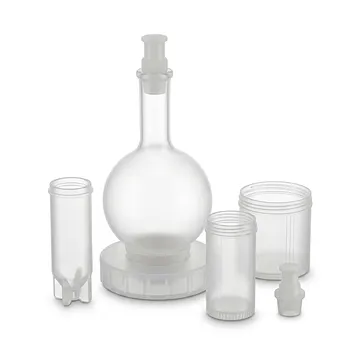
Microwave digestion vessels and ICP-MS digestion tubes can contact concentrated acids, heated samples, and highly sensitive blanks. Low-extractable PTFE or PFA helps prevent the vessel from becoming an uncontrolled source of background contamination.
Beakers, crucibles, and wash containers
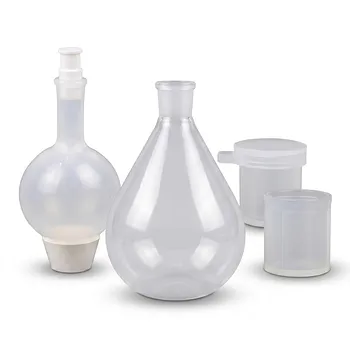
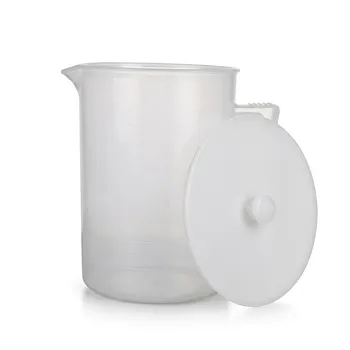
Beakers, crucibles, and high-purity wash bottles may be used repeatedly across preparation steps. Their surfaces must resist aggressive reagents while minimizing analyte adsorption and the release of polymer-associated impurities.
Cleaning tanks and fluid-management hardware
Cleaning tanks, tubing, fittings, and reagent-contact components can influence large batches of samples. A low-level extractable from a high-contact-area component can affect many samples at once.
For that reason, the purity of the fluoropolymer resin matters not only for individual vessels but also for complete fluid-handling systems.
Understanding the Trade-offs
“PFOA-free” does not mean contamination-free
Eliminating APFO/PFOA addresses a major source of concern, but it does not prove that a product has no extractables. Alternative surfactants, processing aids, fabrication residues, or inadequate cleaning can still affect laboratory performance.
Purchasers should evaluate actual extractables and application-specific test data rather than relying only on a marketing designation.
Chemical resistance is not the same as analytical cleanliness
PTFE and PFA are chemically resistant, but chemical resistance mainly describes whether the material is attacked or degraded by a reagent. Ultra-trace cleanliness also concerns what can be released from the material and what can adsorb to its surface.
Both properties must be assessed for sensitive analytical workflows.
More purity can require more process control
High-purity fluoropolymer labware may require controlled resin selection, washing, handling, packaging, and pre-use cleaning. These controls can increase cost and may limit the suitability of general-purpose fluoropolymer products for ultra-trace work.
The correct comparison is therefore not simply material price. It is the total cost of preventing contaminated blanks, repeat analyses, and invalid results.
Claims should be matched to the analytical method
A product suitable for routine chemical handling may not be suitable for trace metals, semiconductor processing, or ultra-clean environmental analysis. The required purity level depends on the analytes, detection limits, reagents, temperature, and contact time.
Qualification should be based on blanks, leach testing, and the laboratory’s actual workflow.
How to Apply This to Your Project
Select labware based on both its fluoropolymer type and the cleanliness of the resin-production process.
- If your primary focus is environmental sustainability: Prefer fluoropolymers manufactured without legacy APFO/PFOA surfactants and supported by credible regulatory and supplier documentation.
- If your primary focus is ultra-trace elemental accuracy: Specify high-purity PTFE or PFA with documented low extractables, suitable washing, and application-relevant blank or leach testing.
- If your primary focus is reproducible sample preparation: Qualify the complete labware system—including vessels, tubing, bottles, fittings, and cleaning procedures—rather than evaluating one component in isolation.
- If your primary focus is cost control: Reserve the highest-purity products for the most sensitive contact points, while validating whether standard fluoropolymer products are adequate for less critical steps.
Choosing cleaner fluoropolymer resins turns a regulatory-driven materials change into a practical safeguard for analytical integrity.
Summary Table:
| Aspect | Conventional Surfactants (APFO/PFOA) | Alternative Surfactants (e.g., ether-containing) |
|---|---|---|
| Environmental persistence | High; bioaccumulative | Low; designed to degrade |
| Residue in resin | Potential extractables | Reduced extractables with proper washing |
| Impact on labware purity | Higher risk of contamination | Lower risk; essential for ultra-trace |
| Regulatory status | Under restriction | Compliant with evolving regulations |
Ensure your ultra-trace analyses are free from contamination. At KINTEK, we manufacture high-purity PTFE and PFA labware using PFOA-free resin processes, delivering low-extractable products for your most sensitive applications. From digestion vessels to fluid handling systems, our custom CNC machining capabilities provide tailored solutions. Contact us today to discuss your requirements and enhance your lab's analytical integrity. Get in touch with our experts.
Related Products
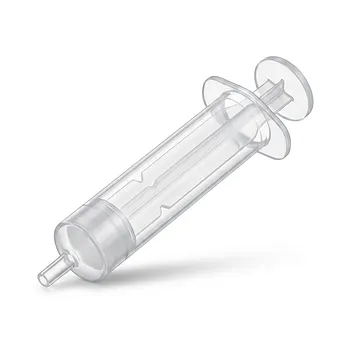
- Corrosion Resistant PFA Syringe Translucent Visual Fluoropolymer Labware 10ml Chemical Handling Tool
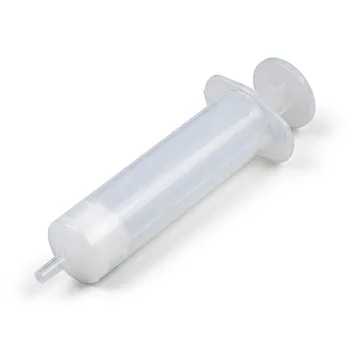
- High Purity PFA Syringe 10ml Corrosion Resistant Translucent Fluoropolymer Sampling Unit for Trace Analysis
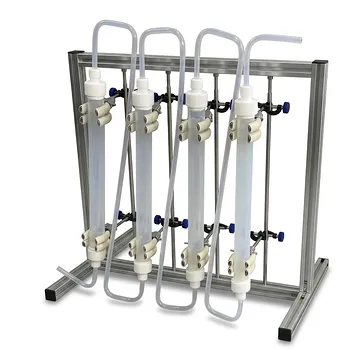
- High Purity PFA Chromatography Columns and Collection Bottles Corrosion Resistant Fluoropolymer Filtration Systems for Trace Analysis
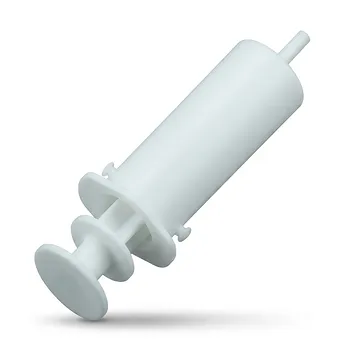
- High Purity Laboratory Grade PTFE Syringe Chemical Resistant Fluoropolymer Injector for Trace Analysis
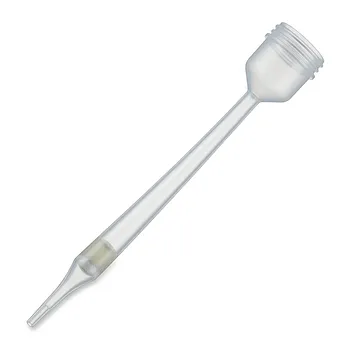
- PFA Laboratory Pipette Tips High Purity Fluoropolymer Pipetting Tubes for Electronic Pipettors Customizable Teflon Suction Tubes
People Also Ask
- How does the incorporation of comonomers such as perfluoropropyl vinyl ether (PPVE) alter the molecular structure and processing characteristics of TFE-based fluoropolymers like PFA compared to standard PTFE?
- Why do PFA fluoropolymer laboratory products offer different melt-processability and structural toughness compared to standard PTFE labware?
- PFA vs FEP: Which is Better for High-Temperature Lab Equipment?
- How does the removal of C8 (APFO) processing aids impact the chemical purity of solid fluoropolymer laboratory tools and fluid handling products? Discover the key benefits of C8-free PTFE, PFA, and FEP for trace analysis and high-purity applications.
- How does increasing fluorine content affect the physical and chemical performance of fluoropolymer laboratory supplies and components?