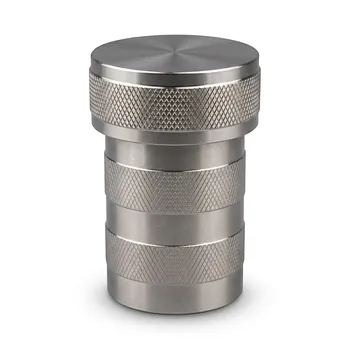
The selection of pressure-resistant vessels is the primary safety and quality safeguard in the production of $\text{Bi}_2\text{MoO}_6$ nanosheets. At standard hydrothermal synthesis temperatures of 180°C, the reaction environment generates significant spontaneous internal pressure that must be precisely contained. Using specialized vessels with high-purity liners ensures the system remains stable, facilitating the controlled nucleation and growth required to achieve optimal crystal purity and morphology.
Core Takeaway: High-performance reaction vessels serve as the critical interface that manages extreme internal pressures and prevents chemical contamination. Without this controlled environment, the synthesis risks mechanical failure and the production of low-quality, contaminated crystals.
Managing the Dynamics of High-Pressure Synthesis
Containing Spontaneous Internal Pressure
During the hydrothermal synthesis of $\text{Bi}_2\text{MoO}_6$ at 180°C, the aqueous environment generates substantial internal pressure. Pressure-resistant vessels are engineered to maintain structural integrity under these harsh conditions, preventing hazardous leaks or vessel failure. This containment is the fundamental requirement for a safe and successful synthesis process.
Facilitating Nucleation and Growth
The high-pressure environment within the vessel is not just a byproduct; it is a functional tool for material formation. This controlled state promotes the effective nucleation and growth of $\text{Bi}_2\text{MoO}_6$ crystal nuclei. By stabilizing the pressure, the vessel ensures that the synthesized nanosheets reach their maximum potential for crystallinity.
Ensuring Uniform Thermal Fields
Consistent pressure is often linked to a stable thermal field within the reactor. A high-quality vessel ensures that the heat is distributed evenly, allowing for the complete reaction of precursors. This uniformity is vital for achieving the specific nanosheet morphology required for advanced applications.
The Role of Chemical Inertness and Purity
Preventing Metallic Contamination
Standard metal autoclaves are susceptible to corrosion when exposed to reactive precursors at high temperatures. High-purity liners, typically made of PTFE (polytetrafluoroethylene) or PFA, prevent the reaction solution from contacting the metal walls. This prevents the leaching of metal impurities, which could otherwise compromise the electrochemical or catalytic performance of the nanosheets.
Maintaining Precise Chemical Environments
Sealing capabilities are critical for maintaining a constant concentration of precursors and gases throughout the reaction. For complex syntheses, any loss of pressure or vapor can shift the pH or chemical balance. A perfectly sealed environment ensures that precursors, such as sodium molybdate, react fully and predictably.
Protecting the Catalyst Lattice
Just as in the synthesis of NiSe or MOFs, the purity of the $\text{Bi}_2\text{MoO}_6$ lattice depends on an environment free from external ions. By using fluoropolymer liners, researchers ensure a precise coordination environment. This level of control is what allows for the reproducible production of high-performance nanosheets.
Understanding the Trade-offs and Risks
Safety Hazards of Substandard Equipment
Using vessels not rated for high-temperature hydrothermal synthesis poses a severe risk of explosive decompression. At 180°C, the internal energy of the system is immense. Any compromise in the vessel's structural integrity can lead to catastrophic laboratory accidents.
Impact of Liner Degradation
While PTFE liners are highly effective, they have specific temperature limits (typically around 200°C–250°C). Operating too close to these limits can cause the liner to deform or "creep," potentially breaking the seal. This leads to pressure fluctuations that result in non-uniform crystal sizes and poor morphology control.
The Cost of Contamination
Choosing lower-quality materials to save on costs often leads to leached impurities from the vessel walls. Even trace amounts of iron, nickel, or chromium from the autoclave body can act as unintended dopants. These impurities can drastically alter the electronic properties of the $\text{Bi}_2\text{MoO}_6$ nanosheets, rendering them useless for sensitive applications.
How to Apply This to Your Project
When selecting equipment for hydrothermal synthesis, your choice should be dictated by the specific requirements of your precursor chemistry and the desired final morphology.
- If your primary focus is Maximum Crystallinity: Prioritize a vessel with a thick-walled design and high-grade pressure ratings to ensure a perfectly stable growth environment.
- If your primary focus is Chemical Purity: Invest in high-purity PTFE or PFA liners and specialized magnetic stirring bars to eliminate the risk of metal ion leaching.
- If your primary focus is Morphology Control: Ensure the vessel provides a uniform thermal field and a robust sealing mechanism to maintain constant internal pressure throughout the reaction duration.
The integrity of your reaction vessel is the foundation upon which the quality and safety of your hydrothermal synthesis are built.
Summary Table:
| Feature | Benefit for Synthesis | Role in Bi2MoO6 Quality |
|---|---|---|
| Pressure Resistance | Contains internal pressure at 180°C | Prevents leaks and explosive decompression |
| Fluoropolymer Liners | PTFE/PFA chemical inertness | Eliminates metallic contamination & leaching |
| Sealing Integrity | Maintains constant concentration | Ensures uniform crystal nucleation and growth |
| Thermal Stability | Even heat distribution | Facilitates specific nanosheet morphology |
Elevate Your Synthesis with KINTEK’s High-Performance Fluoropolymer Solutions
Precision in hydrothermal synthesis demands equipment that never compromises on safety or purity. At KINTEK, we specialize in the engineering of high-performance laboratory supplies crafted exclusively from PTFE and PFA.
Whether you need standard labware—like beakers, crucibles, and reagent bottles—or advanced reaction apparatus such as hydrothermal synthesis liners, microwave digestion vessels, and custom electrochemical cells, we provide the tools necessary to protect your catalyst lattice and ensure maximum crystallinity.
Our Value to You:
- Unmatched Purity: Eliminate metallic ion leaching with our high-purity trace analysis instruments.
- Custom Engineering: Benefit from end-to-end custom CNC fabrication for bespoke laboratory setups and complex non-standard parts.
- Comprehensive Range: From fluid transfer components (tubing, valves) to sample prep tools (filters, pipettes, tweezers), we deliver everything for a contamination-free workflow.
Don't let substandard equipment compromise your research. Contact KINTEK today to discuss your custom fabrication needs and secure the high-volume orders your lab requires.
References
- Anu ., Kamlesh Yadav. Microwave-synthesized Bi <sub>2</sub> MoO <sub>6</sub> nanoplates for high performance symmetric and asymmetric supercapattery devices. DOI: 10.1039/d5ma00647c
This article is also based on technical information from Kintek Knowledge Base .
Related Products
- PTFE Lined High Pressure Digestion Vessel 50ml High Temperature Hydrothermal Synthesis Tank
- High Temperature Corrosion Resistant Hydrothermal Synthesis Reactor with TFM Inner Liner and Straight Cylinder Design
- Custom TFM Reaction Vessel with Stainless Steel Jacket and PTFE Inner Cup for High Corrosion Resistance
- High Pressure Custom TFM Reactor Stainless Steel Outer Vessel PTFE Inner Cup for Corrosive Synthesis
- High Purity PTFE Microwave Digestion Vessel for Soil and Food Analysis Acid Resistant Fluoropolymer Sample Preparation Liners
People Also Ask
- What are the benefits of using a PTFE-lined vessel for carbon-sulfur cathode treatment? Maximize Purity & Performance
- Why are PTFE-lined pressure digestion vessels required for the preparation of Ag/CeO2 catalysts? Purity & Performance
- What safety features are typically incorporated into high-pressure PTFE digestion vessel designs? Ensure Lab Safety
- What is the function of PTFE lined high-pressure vessels in g-C3N4 synthesis? Achieve High-Purity Material Growth
- Role of High-Pressure Digestion Tanks in Perovskite Synthesis: Achieve Superior Stability and Latent Heat