The selection of high-purity PTFE or PFA liners is critical because these materials provide the absolute chemical inertness necessary to prevent metal ion leaching and precursor contamination. In the bottom-up synthesis of WS2 quantum dots, even trace impurities can quench fluorescence or alter the crystal structure, making the isolation provided by these polymers essential for achieving high-performance, consistent results.
High-purity liners act as a definitive chemical barrier that preserves the electronic and structural integrity of WS2 quantum dots by preventing the reaction environment from interacting with the metallic reactor walls. This ensures batch-to-batch consistency and stable optical properties.
Maintaining Purity and Optical Performance
Preventing Metal Ion Leaching
During high-temperature solvothermal processes, the reaction solution can become highly aggressive. High-purity PTFE and PFA liners prevent the leaching of metal ions from the stainless steel autoclave walls into the reaction medium.
If metal impurities enter the system, they can incorporate into the WS2 lattice or act as surface traps. This leads to unpredictable changes in fluorescence performance and degrades the quality of the quantum dots.
Ensuring Batch-to-Batch Consistency
Scientific reproducibility depends on a strictly controlled environment. Using high-purity materials minimizes the variables introduced by the reaction vessel itself.
By eliminating external chemical interference, researchers can ensure that the optical properties and quantum yield of the WS2 dots remain consistent across different production batches.
Structural Control and Material Integrity
Facilitating Controlled Microstructure Growth
The synthesis of quantum dots requires precise control over the nucleation and growth phases. Chemical inertness allows the precursors to react exactly as intended without side reactions triggered by the vessel surface.
This isolation is vital for the controlled growth of the WS2 microstructure, ensuring uniform particle size and morphology. Such uniformity is a prerequisite for applications in electronics and sensing.
Superior Mold-Release Properties
High-purity PTFE is known for its excellent mold-release characteristics. This allows for the efficient collection of synthesized nanopowders or single crystals once the reaction is complete.
Because the materials do not adhere to the liner walls, there is a reduced risk of mechanical loss or cross-contamination between experiments, which is essential for high-yield laboratory workflows.
Safety and Reactor Longevity
Protecting the Pressure Vessel
Hydrothermal synthesis often involves strong acids, bases, or sulfide precursors that are highly corrosive to metal. The liner acts as a sacrificial but durable shield for the stainless steel outer shell.
By preventing corrosion of the autoclave body, these liners extend the service life of expensive laboratory equipment and maintain the structural integrity of the high-pressure system.
Withstanding Extreme Conditions
Bottom-up synthesis requires a stable environment under significant thermal and barometric stress. High-purity PTFE and PFA maintain their chemical stability even at the high temperatures and pressures required for WS2 formation.
This thermal stability ensures that the liner itself does not degrade or release organic impurities into the solvent, which would otherwise compromise the purity of the final nanomaterial.
Understanding the Trade-offs
Temperature Limitations
While PTFE and PFA are highly resilient, they have distinct thermal ceilings. PTFE typically reaches its limit around 250°C, and exceeding this can lead to liner deformation or the release of toxic vapors.
For reactions requiring temperatures near these limits, the material may experience creep or permanent "cold flow" deformation, which can make the liner difficult to remove from the autoclave.
Permeability Concerns
Under extreme pressure, some small molecules or gases may slightly permeate the polymer matrix. While this rarely affects the purity of WS2 quantum dots, it can lead to discoloration of the liner over time or the entrapment of precursors within the liner walls.
How to Apply This to Your Project
Making the Right Choice for Your Goal
- If your primary focus is maximum optical clarity: Use high-purity PFA liners, as they often offer lower trace-metal leaching profiles than standard-grade PTFE.
- If your primary focus is routine hydrothermal synthesis at <200°C: Standard high-purity PTFE is the industry benchmark for its balance of cost and chemical resistance.
- If your primary focus is ease of recovery for small yields: Ensure the liner has a high-quality, smooth finish to leverage the material's natural non-stick properties for total sample collection.
The strategic use of high-purity liners is the most effective way to decouple the chemistry of your quantum dots from the metallurgy of your reactor.
Summary Table:
| Key Benefit | Role of PTFE/PFA Liners | Research Outcome |
|---|---|---|
| Purity Control | Prevents metal ion leaching from autoclave walls | High fluorescence & crystal integrity |
| Structural Growth | Provides chemically inert reaction environment | Uniform particle size & morphology |
| Sample Recovery | Naturally non-stick, smooth surface finish | High yield & zero cross-contamination |
| Equipment Safety | Acts as a corrosion-resistant sacrificial shield | Extended pressure vessel service life |
| Thermal Stability | Maintains integrity under high pressure/temp | Consistent batch-to-batch reproducibility |
Elevate Your Synthesis Precision with KINTEK
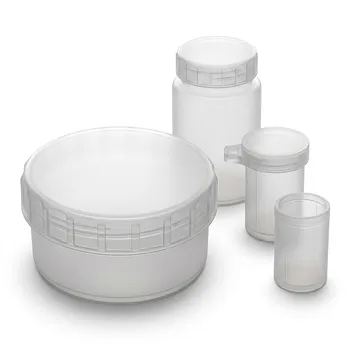
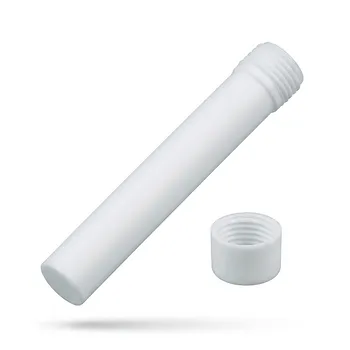
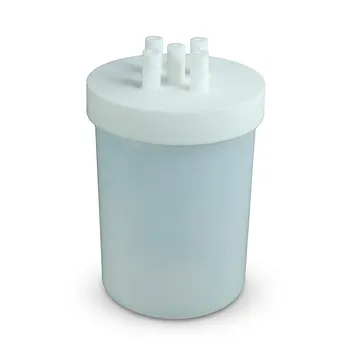
Achieving the ultimate purity in WS2 quantum dot synthesis requires more than just chemistry—it requires the absolute isolation provided by high-performance fluoropolymers. KINTEK manufactures virtually all imaginable laboratory supplies crafted from PTFE and PFA, ensuring your research is never compromised by trace impurities or metal leaching.
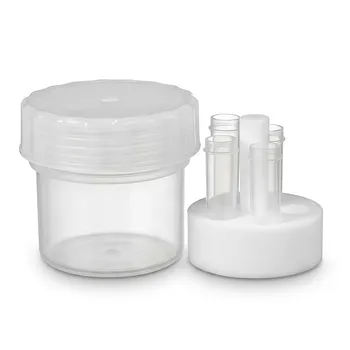
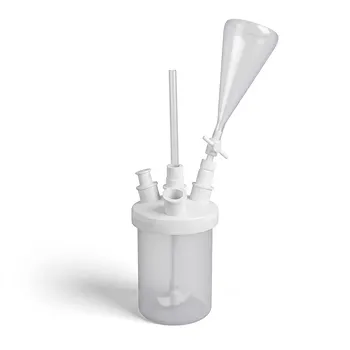
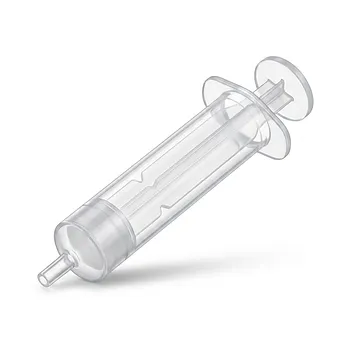
From everyday basic labware (beakers, measuring cylinders, crucibles, reagent bottles, and digestion tubes) to comprehensive fluid transfer components and sample prep tools, we provide the building blocks for a sterile lab environment. Our expertise extends to advanced reaction apparatus, including custom hydrothermal synthesis liners, microwave digestion vessels, and electrochemical cells.
Why choose KINTEK?
- End-to-End Customization: Our custom CNC fabrication delivers everything from non-standard machined parts to bespoke laboratory setups.
- Absolute Focus: We specialize exclusively in high-performance fluoropolymers for high-purity trace analysis.
- Scalability: We support both precision research and high-volume industrial orders with equal rigor.
Don't let reactor contamination quench your results. Contact us today to discuss your custom liner requirements and secure the structural integrity of your next breakthrough.
References
- Lina Hristova, María del Pozo. Optical Sensor Based on WS<sub>2</sub> Quantum Dots for Lamotrigine Determination. DOI: 10.1021/acsomega.4c09476
This article is also based on technical information from Kintek Knowledge Base .
Related Products
- PTFE Lined High Pressure Digestion Vessel 50ml High Temperature Hydrothermal Synthesis Tank
- Corrosion Resistant PTFE Support with PFA Transparent Reaction Tank and High Purity PFA Sampling Tube for Trace Analysis
- Custom PTFE Acid Resistant Support Rack for PFA Hydrogen Absorption Systems Multi Hole Configurations
- Custom PTFE Sleeves and Hollow Rods for Advanced Applications
- PTFE PFA Vacuum Filtration System Corrosion Resistant Customizable Shatterproof Laboratory Device
People Also Ask
- What are the benefits of using a PTFE-lined vessel for carbon-sulfur cathode treatment? Maximize Purity & Performance
- Why are PTFE-lined pressure digestion vessels required for the preparation of Ag/CeO2 catalysts? Purity & Performance
- What safety features are typically incorporated into high-pressure PTFE digestion vessel designs? Ensure Lab Safety
- What is the function of PTFE lined high-pressure vessels in g-C3N4 synthesis? Achieve High-Purity Material Growth
- Role of High-Pressure Digestion Tanks in Perovskite Synthesis: Achieve Superior Stability and Latent Heat