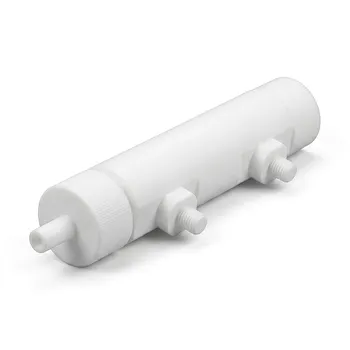
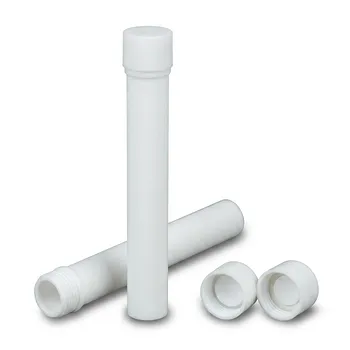
Maintaining the integrity of ultra-trace detection requires absolute control over the chemical environment. The selection of high-purity PTFE or PFA containers is critical because these materials prevent the introduction of background impurities and eliminate the risk of analyte loss through wall adsorption. In the trace detection of Ibuprofen at microgram-per-liter ($\mu$g/L) levels, these properties ensure the accuracy of the reaction solution and the reproducibility of the fluorescence signal generated by Nitrogen-doped Carbon Quantum Dots (NCQDs).
Core Takeaway: High-purity fluoropolymers like PTFE and PFA provide a chemically inert environment that preserves the precise concentration of Ibuprofen and the stability of NCQDs, ensuring that analytical results are a true reflection of the sample rather than an artifact of container contamination.
Eliminating Background Interference and Leaching
The Danger of Ion Leaching in Trace Analysis
Standard glass or lower-grade plastic containers can leach metallic ions—such as sodium, silicon, boron, or potassium—into the sample solution. In the context of NCQD-based detection, these leached impurities can interfere with the chemical reaction or quench the fluorescence signal, leading to false readings.
Superior Chemical Inertness of Fluoropolymers
High-purity PTFE (Polytetrafluoroethylene) and PFA (Perfluoroalkoxy) possess near-universal chemical resistance. This inertness ensures that even when using aggressive reagents for sample preparation or digestion, no leachable organics or metallic ions enter the solution to compromise the 99.8% or higher purity required for micro-analysis.
Protecting the Integrity of the NCQD Reaction
Nitrogen-doped Carbon Quantum Dots are highly sensitive to their chemical surroundings. By using PFA or PTFE, researchers ensure that the reaction solution composition remains unchanged, allowing the NCQDs to interact exclusively with the target Ibuprofen molecules without interference from container-derived contaminants.
Mitigating Analyte Loss Through Surface Adsorption
The Impact of Wall Adsorption at Ultra-Low Concentrations
When detecting Ibuprofen at the microgram-per-liter level, the ratio of surface area to analyte is high. Standard containers often "trap" Ibuprofen molecules on their inner walls through adsorption, which significantly lowers the effective concentration in the solution and skews the results.
Non-Stick Properties for Concentration Stability
PTFE and PFA are characterized by extremely low inner-wall adsorption. This "non-stick" nature ensures that the Ibuprofen remains in the liquid phase, maintaining the stability of the standard stock solutions and the accuracy of the final fluorescence measurement.
Ensuring Fluorescence Signal Reproducibility
Fluorescence detection relies on a predictable relationship between analyte concentration and light emission. By preventing the loss of Ibuprofen to the container walls, fluoropolymer labware ensures a stable and reproducible fluorescence signal, which is the foundation of reliable quantitative analysis.
Understanding the Trade-offs and Considerations
Cost and Resource Allocation
High-purity fluoropolymer containers represent a significantly higher initial investment compared to disposable plastic or standard borosilicate glass. Labs must balance the need for ultra-trace accuracy against the higher procurement costs of PFA and PTFE labware.
Specialized Cleaning Requirements
To maintain their high-purity status, these containers require rigorous cleaning protocols, often involving acid leaching, to ensure no residual trace elements remain from previous uses. Improper handling or cleaning can negate the inherent purity advantages of the material.
Physical Limitations
While PTFE is exceptionally inert, it is opaque and cannot be used for direct visual monitoring of reactions. PFA offers better clarity but is still not as transparent as glass, which may be a consideration for certain manual laboratory workflows.
How to Apply This to Your Analytical Workflow
Recommendations for Material Selection
- If your primary focus is ultra-trace accuracy (ppb levels): Utilize PFA containers for all storage and reaction steps to take advantage of their superior purity and low leaching profile.
- If your primary focus is Ibuprofen stability over time: Choose PTFE or PFA bottles for standard stock solutions to prevent concentration drift caused by surface adsorption.
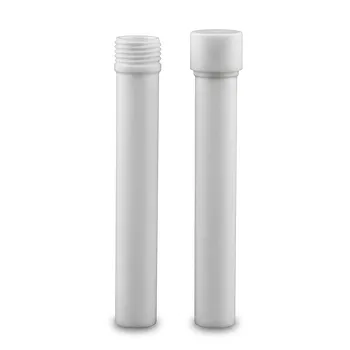
- If your primary focus is high-temperature digestion: Select PFA or PTFE digestion tubes, as they combine extreme chemical resistance with the thermal stability necessary for aggressive sample preparation.
By prioritizing high-purity fluoropolymers, you ensure that your trace detection system remains a precise tool for measurement rather than a source of experimental error.
Summary Table:
| Feature | Impact on Trace Analysis | Benefit to NCQD Detection |
|---|---|---|
| Chemical Inertness | Prevents ion leaching (Na, Si, B, K) | Protects fluorescence signal from quenching |
| Low Adsorption | Eliminates analyte loss on container walls | Maintains stable Ibuprofen concentrations |
| High Material Purity | Zero background impurity introduction | Ensures 99.8%+ accuracy in micro-analysis |
| Thermal Stability | Resists aggressive digestion reagents | Ideal for complex sample preparation steps |
Elevate Your Analytical Precision with KINTEK Fluoropolymers
Don’t let container contamination or analyte loss compromise your ultra-trace detection results. At KINTEK, we maintain an exclusive and absolute focus on high-performance fluoropolymer materials, ensuring your laboratory environment remains chemically inert and ultra-pure.
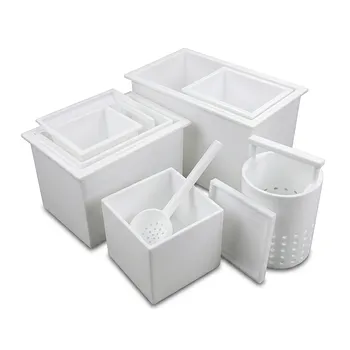
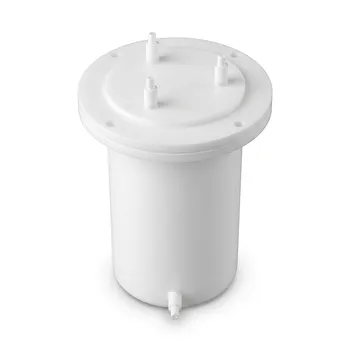
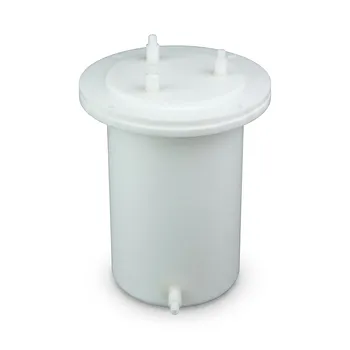
From everyday basic labware like beakers, measuring cylinders, crucibles, and reagent bottles to specialized high-purity trace analysis instruments and cleaning tanks, we provide the foundation for reliable data. Our expertise extends to comprehensive fluid transfer components (tubing, valves), sample prep tools (filters, pipettes, tweezers), and advanced reaction apparatus such as custom electrochemical cells and microwave digestion vessels.
Why choose KINTEK?
- End-to-End Customization: Backed by custom CNC fabrication, we deliver everything from complex non-standard machined parts to high-volume orders.
- Unmatched Purity: Our PFA and PTFE supplies are crafted to meet the rigorous demands of microgram-per-liter analysis.
- Complete Solutions: We supply virtually all imaginable laboratory supplies, including O-rings, gaskets, and sophisticated hydrothermal synthesis liners.
Ensure your research reflects the truth of your samples, not the artifacts of your labware. Contact our specialists today to discuss your bespoke laboratory setup and secure the highest performance fluoropolymer solutions for your workflow!
References
- Jiexin Wang, Yumei Li. Construction of hydrogen bond mediated nitrogen doped carbon quantum dot fluorescent probe and its application in trace detection of ibuprofen in water. DOI: 10.56028/aetr.15.1.337.2025
This article is also based on technical information from Kintek Knowledge Base .
Related Products
- Custom PFA Reaction Bottles High Purity PTFE Reaction Vessels Corrosion Resistant Petrochemical Containers
- High Purity PFA Crucible and Corrosion Resistant PTFE Beaker for Trace Analysis and Custom Laboratory Applications
- High Purity Corrosion Resistant PTFE Raw Material Barrel 4L Screw Seal Low Background Feed Tank
- PFA Reaction Jar Corrosion Resistant Wide Mouth PTFE Lab Bottle High Purity Chemical Vessel
- Corrosion Resistant PFA Reaction Tank High Purity Laboratory Reaction Bottle Wide Mouth PTFE Jar Multiple Specifications
People Also Ask
- What is the function of corrosion-resistant reaction vessels in the acid hydrolysis process of molasses for microalgae culture media?
- Why are well-sealed reaction vessels necessary for superacid-promoted Friedel-Crafts polycondensation? Optimize Synthesis
- Role of reaction vessels in alkali treatment for oil palm waste: Achieve High-Purity Cellulose with PTFE Vessels
- How do the material choice and sealing integrity of the reaction vessel affect the growth of NiFe-LDH? Optimize Synthesis
- Why are corrosion-resistant vessels needed for alkaline cellulose extraction? Ensure Purity and Process Safety