Superior sealing performance is the technical foundation of successful hydrothermal synthesis. The 72-hour reaction duration for Ni(II) complexes requires a perfectly hermetic environment to prevent solvent evaporation and internal pressure drops. Without this integrity, the controlled self-assembly of the lattice structure fails, resulting in unusable polycrystalline powders instead of the high-quality single crystals required for diffraction analysis.
Sealing performance is more than a safety feature; it is a thermodynamic regulator that maintains the constant pressure and chemical concentration necessary for slow crystal growth. By preventing solvent loss at 140°C, the reactor ensures that precursors remain soluble and reactive throughout the entire 72-hour synthesis window.
The Thermodynamic Role of Pressure Stability
Maintaining Precursor Solubility
In the synthesis of binuclear Ni(II) complexes, the reactor must dissolve precursors like 3-chlorobenzoic acid and 3-(pyridin-2-yl)-1,2,4-triazole in mixed water-ethanol solvents.
High internal pressure significantly increases the solubility and reactivity of these components, which would otherwise remain under-saturated or unreactive at standard atmospheric boiling points.
Enabling Kinetic Control over 72 Hours
The 72-hour window is designed to allow for slow self-assembly, a process that is highly sensitive to the kinetic energy of the system.
Any minor leak causes a drop in pressure, which shifts the chemical equilibrium and can prematurely terminate the growth phase of the complex.
The Mechanics of Crystal Lattice Formation
Promoting Slow Self-Assembly
A stable pressure environment is a physical requirement for the orderly arrangement of complex components into a stable lattice structure.
Superior sealing ensures that the transition from a homogenous solution to a solid crystal occurs at a controlled rate, allowing atoms to find their ideal positions in the lattice.
Avoiding Polycrystalline Defects
If sealing is compromised, the resulting pressure fluctuations lead to rapid, uncontrolled precipitation.
This typically results in the formation of polycrystalline powders, which lack the long-range order and clarity needed for precise X-ray diffraction analysis.
Understanding the Trade-offs and Pitfalls
The Risk of Mixed Solvent Volatility
Using mixed solvents like water-ethanol increases the risk of selective evaporation if the seal is not perfect.
If the more volatile ethanol escapes, the chemical concentration and polarity of the medium change, often causing the Ni(II) complexes to precipitate incorrectly.
Impact of Minor Leaks on Ostwald Ripening
While common in nanoparticle synthesis, the principle of Ostwald ripening also applies here; maintaining a constant concentration is essential to prevent "abnormal" growth.
Even a microscopic leak can lead to a high coefficient of variation in the product, ruining the homogeneity of the synthesized batch.
How to Apply This to Your Project
When conducting long-duration hydrothermal synthesis, your choice of equipment and protocol should prioritize atmospheric integrity to ensure repeatable results.
- If your primary focus is single-crystal X-ray diffraction: Prioritize reactors with high-reliability sealing structures to ensure a slow, undisturbed self-assembly phase over the full 72 hours.
- If your primary focus is maximizing precursor reactivity: Ensure the seal can withstand temperatures of at least 140°C without deformation, as high pressure is the primary driver for dissolving complex organic ligands.
- If your primary focus is phase purity and homogeneity: Regularly inspect and replace reactor gaskets to prevent the subtle solvent loss that leads to polycrystalline impurities.
Ultimately, the quality of a Ni(II) complex is dictated by the stability of its environment, making the reactor's seal the most critical variable in the synthesis process.
Summary Table:
| Key Synthesis Factor | Thermodynamic Role | Impact on Crystal Quality |
|---|---|---|
| Pressure Stability | Maintains precursor solubility & kinetic energy | Prevents premature termination of growth phase |
| Hermetic Integrity | Prevents solvent (water/ethanol) evaporation | Ensures slow self-assembly into single crystals |
| Temperature Control | Sustains constant 140°C environment | Avoids rapid precipitation and polycrystalline defects |
| Concentration Unity | Prevents shifts in chemical equilibrium | Ensures batch homogeneity and phase purity |
Secure Your Synthesis Results with KINTEK Precision
Don’t let microscopic leaks compromise 72 hours of research. KINTEK specializes in high-performance fluoropolymer solutions designed for the most demanding hydrothermal environments. From our custom-machined PTFE and PFA hydrothermal synthesis liners and microwave digestion vessels to everyday high-purity labware like beakers, reagent bottles, and specialized fluid transfer components, we ensure your reaction environment remains perfectly hermetic.
Whether you require standard consumables or bespoke CNC-fabricated laboratory setups for complex Ni(II) complex synthesis, KINTEK delivers the durability and chemical inertness your lab demands. Our exclusive focus on fluoropolymer materials ensures superior sealing and zero contamination for high-purity trace analysis and advanced reaction apparatus.
Ready to elevate your lab’s performance? Contact our fluoropolymer experts today to discuss your custom project or high-volume order requirements.
References
- Zhuowen Xu, Chang-Hong Li. Hydrothermal synthesis, crystal structure of [K3:N1:N2:N4-3-(pyridin-2-yl)-1,2,4-triazole] binuclear Ni(II) complex[Ni<sub>2</sub>(C<sub>7</sub>H<sub>5</sub>N<sub>4</sub>)2(C<sub>7</sub>H<sub>4</sub>ClO<sub>2</sub>)<sub>2</sub>]. DOI: 10.1515/ncrs-2024-0362
This article is also based on technical information from Kintek Knowledge Base .
Related Products
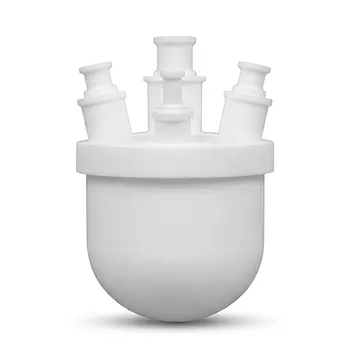
- High Temperature Corrosion Resistant Hydrothermal Synthesis Reactor with TFM Inner Liner and Straight Cylinder Design
- PTFE Lined High Pressure Digestion Vessel 50ml High Temperature Hydrothermal Synthesis Tank
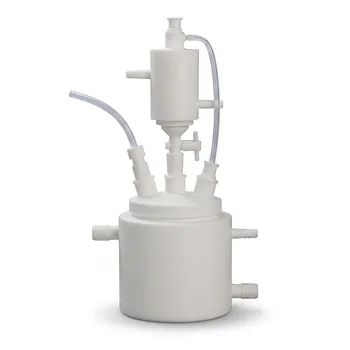
- Custom PTFE Reaction System with Hose Barb Fittings Corrosion Resistant High Sealing 2L 4L Lab Reactor with Separatory Funnel
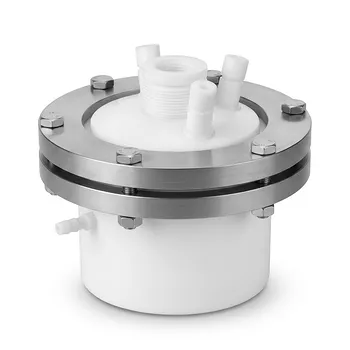
- High Pressure Custom TFM Reactor Stainless Steel Outer Vessel PTFE Inner Cup for Corrosive Synthesis
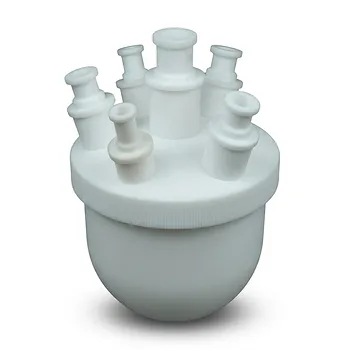
- High Purity PFA Reaction Vessel for Biopharmaceutical Synthesis and Corrosive Chemical Fluid Handling with Customizable Tube Fittings
People Also Ask
- What is the role of a corrosion-resistant reactor in the synthesis of lignin-based carbon dots? Ensure Maximum Purity
- What are the technical advantages of using hydrothermal synthesis reactors for advanced electronic & optical nanomaterials?
- How does a hydrothermal synthesis reactor facilitate the production of crystalline materials with tailored morphologies? Precision Crystal Growth
- Why is the sealing reliability of a hydrothermal synthesis reactor critical for 24-hour cycles? Ensure Nano-Precision
- What role do hydrothermal synthesis reactors play in CQD preparation? Achieve High-Purity Nanomaterial Synthesis