Strict moisture control is essential because water attacks the same phosphorus–chlorine bonds targeted for nucleophilic substitution. In chlorophosphazenes, this produces P–OH groups, which can cause ring or chain cleavage and promote unwanted P–O–P cross-linking. The result is incomplete chlorine replacement, defective material, and potentially insoluble polymer batches.
Moisture is not merely a contaminant in chlorophosphazene substitution—it is a chemically active reagent. Reliable reactions therefore require a genuinely moisture-free system, including impermeable fluoropolymer vessels, sealed transfer lines, and effective dry-gas purging.
Why Moisture Disrupts the Substitution Reaction
Water cleaves phosphorus–chlorine bonds
Chlorophosphazenes contain reactive P–Cl bonds. Atmospheric water reacts with these bonds to form P–OH units, consuming or altering the reactive sites needed for controlled substitution by the intended organic nucleophile.
This side reaction competes directly with the desired process and makes the final substitution pattern difficult to control.
Hydrolysis promotes structural damage
In cyclic trimers such as hexachlorocyclotriphosphazene, moisture-induced reactions can contribute to ring cleavage. In linear high-molecular-weight materials, the same chemistry can damage the polymer backbone or chain structure.
This is why even small moisture leaks can affect more than product purity; they can change the material’s molecular architecture.
P–OH groups promote unwanted cross-linking
The hydroxyl groups generated by hydrolysis can form P–O–P linkages. These linkages create uncontrolled cross-links between phosphazene units or chains.
As cross-linking increases, the material may become partially or completely insoluble, making it difficult to process and preventing complete substitution of the remaining chlorine atoms.
How Moisture Affects Product Quality
Incomplete nucleophilic substitution
The intended organic nucleophile must replace chlorine at the phosphorus centers. If water has already reacted with some P–Cl bonds, fewer sites remain available for the desired substitution reaction.
The product can therefore contain residual chlorine, uneven substitution, and a less predictable composition.
Defective polymer batches
Uncontrolled cleavage and cross-linking produce polymer batches with inconsistent structure and properties. A batch may show poor solubility, reduced processability, or performance that varies significantly from the intended formulation.
Loss of batch reproducibility
Moisture exposure can occur through the vessel, transfer lines, gas supply, or handling operations. Small differences in exposure between runs can therefore produce disproportionately different outcomes.
Strict control is necessary not only for one successful reaction, but also for repeatable scale-up and manufacturing.
Apparatus Requirements for a Moisture-Free Setup
Moisture-impermeable reaction vessels
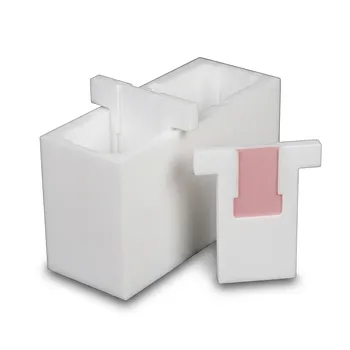
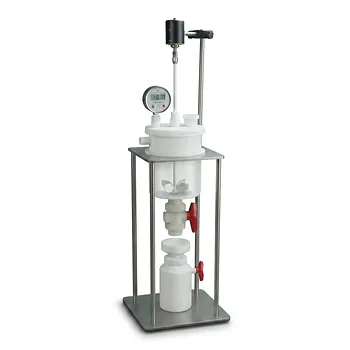
The reaction vessel should be made from a high-purity fluoropolymer, such as PTFE or PFA. These materials provide a moisture-impermeable reaction environment and are suitable for handling highly moisture-sensitive chlorophosphazene chemistry.
The vessel must remain properly sealed throughout charging, reaction, and workup operations.
Sealed PFA transfer lines
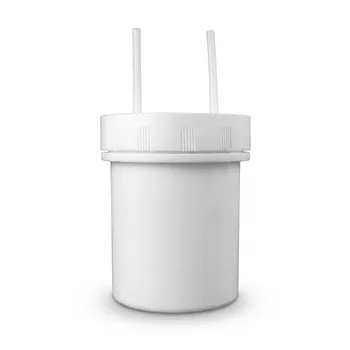
All fluid-transfer paths should use sealed PFA lines where appropriate. Open or poorly sealed connections can introduce atmospheric moisture while reagents, solvents, or reaction mixtures are being moved.
The transfer system should therefore preserve the dry environment between the storage, reaction, and addition stages.
Dry-gas purging components
The apparatus requires components capable of purging the reaction environment with dry gas. Purging removes atmospheric humidity and helps maintain the moisture-free conditions required during the reaction.
The gas path itself must be dry; otherwise, purging can introduce moisture rather than remove it.
Continuous environmental integrity
Moisture control must be maintained for the entire operation, not only during the initial setup. The vessel, lines, seals, and gas-purging components must work as one closed system.
A dry reaction vessel is ineffective if moisture enters later through an exposed transfer line or inadequately sealed connection.
Understanding the Trade-offs and Common Pitfalls
Fluoropolymer compatibility does not replace good sealing
PTFE and PFA provide the required material barrier, but they do not eliminate the need for sound seals, closed connections, and controlled transfers. A moisture-impermeable vessel can still be compromised by an open port or leaking joint.
Purging is only effective with dry gas
A purge system is beneficial only when the gas supply and associated components are sufficiently dry. Wet purge gas can worsen the problem by continuously delivering water vapor to the reaction mixture.
Moisture control must include handling operations
Charging solids, adding nucleophiles, transferring solutions, and sampling can all expose the system to air. These operations must be designed so that the reaction remains isolated from atmospheric humidity.
Cross-linking may be difficult to reverse
Once hydrolysis has generated P–OH groups and P–O–P cross-links, the resulting structural damage is not simply removed by extending the reaction time. Prevention is therefore more practical and reliable than trying to correct a moisture-damaged batch.
How to Apply This to Your Reaction Setup
The apparatus should be designed around preventing water entry at every stage of the substitution process.
- If your primary focus is reaction completeness: Use a sealed PTFE or PFA reaction vessel and maintain dry-gas purging so water does not consume P–Cl substitution sites.
- If your primary focus is polymer solubility and processability: Prevent hydrolysis and P–O–P cross-linking by using moisture-impermeable vessels and sealed PFA transfer lines.
- If your primary focus is batch reproducibility: Treat the vessel, transfer lines, seals, and purge system as one integrated moisture-controlled environment.
- If your primary focus is scale-up: Preserve the same closed, dry configuration during reagent addition, fluid transfer, sampling, and reaction maintenance.
Reliable chlorophosphazene substitution begins with treating moisture exclusion as a reaction requirement, not merely a cleanliness precaution.
Summary Table:
| Aspect | Impact of Moisture | Apparatus Requirement |
|---|---|---|
| Reaction Site | Water attacks P-Cl bonds, forming P-OH and reducing substitution sites | Sealed PTFE/PFA reaction vessel |
| Structural Integrity | Hydrolysis can cause ring/chain cleavage, altering molecular architecture | Impermeable fluoropolymer construction |
| Cross-linking | P-OH promotes P-O-P cross-links, leading to insolubility | Sealed PFA transfer lines |
| Product Quality | Residual chlorine, uneven substitution, and defective polymer batches | Dry-gas purging components |
| Reproducibility | Varying moisture exposure causes inconsistent outcomes | Integrated closed system with continuous integrity |
Ensure your lab achieves reliable chlorophosphazene substitution with our high-purity PTFE and PFA apparatus. From sealed reaction vessels to dry-gas purging systems, KINTEK offers the moisture-impermeable solutions you need for consistent, high-quality results. Our custom CNC machining and comprehensive product line support your exact requirements, from lab-scale to high-volume production. Contact us today to optimize your chemistry and ensure batch reproducibility — Contact KINTEK!
Related Products
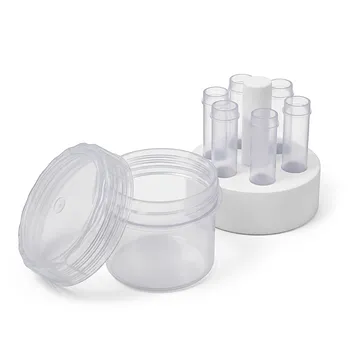
- High Purity Corrosion Resistant PFA Reaction Vessel with PTFE Holder and Integrated Sampling Tube for Trace Analysis
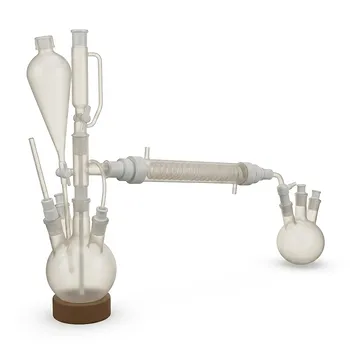
- PTFE Distillation Condensation Apparatus High Temperature Hydrofluoric Acid Resistant Fluorination Reaction Flask
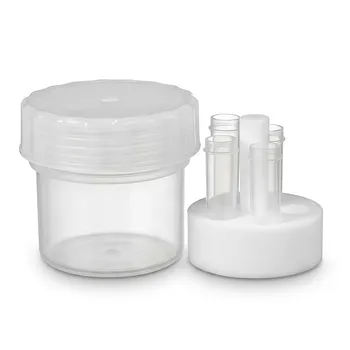
- Corrosion Resistant PTFE Support with PFA Transparent Reaction Tank and High Purity PFA Sampling Tube for Trace Analysis
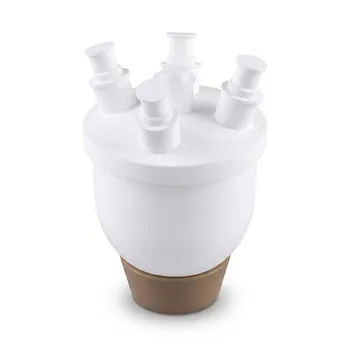
- High Performance Customizable PTFE Reaction Vessel and Corrosion Resistant Polytetrafluoroethylene Flask for Chemical Laboratory Use
- Custom PTFE Multilayer Reaction Apparatus High Temperature Corrosion Resistant Threaded Modular Sieve System
People Also Ask
- Why is the choice of reaction vessel material critical during B-NiBDC synthesis? Optimize MOF Purity & Performance
- How do the material choice and sealing integrity of the reaction vessel affect the growth of NiFe-LDH? Optimize Synthesis
- Why are well-sealed reaction vessels necessary for superacid-promoted Friedel-Crafts polycondensation? Optimize Synthesis
- Role of reaction vessels in alkali treatment for oil palm waste: Achieve High-Purity Cellulose with PTFE Vessels
- What is the role of high chemical inertness reaction vessels in the organic synthesis of acylhydrazone ligands? | Guide