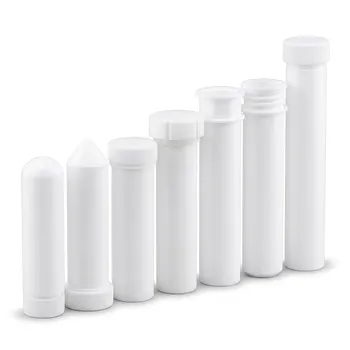
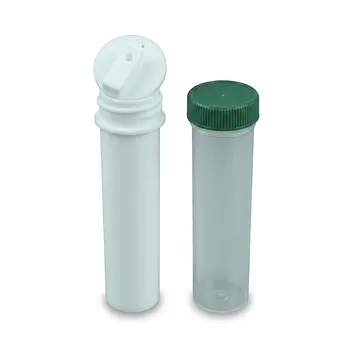
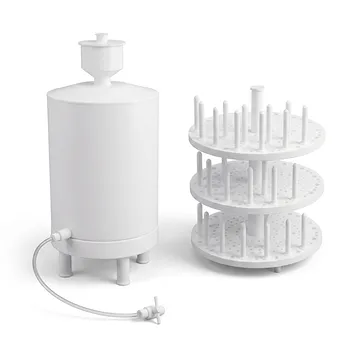
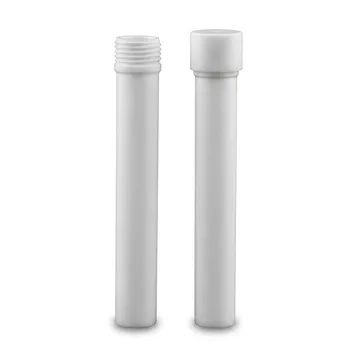
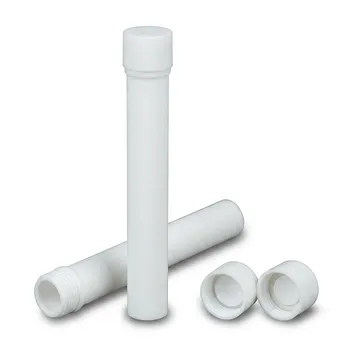
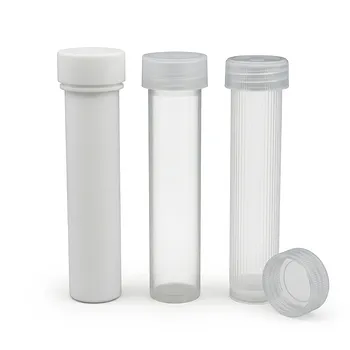
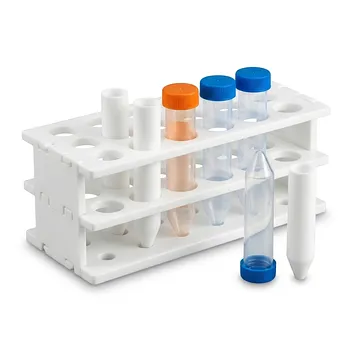
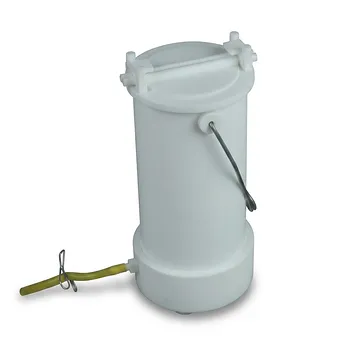
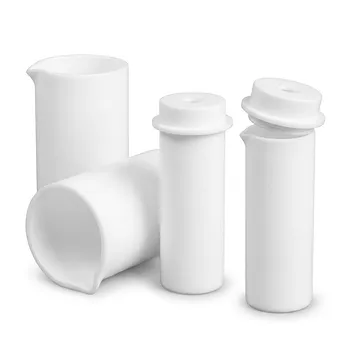
PTFE (Polytetrafluoroethylene) is the gold standard for trace metal analysis because it virtually eliminates sample contamination and analyte loss. Unlike glass, which leaches silicates and trace metals into solutions, PTFE is chemically inert and does not release ions into the sample. Its hydrophobic, non-adsorptive surface prevents metal ions from "sticking" to the container walls, ensuring total recovery of analytes at microgram and nanogram levels.
Core Takeaway: PTFE provides an ultra-clean, non-reactive environment that preserves the integrity of trace samples by adding no contaminants (zero leaching) and removing no analytes (zero adsorption).
Eliminating Background Contamination
The Problem with Glass Leaching
Glass is a reactive material that can release silicates, boron, and various trace metals when it comes into contact with acidic samples. In trace analysis, these leached elements create a high "background noise" that can mask the actual concentration of the metals you are trying to measure.
PTFE’s Superior Chemical Inertness
PTFE is constructed with incredibly strong carbon-fluorine bonds, making it non-reactive to almost all mineral acids and organic solvents. This ensures that the container remains a neutral vessel, providing the "blank" background necessary for high-precision methods like ICP-MS or Atomic Absorption.
Maximizing Analyte Recovery
Preventing Surface Adsorption
In trace metal analysis, losing even a few nanograms of a metal to the container wall can ruin the results. The internal surfaces of fluoropolymers like PTFE are exceptionally smooth and non-adsorptive, preventing metal ions from adhering to the walls.
Hydrophobicity and Quantitative Transfer
The non-wetting (hydrophobic) nature of PTFE allows liquids to bead up and pour out completely. This facilitates a "quantitative transfer," meaning every drop of the sample moves from the container to the instrument without leaving residue behind.
Durability in Harsh Analytical Environments
Resistance to Hydrofluoric Acid (HF)
Glass is fundamentally incompatible with Hydrofluoric Acid (HF), a common reagent used to dissolve geological or ceramic samples, because HF dissolves the silica structure of the glass. PTFE is entirely resistant to HF, making it the only viable choice for many digestion protocols.
Thermal Stability and Microwave Digestion
PTFE can withstand continuous temperatures up to 260°C and remains stable under high pressure. Its microwave transparency allows for rapid, volumetric heating, which is critical for efficient sample digestion in modern laboratory systems.
Understanding the Trade-offs
Cost and Accessibility
PTFE labware is significantly more expensive than standard borosilicate glass. For general laboratory tasks where trace-level accuracy is not required, the high cost of fluoropolymers may not be justified.
Physical Limitations
Unlike glass, PTFE is opaque, meaning you cannot visually inspect the sample for undissolved particulates or color changes. Additionally, PTFE is a softer material that can deform under extreme mechanical stress or be scratched if cleaned with abrasive tools, which could eventually create sites for contamination.
How to Apply This to Your Project
Making the Right Choice for Your Goal
- If your primary focus is ultra-trace analysis (ppb/ppt levels): Utilize high-purity PTFE or PFA containers to ensure the lowest possible background interference and maximum recovery.
- If your primary focus is sample digestion with HF: PTFE is mandatory, as glass will dissolve and contaminate the sample with high levels of silica.
- If your primary focus is high-temperature microwave digestion: Choose PTFE digestion vessels for their thermal stability and microwave transparency, which allow for faster and more complete sample breakdown.
- If your primary focus is routine lab work at ppm levels: Standard borosilicate glass may be sufficient and more cost-effective, provided it is properly acid-washed.
By prioritizing PTFE in your workflow, you ensure that your analytical results reflect the true composition of your sample rather than the chemistry of your container.
Summary Table:
| Feature | PTFE (Fluoropolymer) | Borosilicate Glass |
|---|---|---|
| Contamination | Zero leaching; chemically inert | Leaches silicates, boron, & metals |
| Analyte Recovery | Non-adsorptive; max recovery | Surface adsorption leads to loss |
| HF Resistance | Highly resistant; mandatory for HF | Dissolves in Hydrofluoric Acid |
| Transfer Efficiency | Hydrophobic; bead-up discharge | Wetting surface; residue remains |
| Thermal Stability | Stable up to 260°C | High, but reactive at temp |
| Visual Clarity | Opaque / Translucent | Transparent |
Elevate Your Analytical Precision with KINTEK
Don’t let container leaching compromise your trace-level results. KINTEK specializes in high-performance fluoropolymer labware designed specifically for ultra-trace analysis and harsh chemical environments.
Whether you need everyday essentials—such as beakers, measuring cylinders, crucibles, reagent/wash bottles, and centrifuge tubes—or specialized high-purity trace analysis instruments and cleaning tanks, we have you covered. Our catalog extends to comprehensive fluid transfer components (tubing, fittings, valves), sample prep tools (separatory funnels, filters, pipettes, tweezers), and essential consumables (stirring bars, O-rings, gaskets).
For advanced research, we manufacture bespoke reaction apparatus, including electrochemical cells, battery testing fixtures, hydrothermal synthesis liners, and microwave digestion vessels. With our end-to-end custom CNC fabrication, KINTEK delivers everything from complex non-standard machined parts to high-volume orders with an absolute focus on PTFE and PFA excellence.
Ready to optimize your lab's workflow? Contact our experts today to discuss your custom requirements and ensure the integrity of your samples.
Related Products
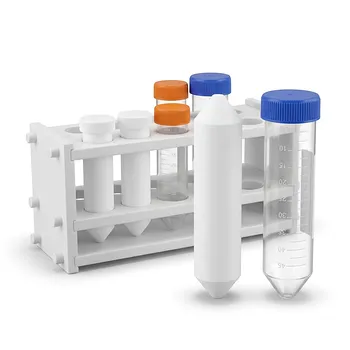
- Custom High Purity PTFE Digestion Tubes and Centrifuge Tubes for Trace Metal Analysis
- PTFE Digestion Tubes Teflon Material Chemical Resistant Laboratory Vessels for Trace Metal Analysis
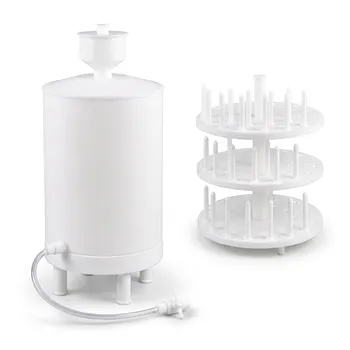
- High Purity Corrosion Resistant PTFE Acid Reflux Cleaning System for Laboratory Trace Analysis
- Custom High Purity PTFE Microwave Digestion Vessels and Graphite Block Compatible Acid Evaporation Tanks for Trace Metal Analysis
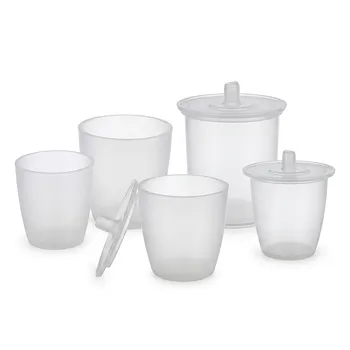
- High Purity PFA Crucible and Corrosion Resistant PTFE Beaker for Trace Analysis and Custom Laboratory Applications
People Also Ask
- What are the common capacities and physical configurations available for PTFE digestion tubes? Expert Selection Guide
- How do PTFE digestion tubes minimize contamination during ultra-trace elemental analysis? Achieve high-purity results.
- How do PTFE digestion tubes assist in pharmaceutical and biological sample preparation? Ensure High Recovery & Purity
- What is the primary function of PTFE digestion tubes in a laboratory setting? Essential for Pure Sample Mineralization
- How does the synergy of pressure and temperature within a PTFE digestion tube improve digestion efficiency? Accelerate Sample Prep