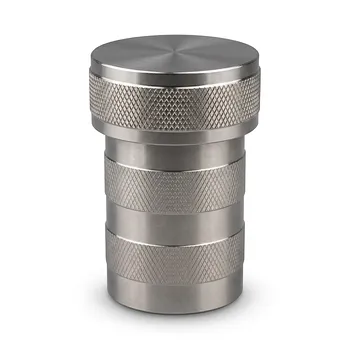
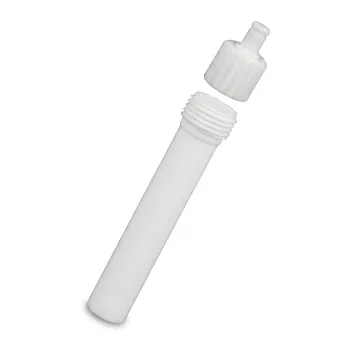
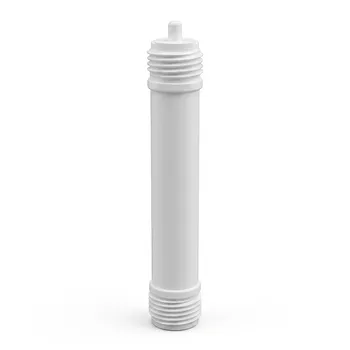
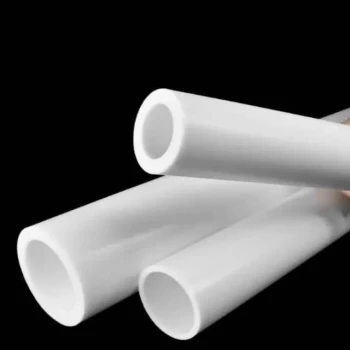
Polytetrafluoroethylene (PTFE) is the material of choice for TNT synthesis because it provides a chemically "invisible" reaction chamber. This material survives the extreme alkalinity (often 10M NaOH) and high temperatures (typically 130°C to 220°C) required to transform titanium precursors into nanotubes. Its primary function is to isolate aggressive reagents from the autoclave’s metal shell, preventing both equipment failure and the leaching of metal impurities into the nanostructures.
Core Takeaway: PTFE liners serve as a critical barrier that maintains high product purity and autoclave safety by resisting the corrosive alkaline environments necessary for the hydrothermal growth of titanium dioxide nanotubes.
Resisting Chemical Degradation
The hydrothermal synthesis of Titanium Dioxide Nanotubes (TNT) requires a highly aggressive environment that would destroy most materials.
Resistance to Extreme Alkalinity
The synthesis process frequently uses high concentrations of strong bases, such as 10M Sodium Hydroxide (NaOH). PTFE’s molecular structure is exceptionally stable, allowing it to remain chemically inert even when exposed to these caustic solutions for extended periods.
Protecting the Autoclave Hardware
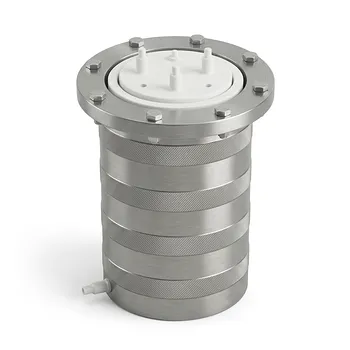
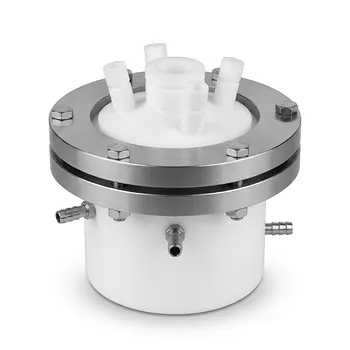
Hydrothermal synthesis occurs under high pressure within a stainless steel autoclave. Without a PTFE liner, the alkaline or acidic precursors would corrode the metal walls, compromising the structural integrity of the pressure vessel and creating a significant safety hazard.
Ensuring Nanomaterial Purity
The performance of TNTs in applications like photocatalysis or solar cells depends heavily on their chemical purity.
Eliminating Metal Ion Contamination
If the reaction solution contacts the steel walls of the autoclave, metal ions like iron, nickel, or chromium can leach into the mixture. The PTFE liner acts as a total seal, ensuring that no foreign ions are introduced into the titanium hydroxide or hydrogen titanate precursors.
Ease of Product Recovery
PTFE possesses excellent non-stick (mold-release) properties. This allows researchers to easily collect the synthesized nanopowders or single-crystal materials from the liner without the product adhering to the surface or becoming contaminated during removal.
Thermal and Pressure Management
The physical properties of PTFE are specifically suited for the subcritical conditions of hydrothermal reactors.
Reliable Sealing Safety
At temperatures between 130°C and 220°C, PTFE maintains its mechanical properties well enough to provide a reliable seal. This prevents the leakage of high-pressure vapors, ensuring the reaction environment remains stable throughout the growth process.
Inducing Specific Morphologies
By providing a stable thermal and chemical environment, PTFE allows the pressure within the autoclave to drive the chemical transformation. This stability is essential for inducing the growth of specific TiO2 morphologies, such as nanotubes, nanosheets, or nanorods.
Understanding the Trade-offs
While PTFE is highly effective, it is not a "universal" material and has specific limitations that must be managed.
Temperature Limitations
PTFE begins to soften and undergo "creep" or deformation as it approaches 250°C to 260°C. For synthesis requiring temperatures above this threshold, more expensive materials like PPL (Polyphenylene polymers) or gold-lined vessels may be required.
Thermal Lag
PTFE is an insulator, meaning it has low thermal conductivity. Users must account for a "thermal lag" where the internal reaction temperature may take longer to reach the setpoint compared to the exterior of the stainless steel vessel.
How to Apply This to Your Project
To ensure the successful synthesis of high-quality Titanium Dioxide Nanotubes, consider your specific experimental parameters.
- If your primary focus is Phase Purity: Always inspect the PTFE liner for staining or pitting, as trapped residues from previous experiments can leach into new batches.
- If your primary focus is Safety and Longevity: Never exceed a 70-80% fill volume in the PTFE liner to allow for liquid expansion and prevent the liner from deforming under excessive internal pressure.
- If your primary focus is Rapid Synthesis: Factor in a longer pre-heating stage to compensate for the insulating properties of the PTFE liner.
By isolating aggressive chemistry from the structural hardware, the PTFE liner remains the gold standard for producing uncontaminated, high-performance titanium nanomaterials.
Summary Table:
| Feature | Benefit for TNT Synthesis | Limitation |
|---|---|---|
| Chemical Inertness | Resists 10M NaOH and aggressive reagents | Maximum use temperature ~250°C |
| Metal Isolation | Prevents ion leaching for high product purity | N/A |
| Non-stick Properties | Easy recovery of synthesized nanopowders | N/A |
| Thermal Insulation | Protects the autoclave's stainless steel shell | Results in internal thermal lag |
Ready to elevate your material synthesis? KINTEK provides high-performance fluoropolymer solutions tailored for hydrothermal research. From standard PTFE liners and microwave digestion vessels to custom-machined PFA components and advanced electrochemical cells, our end-to-end CNC fabrication ensures your lab is equipped with the purest, most durable equipment. Whether you need basic labware like beakers and tubes or complex non-standard reactors, KINTEK delivers the precision your nanotubes demand. Contact our experts today to discuss your custom laboratory needs!
References
- Qi Lv, Bing Xu. High electrocatalytic activity and stability of Pt/TNT-RuO2. DOI: 10.71350/3062192528
This article is also based on technical information from Kintek Knowledge Base .
Related Products
- PTFE Lined High Pressure Digestion Vessel 50ml High Temperature Hydrothermal Synthesis Tank
- High Temperature Corrosion Resistant Hydrothermal Synthesis Reactor with TFM Inner Liner and Straight Cylinder Design
- Custom TFM Reaction Vessel with Stainless Steel Jacket and PTFE Inner Cup for High Corrosion Resistance
- High Purity PTFE Microwave Digestion Vessel Replacement Liner for Acid Sample Preparation and Trace Analysis
- High Purity PTFE Microwave Digestion Vessel for Soil and Food Analysis Acid Resistant Fluoropolymer Sample Preparation Liners
People Also Ask
- What are the benefits of using a PTFE-lined vessel for carbon-sulfur cathode treatment? Maximize Purity & Performance
- Why are PTFE-lined pressure digestion vessels required for the preparation of Ag/CeO2 catalysts? Purity & Performance
- What is the function of high-pressure PTFE digestion vessels in mineral analysis? Optimize Sample Mineralization
- What safety features are typically incorporated into high-pressure PTFE digestion vessel designs? Ensure Lab Safety
- What is the function of PTFE lined high-pressure vessels in g-C3N4 synthesis? Achieve High-Purity Material Growth