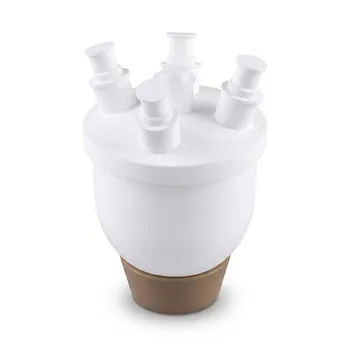
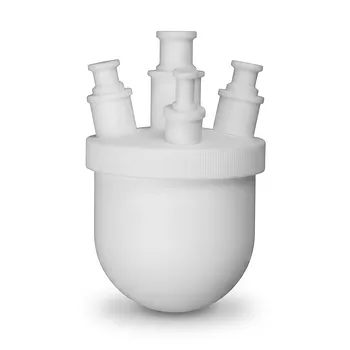
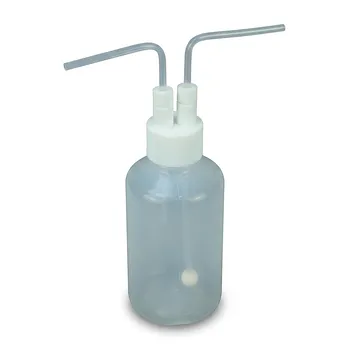
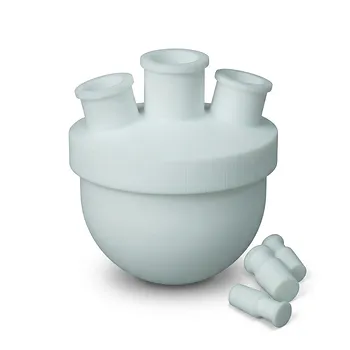
Ensuring mechanical stability and chemical inertness is the cornerstone of high-pressure electrochemical synthesis. For the conversion of carbon dioxide and nitrogen, reaction vessels must withstand pressures of 30 bar or higher to facilitate the formation of high-activation-energy C-N bonds. Beyond mere physical containment, these vessels must resist corrosion from highly alkaline electrolytes to prevent impurity leaching, which can catastrophically skew the analysis of catalytic activity.
Material safety and structural integrity are critical because they simultaneously enable the high-pressure environment required for complex bond formation while shielding the reaction from chemical contamination and mechanical failure.
The Role of Structural Integrity in Chemical Kinetics
Overcoming High Activation Energy
The formation of C-N bonds during the electrochemical conversion of carbon dioxide and nitrogen requires significant energy input.
High-pressure environments, specifically those reaching 30 bar or higher, are necessary to increase gas adsorption coverage on the electrode surface.
Without extreme structural strength, the vessel cannot maintain the stable environment required to drive these difficult-to-initiate reactions.
Resistance to Mechanical Fatigue
Operating under high pressure subjects the reactor walls to constant stress and potential material fatigue.
Reaction vessels must possess high fatigue resistance to endure the cyclic loading associated with repeated pressurized experiments.
Precision seals, such as fluororubber O-rings, are essential to maintain a leak-free environment and ensure the system's structural integrity over prolonged operations.
Chemical Compatibility and Material Safety
Resistance to Highly Alkaline Electrolytes
Electrochemical self-activation of carbon-based electrodes often occurs in aggressive environments, such as 3 M Potassium Hydroxide (KOH).
Standard metals or low-grade plastics can degrade rapidly when exposed to both strong alkali and electrochemical polarization.
Using high-purity fluoropolymers like PTFE (Polytetrafluoroethylene) or PFA (Perfluoroalkoxy) is necessary to prevent the vessel walls from corroding.
Preventing Impurity Ion Leaching
A primary risk in electrochemical analysis is the "poisoning" of the catalyst by ions leached from the reactor itself.
If the vessel material is not chemically inert, impurity ions can enter the electrolyte and interfere with the air cathode's catalytic activity.
Utilizing high-purity materials ensures that the recorded data reflects the true performance of the catalyst rather than experimental artifacts.
Understanding the Trade-offs
Balancing Pressure Capabilities with Material Purity
While high-purity fluoropolymers like PTFE offer excellent chemical resistance, they generally possess lower mechanical strength than specialty alloys.
Designing a reactor that is both chemically inert and capable of withstanding 30+ bar often requires complex "sleeve" designs or reinforced housings.
The Complexity of High-Pressure Sealing
As pressure increases, the risk of seal failure grows exponentially, necessitating more frequent maintenance and high-performance seal materials.
Relying on fluororubber O-rings provides chemical resistance but requires precise machining of the seal seats to prevent leaks at peak pressure.
How to Apply This to Your Project
Recommendations for Reactor Design
Selecting the right material and structural approach depends on your specific experimental parameters and safety requirements.
- If your primary focus is maximizing C-N bond formation: Prioritize a vessel rated for at least 30 bar with high-performance fluororubber seals to ensure stable gas adsorption.
- If your primary focus is long-term catalytic stability: Utilize high-purity PTFE or PFA liners to eliminate the risk of impurity leaching and electrolyte contamination.
- If your primary focus is operator safety and reliability: Implement a rigorous fatigue-testing schedule for the vessel and ensure all components are rated for high-pressure electrochemical polarization.
The intersection of mechanical durability and chemical purity is what transforms a simple container into a definitive scientific instrument for high-pressure electrochemistry.
Summary Table:
| Key Feature | Technical Requirement | Strategic Benefit |
|---|---|---|
| Pressure Stability | 30+ Bar Resistance | Enables high-activation-energy C-N bond formation |
| Chemical Inertness | PTFE/PFA Construction | Resists 3M KOH and aggressive alkaline electrolytes |
| Purity Control | Trace-Analysis Quality | Prevents catalyst poisoning from leached impurity ions |
| Seal Integrity | Fluororubber O-rings | Maintains gas adsorption and prevents mechanical fatigue |
Secure Your Research with High-Performance Fluoropolymer Engineering
Maximize the precision and safety of your electrochemical conversions with KINTEK. We specialize in high-purity fluoropolymer solutions designed for the most demanding laboratory environments. From everyday basic labware (beakers, crucibles, reagent bottles) to advanced custom-machined reaction apparatus, we ensure your experiments are shielded from contamination and mechanical failure.
Why choose KINTEK?
- Comprehensive Range: We offer everything from fluid transfer components (tubing, valves) and sample prep tools (filters, pipettes) to complex electrochemical cells and microwave digestion vessels.
- Bespoke Fabrication: Our end-to-end custom CNC machining allows us to deliver non-standard parts and bespoke laboratory setups tailored to your specific pressure and chemical requirements.
- Material Excellence: We maintain an absolute focus on high-performance PTFE and PFA to guarantee absolute chemical inertness and structural integrity.
Ready to upgrade your high-pressure reactor setup? Contact our technical team today to discuss your custom project or high-volume order requirements.
References
- Yuwei Gu, Chunhua Ge. Heterogeneous Catalyzed Electrochemical Conversion of CO2 through C-N Bond Formation. DOI: 10.70322/gct.2025.10009
This article is also based on technical information from Kintek Knowledge Base .
Related Products
- High Pressure Custom TFM Reactor Stainless Steel Outer Vessel PTFE Inner Cup for Corrosive Synthesis
- PTFE Lined High Pressure Digestion Vessel 50ml High Temperature Hydrothermal Synthesis Tank
- Custom TFM Reaction Vessel with Stainless Steel Jacket and PTFE Inner Cup for High Corrosion Resistance
- High Purity PFA Constant Pressure Condensation Reaction System Acid Resistant High Temperature Customizable Teflon Labware
- High Purity PTFE Reaction Vessel with Electric Stirring System and Customizable 5L Tank including Buchner Funnel Filtration Assembly
People Also Ask
- Why is a PTFE-lined reactor required for Mn2O3 synthesis? Achieve High Purity & Corrosion Resistance
- What is the technical value of 180 bar pressure for MgO nanostructures? Unlock Superior Crystallinity and Morphology
- What are the technical advantages of using high-pressure PTFE reaction vessels during metal digestion? Expert Insights.
- How does the regulation of initial pressure within a high-pressure reaction system affect the production of MIL-100(Fe)?
- Why is a high-pressure reactor necessary for the esterification reaction between oleic acid and methanol at 150°C? Guide