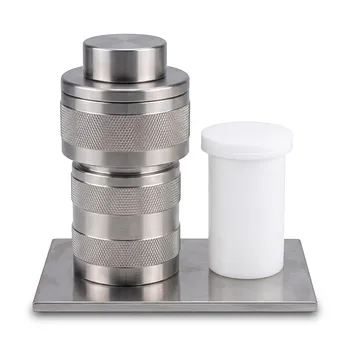
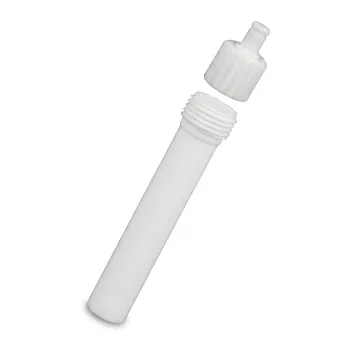
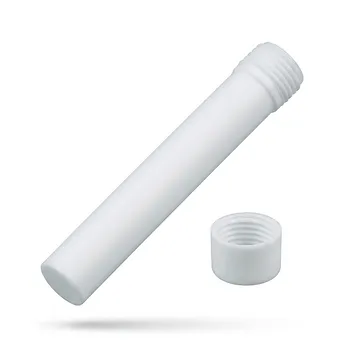
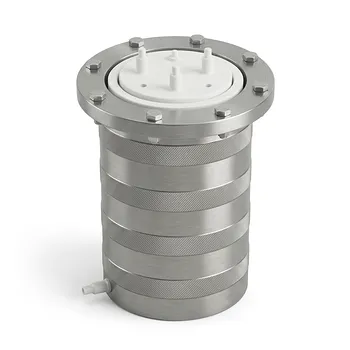
The necessity of PTFE-lined stainless steel autoclaves lies in the critical separation of mechanical strength and chemical compatibility. For the synthesis of Zeolite-A and MOF-5, these reactors provide a sealed environment capable of withstanding high autogenous pressure while isolating corrosive reagents from the metal vessel. This configuration ensures the structural integrity of the equipment and the chemical purity of the resulting crystals.
Core Takeaway: Successful hydrothermal and solvothermal synthesis requires a "duality of protection" where the stainless steel shell manages the physical stress of high-pressure environments, while the PTFE liner provides an inert chemical barrier to prevent corrosion and sample contamination.
The Role of the PTFE Liner: Chemical Isolation
Resistance to Corrosive Synthesis Environments
Zeolite-A synthesis typically involves high concentrations of strong bases, such as sodium hydroxide (NaOH) gels. MOF-5 synthesis utilizes organic solvents like N,N-Dimethylformamide (DMF) at elevated temperatures.
Polytetrafluoroethylene (PTFE) is used because it is exceptionally inert. It prevents these aggressive chemicals from reaching and reacting with the metal walls of the autoclave.
Prevention of Metal Ion Leaching
During the crystallization of Zeolite-A or MOF-5, even trace amounts of metal impurities can disrupt the framework. If the synthesis solution contacts the stainless steel walls, metal ions (such as iron, nickel, or chromium) can leach into the mixture.
The PTFE liner acts as a barrier, ensuring that the reaction liquid remains uncontaminated. This is essential for maintaining the regularity of the microporous structure and the purity of the framework.
Facilitating Non-Adhesive Crystallization
PTFE possesses non-stick properties that are highly beneficial during the recovery phase. These properties prevent the synthesized crystals from adhering permanently to the container walls.
This ensures a higher yield and easier cleaning, which is vital for the reproducibility of specific surface areas in catalytic and adsorbent materials.
The Role of Stainless Steel: Mechanical Integrity
Withstanding Autogenous Pressure
Hydrothermal and solvothermal reactions occur at temperatures above the boiling point of the solvents, creating significant autogenous pressure. For example, MOF synthesis often requires temperatures between 120°C and 160°C.
The stainless steel outer shell provides the necessary structural strength to contain this pressure. Without this rigid support, the PTFE liner—which is relatively soft—would deform or rupture under the internal stress.
Maintaining Subcritical Solvent States
To achieve complete and orderly growth of MOF-5 or Zeolite-A crystals, solvents must often be kept in a subcritical state. This state is maintained by the sealed, high-pressure environment provided by the autoclave.
The heavy-duty sealing mechanism of the stainless steel vessel ensures that volatile organic solvents or water vapor do not escape. This stability is required for precise molecular assembly.
Understanding the Trade-offs and Pitfalls
Temperature Limitations of PTFE
While PTFE is chemically robust, it has a clear thermal ceiling, typically around 220°C to 250°C. Exceeding these temperatures causes the liner to soften, lose its shape, or even release toxic fumes.
If your synthesis requires temperatures higher than 250°C, you must switch to more expensive liners like PFA or specialized metallic alloys, depending on the chemical environment.
Thermal Expansion Mismatch
PTFE and stainless steel expand at different rates when heated. This can lead to liner deformation or "creep" if the heating and cooling cycles are too aggressive.
Users must ensure the liner is properly fitted and that the autoclave is not overfilled. Overfilling leaves no room for liquid expansion, which can lead to a catastrophic pressure failure.
Making the Right Choice for Your Goal
To ensure the success of your Zeolite or MOF synthesis, consider the following recommendations:
- If your primary focus is product purity: Always inspect the PTFE liner for scratches or discoloration before use, as surface defects can harbor contaminants from previous reactions.
- If your primary focus is high-pressure safety: Ensure the stainless steel vessel is rated for at least 20% more pressure than your reaction is expected to generate at peak temperature.
- If your primary focus is material longevity: Implement a slow cooling protocol after synthesis to prevent the PTFE liner from warping due to rapid thermal contraction.
By balancing the chemical inertness of PTFE with the structural power of stainless steel, researchers can reliably produce the high-quality crystalline frameworks required for modern material science.
Summary Table:
| Component | Primary Function | Key Advantages for Synthesis |
|---|---|---|
| PTFE Liner | Chemical Isolation | Resists strong bases/solvents; prevents metal leaching; non-stick for high yield. |
| Stainless Steel Shell | Mechanical Strength | Withstands high autogenous pressure; maintains subcritical solvent states. |
| Combined System | Duality of Protection | Ensures structural integrity while maintaining high chemical purity for crystals. |
Elevate Your Research with KINTEK’s Precision Fluoropolymer Solutions
Achieve uncompromising purity in your hydrothermal and solvothermal synthesis with KINTEK. We specialize in high-performance fluoropolymer materials, offering an exhaustive range of laboratory supplies from everyday basics—like PTFE/PFA beakers, crucibles, and reagent bottles—to advanced reaction apparatus including hydrothermal synthesis liners, microwave digestion vessels, and custom electrochemical cells.
Whether you require standard tubing, fittings, and filtration tools or complex, non-standard machined parts via our end-to-end custom CNC fabrication, KINTEK is equipped to deliver exactly what your lab needs. From bespoke setups to high-volume orders, we maintain an absolute focus on material performance to ensure your Zeolite or MOF frameworks are never compromised by contamination or equipment failure.
Ready to optimize your synthesis environment? Contact our experts today and let us build the perfect setup for your laboratory!
References
- Tessema Derbe, Enyew Amare Zereffa. Synthesis of zeolite-A/Fe3O4/biochar/MOF-5 composite for the defluoridation of drinking water. DOI: 10.1007/s13201-025-02438-w
This article is also based on technical information from Kintek Knowledge Base .
Related Products
- PTFE Lined High Pressure Digestion Vessel 50ml High Temperature Hydrothermal Synthesis Tank
- Custom TFM Reaction Vessel with Stainless Steel Jacket and PTFE Inner Cup for High Corrosion Resistance
- High Purity PTFE Microwave Digestion Vessel Replacement Liner for Acid Sample Preparation and Trace Analysis
- High Purity TFM Microwave Digestion Vessels PTFE Acid Evaporation Liners Domestic GT-400 Equivalent Laboratory Reaction Containers
- High Pressure Custom TFM Reactor Stainless Steel Outer Vessel PTFE Inner Cup for Corrosive Synthesis
People Also Ask
- What are the benefits of using a PTFE-lined vessel for carbon-sulfur cathode treatment? Maximize Purity & Performance
- Why are PTFE-lined pressure digestion vessels required for the preparation of Ag/CeO2 catalysts? Purity & Performance
- What is the function of high-pressure PTFE digestion vessels in mineral analysis? Optimize Sample Mineralization
- What safety features are typically incorporated into high-pressure PTFE digestion vessel designs? Ensure Lab Safety
- What is the function of PTFE lined high-pressure vessels in g-C3N4 synthesis? Achieve High-Purity Material Growth