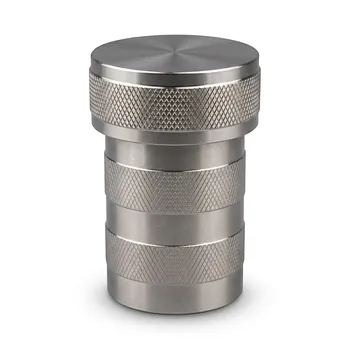
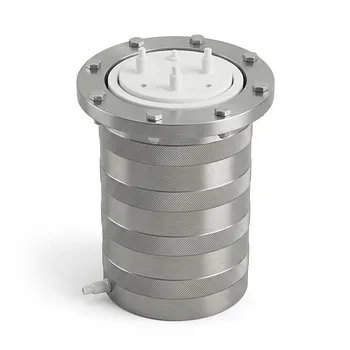
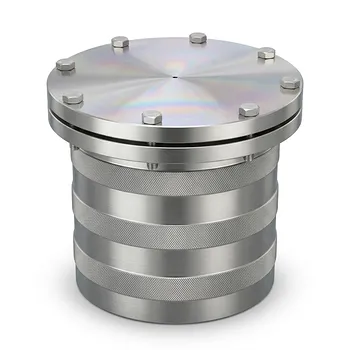
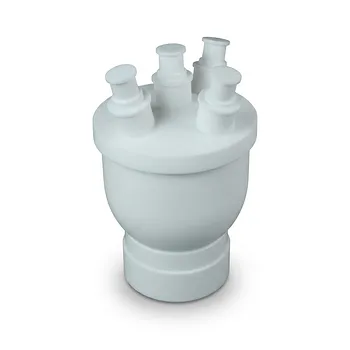
Hydrothermal synthesis of Cobalt Ferrite ($CoFe_2O_4$) necessitates PTFE (Polytetrafluoroethylene) liners because they provide an inert, corrosion-resistant environment capable of withstanding the high temperatures (up to 200°C) and autogenous pressures required for spinel crystal formation. These liners prevent aggressive reaction media from contacting the metal walls of the autoclave, which eliminates metal ion contamination and ensures the purity and magnetic stability of the resulting nanoparticles.
Core Takeaway: PTFE liners serve as a critical chemical and thermal barrier that protects the integrity of the synthesis process; they enable the high-pressure recrystallization of $CoFe_2O_4$ while shielding the reactor hardware from corrosive alkaline or acidic environments.
Maintaining Chemical Integrity and Purity
Prevention of Metal Ion Contamination
The synthesis of $CoFe_2O_4$ often involves precursors and solvents that can react with the stainless steel walls of a standard autoclave. PTFE liners act as a physical barrier, ensuring that the reaction media never touches the metal shell, which prevents unwanted metallic impurities from entering the crystal lattice.
Stability in Highly Alkaline Environments
High-performance nano-ferrites frequently require a highly alkaline environment (pH levels up to 10) to facilitate the precipitation of precursors. PTFE is exceptionally resistant to strong bases and acids, maintaining its structural integrity where other materials would degrade or leach contaminants.
Non-Stick Surface for High Recovery
The extremely low surface energy of PTFE prevents the precipitated cobalt ferrite nanoparticles from adhering to the vessel walls. This non-stick property is essential for maximizing the recovery rate of the final product and simplifying the cleaning process between experimental runs.
Facilitating High-Performance Crystal Growth
Withstanding Autogenous High Pressure
To achieve a well-defined spinel structure, the reaction must occur under autogenous high pressure, which is generated as the liquid is heated in a sealed environment. The PTFE liner, supported by the stainless steel outer shell, creates a secure, sealed space where these pressures can drive the complete transformation of precipitates into nanoparticles.
Supporting High Crystallinity
The ability of the liner to withstand temperatures of 180°C to 200°C for several hours is vital for the recrystallization process. This sustained thermal energy, held within the inert PTFE container, allows for the growth of crystals with high crystallinity and consistent magnetic properties.
Controlled Reaction Environment
Because PTFE is chemically inert, it does not participate in the redox reactions occurring during synthesis. This ensures that the growth of $CoFe_2O_4$ nanocrystals is dictated solely by the concentration of reactants and the temperature-pressure profile, rather than side reactions with the container.
Protecting the Reactor Infrastructure
Preventing Stress Corrosion Cracking
The metal outer shell of a hydrothermal reactor is susceptible to stress corrosion cracking when exposed to high-temperature salts and alkalis. The PTFE liner isolates these corrosive agents, significantly extending the operational lifespan of the expensive stainless steel autoclave.
Sealing and Safety
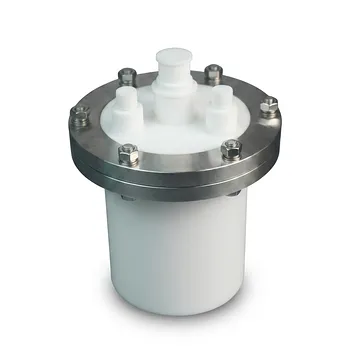
High-quality PTFE liners are designed to fit precisely within the autoclave, often featuring a flanged edge that assists in creating a high-pressure seal. This ensures that the reaction remains contained and the laboratory environment remains safe from high-pressure leaks of corrosive chemicals.
Understanding the Trade-offs and Limitations
Temperature Ceilings
While PTFE is robust, it has a definitive thermal limit, typically around 220°C to 250°C. Exceeding these temperatures can cause the liner to soften, deform, or even release toxic fluorinated vapors, making precise temperature control mandatory.
Thermal Expansion and Contraction
PTFE has a different coefficient of thermal expansion than the stainless steel shell. Rapid heating or cooling can lead to permanent deformation (creep) of the liner, which may eventually cause it to fit poorly or fail to seal correctly.
Pressure Limitations
The liner itself is not pressure-rated; it relies entirely on the mechanical strength of the metal autoclave. If the liner is used in a damaged or improperly sized shell, the PTFE can rupture under the internal autogenous pressure generated during the synthesis of $CoFe_2O_4$.
How to Apply This to Your Synthesis
When preparing Cobalt Ferrite nanoparticles, your equipment choice should be dictated by your specific thermal and purity requirements.
- If your primary focus is high magnetic saturation: Use a PTFE-lined reactor at 200°C to ensure maximum crystallinity and zero metal contamination from the reactor walls.
- If your primary focus is maximizing product yield: Leverage the non-stick properties of the PTFE liner to ensure all precipitated nanoparticles are recovered during the washing phase.
- If your primary focus is reactor longevity: Always ensure the liner is completely dry and free of scratches before use, and never exceed 220°C to prevent mechanical deformation of the seal.
By utilizing a PTFE liner, you provide the stable, inert, and high-pressure environment necessary to transform simple metal salts into high-performance Cobalt Ferrite nanomaterials.
Summary Table:
| Feature | Advantage for Cobalt Ferrite ($CoFe_2O_4$) Synthesis |
|---|---|
| Chemical Inertness | Prevents metal ion contamination and resists highly alkaline environments (pH 10+). |
| Thermal Stability | Maintains integrity at 180°C–200°C, essential for spinel crystal formation. |
| Non-Stick Surface | Low surface energy prevents nanoparticle adhesion, ensuring maximum product recovery. |
| Structural Shielding | Protects the autoclave from stress corrosion cracking caused by aggressive salts. |
| Pressure Containment | Facilitates autogenous pressure for high crystallinity and magnetic stability. |
Elevate Your Synthesis with KINTEK’s High-Performance Fluoropolymers
Precision in Cobalt Ferrite synthesis demands materials that never compromise on purity. KINTEK specializes in high-performance fluoropolymer solutions, offering an exhaustive range of laboratory supplies crafted from PTFE and PFA.
Whether you require everyday basic labware—such as beakers, crucibles, and reagent bottles—or advanced components like high-purity trace analysis instruments and custom hydrothermal synthesis liners, we have you covered. Our expertise extends to comprehensive fluid transfer components (tubing, valves, fittings), sample prep tools (filters, pipettes, tweezers), and sophisticated reaction apparatus like electrochemical cells and microwave digestion vessels.
Why choose KINTEK?
- End-to-End Customization: Our advanced CNC fabrication delivers everything from complex non-standard machined parts to bespoke laboratory setups.
- Material Excellence: An exclusive focus on high-performance fluoropolymers ensures maximum chemical resistance and thermal stability.
- Scalability: We support both specialized research needs and high-volume industrial orders with absolute precision.
Don't let contamination or equipment failure stall your research. Contact KINTEK today to source the high-performance PTFE liners and custom labware your project deserves!
References
- Zahra Khaleghi, Maryam Moudi. Exploring a green and precise approach based on graphene oxide-cobalt ferrite nanocomposite for detection and quantification of vitamin B9 and antibacterial assessment. DOI: 10.1038/s41598-025-09893-0
This article is also based on technical information from Kintek Knowledge Base .
Related Products
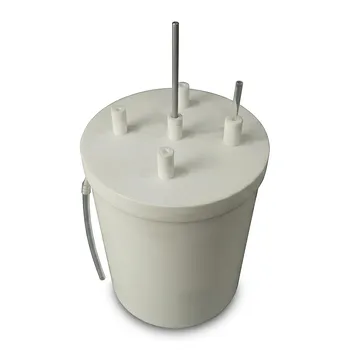
- High Temperature Corrosion Resistant Hydrothermal Synthesis Reactor with TFM Inner Liner and Straight Cylinder Design
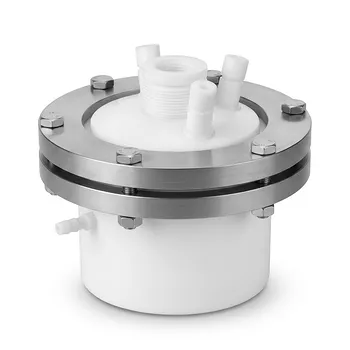
- High Pressure Custom TFM Reactor Stainless Steel Outer Vessel PTFE Inner Cup for Corrosive Synthesis
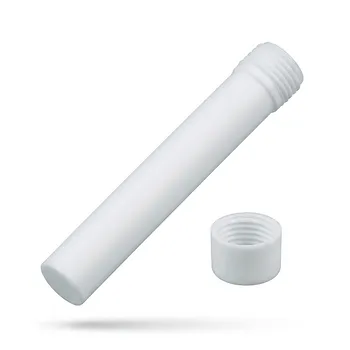
- PTFE Lined High Pressure Digestion Vessel 50ml High Temperature Hydrothermal Synthesis Tank
- Custom TFM Reaction Vessel with Stainless Steel Jacket and PTFE Inner Cup for High Corrosion Resistance
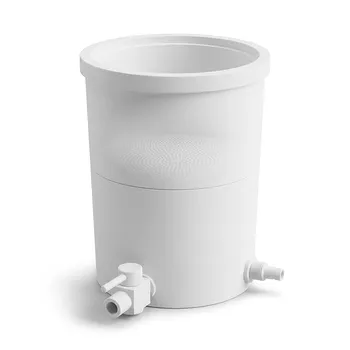
- Custom PTFE Reaction System with Hose Barb Fittings Corrosion Resistant High Sealing 2L 4L Lab Reactor with Separatory Funnel
People Also Ask
- What is the role of a corrosion-resistant reactor in the synthesis of lignin-based carbon dots? Ensure Maximum Purity
- What are the technical advantages of using hydrothermal synthesis reactors for advanced electronic & optical nanomaterials?
- How does a hydrothermal synthesis reactor facilitate the production of crystalline materials with tailored morphologies? Precision Crystal Growth
- Why is the sealing reliability of a hydrothermal synthesis reactor critical for 24-hour cycles? Ensure Nano-Precision
- What role do hydrothermal synthesis reactors play in CQD preparation? Achieve High-Purity Nanomaterial Synthesis