Preventing atmospheric exposure is the only way to ensure the chemical purity of reactive precursors. During the synthesis of sensitive materials, even trace amounts of oxygen or moisture can trigger irreversible oxidation, fundamentally altering the intended chemical composition.
Core Takeaway: High vacuum sealing and inert gas environments are critical safeguards that prevent undesirable side reactions, ensuring that reactive metals maintain their precise stoichiometric ratios during high-temperature heat treatments.
The Chemical Vulnerability of High-Affinity Metals
The Oxygen Affinity Challenge
Many metals used in the synthesis of advanced materials, such as Scandium, possess an extremely high affinity for oxygen. In a standard atmospheric environment, these elements will react almost instantly with available oxygen molecules.
Oxidation Side Reactions
When these metals are exposed to even "trace" amounts of oxygen, they undergo undesirable oxidation side reactions. These reactions convert the pure metal into oxides, which effectively removes the active metal from the intended reaction pathway.
Thermal Catalysis of Contamination
The risk of contamination escalates significantly during heat treatments between 700°C and 800°C. At these elevated temperatures, the kinetic energy of gas molecules increases, making the oxidation process much faster and more destructive to the sample.
Maintaining Structural Integrity and Stoichiometry
Precision in Stoichiometry
For non-centrosymmetric materials to exhibit their unique physical properties, the stoichiometric ratio must be perfect. If oxygen consumes a portion of the metal precursor, the final product will have the wrong elemental balance, potentially resulting in a centrosymmetric impurity phase.
Isolating the Reaction Environment
Utilizing high vacuum sealing or a vacuum glove box filled with high-purity argon creates a physical barrier against the atmosphere. This isolation ensures that the only elements present in the reaction are those the researcher intentionally added.
The Role of High-Purity Argon
High-purity argon acts as a dense, inert blanket that does not react with the materials. It provides a stable pressure environment for the synthesis while preventing any atmospheric interference from reaching the reactive metal surfaces.
Understanding the Trade-offs
Equipment Complexity vs. Material Purity
Maintaining a high-vacuum or inert environment requires specialized equipment and rigorous handling protocols. While this increases the operational complexity of the synthesis, it is a mandatory investment for achieving high-quality crystalline phases.
Costs of Failure
Attempting synthesis without these protections usually leads to material degradation. The cost of losing expensive precursors like Scandium far outweighs the initial effort required to ensure a controlled, oxygen-free environment.
Strategic Implementation for Material Synthesis
To achieve successful synthesis of oxygen-sensitive materials, the protective method must be matched to the specific experimental goals.
- If your primary focus is long-term thermal stability: High vacuum sealing in quartz ampoules is preferred to ensure no gas exchange occurs during extended heating cycles.
- If your primary focus is material handling and preparation: Utilizing a vacuum glove box with high-purity argon allows for the safe weighing and mixing of precursors before they are sealed.
- If your primary focus is phase purity in NCS materials: Strict adherence to the 700°C–800°C range within a protected environment is necessary to prevent the formation of oxide impurities that destroy non-centrosymmetry.
By rigorously controlling the atmospheric environment, you transform a highly volatile chemical process into a predictable and repeatable synthesis.
Summary Table:
| Protection Method | Primary Function | Key Advantage |
|---|---|---|
| High Vacuum Sealing | Eliminates gas exchange | Optimal for long-term thermal stability at 700°C-800°C |
| Inert Gas (Argon) | Provides non-reactive blanket | Maintains stable pressure and prevents oxidation |
| Vacuum Glove Box | Atmospheric isolation | Ensures safety during precursor weighing and mixing |
Precision in synthesis requires the highest quality labware. KINTEK provides an exhaustive range of high-performance fluoropolymer (PTFE and PFA) supplies designed to protect your most sensitive experiments. From high-purity trace analysis instruments and digestion tubes to custom electrochemical cells and reaction apparatus, we ensure your oxygen-sensitive materials remain uncontaminated. Whether you need standard consumables like O-rings and seal tapes or complex non-standard machined parts via our end-to-end CNC fabrication, our expertise supports your path to perfect stoichiometry. Contact us today to secure your laboratory's success with premium, chemical-resistant solutions.
References
- Y.J Kim, Kang Min Ok. Structure–property relationships in noncentrosymmetric solid‐state materials. DOI: 10.1002/bkcs.70058
This article is also based on technical information from Kintek Knowledge Base .
Related Products
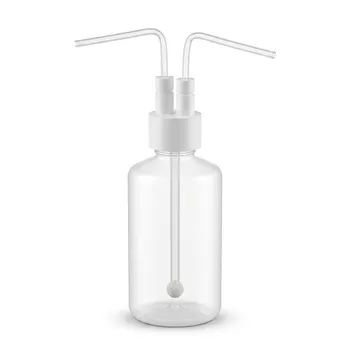
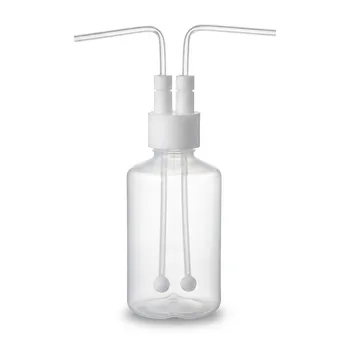
- Custom PTFE Gas Washing Bottle Cap Multi Port Reaction Lid Corrosion Resistant High Sealing Laboratory Fluoropolymer Closure
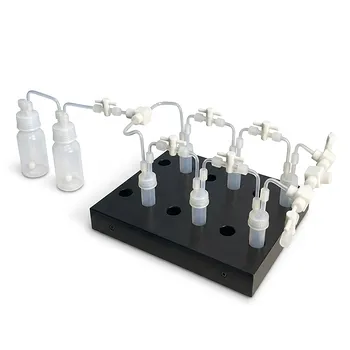
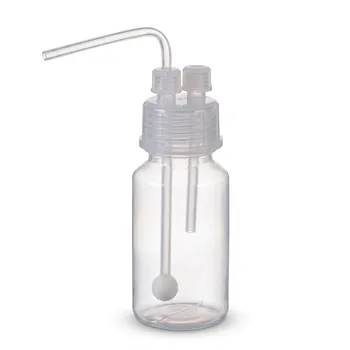
- High Purity PFA Inert Gas Purge Device for Semiconductor Precursor Trace Analysis Nitrogen and Argon Compatible Purging System
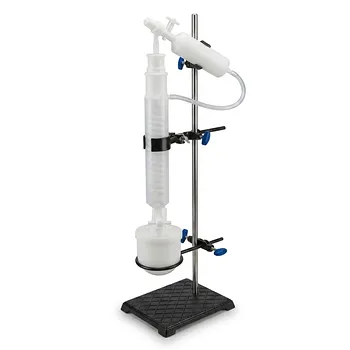
- PTFE Condensation Reflux and Gas Collection Apparatus for Corrosive Biochemical Processing Customizable High Temperature System
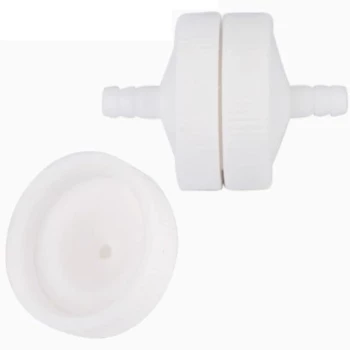
- Customizable PTFE Seals Filter Holders for Versatile Applications
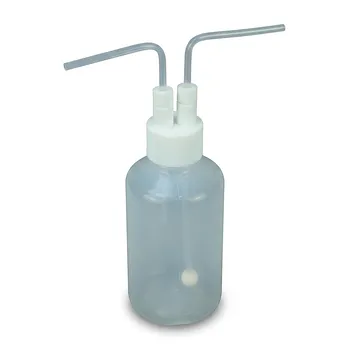
- High Purity PFA Gas Washing Bottle Corrosion Resistant Gas Absorption Vessel PTFE Cap Customizable PFA Reaction Bottle
People Also Ask
- What material grades are available for PTFE caps? Choose the Right Grade for Purity or Performance
- What are the electrical insulation properties of PTFE caps? Superior Dielectric Performance for Demanding Applications
- What are the specialized types of PTFE caps and their uses? Ensure Sample Integrity and Safety
- What are the advantages of PTFE lids for jacketed and process vessels? Achieve Superior Durability & Chemical Resistance
- What are the reusability and durability characteristics of PTFE-lined bottle caps? Engineered for Repeated, Reliable Use