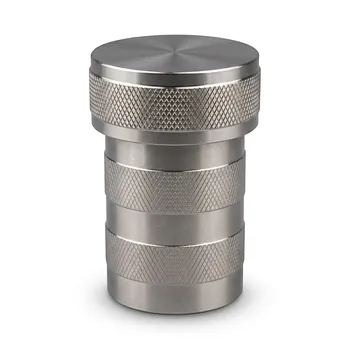
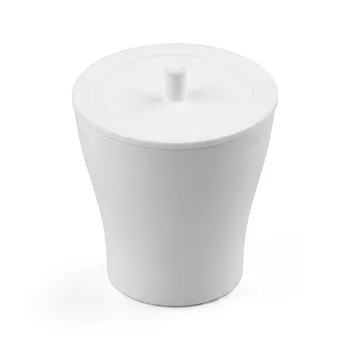
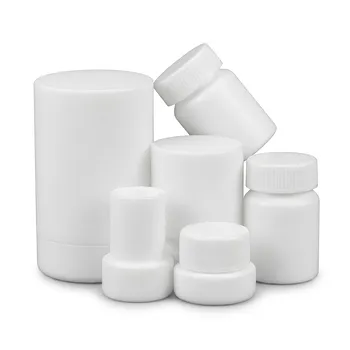
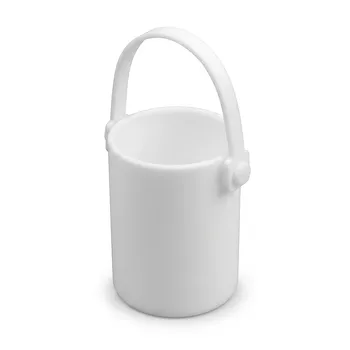
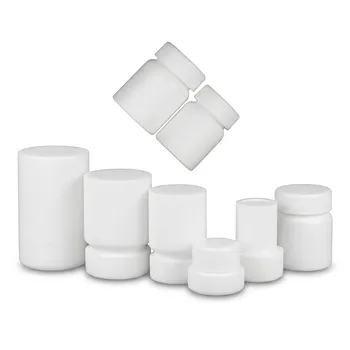
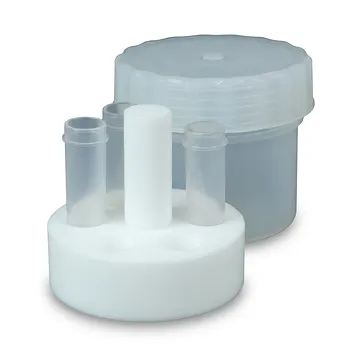
The use of a Teflon-lined stainless steel autoclave is essential because it creates a sealed, high-pressure environment that allows chemical reactions to occur at temperatures far exceeding the normal boiling point of solvents. This specific configuration combines the structural strength of a steel pressure vessel with the chemical inertness of a Polytetrafluoroethylene (PTFE) liner to ensure the high-purity crystallization of manganese dioxide (MnO2) without corroding the equipment.
A Teflon-lined autoclave enables "subcritical" water conditions that accelerate reaction kinetics and facilitate the growth of specific MnO2 nanostructures. By isolating aggressive reagents from the metal shell, the system guarantees both the structural integrity of the vessel and the phase purity of the resulting micro-nano particles.
The Role of the Sealed High-Pressure Environment
Facilitating Subcritical Water Conditions
The sealed nature of the autoclave allows water to enter a subcritical state, where its physical properties shift significantly. In this state, the dielectric constant of water decreases and its ionic product increases, which is critical for the effective dissociation of precursors like potassium permanganate.
Accelerating Reaction Kinetics
Operating at high pressure and temperatures above 100°C significantly speeds up the chemical reaction kinetics. This energy-rich environment provides the necessary activation energy for the dehydration and polymerization processes required to form transition metal oxides.
Controlling Particle Morphology
The constant, sealed pressure environment is a primary driver for the development of specific micro-nano structures. This stability allows MnO2 to crystallize into complex shapes, such as nanowires, nanosheets, or peony-like microspheres, which would be impossible to achieve in an open-air system.
The Necessity of the Teflon (PTFE) Liner
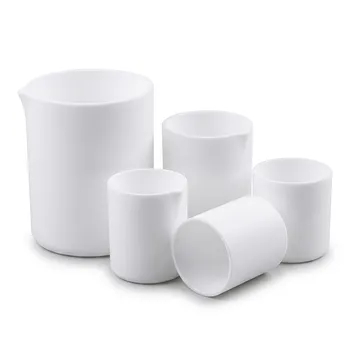
Providing Exceptional Chemical Inertness
MnO2 synthesis often involves aggressive acidic solutions or strong oxidizing agents that would quickly degrade bare metal. The Teflon (PTFE) liner acts as an impenetrable barrier, offering corrosion resistance against manganese salts and acids.
Ensuring Product Purity
Without a liner, the hydrothermal process would leach metallic impurities from the stainless steel walls into the reaction solution. The PTFE liner ensures that the nanocrystals grow in a pure environment, which is vital for maintaining the catalytic activity and specific crystalline phase of the MnO2.
Maintaining Anti-Adhesion Properties
The "non-stick" nature of Teflon prevents highly active precursors from adhering to the vessel walls during long-duration reactions. This ensures a higher yield of uniform particles and makes the equipment significantly easier to clean and maintain between synthesis cycles.
Understanding the Trade-offs
Temperature Limitations of PTFE
While highly inert, Teflon has a strict thermal ceiling, typically around 220°C to 250°C. Exceeding these temperatures can cause the liner to soften, deform, or release toxic vapors, meaning researchers must strictly monitor internal temperatures to avoid vessel failure.
Thermal Expansion Mismatch
Stainless steel and Teflon expand at different rates when heated, which can lead to "creeping" or deformation of the liner over many cycles. This necessitates regular inspection of the liner to ensure it still fits perfectly within the stainless steel jacket to prevent precursor leakage behind the liner.
Pressure Safety Thresholds
Because the internal pressure is generated by the heating of the liquid (autogenous pressure), there is a risk of over-pressurization if the vessel is filled too high. Standard safety protocols generally dictate that the autoclave should never be filled beyond 60% to 80% of its total volume to allow for a safe vapor headspace.
How to Apply This to Your Synthesis Project
When selecting or operating a hydrothermal autoclave for MnO2 production, your approach should vary based on your specific material requirements:
- If your primary focus is phase purity: Ensure the PTFE liner is pristine and free of scratches, as even minor surface defects can harbor contaminants from previous reactions.
- If your primary focus is complex morphology (e.g., nanowires): Prioritize long-duration heating cycles at a constant temperature to allow the crystals to grow undisturbed under stable pressure.
- If your primary focus is equipment longevity: Never exceed 200°C for extended periods and implement a slow cooling phase to prevent the liner from deforming due to rapid thermal contraction.
By mastering the balance between the structural strength of steel and the chemical resistance of Teflon, you can reliably produce high-performance MnO2 nanostructures for advanced applications.
Summary Table:
| Feature | Benefit for MnO2 Hydrothermal Synthesis |
|---|---|
| Sealed Steel Shell | Maintains high-pressure environment and structural integrity at 100°C+ |
| PTFE (Teflon) Liner | Provides chemical inertness; prevents leaching of metallic impurities |
| Subcritical Water State | Lowers dielectric constant and increases ionic product for precursor dissociation |
| Anti-Adhesion Surface | Prevents particles from sticking to walls, ensuring high yield and easy cleaning |
| Morphology Control | Enables stable crystallization of nanowires, nanosheets, and microspheres |
Elevate Your Materials Synthesis with KINTEK’s Precision Fluoropolymers
High-purity $MnO_2$ synthesis demands equipment that can withstand aggressive chemical environments without compromising phase purity. At KINTEK, we specialize in high-performance fluoropolymer solutions tailored for the most demanding laboratory applications.
From everyday basic labware like beakers, crucibles, and reagent bottles to advanced hydrothermal synthesis liners, microwave digestion vessels, and custom electrochemical cells, we provide the tools you need for reliable results. Whether you require standard consumables—such as stirring bars, O-rings, and filters—or complex, bespoke laboratory setups crafted through our end-to-end custom CNC fabrication, KINTEK delivers unmatched quality in PTFE and PFA materials.
Ready to optimize your hydrothermal processes? Our experts are here to provide high-volume orders or complex non-standard machined parts designed specifically for your research goals.
Contact KINTEK Today for a Custom Solution
References
- Francesco Biscaglia, Luisa De Marco. KI-Assisted MnO2 Electrocatalysis Enables Low-Charging Voltage, Long-Life Rechargeable Zinc–Air Batteries. DOI: 10.3390/batteries11120463
This article is also based on technical information from Kintek Knowledge Base .
Related Products
- Custom TFM Reaction Vessel with Stainless Steel Jacket and PTFE Inner Cup for High Corrosion Resistance
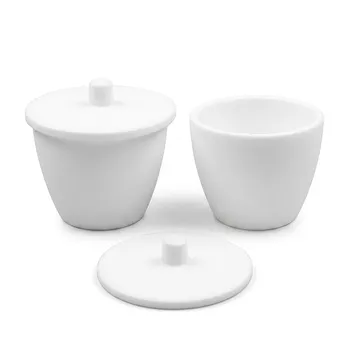
- High Purity Corrosion Resistant Teflon Crucible Low Background Laboratory PTFE Vessel for Trace Analysis and Acid Digestion
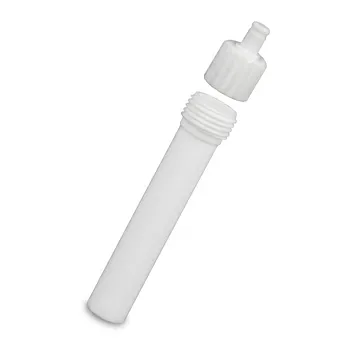
- High Temperature Corrosion Resistant Hydrothermal Synthesis Reactor with TFM Inner Liner and Straight Cylinder Design
- High Purity PTFE Microwave Digestion Vessel Replacement Liner for Acid Sample Preparation and Trace Analysis
- PTFE Lined High Pressure Digestion Vessel 50ml High Temperature Hydrothermal Synthesis Tank
People Also Ask
- Why are high-performance pressure-resistant reaction vessels required for oxygen-assisted hydrothermal conversion at 150 °C?
- How do magnetic stirring and reaction vessels impact MOF-derived carbon quality? Optimize Your Composite Performance
- Why are high-quality fluoropolymer-lined reaction vessels required for alk-Ti3C2Tx MXene? Ensure Purity & HF Resistance
- Why are PTFE-lined reaction vessels necessary for forced degradation studies? Ensure high-purity results and accuracy.
- Why is a high-purity PTFE lined reaction vessel required for the acidic etching of MXenes? Ensure Material Purity.