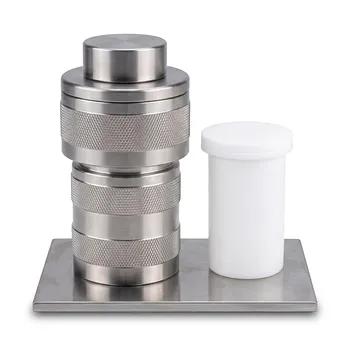
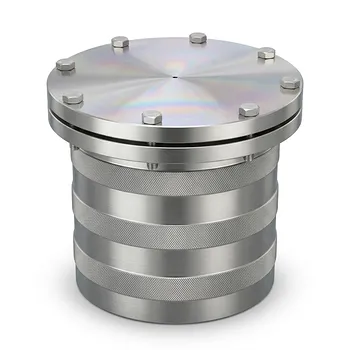
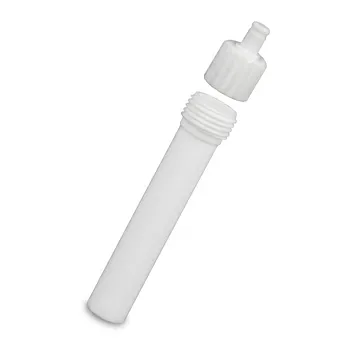
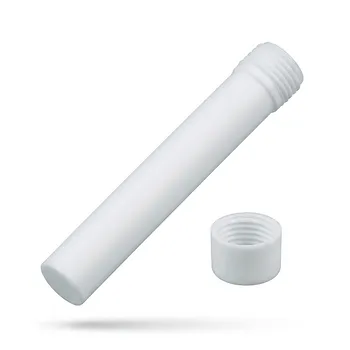
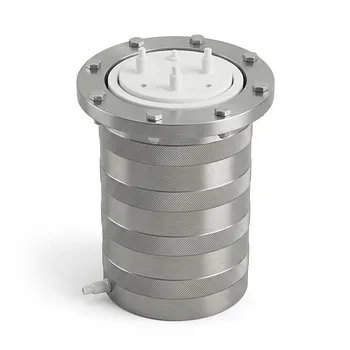
The synthesis of sodium cobalt phosphate requires a PTFE-lined stainless steel autoclave to simultaneously manage extreme mechanical stress and prevent chemical contamination. At reaction temperatures of 180 °C, the combination of inorganic salts and urea creates a high-pressure, corrosive environment that would compromise the structural integrity and purity of the final crystalline product without this specific reactor design.
The stainless steel shell provides the mechanical strength to withstand internal autogenous pressure, while the PTFE liner ensures chemical inertness, protecting the reaction from metal ion contamination and corrosion.
The Structural Necessity of Stainless Steel
Hydrothermal synthesis occurs in a sealed environment where liquids are heated beyond their boiling points, creating significant internal pressure.
Managing Autogenous Pressure at 180 °C
As the temperature reaches 180 °C, the precursors and solvents generate autogenous pressure within the sealed vessel. Stainless steel is used because it possesses the high tensile strength required to contain this pressure safely without deforming or rupturing.
Maintaining a Constant Pressure Environment
Stable crystal growth for sodium cobalt phosphate depends on a constant pressure environment. The rigid stainless steel exterior prevents fluctuations in volume, ensuring that the internal conditions remain steady throughout the duration of the synthesis.
The Chemical Role of the PTFE Liner
While the steel provides the strength, it is chemically vulnerable to the reagents used in the synthesis of sodium cobalt phosphate.
Preventing Metal Ion Leaching
At high temperatures, the reaction media can cause metal ions to leach from the autoclave walls. A PTFE liner acts as a barrier, ensuring that no iron, chromium, or nickel from the steel enters the solution, which would otherwise disrupt the purity of the flower-like crystal structures.
Resistance to Corrosive Reagents
The synthesis involves inorganic salts and urea, which can become highly reactive under hydrothermal conditions. PTFE (polytetrafluoroethylene) is utilized because it is chemically inert, meaning it will not react with these precursors or the intermediate alkaline environments often found in such reactions.
Understanding the Trade-offs
While this dual-material setup is the industry standard, it does come with specific operational limitations that must be managed.
Temperature Limitations of PTFE
PTFE has a maximum safe operating temperature, typically around 220 °C to 250 °C. Approaching or exceeding these limits can cause the liner to soften or deform, potentially leading to a seal failure or "creeping" of the plastic material.
Thermal Expansion Mismatch
Stainless steel and PTFE expand at different rates when heated. If the autoclave is cooled too rapidly, the differential contraction can cause the liner to crack or become permanently misshapen, requiring careful, controlled cooling phases.
How to Apply This to Your Project
When selecting or operating an autoclave for hydrothermal synthesis, your choice should be dictated by the specific chemistry and temperature of your reaction.
- If your primary focus is high-purity crystal growth: Always use a high-quality PTFE liner to eliminate the risk of metallic impurities that could alter the electrochemical or structural properties of your material.
- If your primary focus is safety in high-temperature reactions: Ensure the stainless steel outer shell is rated for at least 25% more pressure than your calculated autogenous pressure at 180 °C.
- If your primary focus is equipment longevity: Avoid rapid quenching or cooling of the autoclave to protect the PTFE liner from thermal shock and mechanical deformation.
By balancing the structural rigidity of steel with the chemical passivity of PTFE, you create the controlled environment necessary for the precise nucleation of complex phosphate materials.
Summary Table:
| Component | Primary Function | Key Benefit |
|---|---|---|
| Stainless Steel Shell | Mechanical Strength | Safely contains high autogenous pressure at 180°C |
| PTFE Liner | Chemical Inertness | Prevents metal ion contamination & resists corrosion |
| Integrated System | Controlled Environment | Ensures stable nucleation for flower-like crystal structures |
Elevate Your Synthesis Precision with KINTEK
Achieve uncompromising purity in your hydrothermal research with KINTEK’s high-performance fluoropolymer solutions. From everyday basic labware—including beakers, crucibles, and reagent bottles—to specialized high-purity trace analysis instruments, we provide the tools necessary for advanced material science.
Our expertise extends across a comprehensive range of fluid transfer components (tubing, fittings, valves), sample prep tools (filters, pipettes, spatulas), and custom CNC-fabricated PTFE and PFA reaction vessels. Whether you require standard hydrothermal synthesis liners, microwave digestion vessels, or complex non-standard machined parts, KINTEK delivers high-volume or bespoke setups with an absolute focus on fluoropolymer excellence.
Ready to optimize your laboratory setup? Contact our technical experts today!
References
- Oladepo Fasakin, Ncholu Manyala. Electrochemical investigation of flower-like sodium cobalt phosphate-based materials and activated carbon derived from cocoa pod husks as potential electrode for asymmetric supercapacitor. DOI: 10.4314/ijs.v27i1.16
This article is also based on technical information from Kintek Knowledge Base .
Related Products
- PTFE Lined High Pressure Digestion Vessel 50ml High Temperature Hydrothermal Synthesis Tank
- Custom TFM Reaction Vessel with Stainless Steel Jacket and PTFE Inner Cup for High Corrosion Resistance
- High Purity PTFE Microwave Digestion Vessel Replacement Liner for Acid Sample Preparation and Trace Analysis
- High Purity TFM Microwave Digestion Vessels PTFE Acid Evaporation Liners Domestic GT-400 Equivalent Laboratory Reaction Containers
- High Pressure Custom TFM Reactor Stainless Steel Outer Vessel PTFE Inner Cup for Corrosive Synthesis
People Also Ask
- What are the benefits of using a PTFE-lined vessel for carbon-sulfur cathode treatment? Maximize Purity & Performance
- Why are PTFE-lined pressure digestion vessels required for the preparation of Ag/CeO2 catalysts? Purity & Performance
- What safety features are typically incorporated into high-pressure PTFE digestion vessel designs? Ensure Lab Safety
- What is the function of PTFE lined high-pressure vessels in g-C3N4 synthesis? Achieve High-Purity Material Growth
- Role of High-Pressure Digestion Tanks in Perovskite Synthesis: Achieve Superior Stability and Latent Heat