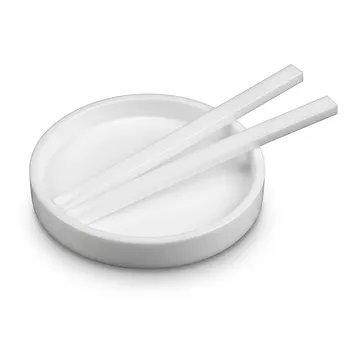
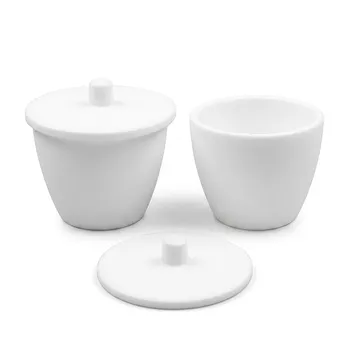
The synergy of mechanical strength and chemical inertness is the primary reason for using a PTFE-lined stainless steel autoclave in the synthesis of HKUST-1. This configuration allows researchers to maintain the high-pressure, high-temperature environment (typically 140°C) required for metal ions to coordinate with organic ligands like benzene-1,3,5-tricarboxylic acid, while simultaneously protecting the reactor from corrosion and ensuring the absolute purity of the resulting crystals.
This reactor design solves the dual challenge of containing high autogenous pressure while isolating reactive, acidic precursors from the metal vessel. The result is a controlled solvothermal environment that facilitates the precise growth of octahedral HKUST-1 precursors without metallic contamination.
The Role of the External Stainless Steel Shell
Providing Mechanical Integrity under Pressure
The primary function of the stainless steel outer body is to provide the mechanical strength necessary to withstand high autogenous pressure. During the synthesis of HKUST-1, the reaction mixture is heated to 140°C, well above the boiling point of many common solvents.
The sealed environment generates internal pressure that drives the synergistic interaction between the metal ions and organic ligands. Without the robust containment of the steel shell, the vessel would fail under the stresses of these high-pressure solvothermal conditions.
The Critical Function of the PTFE Liner
Protecting the Vessel from Corrosive Precursors
HKUST-1 synthesis involves benzene-1,3,5-tricarboxylic acid and various organic solvents that can be highly corrosive to metal at elevated temperatures. The Polytetrafluoroethylene (PTFE) liner acts as a barrier, offering exceptional chemical stability against these acidic reactants.
By isolating the precursors, the liner prevents the reaction mixture from attacking the interior walls of the autoclave. This protection extends the life of the equipment and prevents structural degradation of the outer shell.
Eliminating Metal Ion Contamination
Maintaining high purity is essential for the performance of Metal-Organic Frameworks (MOFs) like HKUST-1. The PTFE liner is chemically inert, meaning it does not react with the synthesis gel or leach metal ions from the autoclave walls into the solution.
If the reaction were in direct contact with the stainless steel, iron, nickel, or chromium ions could contaminate the framework. This would impair the electrochemical performance and structural integrity of the resulting octahedral crystals.
Preventing Adhesion and Maximizing Yield
PTFE is known for its extremely low surface energy, which creates a "non-stick" effect inside the reactor. This property prevents microcrystals from adhering to the vessel walls during the crystallization process.
By ensuring the crystals remain in the bulk solution, the liner facilitates a higher yield and maintains the structural integrity of the HKUST-1 precursors. This also makes the recovery of the synthesized material significantly more efficient.
Understanding the Trade-offs and Limitations
Temperature and Pressure Constraints
While PTFE is highly effective, it has a clear thermal ceiling, typically around 200°C to 250°C. Exceeding these temperatures can cause the liner to soften or deform, compromising the seal and potentially releasing toxic vapors.
Thermal Expansion Disparity
There is a significant difference in the thermal expansion coefficients of stainless steel and PTFE. If the autoclave is heated or cooled too rapidly, the liner can warp or crack, allowing the corrosive reaction mixture to reach the steel shell and cause "hidden" corrosion.
How to Apply This to Your Project
When synthesizing HKUST-1 or similar MOF precursors, your choice of equipment should be dictated by your specific purity and pressure requirements.
- If your primary focus is high crystal purity: Always utilize a high-quality PTFE liner to eliminate the risk of leaching metallic impurities from the reactor walls.
- If your primary focus is maximizing product yield: Leverage the low surface energy of PTFE to ensure that the octahedral precursors do not adhere to the vessel, facilitating easier collection.
- If your primary focus is safety during high-temp synthesis: Ensure the stainless steel shell is rated for pressures exceeding those generated at 140°C and maintain a moderate heating/cooling rate to protect the liner’s integrity.
The PTFE-lined autoclave remains the definitive standard for HKUST-1 synthesis because it perfectly balances the need for extreme physical containment with total chemical isolation.
Summary Table:
| Component | Primary Function | Key Benefit for HKUST-1 |
|---|---|---|
| Stainless Steel Shell | Mechanical Strength | Withstands high autogenous pressure at 140°C |
| PTFE Liner | Chemical Inertness | Prevents acidic corrosion and metal leaching |
| Non-Stick Surface | Low Surface Energy | Maximizes crystal yield and simplifies recovery |
| Combined System | Solvothermal Stability | Ensures precise growth of octahedral precursors |
Elevate Your Synthesis with KINTEK’s Fluoropolymer Expertise
Precision in HKUST-1 synthesis demands equipment that never compromises on purity or performance. KINTEK specializes in high-performance PTFE and PFA laboratory solutions, offering everything from high-purity trace analysis instruments and microwave digestion vessels to custom CNC-fabricated reaction apparatus.
Whether you need standard labware like beakers and reagent bottles, or advanced components such as hydrothermal synthesis liners, electrochemical cells, and complex fluid transfer systems, our end-to-end fabrication ensures a perfect fit for your research. Don't let metallic contamination or vessel failure compromise your results—leverage our absolute focus on high-performance materials to drive your next breakthrough.
Ready to optimize your lab’s efficiency? Contact us today to discuss your custom requirements!
References
- Ye‐Cheng Li, Min‐Rui Gao. Highly Tension‐Strained Copper Concentrates Diluted Cations for Selective Proton‐Exchange Membrane CO<sub>2</sub> Electrolysis. DOI: 10.1002/anie.202422054
This article is also based on technical information from Kintek Knowledge Base .
Related Products
- Custom TFM Reaction Vessel with Stainless Steel Jacket and PTFE Inner Cup for High Corrosion Resistance
- PTFE Lined High Pressure Digestion Vessel 50ml High Temperature Hydrothermal Synthesis Tank
- High Pressure Custom TFM Reactor Stainless Steel Outer Vessel PTFE Inner Cup for Corrosive Synthesis
- High Purity TFM Microwave Digestion Vessels PTFE Acid Evaporation Liners Domestic GT-400 Equivalent Laboratory Reaction Containers
- High Purity PTFE Microwave Digestion Vessel Replacement Liner for Acid Sample Preparation and Trace Analysis
People Also Ask
- Why are high-performance pressure-resistant reaction vessels required for oxygen-assisted hydrothermal conversion at 150 °C?
- How do magnetic stirring and reaction vessels impact MOF-derived carbon quality? Optimize Your Composite Performance
- Why are high-quality fluoropolymer-lined reaction vessels required for alk-Ti3C2Tx MXene? Ensure Purity & HF Resistance
- Why are PTFE-lined reaction vessels necessary for forced degradation studies? Ensure high-purity results and accuracy.
- Why is a high-purity PTFE lined reaction vessel required for the acidic etching of MXenes? Ensure Material Purity.