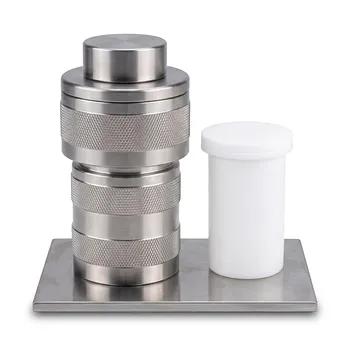
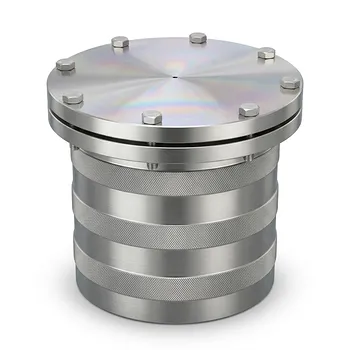
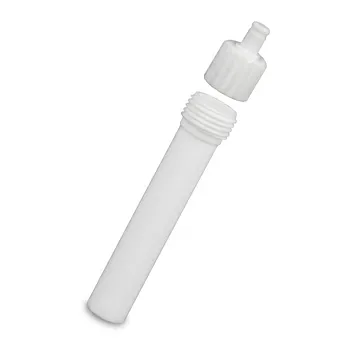
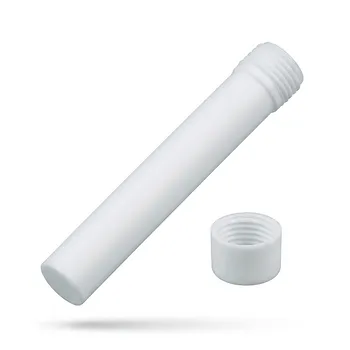
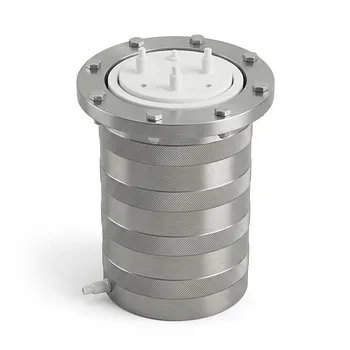
The requirement for a PTFE-lined stainless steel autoclave is driven by the extreme chemical and physical demands of Bismuth Vanadate (BiVO4) synthesis. Hydrothermal reactions for BiVO4 occur at high temperatures—typically around 160°C—under high autogenous pressure using corrosive precursors like nitric acid or sodium hydroxide. The stainless steel provides the structural integrity to withstand these pressures, while the Polytetrafluoroethylene (PTFE) liner ensures the chemical purity of the final product.
This specialized equipment creates a "dual-protection" environment where the outer shell manages mechanical stress and the inner liner manages chemical stability. This synergy is essential for producing high-purity BiVO4 with the precise crystal structures required for advanced applications.
The Structural Necessity of the Stainless Steel Shell
Withstanding High Autogenous Pressure
Hydrothermal synthesis takes place in a closed system where heating liquids beyond their boiling point creates significant internal pressure. The stainless steel body acts as a pressure vessel, providing the mechanical strength necessary to contain these forces safely without deformation or failure.
Maintaining a Subcritical State
By sealing the reaction environment, the autoclave maintains solvents in a subcritical state. This high-energy environment is required for the complete growth of BiVO4 crystals, facilitating the kinetic energy needed for specific morphologies, such as decahedron structures.
The Chemical Function of the PTFE Liner
Resistance to Corrosive Precursors
BiVO4 synthesis often involves strong acidic or alkaline solutions that would aggressively attack bare metal. PTFE is chosen for its exceptional chemical inertness, allowing it to resist corrosion from nitric acid and sodium hydroxide even at elevated temperatures.
Preventing Metal Ion Contamination
If the reaction solution were to contact the stainless steel directly, metal ions would leach from the autoclave walls into the mixture. The PTFE liner provides a clean reaction interface, ensuring that no foreign metal impurities impair the electrochemical performance or chemical purity of the synthesized nanoparticles.
Ensuring Ideal Crystal Structure
The presence of impurities can disrupt the nucleation and growth process of the BiVO4 powder. By isolating the reaction from the metal shell, the PTFE liner allows for the formation of an ideal crystal structure, which is critical for the material’s photocatalytic and electronic properties.
Understanding the Trade-offs and Safety Limits
Temperature Constraints of PTFE
While PTFE is highly stable, it has a functional upper temperature limit, often around 220°C to 250°C. Exceeding these temperatures can cause the liner to soften or deform, potentially compromising the seal and damaging the stainless steel shell.
Pressure Limitations and Cooling
The autogenous pressure generated is a function of the filling degree of the liner and the temperature. Users must carefully calculate the volume of the precursor solution to prevent over-pressurization, and the autoclave must be allowed to cool slowly to prevent structural stress or "sucking" effects on the liner.
Maintenance and Wear
PTFE liners are not permanent; they can develop micro-cracks or become stained over multiple synthesis cycles. Regular inspection is required because a compromised liner can lead to "hidden" corrosion on the interior of the stainless steel shell, eventually leading to equipment failure.
How to Apply This to Your Project
When preparing for the hydrothermal synthesis of BiVO4 or similar metal oxides, your equipment choice should be dictated by your specific reaction conditions.
- If your primary focus is high chemical purity: Ensure your PTFE liner is thoroughly cleaned with dilute acid between runs to prevent cross-contamination of metal ions.
- If your primary focus is structural morphology (e.g., decahedrons): Closely monitor the temperature-pressure relationship, as the stainless steel shell's ability to maintain a steady subcritical environment is what drives crystal growth.
- If your primary focus is safety and longevity: Never exceed a 70-80% filling ratio in the PTFE liner to allow sufficient headspace for gas expansion during the heating cycle.
By effectively balancing the mechanical strength of steel with the chemical resistance of PTFE, you can reliably produce high-quality BiVO4 crystals for demanding technical applications.
Summary Table:
| Feature | Role in BiVO4 Synthesis | Benefit for Research |
|---|---|---|
| Stainless Steel Shell | Structural Pressure Containment | Safe hydrothermal reactions at 160°C+ |
| PTFE (Teflon) Liner | Chemical Inertness | Prevents corrosion from acidic/alkaline precursors |
| Closed System | Subcritical Environment | Enables growth of precise decahedron structures |
| Liner Barrier | Contamination Prevention | Eliminates metal ion leaching for ultra-pure powder |
Elevate Your Synthesis with KINTEK’s Fluoropolymer Expertise
Precision in hydrothermal synthesis demands equipment that never compromises on purity or performance. KINTEK specializes in high-performance fluoropolymer materials, offering everything from everyday basic labware (beakers, measuring cylinders, crucibles, and reagent bottles) to the specialized PTFE liners and high-purity trace analysis instruments essential for BiVO4 production.
Whether you require standard consumables like stirring bars and seal tapes, or advanced components such as custom electrochemical cells, hydrothermal synthesis liners, and microwave digestion vessels, our end-to-end custom CNC fabrication ensures a perfect fit for your research. We deliver absolutely everything from complex non-standard machined parts to high-volume orders with an exclusive focus on high-performance PTFE and PFA.
Ready to optimize your lab’s efficiency and purity?
Contact us today to discuss your custom laboratory needs!
References
- Jakob Praxmair, Simone Pokrant. Hydrothermally Synthesized BiVO <sub>4</sub> : The Role of KCl as Additive for Improved Photoelectrochemical and Photocatalytic Oxygen Evolution Activity. DOI: 10.1002/celc.202500280
This article is also based on technical information from Kintek Knowledge Base .
Related Products
- PTFE Lined High Pressure Digestion Vessel 50ml High Temperature Hydrothermal Synthesis Tank
- Custom TFM Reaction Vessel with Stainless Steel Jacket and PTFE Inner Cup for High Corrosion Resistance
- High Purity PTFE Microwave Digestion Vessel Replacement Liner for Acid Sample Preparation and Trace Analysis
- High Purity TFM Microwave Digestion Vessels PTFE Acid Evaporation Liners Domestic GT-400 Equivalent Laboratory Reaction Containers
- High Pressure Custom TFM Reactor Stainless Steel Outer Vessel PTFE Inner Cup for Corrosive Synthesis
People Also Ask
- What are the benefits of using a PTFE-lined vessel for carbon-sulfur cathode treatment? Maximize Purity & Performance
- Why are PTFE-lined pressure digestion vessels required for the preparation of Ag/CeO2 catalysts? Purity & Performance
- What is the function of high-pressure PTFE digestion vessels in mineral analysis? Optimize Sample Mineralization
- What safety features are typically incorporated into high-pressure PTFE digestion vessel designs? Ensure Lab Safety
- What is the function of PTFE lined high-pressure vessels in g-C3N4 synthesis? Achieve High-Purity Material Growth