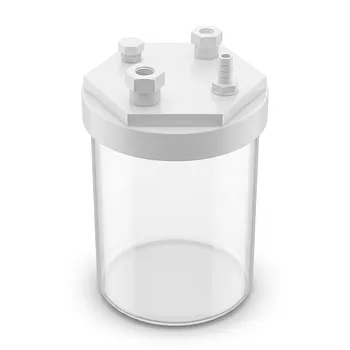
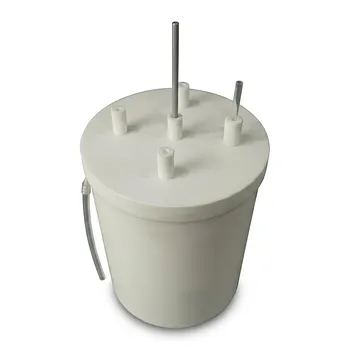
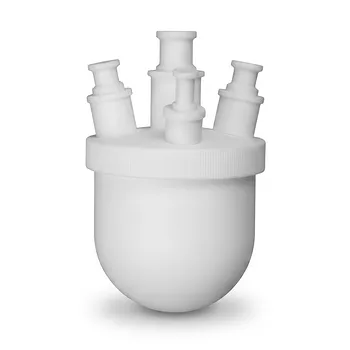
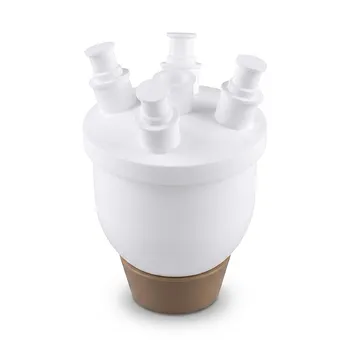
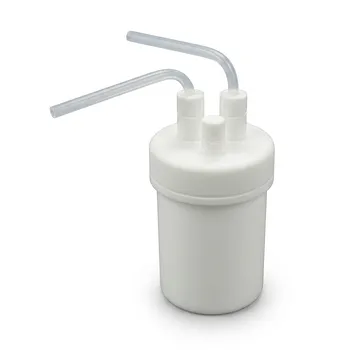
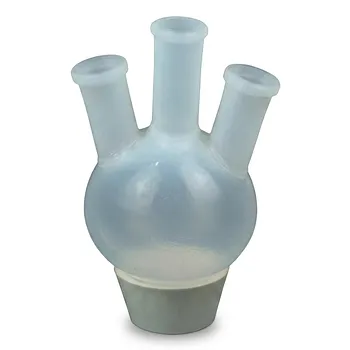
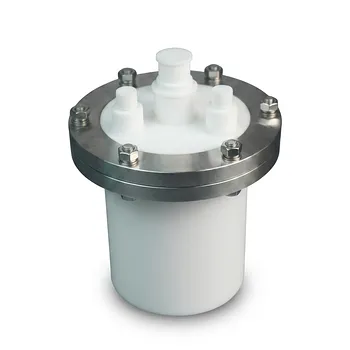
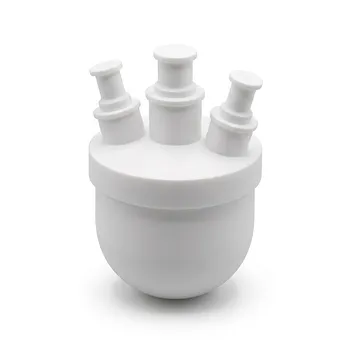
The use of a solvothermal reaction vessel is fundamental because it creates a high-pressure, high-temperature environment that is physically impossible to achieve in an open system. By sealing the reaction mixture, the vessel allows the solvents to be heated to 120°C—well above their normal boiling points—generating autogenous pressure that facilitates the specific crystallization of the [Cu2(µ3-pdc)2(DMF)(H2O)2]n framework.
Core Takeaway: Solvothermal synthesis serves as the critical "energy bridge" required to overcome structural barriers. By combining temperatures exceeding solvent boiling points with self-generated pressure, this method forces reactants into a specific 2D layered geometry that cannot be formed at room temperature or under ambient pressure.
The Role of Temperature and Pressure
Exceeding Ambient Boiling Points
Standard laboratory glassware is limited by the boiling point of the solvent used, which restricts the thermal energy available to the reaction. The sealed solvothermal vessel allows the mixture to reach 120°C, a temperature necessary to provide the kinetic energy required for the formation of the [Cu2(µ3-pdc)2(DMF)(H2O)2]n complex.
Generating Autogenous Pressure
As the temperature rises within the closed system, the vapor pressure of the solvents increases significantly, creating autogenous pressure. This pressure is not merely a byproduct; it is a functional tool that increases the solubility and reactivity of the precursors, ensuring they stay in a state conducive to framework assembly.
Overcoming Barriers to Crystallization
Surpassing Energy Thresholds
Coordination polymers often have high activation energies for the formation of stable crystalline structures. The high-energy environment of the solvothermal vessel allows the reaction to surpass energy barriers that are insurmountable at room temperature, preventing the formation of amorphous precipitates.
Guiding the 2D Structural Growth
The specific arrangement of the [Cu2(µ3-pdc)2(DMF)(H2O)2]n framework depends on a controlled crystallization process. The solvothermal method provides the precise conditions needed to guide the precursors into a two-dimensional layered structure with highly defined pore sizes.
Understanding the Trade-offs
Equipment Safety and Complexity
While highly effective, solvothermal reactions carry inherent risks due to the buildup of internal pressure. If the vessel is overfilled or the temperature is improperly monitored, the risk of mechanical failure or explosion increases, requiring specialized training and equipment.
The "Black Box" Nature of Synthesis
Because the reaction occurs within a sealed, opaque stainless-steel autoclave, it is difficult to monitor the process in real-time. This can lead to challenges in troubleshooting if the resulting crystals do not meet the desired morphology or purity standards.
How to Apply This to Your Synthesis
Selecting the Right Approach for Your Goal
To successfully synthesize this coordination polymer, you must align your equipment and parameters with your desired structural outcome.
- If your primary focus is structural precision: Ensure your vessel is rated for temperatures well above 120°C to provide a safety margin and maintain constant autogenous pressure.
- If your primary focus is crystal size and quality: Implement a slow cooling ramp-down after the 120°C dwell time to allow the layers of the 2D polymer to organize without significant defects.
Mastering the solvothermal environment is the only way to unlock the specific thermodynamic pathway required to assemble this complex 2D coordination polymer.
Summary Table:
| Feature | Parameter | Impact on Synthesis |
|---|---|---|
| Temperature | 120°C | Provides kinetic energy to surpass structural activation barriers. |
| Pressure | Autogenous | Increases solubility and reactivity for framework assembly. |
| System Type | Sealed/Closed | Allows solvents to reach temperatures well above their boiling points. |
| Outcome | 2D Layered Structure | Prevents amorphous precipitates and guides precise crystalline growth. |
Achieve Unmatched Precision in Your Solvothermal Synthesis with KINTEK
Success in synthesizing complex coordination polymers like $[Cu_2(µ_3-pdc)_2(DMF)(H_2O)_2]_n$ demands equipment that can withstand extreme autogenous pressures and high temperatures without contamination. KINTEK specializes in high-performance fluoropolymer solutions tailored for the most demanding laboratory environments.
From high-purity PTFE hydrothermal synthesis liners and microwave digestion vessels to essential labware like PFA reagent bottles, beakers, and digestion tubes, we provide the chemical inertness and thermal stability your research requires. Our expertise extends to comprehensive fluid transfer components (tubing, valves, fittings), sample prep tools (filtration, pipettes, tweezers), and advanced derivative apparatus like custom electrochemical cells.
Why choose KINTEK?
- Custom Fabrication: End-to-end CNC machining for complex, non-standard parts and bespoke laboratory setups.
- Material Excellence: An exclusive focus on high-performance PTFE and PFA materials.
- Scalability: We handle everything from single custom components to high-volume orders.
Equip your laboratory with the tools needed for next-generation material science. Contact us today to discuss your custom project or standard supply needs!
References
- Gilvan Aguiar Correia, Alexander M. Kirillov. Copper pyridinedicarboxylates: assembly, structures, and catalytic oxidation of terpenes. DOI: 10.1039/d5qi01178g
This article is also based on technical information from Kintek Knowledge Base .
Related Products
- PFA Reaction Tank 6L Customizable Fittings Corrosion Resistant Solvent Resistant PFA Reaction Bottle for New Material Synthesis
- PTFE 10L Reaction Vessel with Stirring Paddle Customizable Corrosion Resistant High Temperature Reactor for Biopharmaceutical and Chemical Processing
- High Temperature Corrosion Resistant PTFE Reaction Flask Custom Multi Neck Laboratory Vessel with Flat or U Bottom
- High Performance Customizable PTFE Reaction Vessel and Corrosion Resistant Polytetrafluoroethylene Flask for Chemical Laboratory Use
- Customizable PTFE Reaction Vessel with Electric Stirring Paddle and Buchner Funnel Vacuum Filtration System
People Also Ask
- When synthesizing TFVE monomers involving reactive organometallic reagents and aggressive polar solvents, what material performance characteristics are required? Ensure purity with PTFE/PFA.
- What role do low-surface-energy fluoropolymer reaction vessels play in preventing fouling during particle synthesis and emulsion polymerization?
- How do choice of solvent and chain transfer activity affect molecular weight during vinylidene fluoride (VDF) radical polymerization? Learn Key Factors for High-MW PVDF
- Why are fluoropolymer reaction vessels essential for SnO2/rGO synthesis? The Key to High-Performance Composites
- What are the thermodynamic properties and heat of polymerization of tetrafluoroethylene (TFE), and how do they influence fluoropolymer reaction vessel design? Discover key design principles for safe and efficient TFE polymerization reactors.